|
|
|
|
|
|
Barter Your Way to a Better 2010
Now that the Holiday rush is over and it is time to look
ahead to the upcoming year, many restaurant operators are looking for creative ways to improve their
cash flow and keep their restaurants full in 2010. One method to accomplish
this goal, which is growing in popularity, is participation in a B2B trade
exchange, or as it is more commonly known, bartering.
According to a Wall
Street Journal article published December 3rd, "restaurants are turning to an
old-fashioned method to fill tables-barter. As they struggle to keep customers
and pay the monthly bills, restaurants are swapping food for services like
oven-hood cleaning and pest control. Bartering helps restaurants fill seats,
reassuring prospective customers who might be turned off by the sight of a
vacant eatery. It also attracts new customers when tradespeople bring friends
along, reduces some costs, and helps retain employees who can't scoop tips off
empty tables."
While the concept of barter has been with us for years,
the techniques used are becoming more convenient and sophisticated each year.
Members of established trade exchanges can now access new business opportunities 24/7 via trading websites, receive
itemized statements each month to make accounting quick and easy, and Trade Directors who
help them market their business, spend their barter dollars and reduce their
cash outflow on an ongoing basis.
> DOWNLOAD FULL STORY | |
 A New Year Means New Marketing Opportunities A New Year Means New Marketing Opportunities
Last month's article focused on reviewing the results of
your email marketing campaigns to identify what worked and what might need
improvement. As we charge into another New Year, now is the time to put all
those lessons to work. Dedicate some time this month to assessing your results
and thinking about your goals for 2010. Once you have a direction and strategy
in mind for your email marketing this year, you can apply the following tips to
kick off your 2010 campaign with a bang.
Keep it Clean
Every chef knows a clean kitchen is the basis for
successful culinary creations. Similarly, a clean, up-to-date email list can
make a big difference to the success of your email efforts. A lot can happen
over the course of a year: people change jobs; their interest in a specific
product may wane, or they simply may no longer want to receive your email
newsletter but haven't gotten around to unsubscribing from your list. Whatever
the reason, the emails you're sending to those addresses are likely bouncing,
being ignored - or worse, getting flagged as spam.
Spend some time scrubbing your email list to remove old or inactive emails. Use a service such as Constant Contact, which can access your campaign tracking reports to review bounced emails. Carefully review each reported bounce to determine if the address is non-existent or no longer active. If so, immediately remove those addresses, but export your list and keep copies of list iterations for future reference before removing multiple addresses. As a safety net, Constant Contact will automatically stop sending email after three campaigns that bounce back as unsuccessfully delivered due to a non-existent address.
> DOWNLOAD FULL STORY
|
Liquid Assets:
How and Why to Sell More Beverages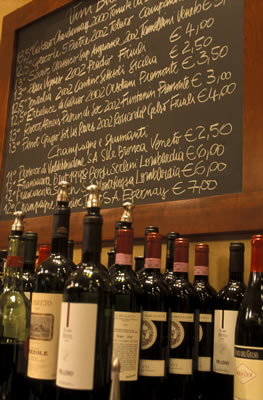
"They speak of my drinking, but never my thirst."
--Dylan Thomas
OK, it's apparent that most of the industry recognizes that food is king. Owners, operators, managers and cooks fawn over the entrees, appetizers and desserts on their menus. Managers slavishly sample and in detail describe their food to waitstaff in pre-shift meetings, hoping to encourage more sales. CFOs and chefs labor over portioning, specs, flavors and recipes of their center-of-the-plate offerings, ciphering ways to wrangle a few pennies more from each item. But meanwhile, sitting alone, unattended, tucked into the corner in tiny type on the last page of the menu, sits the red-headed step-child of top line sales: the beverage selection. Overlooked more often than an O'Doul's in Ted Kennedy's fridge, the beverage menu is sadly under-promoted and overlooked by most operators. Sure, they'll occasionally spotlight the alcohol or wine menu, but it's time to wake up and smell the water and soda, too.
The gross profit margins on beverages are astronomical compared to food, yet
strangely, most beverage incidence (ratio of beverages sold to food sold) is less
than 10% in foodservice operations. And yet beverages can contribute as much as
70-80% gross profit margin per serving...so what's wrong with this picture?
Opportunity knocks if you're willing to listen, and here's a few ideas to help you
start managing your beverage sales like the (overlooked) profit center they are.
|
How to Create Motivated Employees
An organization is
only as successful as the people who work there and today organizations
throughout the hospitality industry understand this return of investment.
Organizations know the importance of retaining employees and the added benefit
of making them better regardless of position.
Communication is the key to connecting to staff at all
levels which is critical to employee retention and growth. A performance review
creates the opportunity to:
1. Identify areas for improvement
2. Reward good performance
3. Identify opportunity for growth
4. Address overall concerns effectively
Typically, managers conduct performance reviews
in person on an annual or semiannual basis. An employee evaluation form is the
foundation for the review and it should be filled out by both the employee and
the manager prior to the meeting. This form should outline the employee's job
responsibilities, skill requirements and goals and objectives. It is important
to note that although all evaluation forms should have the same rating scale to
ensure consistency, each form should be different to reflect each distinct job
position to ensure accuracy and fairness.
> DOWNLOAD FULL STORY
| |
|
|
|
At Sysco iCare , we've done
our homework, so you don't have to. iCare partners are Sysco approved and
uphold the highest service levels, quality standards and performance guarantees
of anyone in the industry.
|
|
|
|
|
|


