|
|
|
INTRODUCING NEW COUNCIL NEWSLETTER
|
|
|
 | |
Bob Donovan, MD
|
Welcome to the new consolidated newsletter of the National Health Care for the Homeless Council, featuring highlights from our individual membership constituencies, a look at the past year's accomplishments, and a glimpse of what you can look forward to from the Council in the coming months. We want to know what you think--please take a moment to share your feedback via the survey link in the left column. At the National HCH Conference in June, the Council instituted its 2011-12 Board of Directors, and Bob Donovan, MD, began his term as President. Bob is a Family Physician for the Cincinnati Health Network, where he has worked for 23 years. To kick off Bob's term and the new newsletter, Jan Caughlan, former Chair of the HCH Clinicians' Network, interviewed Bob about his career in Health Care for the Homeless and the role the Council has played in his personal and professional growth. "Networking, I've found, is really important, and the Clinician's Network has been a marvelous way to do that. The yearly [NHCHC] conference is just an incredible time of networking and listening to people...Being able to get ideas from others has been really important." FULL INTERVIEW |
|
 
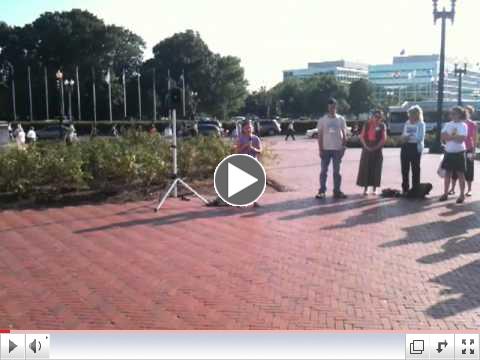 | Rally for Human Rights at
2011 National HCH Conference |
|
|
Share your feedback
on the new
newsletter format
TAKE SURVEY
|
|

MIDWEST REGIONAL TRAINING Detroit, MI | September 19-20, 2011 A variety of factors affect the health status of individuals and communities; these factors act as determinants of health and include: where one resides, environmental factors, income, education, and social relationships. According to the U.S. Dept. of Health & Human Services, each of the states in Region V (MN, WI, MI, IN, IL, and OH) has distinct similarities in health challenges and determinants. These challenges, which have been particularly highlighted among racial/ethnic minorities, include high prevalence of obesity, low per capita health funding, and high rates of deaths from cardiovascular disease. The city of Detroit fares worse among health statistics in Michigan due largely to low-income status and limited access to care, which have lead to increased hospital use as a primary source of care. The National HCH Council will offer a regional training in Detroit in September to encourage ongoing conversations and plans for supporting health care providers in addressing the region's unmet needs. The training will include courses on clinical topics, trauma-informed care, chronic pain, medical respite, and Consumer Advisory Boards, as well as networking opportunities. Watch your inbox for more details in the coming weeks. REGIONAL TRAINING INFO
| |
FREE WEBINARS
Introduction to the Community Health Worker Guide for Administrators | July 27, 2011 | 2pm EDT
Steps to NCQA Recognition for Patient-Centered Medical Home | July 29, 2011 | 2pm EDT
Patient-Centered Medical Home: A Case Study on Achieving Level 3 | August 10, 2011 | 2pm EDT
Motivational Interviewing: An Overview with Application for Outreach in the HCH Setting | August 17, 2011 | 2pm EDT
Managing Chronic Pain for Adults Experiencing Homelessness | August 2011 | Date and Time TBD
Webinars are free of charge, but space is limited and advance registration is required. MORE INFO
| |
GOVERNING MEMBERSHIP RETREAT
Nashville, TN | October 13-14, 2011
Organizational Members appoint a representative to take part in the annual fall planning retreat, where participants set the Council's priorities for the next year. BECOME AN ORGANIZATIONAL MEMBER
|
LETTER FROM THE EXECUTIVE DIRECTOR: CONFERENCE RECAP  | |
John Lozier,
Executive Director
|
In June we conducted the 2011 National HCH Conference & Policy Symposium, where 700+ HCH consumers, providers, advocates and high-level Federal officials addressed health reform's promises and challenges for people without homes. FULL LETTER
| |
WHAT PRIORITIES SHAPE THE COUNCIL'S WORK?
With the passage of Health Care Reform in 2010, the National HCH Council and health center programs across the country have a unique opportunity to dramatically increase access to quality health care for this country's most vulnerable, medically underserved population--those living through homelessness. The federally funded Health Center program that includes most of our constituency will grow by 50% next year and by nearly 200% over the next five years due to federal health care reform. To address the multiple and diverse needs of our grantees in this era of reform, the Council will continue to produce relevant educational products to support health center capacity building and effectiveness. These products will elucidate Meaningful Use regulation and the recognition process for PCMH, as well as address needs for front line staff training, adapted clinical guidance for providers, administrative resources for workforce retention and recruitment and training in policy and advocacy.
| |
NEW RESOURCES COMING TO NHCHC.ORG
Stay tuned to www.nhchc.org for a number of tools and publications to be launched in the coming months. New materials will include:
- Community Health Worker Guide for Administrators
- Readiness for Meaningful Use of Health Information Technology and Patient Centered Medical Home Recognition: Summary of Responses Provided by Homeless Health Care Providers
- Key Elements of Integrated Health Care for Persons Experiencing Homelessness
- Adapting Your Practice: Recommendations for the Care of Homeless Adults with Chronic Non-Malignant Pain
- Health Care Delivery Strategies for Addressing Key Preventive Health Measures in Homeless Health Care Settings
- Impact of Chronic Homelessness on Cognitive and Emotional Development in Children: A Case Report
- Updated Sample Safety Guidelines
- Healing Hands Newsletter (October Issue: Nutrition)
|
THIS FALL: WELLNESS & SELF-CARE PODCASTS This fall the Council will podcast Stories from the Field, interviews with HCH providers and consumers, along with resources and tips for self-care. The first installment will include a conversation about advocacy with Jennifer Ho, Deputy Director, U.S. Interagency Council on Homelessness, and Council Executive Director John Lozier.
| |
WORKING TOGETHER: COUNCIL COLLABORATIONS
The Council works with an incredible lineup of partner organizations on a number of key projects. The following collaborations will produce vital clinical trainings, critical guidance on outreach and emergency planning, evidence to support policy change that improves health care services to special populations, increased dialogue with primary care associations, research on health literacy and much more.
- Community Voice Mail will offer a critical communication tool to selected health center clients.
- HealthHIV will offer several trainings/workshops on the integration of chronic HIV/AIDS care into primary care.
- Association of Asian Pacific Community Health Organizations will provide trainings on enabling services data collection.
- Health Outreach Partners and NACHC will participate in the development of outreach guidelines for special populations.
- Nova Southeastern University College of Medicine- Project HOPE will survey health centers' association with educational programs and promote the "teaching health center."
- Association of Clinicians for the Underserved will provide trainings on Meaningful Use, PCMH, and key clinical topics.
- Cave Institute will pursue research and provide information on culturally-specific Health Information Technology.
- Centers for Disease Control and Prevention and public health agents will participate in the development of communication strategies for emergency preparedness among persons experiencing homelessness.
| |
COUNCIL ACCOMPLISHMENTS: THE PAST 12 MONTHS
Over the last year, the Council has taken deliberate steps to evolve as an effective Training and Technical Assistance (TA) organization for community health centers serving vulnerable populations. We have produced more resources for the field, including online trainings, webinars, publications, policy statements, and face-to-face events, than at any time in our history. For a linked directory of these resources, visit our 2011 ACCOMPLISHMENTS.
|
|
CONSUMERS ADVOCATE FOR LIFELINE CHANGES NCAB members are advocating for changes to the Federal Communications Commission's current policy of allowing only one "Lifeline" phone per physical address. By these rules--which date to the program's launch in 1983, when cell phones were uncommon--residents of shelters, transitional housing, supportive housing, and those living on the streets are left out. Through calls with advocacy groups including members of NCAB, the FCC is now considering using the same eligibility criteria as for food stamps. This would allow persons without traditional housing access to the same low-income communications subsidies as their housed counterparts. In an upcoming article, we will discuss the utility of Community Voice Mail as a complement or alternative to lifeline phone programs. ABOUT COMMUNITY VOICE MAIL
| |
WELCOME NEW STEERING COMMITTEE MEMBERS
 NCAB welcomes Diane Myers of Oregon and Marion Walls of Colorado to the Steering Committee. Both have participated in several training events and Marion presented at this year's National HCH Conference. NCAB would also like to welcome the five newly-elected regional representatives to the leadership of NCAB. They will be working to provide more hands-on support of the great work CABs do. Each Regional Rep covers two HRSA Regions: Regions 1 & 2: Edward Roche, Regions 3 & 4: James Crawford, Jr., Regions 5 & 7: Valarie Dowell, Regions 6 & 8: Kaylynn Boone, Regions 9 & 10: Willie Joe Mackey. For more information about NCAB or to get involved, visit www.nhchc.org/advisory or email ncab@nhchc.org.. NCAB welcomes Diane Myers of Oregon and Marion Walls of Colorado to the Steering Committee. Both have participated in several training events and Marion presented at this year's National HCH Conference. NCAB would also like to welcome the five newly-elected regional representatives to the leadership of NCAB. They will be working to provide more hands-on support of the great work CABs do. Each Regional Rep covers two HRSA Regions: Regions 1 & 2: Edward Roche, Regions 3 & 4: James Crawford, Jr., Regions 5 & 7: Valarie Dowell, Regions 6 & 8: Kaylynn Boone, Regions 9 & 10: Willie Joe Mackey. For more information about NCAB or to get involved, visit www.nhchc.org/advisory or email ncab@nhchc.org..
|
HCH CLINICIANS' NETWORK NEWS
|
16TH ANNUAL MEMBERSHIP MEETING The HCH Clinicians' Network held its membership meeting at June's 2011 National HCH Conference. Travis Baggett, MD, and Robert Anderson, MA, CHES, of the Break Free Alliance presented results from a 2011 survey of the Clinicians' Network regarding tobacco cessation. Copies of these presentations will be posted to www.nhchc.org, along with information about the Break Free Alliance. Outgoing Network Chair Jan Caughlan, MSW, LCSW-C, reviewed the year's accomplishments and incoming Chair Greg Morris, PA-C, highlighted projects for the upcoming year including:  | | Greg Morris, Network Chair |
- Defining core competencies for clinicians working within the HCH setting
- Providing guidance for the management of complex co-morbidities
- Presenting an outreach model for first-time parents called the Home Visiting Program
Four Local Hero Awards were presented, five new Steering Committee members were elected and the 2011-2012 officers were announced. Michelle Nance, NP, RN, MSN, of the San Francisco Medical Respite and Sobering Center is Chair-Elect and Danielle Robertshaw, MD, of Health Care for the Homeless, Inc. in Baltimore, MD, is the Fiscal Officer. The Network extended utmost appreciation to the outgoing Steering Committee members and outgoing Chair who led them so graciously this past year.
The Clinicians' Networkthanks everyone who participated in the membership meeting and the conference. If you would like to participate in any of the above projects or other Clinicians' Network activities, please contact Morgan Porter. We always welcome new members and perspectives.
| |
SHARE YOUR ORGANIZATION'S SAFETY POLICIES
 The HCH Clinicians' Network Communications Committee is working to update the Sample Safety Guidelines publication and seeks examples of policies, procedures, and any other documents pertaining to safety in the workplace for homeless health care providers. Send your materials to Lily Catalano by July 31st. The HCH Clinicians' Network Communications Committee is working to update the Sample Safety Guidelines publication and seeks examples of policies, procedures, and any other documents pertaining to safety in the workplace for homeless health care providers. Send your materials to Lily Catalano by July 31st.
JOIN THE NEW DISCUSSION FORUM FOR HOMELESS HEALTH CARE PROVIDERS  It's EASY! It's EASY!
- Register at www.BHTalk.org
- Once your registration in processed, simply join the National Health Care for the Homeless Council group
- Click on the forum of your choice (clinical, administration, research, medical respite care)
- Read or respond to discussions or start a new discussion thread
BHTalk is a service of the Substance Abuse and Mental Health Services Administration (SAMHSA). |
NEW HCH RESEARCH UPDATE AVAILABLE  | |
Patrina Twilley, Research Assistant
|
In its quarterly HCH Research Update, the Council summarizes recent publications on health care and homelessness. The July issue, compiled from several research databases, includes relevant articles from approximately April through June 2011. Summaries are categorized into themes that vary by quarter. DOWNLOAD RESEARCH UPDATE
| |
CALL FOR ABSTRACTS
 Has your clinic or organization implemented a new practice or protocol that resulted in an improvement in care or outcomes? The peer-reviewed Journal of Health Care for the Poor and Underserved has issued a call for abstracts for a special theme issue on quality improvement initiatives related to clinical care outcomes, health systems delivery, organizational efficiencies, financing models, reducing medical errors, improving patient safety, and communications. Submissions are due September 1, 2011. MORE DETAILS Has your clinic or organization implemented a new practice or protocol that resulted in an improvement in care or outcomes? The peer-reviewed Journal of Health Care for the Poor and Underserved has issued a call for abstracts for a special theme issue on quality improvement initiatives related to clinical care outcomes, health systems delivery, organizational efficiencies, financing models, reducing medical errors, improving patient safety, and communications. Submissions are due September 1, 2011. MORE DETAILS
| |
CHILDREN AND FAMILIES EXPERIENCING HOMELESSNESS
The Wilder Research group recently published 2009 Minnesota Homeless Study: Homeless Children and Their Families, a detailed report describing the state of family homelessness in Minnesota. The report represents data from a one-night survey of adults, youth and children experiencing homelessness. The Wilder Research group documents an increase in family homelessness since 1991, racial/ethnic disparities in housing status, health disparities between families in the shelter system and those outside the system and education performance disparities between students experiencing homelessness and the general population, among other statistics. FULL REPORT
|
|
|
|
|
|
|
|
|
|


