|
|
| SWS Mountain Guides Newsletter |
Spring 2009 |
|
| SWS Quick Links |
|
MORE ON FITNESS
|

Everest Basecamp
|
|
SWS Mountain Guides NEWS
Dear Fellow Adventurers,
Welcome to our new format for the SWS Newsletter. We hope you find it's easier to read.We will be getting it out more often with great deals on trips, equipment recommendations, and great articles on many of the trips that we run.
We look forward to having you join us this summer climbing in the Sierra Nevada, mountaineering on Mt. Shasta, or hiking in Yosemite National Park. You can find a great summer adventure at our website www.swsmountainguides.com or give us a call at 888.797.6767 and get out and enjoy the mountains this spring and summer!
Yours in the Spirit of Adventure,
Tim Keating & Dave Cressman
|
 CHO OYU 26,906 ft. EXPEDITION UPDATE CHO OYU 26,906 ft. EXPEDITION UPDATE Our Spring 2010 expedition to the Cho Oyu is scheduled for May/June. Cost for the expedition is $16,950.00 per person which includes full support on the 38 day expedition and a 5 day Ice and Snow Expedition Training course on Mt.Shasta.
Contact us for an expedition application and full details of the Cho Oyo Expedition.
| |
Mountaineering in the Range of Light The Sierra Nevada has for decades been referred to as the "Range of Light" for its spectacular morning and evening light shows. Sunlight bounces off the granite walls, high peaks, and canyons of the Sierra, giving alpine glow a whole new meaning. The sheer beauty of the Sierra Nevada is one of the main reasons mountaineers have been draw to these high peaks. With such a deep history of mountaineering, it makes a perfect place to learn the art of mountain climbing.
The highest peak in the lower 48 states, Mt. Whitney has always been the most popular area for climbing, but for learning mountaineering skills nothing beats the Palisades located just south of Bishop, CA out of the small town of Big Pine. Most people are unfamiliar with the Palisades region, which has the highest concentration of 14,000 ft. peaks anywhere in the Sierra Nevada. It has been the training ground for many a mountaineer for over 50 years. With such classic climbs as U-Notch, V-Notch, Thunderbolt Peak (the last of the 14000 ft peak to be climbed), and the Swiss Arete on Mt. Sill, this place is a climbing mecca! For an amazing climbing experience for the beginner or experienced climber, miss the crowds and experience the Palisades in the Range of Light.
Palisades Basic Mountaineering Camp: August 10-14, Sept. 2-7, October 7-11 $875.00
Palisades Advanced Mountaineering Camp: July 13-17, Aug. 17-21, Sept 5-9 $975.00 |
 Excellent Climbing Conditions on Mt. Shasta for 2009 Excellent Climbing Conditions on Mt. Shasta for 2009
The snow has been falling all winter and we are looking for the climbing conditions for the summer on Mt. Shasta to be much better than last year. As of the end of March, the precipitation on Mt. Shasta was 82% of normal compared to years past. We have had three years of drought conditions on Mt. Shasta so with this winter's heavier snowfall, the best conditions for climbing should be mid/late May through early July. I always recommend the third week of June for the best climbing since we have both the summer solstice (longest day), and a full moon on June 22nd. With the heavy snow pack it will be a great time to climb Mt. Shasta! This assumes that we should get some more snow in April and that we do not get a heat wave in April and May!!
Join us:
Shasta Summit -2 day Climb; June 20-21, June 24-25 $425.00
Introduction to Mountaineering
Mt. Shasta: June 19-21 and June 23-25 $545.00 |
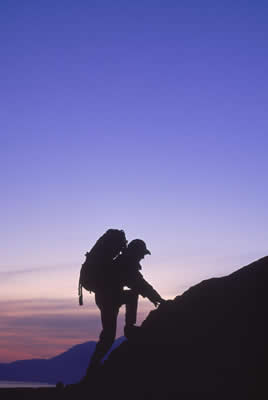 Getting Ready for Summer Climbing Getting Ready for Summer ClimbingMany clients give me a call and ask "How can I get in shape?" for one of our climbs or courses. What should you be doing to get the best out of your course and enjoy the mountaineering experience? Of course it all starts with baseline cardiovascular conditioning. We recommend training with an aerobic activity 4-5 times per week, for 40-60 minutes each session. Remember that you want this cardiovascular training to be the most effective, so keep in the range of 60-70% of your maximum heart rate (220 - your age approximately). Mountaineering is a slow, long distance activity. Summit days are usually 12-14 hours of sustained effort, with breaks of course and time to take in the view. Great training activities for mountaineering include hiking, hill walking, running, road biking, mountain biking, treadmill, stairmaster or elliptical machines. I always recommend training hikes with 25-30 lbs of weight on hilly terrain. Plan on 3-4 hours of hiking, pack your pack with a couple gallons of water (2.2 lbs per gallon) for the way up and when you reach the top of your hike, you can dump out the water and save you knees the pounding on the way down the trail. You just need the weight in your pack to work your legs on the up hill parts, or better yet, get a friend or spouse to go along with you, carry the pack with a full blown picnic lunch complete with wine and great food. Once you reach the high point of the hike have a great picnic lunch and now you have a light pack for the decent. Make your training enjoyable and you will stick with it, thereby helping you to enjoy all your mountaineering adventures this summer.
|
 Altitude & You: Preparing for Mt. Shasta Altitude & You: Preparing for Mt. Shasta
Ascending to altitude affects everyone in different ways, but there are some things you can do to help prepare yourself for the ascent.
-
HYDRATE! HYDRATE! HYDRATE! Make sure your are fully hydrated prior to the day of the climb. You should drink 3-4 liters of water per day, for a couple days prior to the climb. You should be urinating 6-9 times a day, clear and copious!
- Reduce your intake of diuretics (things that make you urinate) such as coffee, alcohol, soda, and other things with caffeine. This makes it easier to hydrate...but if you drink coffee, don't cut it out all together, just reduce the amount you usually drink.
- Get to the trailhead early, rest, take it easy. You are going to stress your body climbing for the next couple of days. It's good to get plenty of sleep and rest prior to the climb. Climbing is like running a really, really, slow marathon.
- Remember there is a 12-24 hour lag time between going to altitude and the symptoms of altitude illness. So take it easy on the hike in, watch your guide(s); they go slow and steady, and you should do the same!
|
 Mt. Whitney Presentations at REI hosted by REI Adventures & SWS Mountain Guides
Tim Keating, Co-Owner and founder of SWS Mountain Guides, in conjunction with REI Adventures will be presenting a complete presentation on climbing Mt. Whitney via the Trail, Backpacking around the Westside, and our Guided Climbs of the Mountaineer's Route. Come meet Tim and enjoy an information packed presentation on climbing this very popular peak.
| |
|
|
|
|
|
|
|
|



