|
Greetings from the times of "Trick or Treat"
which seems a fitting opening for the topic
of this newsletter.
 |
 Frangrances have been used for centuries, as an aphrodishiac to the familiar aromas of a loving, welcoming home. However, with a closer look at what we are exposing ourselves and our loved ones to, it is more of a trick on our senses than a treat. Frangrances have been used for centuries, as an aphrodishiac to the familiar aromas of a loving, welcoming home. However, with a closer look at what we are exposing ourselves and our loved ones to, it is more of a trick on our senses than a treat.
For the first time, the entire newsletter is dedicated to one topic, and that is the topic of fragrances and scents. Ten years ago I was not aware that the colognes I enjoyed collecting, and wearing, could be affecting anyone around me. There are more and more people finding they are sensitive, if not allergic, to fragrances. At this time it is not fully known the impact on our society as studies are proving toxins found in frangrances and scents are surfacing from pre-natal to the elder years, which is why it is becoming a greater medical issue and concern.
I know you may be saying, this is not my problem. However, you may not know it, but it could be. Sinus congestion, headaches, joint and muscle aches and pains, slowed mental processes, depression, personality changes, and more, may not be manifested in your life, but what about your children, or other loved ones? And, if not now, how much is overload, and will the price be paid later?
I realize this letter sounds stronger than my usual more upbeat, inspirational thoughts. Believe me, this is concern speaking from someone who cares deeply to share this information with others, as together, we seek a better life and better health for you and your loved ones. To do that, is uplifting and inspiring!
Join me next month as we welcome the joys of the holiday season together, but for now, remember to treat your body, not trick it! Please read on.
Warmest regards,
Pam |
 |
|
Featured Article
Note: I have printed this with key words and highlights
in red. For those of you wishing to hit only the high points,
this should help you breeze through. The rest of the text
completes the thoughts and gives you more information.
Did you know.. Fragrances can make you ill?
There are currently around three thousand chemicals used in the manufacture of fragrances. Many of these are petrochemical (petro, as in fuel ) derivatives. Chemicals used to manufacture fragrances are also used to produce flavorings. Fragrances are also found in a large number of perfumed consumer products such as personal care products, air fresheners, laundry products, detergents, 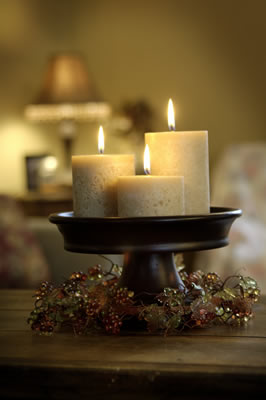 paper tissue products, essential oils, fragranced candles and incense, antibacterial products added to air conditioning systems to reduce the risk of legionella or other diseases that can be circulated via air conditioning. Fragrances are present in public areas from air fresheners and commercial cleaning products used on public transport, in public buildings and health care facilities. As fragrances are now more the norm than the exception, it is difficult to find products, including food, pharmaceuticals and tobacco products that are not fragranced or flavored. paper tissue products, essential oils, fragranced candles and incense, antibacterial products added to air conditioning systems to reduce the risk of legionella or other diseases that can be circulated via air conditioning. Fragrances are present in public areas from air fresheners and commercial cleaning products used on public transport, in public buildings and health care facilities. As fragrances are now more the norm than the exception, it is difficult to find products, including food, pharmaceuticals and tobacco products that are not fragranced or flavored.
Are fragrances safe?
Cases of anaphylaxis or allergic shock have been observed following fragrance exposure while lesser symptoms such as hay fever or rhinitis are reported. Some studies have shown that fragrances are respiratory irritants and many asthmatics react adversely to them. Studies also indicate that  fragrances may actually cause asthma. fragrances may actually cause asthma.
Individuals who are chemically sensitive can become disabled when exposed to fragrances and cannot take part in normal activities. They report symptoms such as migraine, nausea, dizziness, fatigue, shortness of breath, difficulty concentrating and allergy-like symptoms. Studies report that some 15 - 30% of the population report sensitivity to chemicals and that around 4 - 6% have a major impact on their quality of life. Of these, more than 80% claimed that exposure to fragrances is troublesome.
Industry's view is that people who claim they react to fragrances suffer from psychological problems. This view does not take into account that fragrance chemicals are part of complex mixtures of very toxic substances and these same chemicals are present in a large number of frequently used consumer products contributing to an addictive effect. A study by the US EPA identified volatile organic compounds emitted by fragranced products that contribute to indoor air pollution and sick building syndrome. These compounds were found to be toxic and carcinogenic. While some of the compounds identified occur commonly in many fragrances, few fragrance products containing them have been tested for carcinogenicity. In the USA, a report by the Environmental Working Group entitled 'Skin Deep' found that around 89% of the 10,500 ingredients in personal care products have not been evaluated, one in three personal care products has at least one ingredient classified as a possible carcinogen and one in one hundred contain probable cancer-causing agents; care products has at least one ingredient classified as a possible carcinogen and one in one hundred contain probable cancer-causing agents; some other ingredients e.g. phthalates are endocrine disruptors that are linked to birth defects, while parabens used as preservatives in underarm deodorants and other personal care products have been linked to breast cancer.
Secret ingredients 
The components of a fragrance do not have to be disclosed on labels and are protected by secrecy laws. All that has to be labelled is the term 'fragrance', so individuals who are allergic or chemically sensitive to specific compounds don't have the information to know what is in a product in order to avoid unnecessary exposure. In some cases products labeled 'unperfumed' are perfumed, while other products labeled 'unperfumed' on closer scrutiny of the label contain 'masking fragrance'.
However, while most research on fragrances has focused on dermal exposure as the primary route of exposure, there is rarely any thought given to inhaled exposure and respiratory testing.Some researchers believe that fragrance molecules can be absorbed via the olfactory bulb in the nose directly into the brain.
There is also an assumption that fragrance only produces a sense of odor, however, fragrance can stimulate the olfactory and trigeminal nerves causing irritation that results in sensations such as stinging, burning, prickling and tingling. This process is referred to as 'sensory irritation' and can result in neurogenic inflammation.
Child Health 
Children from infancy to adolescence are in various stages of development and are more vulnerable to chemicals than are adults. Yet many products aimed at infants, children and adolescents are scented in spite of the lack of data on fragrances to prove safety. A recently initiated biomonitoring program in the USA has discovered measurable levels of chemicals in the human body and breast milk e.g. phthalates http://www.cdc.gov/nceh/dls/default.htm.
This raises concerns for the health of breast fed infants and their future health.
Right to clean air and a safe environment
The fragrance issue is the same as the tobacco smoke issue i.e. the right to wear fragrances that pollute the air and damage human health over the right to clean air and a safe environment. In the USA there are many places that post notices asking people to refrain from wearing fragrances.
If you have a place you frequent, or where your children
spend many hours a day, and have concerns of this nature, you may want to suggest a fragrance ban.
Information contibuted by Allergy, Sensitivity, and Environmental Health Association.
.
|
|
|
"We cannot solve our problems with the same thinking we used when we created them." Albert Einstein
|
|
| |
|
I have been seeking a
voice to speak for the younger getneration.
Although it has been in my thoughts for some time, I did not have to look far to find that voice, after all.
This is the debut of
"Tips for Teens".
A special space for the younger crowd and
issues which relate to
their lives.
The contributor is
Ashley, 13 years old.
She has shown a
pro-active interest in health, toxins, and
environmental issues since she was 5 years old. At that time she announced to her family she had become a vegetarian and she
has stuck with it.
Today she wears
buttons to school to
promote awareness and
education of environmental and health issues.
Why it took me so long to find her?
I don't know.
Then, how did I find her so quickly?
She was in my own back yard.....
she is my granddaughter.
Ashley will welcome and address questions or suggestions from children and/or other teens. Share this newsletter with them !
Just think, what a difference one generation can make.
Thanks for helping,
Ashley!
Oh, yes, and,
Happy Halloween Day
Birthday
|
|
 Tips for Teens Tips for Teens
by Ashley
A tip for all you babysitters: it's best to NOT wear any perfume during a baby's first year of life. I saw an article that said that scientists are beginning to study the effects of perfume and makeup exposure to infants. Baby's senses are so sensitive that it's best to not overload them with too much fragrance.  |
|
|
How sharp is our sense of smell at birth?
Our sense of smell is fully mature at birth and is one of the first senses that newborns experience.
Their sense of smell helps them to locate their mother and her source of food.
Studies indicate that a newborn can recognize his or her mother's breast simply by its scent. In one study, mothers washed one of their breasts while leaving the other left unwashed. Over two-thirds of the babies tested, chose the unwashed breast.
NOTE:
Parents, Grandparents,
Relatives and friends,
Are you sure
you want to mask the
initial, natural bond with
fragranc and chemicals?
|
|
|
Household
toxins
and
scents
Remember the scents
under the sink, in the cabinets, and used
everyday ----
detergents, soaps, lotions, shampoos,
creams, and anything else you may see there.
The most dangerous
place in the house is
UNDER THE SINK ! Countless number of toxins, including fragrances.
This is the easiest
place to make
immediate and
healthy corrections.  |
| Quick Links
|
|
read past newsletters
|
|
|
Did You Know
Many subscription
magazines and
catalogs offer
a list of subscribers
requesting not to have
fragrance samples in their issues?
Get in touch with your subscription contact
address or number to
check on yours. |
|
Make your
own, safe
home scents.....
This is an easy enough project and it can be created by children as young as 3 or 4 with help from an older sibling or an adult.
Home fragrance stones are hard "rocks" that are infused with a scent. They can be used to scent a room, closet, or a drawer. There are thousands of scents you can use and you can even create your own personalized aromatherapy scents. When the scent begins to grow weak you can energize it with a few drops of the original scent.
Full Article and recipe at
Planet Green.com
| |