Slight Increases in Average Shoe Prices In 2011
|

Data from the NSGA Sporting Goods Market in 2012 indicates that the average price point for basic athletic footwear in 2011 rose only slightly in both sporting goods stores and in specialty athletic footwear stores. In sporting goods stores, the average price rose 2.9% to $58.05 from $56.40 in 2010. In specialty athletic footwear stores, the price rose only 1.4% to $74.28 from $73.28. Specialty sport shops saw the biggest increase of all the outlet types with an average price rise to $75.36 from $70.51 in 2010 or 6.9%.
In 2011, the average price across all channels of distribution rose 1.9%. In 2010, it had risen 11.8% across all channels.
Family footwear stores saw the biggest decline in average price point, down 6.2%. Factory outlets had the second biggest decrease in average price point, dropping 4.1%.
Internet sellers of athletic footwear increased market share and showed a decrease in average price. Their market share of all units sold in the athletic footwear market rose 13.3% versus 12.8% the previous year. Their average price point fell 3.8% to $60.28. The average price point was below only that of specialty athletic footwear stores and specialty sport shops.
The information on average shoe prices and on channels of distribution is included in the NSGA report, The Sporting Goods Market in 2012. "The Sporting Goods Market in 2012" is available for $290 for retailer/dealer members of the Association and free to manufacturer and sustaining members. For non-members, the cost is $340. For more information and/or pricing for other NSGA research reports, please contact the NSGA Research Department, (847) 296-6742, ext. 108, or e-mail dkasen@nsga.org. Information is also available on the NSGA website by clicking here.
|
August CPI for Sporting Goods Slightly Down
|

The CPI for Sporting Goods fell 1.1% in August. This followed a decline of 1.3% in July and a 1.4% in May. The spread between the two indices was 2.8 in August compared to an average spread of 7.8% between the two indices in 2011.
The CPI for All Items continued positive in August with a 1.7% increase. This follows a 1.2% increase in July and a 1.7% increase in June.
For 2011, The CPI for Sporting Goods averaged a 4.7% decrease, following a 3.0% average decrease in 2010. 2011 was the second year in a row that Sporting Goods CPI had shown a decrease. It increased 2.1% in 2009.
In the past five years (2011 versus 2006), the average CPI for Sporting Goods has declined 1.2% in the face of a 3.0% rise in the average CPI for All Items.
|
Total Amount of Bike Imports Increased More than the Value of the Imports
|

Bicycle imports rose 23% through June 2012 Year-to-Date compared to June 2011 according to U.S. Department of Commerce data. Total units imported through June were 9,135,163, up 1,737,653 from June 2011. The value of those imports, however, were up only 11% from $694.0 million to $767.4 million.
Imports of kids' bikes were up 34% to 2,476,475, with a value of $77.7 million, through June.
Among adult bike, imports of mountain and comfort bikes rose 11% to 2,819,778 units, with a value of $302.3 million.
Imports of 27-inch and 700c bikes increased 16% to 928,745 units for the sixth month of 2012, compared to 798,738 units through June last year.
Average unit value of an imported bicycle fell 10% for 2012, from $93.82 in 2011 to $84.01 in 2012
In 2011, 15.65 million bicycles were imported into the U.S., with a value of $1.40 billion. Unit imports decreased 21.0% but their value increased 23.6%.
In 2010, 19.77 million bicycles were imported into the U.S., with a value of $1.43 billion. Unit imports increased 33.2% but their value decreased 1.7%.
|
Ski Industry Reports Decreased Visits in 2011/2012 Season
|
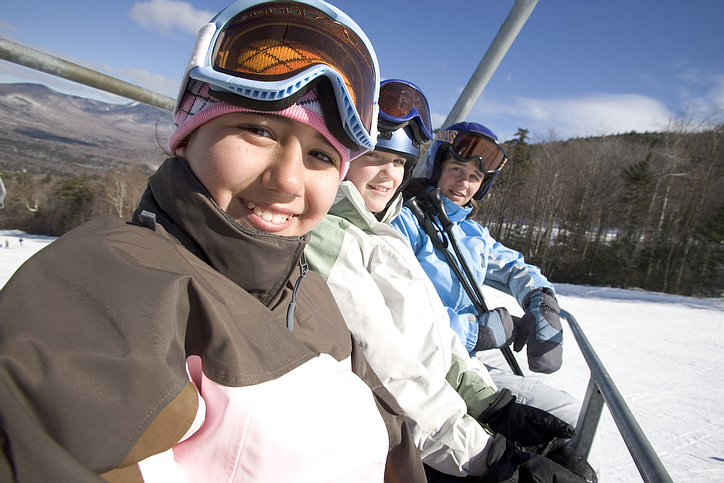
Skier and snowboarder visits for the 2011-2012 season decreased by 15.7% to an estimated 51 million visits, according to the Kottke End of Season Survey, published by the National Ski Areas Association. This makes it the biggest year-over-year visitation decline since the 17.6% drop in the 1980/81 season. The decrease is attributed to the 41% decrease in average snowfall this season.
Regionally, the Pacific Southwest showed a 26.3% decrease in visits. The Southeast (24.0%), Northeast (20.2%), and Midwest (18.4%) also exhibited declines last season.
For more information visit www.nsaa.org.
|
|



