| What's on ALL4's Calendar? |
 At ALL4, we like to get out and about -- whether presenting or taking part in technical and regulatory conferences. Stop by and see us at these upcoming events.
- March 16 - 17, 2009 - Wilkes-Barre, PA.
- April 1 - 2, 2009 - Meadville, PA
- April 21 - 22, 2009 - Norristown, PA
- April 28 - 29, 2009 - Pittsburgh, PA
Mid-May, 2009 - Fine Particulate Breakfast Seminar, Presented by ALL4 and Strategic Partners. Info coming soon.
COMING SOON...
- ALL4 Webinar Series
- 4 The Record Survey |
 |
|
|
| This Month... |
| The March 2009 4 The Record was planned to be an issue with an emphasis on fine particulate. In the last few weeks, however, we've been introduced to a wealth of key information on climate change and greenhouse gases, including proposed reporting requirements for many industries. We strive to keep you up to date on breaking regulatory news and therefore the March edition has a dual focus on fine particulate and climate change, packed with six (6) articles on the two (2) subjects. We have also kicked off our 4 The Record Guest Article Series. Our first 4 The Record Guest Contributor, Weston Solutions, provides us with "Filterable and Condensable Emission Testing (PM, PM10, PM2.5)." Additionally, ALL4 and CyberRegs have partnered to share recent key Federal environmental rulemaking. Select content from EnviroReview Extract is now available on CyberRegs. |
| A Fine Particulate Series: A Practical Guide to PM2.5 |
 By now you've likely heard about U.S. EPA's final rules governing the implementation of the New Source Review (NSR) program for fine particulate matter (i.e., particulate matter with an aerodynamic diameter less than 2.5 microns, or PM2.5). ALL4 published two articles in 2008 addressing specific aspects of the PM2.5 NSR rule. ALL4 has since formally established a PM2.5 Team to continue tracking the PM2.5 NSR rule and to communicate and address the challenges that the rule will present to our clients. This article has been prepared by the PM2.5 Team, and is the first in a series of articles in 2009 that will address various aspects of PM2.5 regulation. By now you've likely heard about U.S. EPA's final rules governing the implementation of the New Source Review (NSR) program for fine particulate matter (i.e., particulate matter with an aerodynamic diameter less than 2.5 microns, or PM2.5). ALL4 published two articles in 2008 addressing specific aspects of the PM2.5 NSR rule. ALL4 has since formally established a PM2.5 Team to continue tracking the PM2.5 NSR rule and to communicate and address the challenges that the rule will present to our clients. This article has been prepared by the PM2.5 Team, and is the first in a series of articles in 2009 that will address various aspects of PM2.5 regulation.
U.S. EPA published final rules governing the implementation of the NSR program for PM2.5 in the Federal Register on May 16, 2008 (the rules became effective on July 15, 2008). Specifically, the NSR program includes both the Prevention of Significant Deterioration (PSD) rules for areas that are designated as being in attainment with the PM2.5 National Ambient Air Quality Standards (NAAQS) and the Nonattainment New Source Review (NNSR) rules for areas designated as not being in attainment with the PM2.5 NAAQS. The introduction of the PM2.5 NSR rules, in addition to a recent revision to the PM2.5 24-hour NAAQS (resulting in new PM2.5 nonattainment areas), will present several permitting challenges for both existing and new facilities:
- PM2.5 emissions data is not widely available, making PM2.5 emissions difficult to quantify in order to support air quality permitting projects.
- There are two components to PM2.5 emissions: a filterable component and a condensable component. Condensable PM2.5 emissions are not yet required to be included in applicability determinations or in permit limits in some areas. In cases where condensable PM2.5 emissions must be addressed, they are difficult to measure and quantify.
- Facilities located in designated PM2.5 nonattainment areas will have a difficult time locating PM2.5 emission reduction credits (ERCs) to offset PM2.5 emissions increases resulting from new or modified sources.
- The PM2.5 NSR Rules contain provisions addressing PM2.5 precursors (SO2 and NOx). This means that projects that are not major modifications with respect to direct PM2.5 emissions may still trigger PM2.5 NSR requirements if they result in major emission increase of SO2 or NOx. In addition, NNSR requirements could apply to SO2 or NOx PM2.5 precursors as a result of PM2.5 nonattainment in an area (even if both SO2 and NOx by themselves are attainment pollutants).
- In order to encourage attainment with the PM2.5 NAAQS, states will introduce new PM2.5-specific rules (i.e., Reasonably Available Control Technology or RACT) within their State Implementation Plans (SIPs) that will impact existing sources and their ongoing operation.
This article is a practical guide to help you address these challenges now and includes steps that you can take to prepare for future PM2.5 permitting (even if no new projects are currently planned).
- Technical Basics of PM2.5
- Your PM2.5 Plan
- Step 1: Determine if Your Facility Emits PM2.5
- Step 2: Determine Your Attainment Status
- Step 3: Quantify Your PM2.5 Emissions and Identify Information Needs
- Step 4: Determine the Most EfficientTest Method
- Step 5: Identify Potential PM2.5 Emission Reductions
- Conclusion
Please contact ALL4's Colin McCall at 610.933.5246 x20 or cmcall@all4inc.com should you have any questions related to PM2.5 issues. |
|
|
| HWIMI Rule Revisions Get Attention from Many Industry Groups |
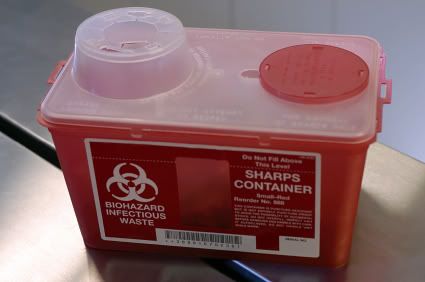 You may think that your facility has little in common with Hospital, Medical, and Infectious Waste Incinerators (HMIWI). Consider this...is your facility subject to a Maximum Achievable Control Technology (MACT) standard? If so, you may have more in common with the HMIWI industry than you think! You may think that your facility has little in common with Hospital, Medical, and Infectious Waste Incinerators (HMIWI). Consider this...is your facility subject to a Maximum Achievable Control Technology (MACT) standard? If so, you may have more in common with the HMIWI industry than you think!
In December 2008, U.S. EPA proposed revisions to the New Source Performance Standards (NSPS) and Emission Guidelines (EGs) for HMIWI (73 FR 72962), originally promulgated in 1997. These regulations, established under Section 129 of the Clean Air Act (CAA), serve as the MACT standards for this industry. The comment period for the proposed rules closed on February 17, 2009 and resulted in significant attention from industry, state agencies, environmental organizations, and particularly from other industry organizations and associations. So why would a rule about hospital, medical, and infectious waste get the attention of the American Forest & Paper Association (AF&PA), the American Chemistry Council (ACC), the Alliance of Automobile Manufacturers (AAM), the Cement Kiln Recycling Coalition (CKRC), the Brick Industry Association (BIA), the Utility Air Regulatory Group (UARG), the Portland Cement Association (PCA), and the Council of Industrial Boiler Owners (CIBO), among others?
|
| GUEST ARTICLE: Filterable and Condensable Emissions Testing (PM, PM10, PM2.5) |
 Recent regulatory developments addressing emissions of fine particulate matter (PM2.5) require a clear understanding of the various particulate matter (PM) test methods to adequately evaluate compliance options. Traditional test methodologies do not adequately characterize fine particulate in gas streams and U.S. EPA is developing new test methods to measure PM2.5 emissions. Source owners and operators should be aware of the differences in the various particulate matter (PM) test methods and how test results may affect compliance strategies for their facilities. Recent regulatory developments addressing emissions of fine particulate matter (PM2.5) require a clear understanding of the various particulate matter (PM) test methods to adequately evaluate compliance options. Traditional test methodologies do not adequately characterize fine particulate in gas streams and U.S. EPA is developing new test methods to measure PM2.5 emissions. Source owners and operators should be aware of the differences in the various particulate matter (PM) test methods and how test results may affect compliance strategies for their facilities.
As described in ALL4's A Practical Guide to PM2.5, particulate matter exists in exhaust streams in a solid or liquid state that is filterable or in a gaseous state that is converted to a solid/liquid state when it is condensed. U.S. EPA test methods are designed to quantify PM in a sample gas stream either by collecting filterable PM (FPM) on a filter media or by collecting condensible PM (CPM) in a series of impingers. Each method has advantages and limitations that need to be considered when developing air permits and compliance strategies or for determining emission reduction credits (ERCs)/emission offsets.
Read on as Weston's Wes Fritz describes several testing methods:
- Promulgated PM Reference Test Methods
- FPM Measurement - U.S. EPA Methods 5 and 17
- FPM Measurement - U.S. EPA Method 201A
- CPM Measurement - U.S. EPA Method 202
New PM2.5 Test Methods
- PM2.5 FPM Measurement - U.S. EPA Other Test Method 27 (OTM-27)
- PM2.5 CPM Measurement - U.S. EPA Other Test Method 28 (OTM-28)
Selection and diligent performance of the proper sampling methodology is critical to successfully achieving PM compliance goals. Weston Solutions Inc. - Integrated Air Services professionals can help you plan and implement a test program that meets those objectives. Should you have any specific questions related to PM2.5 emissions testing, please contact Wes Fritz at 610.701.3944 or wes.fritz@westonsolutions.com. |
| CO2 and PSD - In or Out? |
 On December 18, 2008, in one of his final acts as U.S. EPA Administrator, Stephen Johnson issued an interpretive memo to U.S. EPA's Regional Administrators that addressed the regulation of CO2 for a power project in Utah under the Federal New Source Review (NSR) Prevention of Significant Deterioration (PSD) air permitting rules. The memo focused on the definition of "regulated NSR pollutants" included in the PSD rules at 40 CFR §52.21(b)(50). Johnson indicated that from the date of the memo, U.S. EPA would exclude pollutants from the definition if they only require monitoring or reporting under the Clean Air Act (CAA). In other words, if there are no standards for a particular pollutant, it wouldn't meet the definition of a regulated NSR pollutant and therefore it wouldn't be regulated under the PSD program. From U.S. EPA's perspective, CO2 was out. On December 18, 2008, in one of his final acts as U.S. EPA Administrator, Stephen Johnson issued an interpretive memo to U.S. EPA's Regional Administrators that addressed the regulation of CO2 for a power project in Utah under the Federal New Source Review (NSR) Prevention of Significant Deterioration (PSD) air permitting rules. The memo focused on the definition of "regulated NSR pollutants" included in the PSD rules at 40 CFR §52.21(b)(50). Johnson indicated that from the date of the memo, U.S. EPA would exclude pollutants from the definition if they only require monitoring or reporting under the Clean Air Act (CAA). In other words, if there are no standards for a particular pollutant, it wouldn't meet the definition of a regulated NSR pollutant and therefore it wouldn't be regulated under the PSD program. From U.S. EPA's perspective, CO2 was out.
However, two months later on February 17, 2009, U.S. EPA's new Administrator under the Obama administration, Lisa Jackson, issued a letter to the Sierra Club granting reconsideration of Johnson's decision. This was in response to a suit and petition that the Sierra Club and other parties had filed seeking reconsideration of U.S. EPA's position expressed in the December 18 interpretive memo. The petition was granted in order to allow for public comment on the issues raised in that memo. Jackson stated that U.S. EPA was declining action that would stay the effectiveness of the memo while comments were sought on it and related decisions, and that a notice of proposed rulemaking would be published to respond to the petition for reconsideration. Jackson also went on to point out that the memo was not binding for states issuing permits under their own State Implementation Plans (SIPs). The National Association of Manufacturers (NAM) is challenging the decision by Lisa Jackson to reconsider the Johnson memo.
Lisa Jackson, in testimony to Congress, indicated that she believes CO2 can be effectively regulated under the CAA while still avoiding a scenario where hundreds of thousands of sources would be subject to regulation because of the 100 or 250 ton per year major source thresholds. Industry is not convinced that the flexibility needed to distinguish between CO2 and other regulated NSR pollutants in the CAA exists to support this approach. Recent air permitting projects in South Dakota, Utah, and Georgia are currently in litigation involving CO2 emissions.
While U.S. EPA studies the public comments on the Johnson memo and other interested parties prepare their comments, what effect will the result have on the project you are planning or the PSD application you are preparing? A recommended first step is to determine your state agency's position on CO2. Next, even if your state is declining to address CO2, ALL4 still strongly recommends quantifying your CO2 emissions. The new Administration is prioritizing climate change and regardless of what program oversees CO2, (CAA program or a new Congressional action), CO2 emissions from your source will eventually be regulated.
Please contact ALL4's Dan Holland at 610.933.5246 x15 or dholland@all4inc.com should you have any questions or need assistance quantifying your facility's CO2 emissions. |
|
Cap and Trade or Carbon Tax? |
 The debate about a cap and trade greenhouse gas (GHG) program versus a carbon tax GHG program is beginning to focus on where the money goes, particularly with respect to a cap and trade program. To appreciate the monetary aspect, it is important to understand the basics of both programs.
A GHG cap and trade program requires facilities to offset their actual emissions with allocated allowances and, if necessary, additional credits purchased from brokers. If a facility's emissions do not exceed its allocated allowances, it can trade (i.e., sell) its remaining allowances to another facility that did exceed its allocated allowances. The facility would use a broker to sell its credits, who would in turn make a profit from buying and selling them. The argument against the cap and trade program is that part of its cost will be borne by the consumer if facilities offset the cost of GHG credits by charging higher prices for their services.
A carbon tax is simply a fee that is based on a facility's total GHG emissions. The carbon tax is collected by the agency administering the tax program. One positive aspect of the carbon tax proposals is that the carbon tax revenue would be returned to the tax paying public.
Similar to the economically friendly aspect of the carbon tax proposals, proponents of the cap and trade approach to regulating GHGs have also instituted a tax payer benefit option. Specifically, Senator Diane Feinstein is proposing a plan that would return the revenue as part of a "cap and dividend" program. It appears that this type of cap and trade program could receive support from both the Senate and House and thus move even closer to GHG reporting and regulation.
|
| U.S. EPA Proposes First National Reporting Rule on Greenhouse Gas Emissions |
 U.S. EPA released proposed regulations for mandatory greenhouse gas (GHG) emission inventory reporting on March 10, 2009 and will be requesting public comment as soon as the regulations are published in the Federal Register via a 60 day public comment period. The regulations regarding the inventory are contained at 40 CFR Part 98 (Mandatory Greenhouse Gas Reporting) while several other Parts have also been revised to reference nitrous oxide (N2O) and methane (CH4) emissions. U.S. EPA has a June 26, 2009 deadline to finalize the GHG inventory program and intends to require sources with 25,000 metric tons equivalent of CO2 GHG emissions to report calendar year 2010 GHG emissions beginning in 2011. U.S. EPA estimates that the requirement will cover approximately 13,000 facilities and will account for about 85 to 90 percent of GHGs emitted in the United States. U.S. EPA released proposed regulations for mandatory greenhouse gas (GHG) emission inventory reporting on March 10, 2009 and will be requesting public comment as soon as the regulations are published in the Federal Register via a 60 day public comment period. The regulations regarding the inventory are contained at 40 CFR Part 98 (Mandatory Greenhouse Gas Reporting) while several other Parts have also been revised to reference nitrous oxide (N2O) and methane (CH4) emissions. U.S. EPA has a June 26, 2009 deadline to finalize the GHG inventory program and intends to require sources with 25,000 metric tons equivalent of CO2 GHG emissions to report calendar year 2010 GHG emissions beginning in 2011. U.S. EPA estimates that the requirement will cover approximately 13,000 facilities and will account for about 85 to 90 percent of GHGs emitted in the United States.
Look for more information on the industry-specific GHG inventory requirements next week in special industry-specific 4 The Record Extra!s. In the interim, contact ALL4's Cara Fox at 610.933.5246 x23 or cfox@all4inc.com to find out more or to learn about ALL4's Greenhouse Gas Inventory Starter Kit. |
| U.S. EPA Proposal for Greenhouse Gas Clean Air Act Regulation |
 A presentation by U.S. EPA Administrator Lisa Jackson outlines an approach to regulate greenhouse gas (GHG) emissions from mobile emission sources while also laying the groundwork for exempting small industrial sources of GHG emissions. At the center of the approach is U.S. EPA's response to the Supreme Court's decision that GHG from mobile emission sources could endanger public welfare (Massachusetts v. U.S. EPA). Although the U.S. EPA response only addresses GHG emissions from mobile sources, it is establishing a precedent that will logically lead to regulation of other sources of GHG emissions under Clean Air Act (CAA) programs (e.g., New Source Review (NSR)). The potential regulation of other sources of GHG emissions (i.e., industrial sources) is of significant concern because of the relatively low thresholds associated with defining a source as major (100 to 250 tons per year) under NSR and thus requiring regulation of that source. U.S. EPA is proposing to address the low emission thresholds by providing precedent from previous CAA regulations involving mobile sources. Specifically, U.S. EPA has exercised authority to regulate those sources that it felt were contributing to an air quality problem regardless of the emission threshold of the source. U.S. EPA believes that the precedent exercised when regulating small mobile sources also establishes the discretionary review that U.S. EPA would need to exempt smaller sources of GHG under CAA programs such as NSR. The U.S. EPA approach is most likely a stopgap measure for regulating GHGs. There are so many aspects to GHG regulation under different U.S. EPA programs (e.g., CAA, Safe Drinking Water Act, etc.) that separate Congressional action is likely the best solution to establishing a program to provide effective management of GHGs. A presentation by U.S. EPA Administrator Lisa Jackson outlines an approach to regulate greenhouse gas (GHG) emissions from mobile emission sources while also laying the groundwork for exempting small industrial sources of GHG emissions. At the center of the approach is U.S. EPA's response to the Supreme Court's decision that GHG from mobile emission sources could endanger public welfare (Massachusetts v. U.S. EPA). Although the U.S. EPA response only addresses GHG emissions from mobile sources, it is establishing a precedent that will logically lead to regulation of other sources of GHG emissions under Clean Air Act (CAA) programs (e.g., New Source Review (NSR)). The potential regulation of other sources of GHG emissions (i.e., industrial sources) is of significant concern because of the relatively low thresholds associated with defining a source as major (100 to 250 tons per year) under NSR and thus requiring regulation of that source. U.S. EPA is proposing to address the low emission thresholds by providing precedent from previous CAA regulations involving mobile sources. Specifically, U.S. EPA has exercised authority to regulate those sources that it felt were contributing to an air quality problem regardless of the emission threshold of the source. U.S. EPA believes that the precedent exercised when regulating small mobile sources also establishes the discretionary review that U.S. EPA would need to exempt smaller sources of GHG under CAA programs such as NSR. The U.S. EPA approach is most likely a stopgap measure for regulating GHGs. There are so many aspects to GHG regulation under different U.S. EPA programs (e.g., CAA, Safe Drinking Water Act, etc.) that separate Congressional action is likely the best solution to establishing a program to provide effective management of GHGs.
|
| The Latest on the Commonwealth Court Mercury Rule Decision |
 The court battle over Pennsylvania's regulations to limit mercury air emissions from coal-fired Electric Generation Units (EGUs) feels very much like watching a tennis match waiting to see where the next volley lands. On January 30, 2009, Commonwealth Court Judge Dan Pellegrini ruled that Pennsylvania's Mercury Rule was unlawful, invalid, and unenforceable. Following that ruling, the Pennsylvania Department of Environmental Protection (PADEP) filed an appeal of that decision with the Pennsylvania State Supreme Court. That filing created an automatic stay of the Commonwealth Court ruling which kept the PA Mercury Rule in effect. Next, the PPL Corporation (PPL), who began the original appeal with the Commonwealth Court, filed a request with the Commonwealth Court to lift the automatic stay on its ruling. The Commonwealth Court granted PPL's request and lifted the automatic stay. So for now, the PA Mercury Rule is not in effect. PADEP will need to file a request with the State Supreme Court to place a stay on the Commonwealth Court's vacature of the PA Mercury Rule if it wants to continue with implementation of its mercury reduction regulations. Stay tuned for the latest on the next volley. The court battle over Pennsylvania's regulations to limit mercury air emissions from coal-fired Electric Generation Units (EGUs) feels very much like watching a tennis match waiting to see where the next volley lands. On January 30, 2009, Commonwealth Court Judge Dan Pellegrini ruled that Pennsylvania's Mercury Rule was unlawful, invalid, and unenforceable. Following that ruling, the Pennsylvania Department of Environmental Protection (PADEP) filed an appeal of that decision with the Pennsylvania State Supreme Court. That filing created an automatic stay of the Commonwealth Court ruling which kept the PA Mercury Rule in effect. Next, the PPL Corporation (PPL), who began the original appeal with the Commonwealth Court, filed a request with the Commonwealth Court to lift the automatic stay on its ruling. The Commonwealth Court granted PPL's request and lifted the automatic stay. So for now, the PA Mercury Rule is not in effect. PADEP will need to file a request with the State Supreme Court to place a stay on the Commonwealth Court's vacature of the PA Mercury Rule if it wants to continue with implementation of its mercury reduction regulations. Stay tuned for the latest on the next volley.
|
| EnviroReview Extract |
 EnviroReview is ALL4's regulatory update product which summarizes multimedia environmental changes at the Federal, state, and local level. Being on top of the regulatory development process is paramount to continued environmental compliance. "EnviroReview Extract" is a monthly feature sharing several highlights of the previous month's EnviroReview. EnviroReview is ALL4's regulatory update product which summarizes multimedia environmental changes at the Federal, state, and local level. Being on top of the regulatory development process is paramount to continued environmental compliance. "EnviroReview Extract" is a monthly feature sharing several highlights of the previous month's EnviroReview.
This month's highlights include:
Federal News - PM2.5 NAAQS
The U.S. Court of Appeals for the D.C. Circuit (Court) decided on February 24, 2009 to grant in part and deny in part a number of consolidated petitions relating to U.S. EPA's 2006 National Ambient Air Quality Standards (NAAQS) for particulate matter (PM). The Court granted the petitions for review of the primary annual and secondary fine PM (PM2.5) standards, and remanded those rules to U.S. EPA. The Court denied the petitions to review the primary daily standards for coarse PM and U.S. EPA's revocation of the primary annual standard for coarse PM. Although remanded for reconsideration, the annual primary fine PM and secondary fine PM rules were not vacated and will remain in effect during U.S. EPA's reconsideration.
Federal News - Ozone NAAQS
U.S. EPA has announced that the public comment period for the proposed rule relating to the implementation of the 1997 8-hour ozone National Ambient Air Quality Standard (NAAQS) has been extended from February 17 to April 1, 2009. The proposed revisions include a classification system for the subset of initial 8-hour ozone nonattainment areas addressed by the original rule. U.S. EPA has also proposed provisions for how the 1-hour ozone contingency measures should apply under the anti-backsliding provisions of the implementation rule. U.S. EPA plans to issue a separate proposed rulemaking action to address exemptions from the requirements of nonattainment New Source Review (NSR) and Clean Air Act (CAA) Section 185 penalty fees under the 1-hour standard. A public hearing was held March 2, 2009.
Federal News - NSR 'Aggregation'
U.S. EPA provided notice in the January 15, 2009 Federal Register of the current definition and interpretation of the term "aggregation" as it is used to determine major New Source Review (NSR) applicability for modified sources within the NSR program to mean that sources and permitting authorities should combine emissions when activities are "substantially related." It also adopted a rebuttable presumption that activities at a plant can be presumed to not be "substantially related" if they occurred three (3) or more years apart. On January 30, 2009, the Natural Resources Defense Council (NRDC) submitted a petition for reconsideration of U.S. EPA's clarification of the term " aggregation." U.S. EPA, in response to NRDC's petition, having found that that the petitioner has raised objections to the rule that arose after the comment period and that are of central relevance to the rule, is convening a proceeding for reconsideration of the NSR Aggregation Amendments. A comment period and hearing date, once established, will be published in the Federal Register.
Pennsylvania News - Ozone NAAQS
The Pennsylvania Department of Environmental Protection (PADEP) has provided notice that it is seeking public input on the proposed attainment designation recommendations for the 2008 ozone National Ambient Air Quality Standard (NAAQS). The Governor of each state must submit designation recommendations to U.S. EPA in accordance with Section 107(d) of the Federal Clean Air Act (CAA). Pennsylvania's designation recommendations are based on air quality monitoring data for 2006-2008, demographic information, and other criteria, as recommended by U.S. EPA. U.S. EPA expects to make final designations in March 2010. Public informational meetings were held on March 3, 2009. Written comments were due by March 6, 2009.
Delaware News - Section 126(b)
U.S. EPA extended by six (6) months the deadline to take action on a petition submitted by the Delaware Department of Natural Resources and Environmental Control (DNREC). The petition requests that U.S. EPA make a finding under Section 126(b) of the Clean Air Act (CAA) that emissions of sulfur dioxide (SO2) and oxides of nitrogen (NOx) from electric generating units (EGUs) in nine (9) upwind states (Michigan, Maryland, New Jersey, New York, North Carolina, Ohio, Pennsylvania, Virginia, and West Virginia) are adversely impacting the air quality in Delaware. Under the CAA, U.S. EPA is authorized to grant a time extension for responding to the petition if U.S. EPA determines that the extension is necessary, among other things, to meet the purposes of the CAA's rulemaking requirements. By this action, U.S. EPA is granting an extension. This action was effective February 20, 2009. | |
| Careers @ ALL4 |
 At ALL4, we are constantly growing: personally, professionally, and as a company. Because growth is so present in our organization, we are continually looking to hire environmental professionals that share our same vision and passion for helping our clients be successful. If you are an environmental professional that wants to...... At ALL4, we are constantly growing: personally, professionally, and as a company. Because growth is so present in our organization, we are continually looking to hire environmental professionals that share our same vision and passion for helping our clients be successful. If you are an environmental professional that wants to......
- Work in a relaxed and employee-centered work environment,
- Be given the opportunity to measure success based on your own merits,
- Make a tangible contribution to the growth of the company,
- Work in a culture of accountability,
- Be rewarded for your efforts that go above and beyond "business as usual,"
- Receive a benefits package that is unmatched in our industry,
- Have access to mentoring and hands-on training from experienced experts in the environmental consulting business,
- Constantly challenge yourself both technically and personally,
- Have the opportunity to contribute to the management and the direction of the company,
- Be asked your opinion and given the freedom to put it into action, and
- Be part of an organization that is striving to be "best in class" every day,
|

|
 We hope you've enjoyed our March 2009 4 The Record. Feel free to forward suggestions, thoughts, and/or comments to kgordon@all4inc.com We hope you've enjoyed our March 2009 4 The Record. Feel free to forward suggestions, thoughts, and/or comments to kgordon@all4inc.com.
Sincerely,
All4 Inc.
Kristin M. Gordon, P.E.
Your environmental compliance is clearly our business. |
|