| What's on ALL4's Calendar? |
 At ALL4, we like to get out and about -- whether presenting or taking part in technical and regulatory conferences. Stop by and see us at these upcoming events.
February 1 - 4, 2009 - Electric Utility Environmental Conference, Phoenix, AZ (presentations: Searching for PM2.5 Emission Credits & Approaches for Determining Surface Roughness for use in an Air Dispersion Modeling Evaluation)
April 7 - 8, 2009 - PA Chamber 2009 Annual Environmental & Energy Conference and Trade Show, Lancaster, PA(presentations: Environmental Roundtable, Air Permitting 101, Searching for PM2.5 Emission Credits)
| |
|
| Happy Holidays! |
|
Our December edition of 4 The Record is a special holiday edition and contains expanded content -- from environmental-based press coverage to new utility testing requirements to alternative fuel opportunites for facilities - reducing fuel costs and their carbon footprint.
Our December edition of 4 The Record completes our first year of distribution. Keep an eye out for a 4 The Record survey in early 2009. We're looking for you to tell us what you think, what you find value in and what you want to see in 2009.
In the last year, we've continued our ongoing work with some of you and others we've met for the first time. It's been our pleasure to interact with each of you. We thank you for your business and look forward to working with you in 2009. ALL4 hopes that each of you and your families have a wonderful holiday season. And, we wish you a very Happy New Year!
Cheers! |
| Alternative Fuels: Reducing Fuel Costs and Greenhouse Gas Emissions |
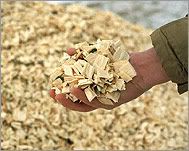 The use of alternative fuels for heat and power generation is on the rise, an increase that can be attributed to the price surge and volatility of traditional fossil fuels, as well as a general desire to use more environmentally friendly materials to reduce greenhouse gas emissions. Alternative fuels have been successfully permitted and are being effectively used on a consistent basis as fossil fuel substitutes at numerous public, commercial, and industrial manufacturing facilities. In addition to the "mainline" alternative fuels such as biodiesel and ethanol that receive plenty of press coverage, there are numerous less-visible alternative fuels that are being utilized more and more. Typical alternative fuels include: The use of alternative fuels for heat and power generation is on the rise, an increase that can be attributed to the price surge and volatility of traditional fossil fuels, as well as a general desire to use more environmentally friendly materials to reduce greenhouse gas emissions. Alternative fuels have been successfully permitted and are being effectively used on a consistent basis as fossil fuel substitutes at numerous public, commercial, and industrial manufacturing facilities. In addition to the "mainline" alternative fuels such as biodiesel and ethanol that receive plenty of press coverage, there are numerous less-visible alternative fuels that are being utilized more and more. Typical alternative fuels include:
- Biomass materials such as wood and wood waste, agricultural byproducts, crops and crop residue, grasses, biomass gasses (biogas), and liquids.
- Industrial byproducts such as petroleum refinery byproducts, biodiesel manufacturing byproducts, ethanol manufacturing byproducts, wood waste, tires, waste oils, waste plastics, waste paper, black liquor (from the pulp production process), paper fiber sludge, waste textiles, waste carpet, landfill gas, municipal solid waste, rendering plant residue, biosolids, and other various industrial byproducts with high energy value (>5,000 Btu/lb).
There are many potential advantages to using alternative and biomass fuels as a substitute for fossil fuels for meeting energy needs. Specific benefits depend upon the intended use and fuel source. Benefits often include fuel cost savings, using a carbon-neutral fuel source or potentially reducing greenhouse gas and other air pollution reductions, local economic development, waste reduction, and the security of a domestic fuel supply. In most cases, the use of alternative fuels for heat and steam production will require the source to secure environmental permits.
- Solid Waste Permitting
- Air Quality Permitting
- Economic Benefits
- Environmental Impacts
- Alternative Fuel Systems
- Incentives
Please contact ALL4's Michael Luybli at 610.216.1658 or mluybli@all4inc.com for more information or to discuss specific alternative fuel opportunities or system designs. |
|
|
| USA Today Article "Toxic Air and America's Schools": How is Your Company Depicted? |
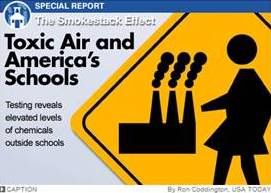 If your company reports Toxics Release Inventory (TRI) data to U.S. EPA and you have not seen the recent USA Today article and interactive website entitled "The Smokestack Effect: Toxic Air and America's Schools," you probably should. Your company may have been implicated as contributing to a health risk for children in schools. According to the article, USA Today partnered with the University of Massachusetts - Amherst Political Economy Research Institute to develop a computer simulation that predicts ambient concentrations of TRI pollutants at schools from a screening level perspective. If your company reports Toxics Release Inventory (TRI) data to U.S. EPA and you have not seen the recent USA Today article and interactive website entitled "The Smokestack Effect: Toxic Air and America's Schools," you probably should. Your company may have been implicated as contributing to a health risk for children in schools. According to the article, USA Today partnered with the University of Massachusetts - Amherst Political Economy Research Institute to develop a computer simulation that predicts ambient concentrations of TRI pollutants at schools from a screening level perspective.
The simulation uses existing U.S. EPA TRI data, air dispersion models, and default pollutant dispersion parameters. The air quality modeling that supported the analysis was based on the Risk Screening Environmental Indicators (RSEI) which uses the outdated Industrial Sources Complex Long Term (ISCLT) air dispersion model, the 2005 TRI data, and a SIC-based set of default stack heights and flow data. For example, for the pulp and paper industry, the default stack height is about 23 meters with a 10 m/sec exit velocity.
While U.S. EPA cautions against the use of TRI data in the manner presented by USA Today, the key issue at this point is public perception. If you have already discovered that your company is identified in the analysis as contributing to modeled exposures, have you considered what your response would be to potentially negative press? Understanding the limitations of the TRI data and the conservative assumptions that are used in the air dispersion modeling will be important in qualifying the conclusions presented in the analysis.
Please contact ALL4's John Slade at 610.933.5246 x36 or jslade@all4inc.com should you have any questions regarding how best to structure responses to inquiries regarding your company's presence in the analysis. |
| U.S. EPA Amends SPCC Regulation Definition of "Navigable Waters" |
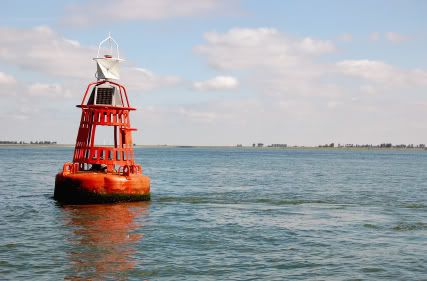 On November 26, 2008, U.S. EPA issued a final rule to amend the Spill Prevention, Control, and Countermeasure (SPCC) regulation in response to a court decision that vacates the definition of "navigable waters" that U.S. EPA had promulgated in 2002. The court decision and U.S. EPA's rule restores the definition of "navigable waters" that was initially promulgated in 1973.
The SPCC rule was originally promulgated on December 11, 1973. On July 17, 2002, U.S. EPA issued a final rule amending the SPCC rule at 40 CFR Part 112 which included revisions to broaden the definition of "navigable waters." For example, the July 2002 definition added specific listings of wetlands, mudflats, wet meadows, and other areas, while the original definition listed only lakes, rivers, streams, and navigable waters defined by judicial decisions prior to 1972. On November 26, 2008, U.S. EPA issued a final rule to amend the Spill Prevention, Control, and Countermeasure (SPCC) regulation in response to a court decision that vacates the definition of "navigable waters" that U.S. EPA had promulgated in 2002. The court decision and U.S. EPA's rule restores the definition of "navigable waters" that was initially promulgated in 1973.
The SPCC rule was originally promulgated on December 11, 1973. On July 17, 2002, U.S. EPA issued a final rule amending the SPCC rule at 40 CFR Part 112 which included revisions to broaden the definition of "navigable waters." For example, the July 2002 definition added specific listings of wetlands, mudflats, wet meadows, and other areas, while the original definition listed only lakes, rivers, streams, and navigable waters defined by judicial decisions prior to 1972.
The American Petroleum Institute, the Petroleum Marketers Association of America, and Marathon Oil Company challenged certain aspects of the July 2002 SPCC regulation. On March 31, 2008, the U.S. District Court for the District of Columbia ruled that U.S. EPA's promulgation of the revised definition of "navigable waters" in the July 2002 SPCC rule violated the Administrative Procedure Act. The court concluded that U.S. EPA failed to provide a reasoned explanation for its decision to promulgate the broader definition of "navigable waters." The court vacated the July 2002 SPCC regulatory definition of "navigable waters" and specifically restored the 1973 SPCC regulatory definition pending further appropriate action by U.S. EPA.
This change could, in certain cases, reduce the requirements for a facility to prepare SPCC Plans and/or Facility Response Plans (FRPs), depending on facility-specific location and regulatory interpretation of the terms in the definition.
Please contact ALL4's Neal Lebo at 610.933.5246 x13 or nlebo@all4inc.com should you have any questions related to the SPCC revisions. |
| Bush Administration and U.S. EPA Under Scrutiny |
 The Bush Administration and U.S. EPA continue to be scrutinized in the press. Most recently, on December 7, 2008, the Philadelphia Inquirer published the first of a four part series of articles titled "Smoke and Mirrors - The Subversion of the EPA." The articles can be accessed at www.philly.com/epa. Of particular interest is the second article in the series, published on December 8, 2008, which examines several air pollution-related court rulings including the Clean Air Interstate Rule (CAIR) and New Source Review (NSR). The article takes a critical look at several rules that have been challenged by both industry and environmental groups, with characterizations of the overturned rules as "reckless" and "arbitrary" by ex-U.S. EPA officials and representatives of environmental groups. The Bush Administration and U.S. EPA continue to be scrutinized in the press. Most recently, on December 7, 2008, the Philadelphia Inquirer published the first of a four part series of articles titled "Smoke and Mirrors - The Subversion of the EPA." The articles can be accessed at www.philly.com/epa. Of particular interest is the second article in the series, published on December 8, 2008, which examines several air pollution-related court rulings including the Clean Air Interstate Rule (CAIR) and New Source Review (NSR). The article takes a critical look at several rules that have been challenged by both industry and environmental groups, with characterizations of the overturned rules as "reckless" and "arbitrary" by ex-U.S. EPA officials and representatives of environmental groups.
Please note that ALL4 does not have an opinion regarding the articles, but finds that the content of the articles and their timing may be of interest to the recipients of 4 the Record. |
| Chemical Facility Anti-Terrorism Standards (CFATS) Security Vulnerability Assessment (SVA) Submission Deadline Changes for Tier 4 Facilities |
 The Department of Homeland Security (DHS) extended the deadline for submission from December 31, 2008, to January 12, 2009 for the Security Vulnerability Assessment (SVA), or for an Alternative Security Program (ASP) in lieu of an SVA, for all Tier 4 facilities. This deadline change was posted on December 17, 2008. If your facility has already submitted an SVA or ASP, no additional action is required.
|
| How Do You Keep Up-To-Date on Changes in Environmental Regulations? |
 Let me guess. Your desktop has a stack of papers on it just like this. Tomorrow you'll start reviewing the ever-growing stack of new proposed and promulgated regulations that may have an impact on your business. Tomorrow comes and goes....but you have to review them or you may just miss that one regulation that has a major impact on your business. What if there was a more efficient way? How about eliminating that stack all together? Click on the stack of papers to find out how.... Let me guess. Your desktop has a stack of papers on it just like this. Tomorrow you'll start reviewing the ever-growing stack of new proposed and promulgated regulations that may have an impact on your business. Tomorrow comes and goes....but you have to review them or you may just miss that one regulation that has a major impact on your business. What if there was a more efficient way? How about eliminating that stack all together? Click on the stack of papers to find out how.... |
| PADEP Announces Mandatory PM Testing for Coal-fired Electric Generation Units |
| On December 4, 2008, PADEP Deputy Secretary Tom Fidler announced that PADEP will be notifying owners of coal-fired Electric Generation Units (EGUs) in Pennsylvania that they will be required to conduct emission tests to measure emissions of particulate matter (PM). The announcement was made during his presentation at the PA Chamber Quarterly meeting with PADEP. The PM testing initiative was initiated by PADEP Acting Secretary John Hanger and is based on his concern that current PM emissions data is not available for all coal-fired EGUs within the state. PADEP is intending to notify all owners of coal-fired EGUs before the end of 2008 of the requirement to conduct PM testing before the end of 2009. Testing will be required for filterable PM, PM10 (including condensible back-half), and PM2.5 including condensible back-half in conformance with the latest approved (or proposed for PM2.5) U.S. EPA test methods. The results of the tests will be used to determine each unit's compliance with applicable PM limits and/or to ensure that accurate PM emissions data is provided for future AIMs reports. At this point it is not anticipated that the PM emissions information will be used for standards setting. PADEP will ultimately require PM testing of all coal-fired EGUs every 2 years through revisions to the EGU's Title V operating permit.
|
| ALL4 Ambient Group Attends Modeling Conference |
 On October 8 and 9, 2008, ALL4's Ambient Group attended the 9th Conference on Air Quality Modeling in Research Triangle Park, NC, hosted by U.S. EPA. The conference provided an update on the latest developments in air quality modeling and represented a public forum for discussion on how air quality models can be used for new air permit applications in the future. Speakers from U.S. EPA, state environmental agencies, and private companies presented on a variety of topics, including the following future developments related to Prevention of Significant Deterioration (PSD) air quality modeling: On October 8 and 9, 2008, ALL4's Ambient Group attended the 9th Conference on Air Quality Modeling in Research Triangle Park, NC, hosted by U.S. EPA. The conference provided an update on the latest developments in air quality modeling and represented a public forum for discussion on how air quality models can be used for new air permit applications in the future. Speakers from U.S. EPA, state environmental agencies, and private companies presented on a variety of topics, including the following future developments related to Prevention of Significant Deterioration (PSD) air quality modeling:
- Meteorological Data Representativeness: Obtaining a complete set of representative meteorological data for use in an air quality modeling evaluation continues to be challenging for many facilities. U.S. EPA discussed approaches to address a lack of complete data within existing meteorological data sets. U.S. EPA also discussed the AERSURFACE preprocessor, which can be used to estimate micrometeorological variables as part of a meteorological data representativeness evaluation.
- PM2.5 Modeling: Issues related to modeling PM2.5 emissions and the proposed PM2.5 PSD ambient concentration standards were discussed. U.S. EPA has initiated an extensive process to address the challenges associated with PM2.5 modeling, and is developing guidance for those facilities that are required to model PM2.5 emissions through the New Source Review (NSR) permitting process.
Please contact ALL4's Colin McCall at 610.933.5246 x20 or cmccall@all4inc.com for more information on the conference or with any questions related to air quality modeling and ambient and meteorological monitoring needs. |
| Electronic Arc Furnace (EAF) Steelmaking Area Source MACT Revisions |
 U.S. EPA is proposing amendments and taking direct final action on those amendments to 40 CFR Part 63, Subpart YYYYY - National Emission Standards for Hazardous Air Pollutants for Area Sources: Electric Arc Furnace (EAF) Steelmaking Facilities. U.S. EPA is taking this dual action in the event that adverse comments are received for the amendments that are being published as direct final rules. Subpart YYYYY was originally issued by U.S. EPA on December 28, 2007. The rule established emission limits for particulate matter (PM) as a surrogate for metallic hazardous air pollutants (HAPs) and pollution prevention standards for the control of mercury (Hg) emissions for electric arc steelmaking facilities that are considered area sources of HAP emissions. The amendments clarify specific regulatory language, make the PM testing requirements consistent with the testing requirements of 40 CFR §60.775a, clarify the conditions under which the initial compliance certification can be based on previous tests, and re-define the term "Scrap Provider." Of particular interest to affected sources may be the amendments that change the language in 40 CFR §63.108686(b)(2) regarding the melt shop opacity limit by excluding the word "solely" from the text of the emission limit. U.S. EPA's rationale for the change is that fugitive emissions from other melt shop sources may comingle with fugitive emissions from EAF and argon-oxygen decarburization (AOD) vessels. Similar changes are being made to the initial compliance test requirements specified in 40 CFR §63.10686(d)(2) to allow opacity determinations for comingled melt shop fugitive emissions. U.S. EPA is proposing amendments and taking direct final action on those amendments to 40 CFR Part 63, Subpart YYYYY - National Emission Standards for Hazardous Air Pollutants for Area Sources: Electric Arc Furnace (EAF) Steelmaking Facilities. U.S. EPA is taking this dual action in the event that adverse comments are received for the amendments that are being published as direct final rules. Subpart YYYYY was originally issued by U.S. EPA on December 28, 2007. The rule established emission limits for particulate matter (PM) as a surrogate for metallic hazardous air pollutants (HAPs) and pollution prevention standards for the control of mercury (Hg) emissions for electric arc steelmaking facilities that are considered area sources of HAP emissions. The amendments clarify specific regulatory language, make the PM testing requirements consistent with the testing requirements of 40 CFR §60.775a, clarify the conditions under which the initial compliance certification can be based on previous tests, and re-define the term "Scrap Provider." Of particular interest to affected sources may be the amendments that change the language in 40 CFR §63.108686(b)(2) regarding the melt shop opacity limit by excluding the word "solely" from the text of the emission limit. U.S. EPA's rationale for the change is that fugitive emissions from other melt shop sources may comingle with fugitive emissions from EAF and argon-oxygen decarburization (AOD) vessels. Similar changes are being made to the initial compliance test requirements specified in 40 CFR §63.10686(d)(2) to allow opacity determinations for comingled melt shop fugitive emissions.
|
| EnviroReview Extract |
 EnviroReview is ALL4's regulatory update product which summarizes multimedia environmental changes at the Federal, state, and local level. Being on top of the regulatory development process is paramount to continued environmental compliance. "EnviroReview Extract" is a monthly feature sharing several highlights of the previous month's EnviroReview. This month's highlights include: EnviroReview is ALL4's regulatory update product which summarizes multimedia environmental changes at the Federal, state, and local level. Being on top of the regulatory development process is paramount to continued environmental compliance. "EnviroReview Extract" is a monthly feature sharing several highlights of the previous month's EnviroReview. This month's highlights include:
Federal EPCRA News
U.S. EPA has finalized changes to the Emergency Planning Notification, Emergency Release Notification, and Hazardous Chemical Reporting regulations that were proposed on June 8, 1998. U.S. EPA recently proposed four (4) major revisions and provided draft guidance on various reporting options that states and local agencies should consider in implementing the hazardous chemical reporting requirements. This action addresses only those changes proposed under the heading "Other Regulatory Changes" described in the preamble to the 1998 proposed rule. Specifically, the changes in this final action include: (1) finalizing some of the proposed revisions on applying threshold quantities and the reporting of mixtures under Emergency Planning and Community Right-to-Know Act (EPCRA) Sections 311 and 312; (2) removing the Tier I and II inventory forms and instructions from the CFR, as well as making some minor changes to the forms and instructions; and (3) codifying certain existing policies and interpretations in 40 CFR Parts 355 and 370. This action also: (1) re-writes the regulations in 40 CFR Parts 355 and 370 in plain language, using a question and answer format; (2) re-numbers and re-organizes each section in 40 CFR Parts 355 and 370; and (3) adds tables in order to improve the clarity and understanding of certain reporting requirements. This final rule became effective on December 3, 2008.
Federal Universal Waste News
U.S. EPA is proposing to add hazardous pharmaceutical wastes to the Universal Waste Rule. The Universal Waste Rule, originally promulgated on May 11, 1995, modified the Resource Conservation and Recovery Act (RCRA) hazardous waste regulations by establishing a set of streamlined requirements for the collection of certain widely dispersed hazardous wastes, called "universal wastes." This proposed rule would facilitate better management of pharmaceutical wastes by streamlining the generator requirements and encouraging generators of hazardous pharmaceutical wastes to manage them under the provisions of the Universal Waste Rule, ensuring that these hazardous pharmaceutical wastes are properly disposed of and treated as hazardous wastes. In addition, this proposed rule would facilitate the implementation of pharmaceutical take-back programs by removing RCRA barriers in the collection of pharmaceutical wastes from health care and other such regulated facilities, as well as facilitate the collection of pharmaceutical wastes from households, including non-hazardous pharmaceutical wastes.
New Jersey RGGI News
The New Jersey Department of Environmental Protection (NJDEP) is adopting new rules and amendments to establish the New Jersey component of a regional CO2 Budget Trading Program, a cap-and-trade program to reduce CO2 emissions from large fossil fuel-fired electric generating units in the region. This regional effort is comprised of these rules and consistent companion rules in nine (9) other states, all of which are based on a model rule developed through the Regional Greenhouse Gas Initiative (RGGI), which is an ongoing effort among Northeast and Mid-Atlantic States to develop and implement a regional CO2 cap-and-trade program. The effective date of the rules and amendments was November 17, 2008.
Pennsylvania General Permit News
The Pennsylvania Department of Environmental Protection (PADEP) is proposing a General Permit (WMGM037) for the processing and conversion of municipal waste to produce a fuel product. This proposed General Permit authorizes permittees to process municipal waste to produce a fuel. Fuel manufactured under the authority of the permit is not considered a waste when marketed as a commodity in trade for use in an air contamination source approved through an Air Quality authorization issued by PADEP. General Permit WMGM037 will reduce the amount of waste disposed in landfills by providing a mechanism to divert waste suitable for use under this permit to a more productive, beneficial use.
California SCAQMD News
The South Coast Air Quality Management District (SCAQMD) held a public consultation meeting to present and solicit information and suggestions regarding proposed amendments to Rule 1156 (Further Reductions of Particulate Emissions from Cement Manufacturing Facilities) on November 20, 2008. Rule 1156 requires operators of cement manufacturing facilities to follow specific requirements for the reduction of PM emissions from all operations, including materials handling and transport at the facilities. The amendments would require total enclosure of clinker material storage and handling, ambient monitoring of PM10 and hexavalent chromium, submittal of a compliance monitoring plan, and continuous monitoring of ambient wind speed and direction. | |
| Careers @ ALL4 |
 At ALL4, we are constantly growing: personally, professionally, and as a company. Because growth is so present in our organization, we are continually looking to hire environmental professionals that share our same vision and passion for helping our clients be successful. If you are an environmental professional that wants to......
- Work in a relaxed and employee-centered work environment,
- Be given the opportunity to measure success based on your own merits,
- Make a tangible contribution to the growth of the company,
- Work in a culture of accountability,
- Be rewarded for your efforts that go above and beyond "business as usual,"
- Receive a benefits package that is unmatched in our industry,
- Have access to mentoring and hands-on training from experienced experts in the environmental consulting business,
- Constantly challenge yourself both technically and personally,
- Have the opportunity to contribute to the management and the direction of the company,
- Be asked your opinion and given the freedom to put it into action, and
- Be part of an organization that is striving to be "best in class" every day,
|

|
 We hope you've enjoyed our December 2008 4 The Record. Feel free to forward suggestions, thoughts, and/or comments to kgordon@all4inc.com.
We wish you and your family a wonderful holiday season! 
Sincerely,
All4 Inc.
Kristin M. Gordon, P.E.
Your environmental compliance is clearly our business.
| |