|

Trainings/Conferences
On-line Resouces
An independent forum with news, programs, research, events, legislation, theory, and opinion on education, health, welfare, and justice for California's 10 million children
Focused on promoting the social emotional development and school readiness of young children birth to age 5
Research and message development on child and family mental health Promoting the health and development of infants and toddlers Building awareness and understanding of sensory processing disorders through education and collaboration Helping parents, teachers and health professionals to proactively manage the challenging behaviors of the 21st century child |
|
Meeting Information
Please note our June meeting has been cancelled and we have no meeting scheduled for July. Our next meeting will be in August.
Next Meeting:
August 14, 2012
8:30 to 10:30 A.M. Blood Source Community Meeting Room |
|
|
 Physical Activity and the Brain Physical Activity and the Brain
From Child Trauma Academy Newsletter
The human brain is the organ that mediates our thinking, feeling and behaving. Therefore one of the primary principles in the work of The Child Trauma Academy is to use an understanding the neurosciences to inform our work with children, youth and adults impacted by a range of brain-mediated problems following maltreatment and trauma. This Translational Neuroscience focus has led to the development of our Neurosequential Model for use in clinical (NMT), educational (NME) and caregiving (NMC) settings.
One of the most fascinating and compelling bodies of "evidence" in neuroscience is the work examining the effects of exercise and physical activity on brain functioning. Both in animals and in humans there is a well-documented positive impact of physical activity on memory and learning functions (see this article for example). The mechanisms underlying this appear to involve several areas of the brain - and multiple molecular processes that are activated by physical activity (including neurogenesis, differentiation of precursor neurons and epigenetic changes in existing neurons in key areas of the brain, for example).
Multiple studies have shown that aerobic exercise leads to neurogenesis (new neurons) in the hippocampus and other areas of the brain involved in learning and memory. But just having physical activity and making new neurons is not the full story; it appears that pairing enriched environments (with opportunities for exposure to novelty) with the physical activity leads to the most enduring and meaningful changes in the brain. Therefore, exercise paired with new social and cognitive experiences would plausibly lead to better "learning" outcomes.
This is very relevant for our current public school challenges. The body of evidence in neuroscience would tell us that the integration of physical activity and exercise into the daily matrix of the school day would have more positive effects than getting rid of recess and expecting children to get their exercise on their own or in some structured activity after school. While those other options are likely to have other positive benefits, the studies would suggest that a more integrated, frequent and repetitive set of exercise activities throughout the day would be more beneficial. Ironically this is just the opposite of what we are doing in most public school settings - and in countries that have acted on this information such as Finland, their public school outcomes have improved and surpassed those in the U.S.
The Neurosequential Model in Education (NME) Work Group is looking at a host of related neuroscience-informed elements to integrate into the educational setting to create a more developmentally informed and effective learning environment.
|
|
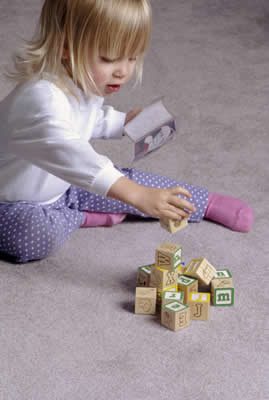 Guiding Behavior of Preschoolers Guiding Behavior of Preschoolers
Exchange Everyday, May 14, 2012
Janet Gonzalez-Mena describes four approaches for guiding the behavior of preschool-age children in her article, "Lessons From My Mother-In-Law: A Story about Discipline," which is included in the Exchange Continuing Education Unit, "Managing Challenging Behaviors":
"Two approaches of mine have to do with helping the child connect rewards with good behavior. They seem soft and sweet to those used to sterner discipline.
- Catch 'em being good approach. I sometimes make a small fuss when children do what they are supposed to. For example, I might announce to whoever is in earshot, "Jessica threw away her napkin and cleared her dishes!"
- Appeal to child's f eelings approach. A variation of the above approach is to help the child reward himself rather than depending on an outside reward. "Doesn't it feel good to put your toys away when you're finished? Now you know just where they are when you want them again." That approach is a contrast to the more common "Good boy for cleaning your room" or "Good job on cleaning up."
Two other approaches of mine aren't so soft and sweet - instead they are cut and dry, leaving all emotion out of the picture. They may seem rather fake and inhuman to people used to a stern finger-shaking warning.
- If-then approach. "If you want to finish your lunch, you have to stay in your chair." What I mean but don't say is, "If you get down again, I'll take your lunch away." The idea of this approach is to help the child develop the habit of sitting at the table until the time he sees the benefit of such behavior and is willing to abide by the social mandate it represents. I remove it from the personal realm and make it a fact.
- Consequences approach. "You're making too much noise to hear the story, so I can't keep reading." This approach is related to the if-then approach. When children learn the consequences of their acts, they can learn to predict and guide their own behavior so they won't have to experience the consequences of mis-behavior. Again, it's impersonal and unemotional (a typical Anglo-American approach - leave the feelings out of it).
|
|

Workshops, Conferences and Other Resources
A Fetal Alcohol Spectrum Disorders Conference takes place June 21st at the Enloe Conference Center in Chico. The course objectives are: Identify the brain damage associated with FASD and key recommendations for working with persons with FASD across the lifespan. Learn about local resources and the Fetal Alcohol Spectrum Diagnostic Center during the lunch roundtable presentation. For more information e-mail Margie Ruegger.
The Butte College Foster/Kinship Care Parent Education Program provides free Parent Education trainings. See their schedule here.
The seventh annual North State Fatherhood Conference takes place September 22nd. Details here.
The Center for Inclusive Child Care offers tip sheets with information on a variety of pertinent topics for early childhood and school age care. Use them for training and consultation or with parents and professionals. They are free and may be reproduced for educational purposes.
The California Budget Project, a nonpartisan public policy research group, released this statement in response to the release of Governor Jerry Brown's May Revision to his proposed 2012-13 budget.
The Center for Juvenile Justice Reform at Georgetown University's Public Policy Institute, in partnership with the Juvenile Law Center, has announced the inaugural Information Sharing Certificate Program. This program is designed to enable leaders in the juvenile justice, child welfare, education, behavioral health and other child serving fields to overcome information sharing challenges that prevent the communication and coordination that is necessary to more fully serve youth known across multiple systems of care.
Upon completion of the intensive three-day learning experience, participants apply the knowledge they gain through the development and implementation of a Capstone Project-an action agenda they undertake in their organization/community to initiate or enhance information sharing efforts. It is encouraged that those interested in attending form a team from their jurisdiction to apply to the program. Tuition subsidies are available for those with financial need. Application deadline: Thursday, June 28, 2012.
|
|
|



 Gloria Balch, Deputy Director