
The Monthly Newsletter from RachaelsCentre.org
November 2009 / Cheshvan-Kislev 5770 - Vol 1, Issue 2 |
|
|
Podcast of the Week
|
 This week, Rachael talks about Parashat Chayei Sarah. This week, Rachael talks about Parashat Chayei Sarah.
Click here to listen!
Click here to go to Rachael's archived podcasts.
|
|
Candle Lighting Times |

|
|
|
|
Greetings!
|

It's been a wonderful month of learning and growing at RachaelsCentre.org. We're starting to hear from people far and wide around the world who are discovering our community and telling us how excited and relieved they are to have found us. It is both thrilling and sobering. There is no question that the more voices that join our studying, the more ideas thrive and the more each of us can grow and gain wider perspectives. At the same time, people have shared with us that they are living in remote places where experiencing the High Holidays is a solitary and isolating feeling. Others have commented to us that even though they live in large Jewish centres, they often feel out of place and disconnected. It has been a pleasure to welcome all of these voices into our online community. I encourage everyone to explore the ideas and ancient wisdom of Jewish text and then gradually find the courage to share your ideas and add comments to the material we present.
I look forward to hearing your thoughts, your ideas, comments and suggestions so that we build this community together as a place of shared voices.
 Dr. Rachael Turkienicz Executive Director, RachaelsCentre.org
|
|
Please help and donate to RachaelsCentre.orgRachael's Centre is a not-for-profit registered charity. We rely on you to help support our online videos and content.
Click here to donate to RachaelsCentre.org
Canadian Charitable Registration
# 80744 7016 RR0001
|
|
|
|
|
Featured Moments From Our Website
|
Here is a preview of some of the new videos now available to our participants in the Pathways to Learning section of www.rachaelscentre.org
|
Understanding Shabbat - A New Delving Deeper Course
|
 In this four part series, Rachael presents Shabbat in detail as she
looks at the creation and meaning behind our Day of Rest. Rachael
touches on how the seventh day of Creation came to be, and what this
means for us.
Click here to explore!
|
The D Word
- A Life Lesson on Parenting
|
 As parents, setting boundaries among our children and modeling
behaviour can be challenging. By exploring the Hebrew word for
discipline, we discover that disciplining is actually about redirecting
energy in a positive way. As parents, setting boundaries among our children and modeling
behaviour can be challenging. By exploring the Hebrew word for
discipline, we discover that disciplining is actually about redirecting
energy in a positive way.
|
Here is a taste of what's available on RachaelsCentre.org in the
Free Media Zone!
|
Weekly Reflection Video Blog
|
 Dr. Rachael Turkienicz explains the exciting story of an ancient woman
who taught a great Torah scholar a lesson on how to study. Click to see what Rachael has to say. Dr. Rachael Turkienicz explains the exciting story of an ancient woman
who taught a great Torah scholar a lesson on how to study. Click to see what Rachael has to say.
|
From the Many Voices Blog
|
 Here is a recent blog posted by Laya (November 5, 2009) Here is a recent blog posted by Laya (November 5, 2009)
Last weekend I traveled to Boston for my cousin's wedding. From my
research I discovered that Boston is a beautiful walking city and in
the fall it has even been described as "heaven on earth". In addition
to exploring the natural beauty, I was looking forward to discovering
Jewish Boston. While we have the Bathurst Street strip in Toronto, I
was excited to engage in something new...
Click here to continue reading.
|
|
On the Breath of Children |

A true tale from Rachael.
Judaism teaches us that the world exists on the breath of children. We'd like to share some of the true moments where the words of children have inspired us.
Once when I was teaching Torah to a grade 3 class, we were going over the text about Jacob and his older twin brother Esau. We were deeply involved in the material and the incident when Esau comes home from hunting and Jacob has made fresh lentil stew. A deal is struck between the brothers that Jacob will give Esau some stew if Esau agrees to trade his birthright.
The children were silent and transfixed on me as I explained that at that moment history itself changes because Esau gives up something he was born with - his birthright. From that moment on Jacob will have a great responsibility to carry.
One little girl starts to look quite puzzled and as the class continued she only looked more confused. At the end of the lesson she was the first to put her hand up and adamantly demand to know how in the world Esau could give Jacob his birthmark!
I have never taught that text the same way again.
|
|
'Olameinu': Our World, Our Environment |
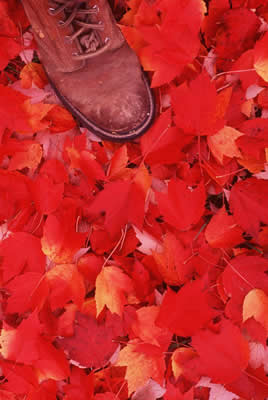 There is a commandment in Judaism called 'Bal Tashchit' which means we are forbidden to destroy things. The context for the commandment is in the book of Deuteronomy (20:19-20) during warfare. When war is raging and cities are sieged, the Torah forbids the destruction of the fruit trees. In essence, the Torah states that we can declare war on each other but we must never declare war on nature.
From this concept, the rabbis of the Talmud learn a logical inference: if needless destruction is forbidden during wartime, how much more would it be forbidden during peace. In other words, if I can't destroy anything unnecessarily when the situation is so serious, how could I justify wanton destruction during my daily life?
In fact, Judaism prohibits destroying anything that can still be put to use in some way. This includes clothing, furniture, paper, anything we can think of. Interestingly, it includes hunting animals if we don't need them for food or clothing. If we take more of something than we need, we will likely end up discarding the part we don't use which would violate 'bal tashchit', so the rabbis conclude we shouldn't take more of anything than we need.
When we talk about environmental issues, the broad western philosophy around us educates us that when we think 'green', we will save the planet. Judaism approaches environmentalism with a subtle difference. When we want to save the planet we should engage in acts of lovingkindness. When we protect the environment we are teaching ourselves to become part of the world around us by balancing what we take with what we need.
Although the wonderful outcome of environmentalism is that it might save the planet, Jewishly speaking that was not our goal. The goal of Jewish environmentalism is to change the way we look at the planet. Only then will we change our behaviour and match what we use with what we need.
In other words, changing our perspective means the optimist sees the glass as half full - the pessimist sees the glass as half empty - the Jewish environmentalist sees you've used the wrong glass.
|
|
Mussar Moment Recap |

Last month we presented a 'Mussar Dilemma', a day to day situation we all have experienced with a Mussar question attached.
Last month's dilemma was: if you offer your seat on the bus to an elderly person and they decline, do you sit back down?
Here is food for thought from a Mussar perspective: Ethics would say you can sit back down since you have already made the offer and allowed the other person to accept or decline.
Mussar would say you do not sit back down. We understand that we are responsible for our own choices and never for someone else's choices. Something inside you told you that you should not be seated while this other person is standing. If the other person chooses to remain standing, it does not change your original conclusion that you should not be seated while they stand. You would probably remain standing.
|
|
This Month's Mussar Dilemma: A Real-Life Moment We've All Faced |

You happen to meet a group of friends and join into their conversation. You mention another friend from the group who is absent and that you saw them recently. You then add that they have changed their hair and it looks wonderful.
Immediately the other people in the group mention how good that is to hear since this person has needed a change for quite some time. The conversation quickly veers into a discussion on this person's general appearance and how they don't pay enough attention and isn't it sad considering how much more popular they would be if only they paid more attention to their appearance.
You walk away feeling terrible all day that you inadvertently triggered such a negative exchange about a friend.
Do you never speak to these friends again?
Do you call the absence friend, tell them what happened and
apologize for your part in it?
Do you never speak of anyone ever again, no matter what?
Do you book a therapy appointment and explore why you can
never get things right?
- Suggested solutions will appear in next month's issue of Koleinu -
|
|
|
|
|
|
|



