|
Nutrition Energy Events
Follow us on Twitter to receive information about upcoming events!

Team in Training Kick Off & Expo
Tuesday, December 6
6:30-7:30pm
630 Second Ave
(between 34th & 35th)
Stay Fit, Stay Healthy
Ultimate Holiday Survival
Featuring Nutrition Energy's Lisa Moskovitz, RD, CDN
December 7, 2011 at 8pm
Velocity Sports Performance
133 East 58th Street, FL 6
Team in Training Run & Nutrition Clinic
Lauren Antonucci, MS, RD, CSSD, CDE, CDN
December 8, 2011
7:00-8:00pm
Finish Line Physical Therapy
119 West 23rd St, Ste 304
|
Join Our List
 |
| Become a fan! | |

|
|
|
|
Holiday Survival Tips: Part 1
| | Part 1 of our 2 part series: How to ensure you maintain your health and happiness this holiday season!
The holiday season is a time for cheer, gatherings and holiday festivities...and does NOT need to be laden with heavy foods, derailed diets and nutrition goals. Follow our tips to brighten your plate and fend off the winter blues. Let us help you focus on enjoying the holiday season in good spirits AND good health!
- Initiate Tea Time. Teas will not only keep you warm during the chilly winter months, but help you stay hydrated, aid in digestion, are full of antioxidants, boost your immune systems, and can lower stress hormones. Drink up!
- Keep Moving! Rather than letting the cold weather deter you from your exercise goals, invest in new earmuffs, gloves, and warm layers and you will look forward to using them outside. Even just getting outside for a few minutes can boost your mood and help you beat those winter blues.
- Go Meatless. Try eating vegetarian for most of the day and then enjoy a small portion of meat for dinner. You will easily stay full and satisfied sans meat with hearty bean, lentil, and grain-based dishes. accompanied by fresh chopped veggies for easy snacking in between meals.
- Get Those Veggies Roasting! Once or twice weekly chop squash, parsnips, turnips, sweet potatoes, carrots, beets and roast them in the oven with a touch of olive oil, pinch of salt and pepper. Now all you have to do is enjoy them!
- COLOR Your Dinner Plate. Color is part of what makes eating so fun (and good for you, too)! Reach for deep greens, warm oranges and reds, and cozy browns and purples. Explore the bounty of winter produce to color you plate and vary your diet.
Cheers to the start of your healthiest (and still most enjoyable) winter holiday season ever! Stay tuned next month for our next top 5 Holiday Survival Nutrition Tips!
|
|
Squash: The Misunderstood Fruit?
|
When we think of squash or gourds, most of us tend to think of the decorative pumpkins that come out around Halloween. Sadly, millions of Americans let these tasty nutrition powerhouses rot on their porch, rather than use them in soup, stew, bread or muffins. Some of the more well-known squash used in cooking are zucchini, pumpkin, and butternut, but how many of you have ventured beyond these?
On the technical side, although most people tend to consider them to be vegetables, according to botanical specifications, they are actually considered fruits as they are the receptacle for the plant's seeds. Typically, squash are categorized as either summer squash (such as zucchini) or winter squash (such as butternut squash), depending on whether it is harvested as immature fruit or mature fruit as well as the season it is harvested. Although there are more than 100 kinds of squash grown around the world today, we chose to highlight 3 of our favorite local winter varieties you can currently find at your local supermarket or farmer's market (and we've included pictures to help you identify them!).
1. Buttercup: Extremely popular in Brazil and Africa, this three to five pound round-shaped squash is known for its super sweet flavor and bright orange flesh. Similar to a sweet potato, try cutting it in half and baking it for a great baked potato replacement!
2. Delicata: Also known as the peanut squash, the sweet potato squash, or the Bohemian squash, this thin-skinned oblong squash is a bit easier to prepare than some of its cousins as it is very easily peeled, if you decide to peel it at all. It is a bit milder and not as sweet as some of the other squash but it is it is just as enjoyable! Slice it up, brush it with olive oil, sprinkle it with salt and roast it for a delicious winter side dish!
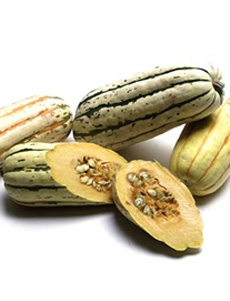
3. Kabocha: Also known as the 'Japanese pumpkin,' this squash looks like a dark green pumpkin that has been a bit flattened and is known for its remarkably sweet and nutty bright yellow-orange flesh. The texture is almost like a cross between a pumpkin and a sweet potato and unlike most other fruits and vegetables, the kabocha continues to grow even after harvested! In order to find the most flavorful squash, make sure it is fully ripened. It should have a hard skin with a dry stem and should sound hollow when knocked on. Cut it in half, scoop out the seeds, brush with olive oil, sprinkle it with salt, and roast it under the flesh is nice and tender. Enjoy as it or try mashing it as a sweet and high fiber substitute for mashed potatoes!

The typical serving size for any cooked winter squash is ½ cup, which has approximately 40 calories and 3g of fiber, is fat-free, and a great source of potassium as well as Vitamins A, C, K and B6. Enjoy!!
|
|
|
Please continue to let us know what you think, send us topics you'd like to see covered in future newsletters and feel free to pass along to friends & family!
Sincerely,
Lauren Antonucci, President
Nutrition Energy |
|
|



