|
|

A seed is no small thing.
As we shared in last month's newsletter, we have recently awarded 8 New York schools with Kids Growing Food (KGF) grants. Three of those schools are receiving the grant for the second time, meaning they have steady and sustainable programs that continue to integrate school food gardening into the curriculum and increase agricultural literacy. Schools that were awarded the grant for the first time were seeking "seed" money to start school gardens or were looking for some financial support to take their existing program to the next level. Kids Growing Food has been supporting school gardens since 1998 and has awarded 392 grants to date!
High Tunnels in School Gardens
A partnership between Cornell University's Department of Horticulture and New York Agriculture in the Classroom, this project's goal is to explore how high tunnels in school gardens can maximize garden-based learning and agricultural literacy activities.
Funded with a three year grant (2010-2013), we are working with a total 6 schools around the state with exisiting school garden programs. Each school receives site consultation, a high tunnel structure, $1500 to purchase materials, and program support from the project partners. With the assistance of these pilot sites, we are developing a resource guide for teaching and learning in school-based high tunnels.
For more information on the project, current pilot sites, and applying to be a pilot site, visit our website and blog. Both are in the development stage so check back often or subscribe for updates.
 | |
Students and staff at Clara Barton School in Rochester work together to construct the high tunnel. Photo by Jan McDonald, Rochester Roots.
|
 | |
Students and staff work together at Edmeston Central School to put the plastic on their high tunnel. Photo by Brian Belknap.
|
|

Ideas & Inspiration: A great post by a former teacher turned principal about the start up of their elementary school garden. "As we move into the 21st century, our students are immersed in a technological world. Yet they also need real life experiences in nature. In my humble opinion, they will certainly benefit from planting a seed, watching it grow, and harvesting a vegetable. To me, this is where true learning and greater appreciation for our global resources is born and thrives. Who knows what impact these experiences will have on their overall life?" Check out the Edible Schoolyard Project's blog for a description of how students used their school food garden to study the pH scale. "In just one class period, these students learned to use scientific instruments, they tested a hypothesis about the pH of different garden soils, and they learned how to bring soil into its ideal window for plant growth. On top of learning these important skills and concepts, the students got to experience hands-on science with a real world application." |
Books:  The book includes gardening projects such as bean teepee, stepping stones and creating plant labels. Various types of gardens, such as a Japanese garden, are explored. Dig, Plant, Grow also discusses the different aspects of nature (such as insects, flower parts, types of leaves) and how they all affect the garden. Colorful symbols explain which plants attract butterflies and other visitors. 'Grown-Up Stuff' that addresses a curriculum and how gardening impacts different subjects in schools. The book includes gardening projects such as bean teepee, stepping stones and creating plant labels. Various types of gardens, such as a Japanese garden, are explored. Dig, Plant, Grow also discusses the different aspects of nature (such as insects, flower parts, types of leaves) and how they all affect the garden. Colorful symbols explain which plants attract butterflies and other visitors. 'Grown-Up Stuff' that addresses a curriculum and how gardening impacts different subjects in schools. 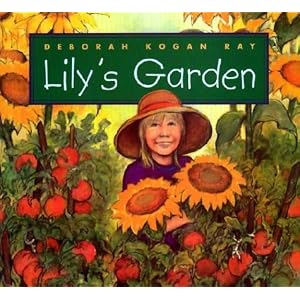 Lily's grandparents move all the way across the country, but stay in touch with Lily by sending her plants and produce from their new home and through her garden. Each spread deals with a new month and garden challenge for Lily. Her grandparents' advice helps her cope with the realistic challenges presented by managing a successful garden. This book is also a good exploration of seasonal changes. Lily's grandparents move all the way across the country, but stay in touch with Lily by sending her plants and produce from their new home and through her garden. Each spread deals with a new month and garden challenge for Lily. Her grandparents' advice helps her cope with the realistic challenges presented by managing a successful garden. This book is also a good exploration of seasonal changes. Lesson plans and activities also available for Lily's Garden on our website.
|
|
Lesson Plans:
 Download our educator's guide supplement for this year's Agricultural Literacy Week book Seed Soil Sun. It has step by step instructions for a germinating activity, connections to standards, NY farm facts, vocabulary, and links to other great seed-based activities. Download our educator's guide supplement for this year's Agricultural Literacy Week book Seed Soil Sun. It has step by step instructions for a germinating activity, connections to standards, NY farm facts, vocabulary, and links to other great seed-based activities.
Detailed lesson plan on how to make an accordion book about germination from Cornell Plantations. It's a great extension from the germinating activity outlined in our Seed Soil Sun educator's guide supplement above.
Developed by Cornell Garden-Based Learning and Ithaca Children's Garden, this curriculum is adaptable to different grade levels and is designed to be completed during Feb/Mar through the end of school in June. This time frame includes garden design, planting, harvesting, and planning a celebration.
Seed to Salad emphasizes:
- A high level of youth decision-making and a multidisciplinary approach
- Activities that involve nutrition, physical activity, art, democratic processes, planning and problem solving, math, science, developing horticulture skills, and language arts
- Harvest in June, before the end of the school year
- The use of minimum garden space
- A range of activities that lets educators adapt Seed to Salad to meet their goals
- Also available in Spanish
|
|
Web Resources:
The Citywide School Gardens Initiative was established by The Mayor's Fund and GrowNYC to inspire, facilitate and promote the creation of a sustainable school garden in each and every public school across New York City. Resources include: School Gardens 101, success stories, grant opportunities, teacher resources, and tools for parents.
American Farm Bureau Foundation for Agriculture's database for ag related educational books and resources. Search by reading level, topic, title or author.
The FBEA is a free member network established to strengthen and support the work of educators and administrators providing public access to their productive working farms. Join the network to receive their newsletter, participate in online forums, gather and share resources for teaching and learning on farms.
School Garden Weekly is a blog created to allow students, teachers, parents, and volunteers the information necessary to start and maintain a successful school garden. Recent posts include information on integrated pest management, spring seed starting, and reflections and success stories from various school gardens.
Resources for making the case for your school garden, planning and design tools, curriculum connections and activities, and information to help sustain your garden.
|
|
Funding Opportunities:
Be sure to keep up to date with current available grants by checking this website often. You can also find a lot of other school gardening resources here.
The grants section of the USDA Farm to School website has been updated to include an extensive list of Farm to School related funding opportunities by USDA and other Federal agencies. The information is organized by target audience, which includes farmers, schools and community.
|

NY AITC Events
2012 Agricultural Literacy Week
March 19th-23rd, Statewide
Volunteers throughout the state are reading Seed, Soil, Sun to second graders and exploring the plant life cycle with a hands-on germinating activity. There is still time to sign up to be a volunteer reader, host a reader in your classroom, and/or donate a book to a local school. For more information about this NYAITC event please visit our website.
Food, Land and People Workshops
 March 31st 9:00am-1:00pm @ SUNY-ESF in Syracuse. For more information on this workshop please visit our website. Contact Beth Folta to register: efolta@esf.edu March 31st 9:00am-1:00pm @ SUNY-ESF in Syracuse. For more information on this workshop please visit our website. Contact Beth Folta to register: efolta@esf.edu
April 3rd and 30th 6:15pm-8:30pm @ the following Cornell Cooperative Extension offices via interactive videoconferencing: Chenango, Clinton, Dutchess, Erie, Genesee, Ontario, Schoharie, and Schuyler County. This two-part workshop is for classroom teachers, educators, volunteers, parents, farmers, and others interested in agricultural education.
Contact Sandie Prokop to register: sprokop@nyfb.org
May 5th Brooklyn, NY
More details to come!
For more information and workshop brochures, please visit our website .
 State deadline: April 13th State deadline: April 13th
Entry forms can be downloaded here.
The I Love NY Agriculture Contest is an opportunity to explore agriculture and the food system while meeting NYS Learning Standards. Students can discover more about where food comes from and why agriculture is important for all of us everyday. For more information on this pre-K-6th grade contest, visit our website .
Other Events & Opportunities
ABC's of Farm-Based Education
March 9-11, 2012 at Shelburne Farms in Shelburne, VT
Develop hands-on education programs for your farm that encourage school groups and visitors to learn and explore. Whatever your farming background and whatever your farm, this workshop is for you. Topics include marketing your farm program to schools and the community, creating a safe farm environment for the public, and meeting teachers' needs.
Distance Learning Courses from Cornell Garden-Based Learning and the Department of Horticulture
Start dates ranging from February to April
Check out Planning and Organizing Sustainable Gardening Programs for Children, Youth, Adults and Communities and Teaching and Learning in the School Garden: Theory into Practice. There are also courses on organic gardening, garden design, plant propagation, and botanical illustration.
Take Root! A Training for Garden Educators, Cornell Garden-Based Learning
Various locations and dates across the state February through November 2012
Trainings are open to educators and youth workers interested in, or already implementing, garden-based learning. Attendees from organizations and CCE offices are encouraged to bring along at least two other staff and/or volunteers.
Dig In! Food & Garden Conference
March 19, 2012 in Potsdam, NY
Dig In! Food & Garden Conference will offer information, inspiration and resources to develop and strengthen food-based projects at the organizational level. Participants may include school staff & parents; business owners & employees; community leaders & residents; and health & food-focused professionals. If you grow, prepare, market, eat, compost, educate or set policy about food, this event is for YOU!
May 12, 2012 in Brooklyn, NY
This FREE conference is expecting over 5000 people from every neighborhood in Brooklyn and beyond to attend. There will be 100+ workshops on a variety of topics, food demos, an expo of non-profit organizations and for-profit businesses, kids and family programs, forums, roundtable discussions, a youth summit, and more.
May 5-6, 2012 at Stone Barns Center for Food and Agriculture, Pocantico Hills, NY
This hands-on two-day workshop is for 1st- 8th grade teachers interested
in deepening their program with garden-based learning. Using The Growing Classroom - a nationally recognized activity guide - the workshop integrates gardening into science, math and language arts and is a valuable resource for any school that has a garden (or would like to have one).
June 19-22, 2012 in Loveland, Colorado
Join NY AITC and agricultural educators from around the US for engaging, interactive workshops that will share methods for incorporating real-life agricultural applications into classroom style language arts, math, nutrition, science and social studies lessons.
American Horticultural Society's National Children and Youth Garden Symposium gathers educators together for engaging and inspiring garden-based learning workshops, field trips, and networking. Registration opens in April 2012.
August 2-5, 2012 in Burlington, Vermont
The conference brings together food service professionals, farmers, educators, policy makers, representatives from government agencies and nonprofits, entrepreneurs, students and others who are breaking down barriers and expanding the impact of Farm to Cafeteria.
**They are now accepting workshop and poster proposals for the conference**
Click here for the request for proposals and more information. Due March 7th.
|
|
|
|
|
|
Did You Know...
Gardening increases children's interest in eating fresh fruits and vegetables.
See research summaries and citations at Cornell Garden-Based Learning's website.
|
|

Like us on Facebook for the latest information, events and resources.
Visit our website
|
|
Our Mission...
| |
is to foster awareness, understanding, and appreciation of how we produce food and fiber, what we eat, and how we live, by helping educators, students, and their communities learn about and engage with agriculture and food systems.
|
|
|



