Four Reasons Why Interactive Television Didn't Score a Super Bowl TD
1. Thirty seconds to Shazam and no time outs: I love that so many ads were Shazam enabled (17, 7 of which had promotions). But the playbook still asks a lot of amateur viewers. I ended up Shazaming most commercials as it wasn't always clear which were enabled. By the time I glanced over the offerings on my iPad, it was time to return to the game. So I ended up leaving web pages open in my browser to review post show.
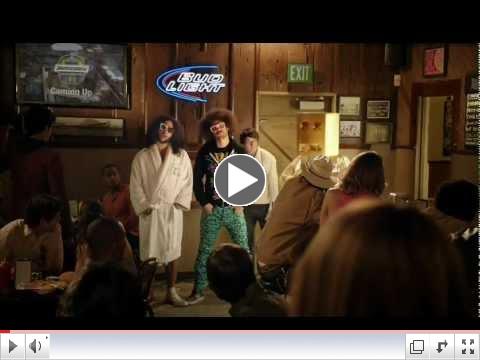 | | Bud Light and Shazam Super Bowl Promotion |
2. "How about socializing with your friends, Will?": I'm nerdy enough without having my jock friends rag on me for ignoring them during the big game. Live sports viewing lends itself to group viewing. The Super Bowl and it's accompanying high profile ads push this social point to an extreme. What to do? I'd devote more Shazam screen space to enabling social sharing. Some Shazam enabled ads did just that once you got past Shazam's home page. 3. Live sports is already fully engaging: From multiple camera angles, to non-stop commentary to slow motion replays to the best team winning (says this New Yorker...), I was as engaged as I've ever been watching the big screen. Knock the game down a few pegs and I'd still argue that a mid-season NFL game (or NHL or NBA - don't ask me about MLB) is high on the viewer engagement scale. The higher the program engagement, the higher the hurdle to get viewers to engage interactively. As important [read more] |
| Four Places Coincident Wants to Take Dual Screen iTV Campaigns
I caught up recently with David Kaiser, CEO of Coincident, and John Gilles, EVP of Sales and Marketing to see a demo of their just launched ScreenSync TV which "makes it possible for companies to build deeply interactive viewing experiences."
So what's different about ScreenSync TV? To my eye, Coincident has targeted four compelling (particularly in combination) destinations with its evolving ScreenSync TV technology:
1. Syncing with both VOD and Live TV: VOD is a logical step for ScreenSync TV as it shares similar attributes with web-based viewing where Coincident had its start. If you had an opportunity to check out the web-based Glee Superfan Experience, you can see how Coincident keeps the focus on the main video while allowing viewers to check out other content easily. Coincident is also enabling ScreenSync TV for live television viewing.

2. Not Just Another ACR Technology: As Coincident puts it, ScreenSync is "unique in that it offers direct, synchronized control between a tablet and television set, allowing users to avoid the often problematic automatic content recognition feature embedded within competitive products." How? ScreenSync communicates directly with the STB or cable server head-end. As for "problematic" ACR, having experienced dozens of ACR powered dual screen experiences, I have encountered some syncing issues but for this to be a competitive advantage, we'll need to see features that ACR driven campaigns can't deliver.
3. Pausing Content: The key feature could be ScreenSync's ability to pause main screen content while the viewer delves into second screen content. That's an important advantage [read more]
|



