|
What People are Saying:
"Thank you so much for training our team about Learning Styles. That was a very powerful investment in our time - the benefits are great. I'm using the information in many of my work relationships - it's been extremely helpful! Always good to be mindful of how different we all are."
~Julie Wheeler, Occupational Health and Safety Officer, USFS
"Get ready to participate in interactive activities!"
~Charles Bennett, Planner II, Jackson County
"Karen's time management strategies have increased my productivity level three-fold! I now have the tools to plan and implement a weekly schedule that is highly organized and efficient. I still have time to "put out the fires" that crop up on a daily basis, but no longer feel that those "fires" are controlling my schedule. In hindsight, I see that the stress I felt from work each day was not inherent in the work I do - it was due to a lack of proper time management. I now feel more in control of my schedule, and feel a higher level of job satisfaction. I highly recommend Karen's Time Management workshop to EVERYONE!! Thank You Karen."
--Brenda Cornett BrandViva "The Learning styles training has helped me to understand where conflicts arise in the workforce and how to deal with them. It has also given me great insight to communication styles that need to be addressed when providing information to people. Thanks for the training!"
~Robert Barnhart Central Vegetation Module Rogue River-Siskiyou National Forest
"Karen is very approachable and easy to be with, and answers questions thoroughly. ~Henry Saltonstall
| |
| Greetings!
We all have habits, it is part of human nature to create routines. The route you pick to go to work, when you brush your teeth, and the way you get ready in the morning are all habits. This human nature towards creating habits can be harnessed to work for us to get tasks done that we tend to procrastinate on. This is especially true for the onerous tasks we face every day such as reading our e-mails, filling out our complex time sheets, balancing our budgets, or reading a technical paper. If you weave these tasks into a pattern that becomes a habit, you will find them getting done on time, and they will be less draining on your energy.
A habit sticks best if it becomes part of a ritual. Look at how you brush your teeth. Chances are it has become part of your 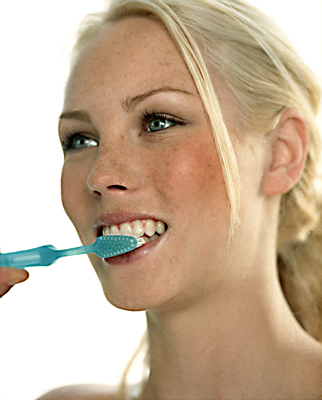 bedtime ritual; you hardly even think about it, yet you would feel incomplete going to bed without brushing them. This linking of several tasks before you get to an end result is how you create a ritual. You can do the same thing for your less than desirable work tasks. For example, managing your e-mails is a task that should happen daily. To ensure this happens, try linking this task with another task that is a habit, such as getting a morning coffee or a snack. Your ritual could be to buy your coffee and drink it only while managing your e-mails. When your coffee is done, your e-mails are done, and you move on to your work day. bedtime ritual; you hardly even think about it, yet you would feel incomplete going to bed without brushing them. This linking of several tasks before you get to an end result is how you create a ritual. You can do the same thing for your less than desirable work tasks. For example, managing your e-mails is a task that should happen daily. To ensure this happens, try linking this task with another task that is a habit, such as getting a morning coffee or a snack. Your ritual could be to buy your coffee and drink it only while managing your e-mails. When your coffee is done, your e-mails are done, and you move on to your work day.
To get a ritual to become automatic, you should force yourself to repeat it every single day for three weeks. At first, it won't feel comfortable at all, and it may feel inconvenient and a time sink. However, after three weeks, you should find it is more automatic. After a month, it will feel odd NOT to do it.
-- Karen
Comments? Need training on this topic? Contact me at:
|
|
|
|
|
|
|
Sign up for bi-weekly professional development tips!  | |
|