|
|
|
|
| Monthly Newsletter Volume 5, Issue 7 | July 2011 |
|
|
|
|
|
Greetings!
 Happy summer everyone! At our last board meeting, a special speaker, Sue McCullom, JD, provided training for our board and fundraising committee on planned giving. This is an area that I am focusing heavily on in 2011. We will be adding a page to our web site that explains how leaving a planned gift to Angels can ensure that injured and neglected babies will always have a safe haven where they can go to heal, be safe and loved. Look for it in August. Happy summer everyone! At our last board meeting, a special speaker, Sue McCullom, JD, provided training for our board and fundraising committee on planned giving. This is an area that I am focusing heavily on in 2011. We will be adding a page to our web site that explains how leaving a planned gift to Angels can ensure that injured and neglected babies will always have a safe haven where they can go to heal, be safe and loved. Look for it in August.
I was so excited about the opportunity to make a lasting gift and did not realize how easy it is. Here is what I did: I called my life insurance provider and asked them for a beneficiary form. Then I added Angels Foster Care of Santa Barbara as one of my beneficiaries and sent it back to them. I gave 2% of my policy to Angels. This had little impact on my overall policy, while helping out my favorite charity.
This is only one of many ways to give a planned gift. I look forward to developing our community of HALO planned givers as we work to ensure that this little charity endures for as along as the babies need us. For more information or to make a gift please contact me at 884-0012.
--Meichelle
|
|
|
|
|
|
| Angels Announcements
New placements: Congratulations to Jean & Jesse and Shelley & Rick on their new placements.
Adoptions: Congratulations to Wendy and Matt on the completion of their adoption of Hunter and Jordan!
Community ONE:27 Summer Video Series for foster & adoptive parents. Current and prospective foster/adoptive parents are welcome to attend this video series professionally produced by Dr. Karyn Purvis at the Institute of Child Development at Texas Christian University. Videos focus on tools and insights for working with children, and improving empathy, support and understanding. A discussion will follow each video presentation. You may attend specific dates or the whole series. Each session lasts about 90 minutes. Please RSVP to former Angels foster parent Jenna Hayden at jhay805@gmail.com.
Tropicana Norte Movie Theater, 6525 El Colegio Rd., Isla Vista
July 13, 7pm - Healing Children Through Trust & Relationships, Part I
July 20, 7pm - Healing Children Through Trust and Relationsips, Part II
July 27, 7pm - The Attachment Dance
August 3, 7pm - Facilitating Behavioral Change
August 10, 7pm - A Sensory World
Volunteers needed
Angels is seeking volunteers to help at community events occurring throughout Santa Barbara County. If you would like to join our volunteer corps and be notified about upcoming opportunities, please contact Margot Clarke.
Angels in the Community
We're looking for opportunities throughout Santa Barbara County to speak about Angels Foster Care and the urgent need for foster families. If you know of a local club, group, church or synagogue that would be interested in a presentation about Angels, please contact Ellen.
Angels Blog: sign up to receive regular updates on our latest program information, happenings of note in the world of foster care and Angels' special events.
Facebook: Please become a friend of Angels today and receive frequent posts about our latest news.
|
|
Angels Calendar
Mid-Morning Parenting Circle
We hope to see you and your Angels baby at a gathering soon!
South County Circle
Tuesday, July 26, 10-11am, Tucker's Grove Park
North County Circle
Wednesday, July 27, 10-11am, Orcutt office
210 E. Clark Ave, Suite D
Angels Foster Parent Training - next session
Sept 16, 5:30-9pm; Sept 17, 9-5pm, Sept 21, 5:30-9pm*
If you know of anyone who may be interested in joining the class, please have them call the Angels' office or give us their name and number and we would be happy to call them.
* last session of the year
|
|
|
|
Angels Contacts 
|
|
| |
From the Desk of Your Social Worker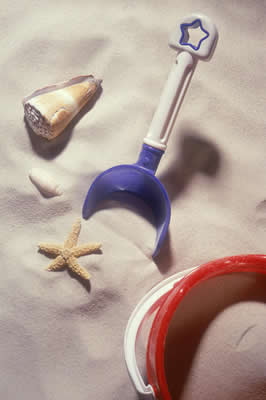
Well, so far so good for July weather. The sun has been shining and it's time to hit the beach or take a dip in the pool! That means it's also the perfect time for a Water Safety Reminder. Take a minute to refresh your memory and help keep your family safe! Local safety instructor, Justin Haagen, from Safety Matters Certified Training provides an excellent overview on this topic in the article summarized below!
- Stacy
Water Safety
While shallow water in pools or along coastlines seem harmless enough to let your child splash around in, you may be surprised to learn that most drownings occur in less than four feet of water. In fact, experts from the American Safety & Health Institute (ASHI)-a leading first aid training and safety organization dedicated to designing and delivering programs in health, aquatic safety and emergency medical care-warn that small children can drown in as little as one inch of water, and in just 30 seconds.
While knowing the techniques for rescuing a person who is either conscious or unconscious in water can mean the difference between life and death, it is just as important to prevent this type of accident by debunking some of the more common water myths. Many mistakes are made near the water, unknowingly by the public. These mistakes are perpetuated by misconceptions about water safety.
Children learn water skills best at a pool or at the beach...
Fact: The development of safety awareness, water skills, and a sense of enjoyment of the water should begin at home - right in the tub. Children will then become ready, willing, and safe participants in swimming programs and water activities as they get older.
The more adults present when children are swimming, the safer the environment...
Fact: When you assume everyone is watching, usually no one is watching. When friends or family are gathered poolside, the tendency is for everyone to think someone else is watching. Having a designated "water watcher" helps ensure that dedicated supervision is being provided, but the best bet is to keep your eyes on your child/children at all times, even if a lifeguard is present.
Flotation devices serve the same purpose as lifejackets...
Fact: Lifejackets save lives. They are specifically designed to hold a person on the top of the water. Flotation devices (floats, noodles, rafts, etc.) usually require an individual to hold on, sit on, or lay on the device and are not dependable. Among other risks, flotation devices increase the chance of weak swimmers falling off in water that is deeper than they would swim in without the float.
Drowning victims thrash, splash, and yell for help...
Fact: Many drownings are "silent"; a person has submerged and is unable to return to the surface. The struggle occurs underwater, and the victim makes no sound. Someone should be diligently watching the water (including the pool bottom), so that a person does not go unnoticed until it is too late for resuscitation (CPR) to be effective.
Water-related accidents only happen to people who are careless...
Fact: Accidents are never expected events, and therefore can happen to anyone at anytime. Being prepared to react and give care during an emergency can often be the difference between life and death - for yourself as well as the person in trouble. Training in water safety, water rescue, CPR and first aid provides the skills needed to save lives and the knowledge to take some of the panic out of the situation.
Article By Justin Haagen from "Safety Matters Certified Training." www.cprtraininsb.com
|
| Things You Should Know | |
Baby's Brain Development
 Young children's brains go through profound changes during the first few years of life. If you've ever wondered how your child's brain is developing and what you can do to enrich him or her during key periods of growth, check out the Zero to Three "Baby Brain Map." This interactive tool allows you to view the areas of the brain that develop as a child ages. Young children's brains go through profound changes during the first few years of life. If you've ever wondered how your child's brain is developing and what you can do to enrich him or her during key periods of growth, check out the Zero to Three "Baby Brain Map." This interactive tool allows you to view the areas of the brain that develop as a child ages.
To get started, click through to the Zero to Three website, select an age range from the pull-down menu, and click on it. Depending on the age range, different hotspots on the brain will appear. Click on a hotspot to reveal questions to find out how a baby's brain develops during this period of brain growth. You'll also learn what you can do to enrich a very young child's development. Don't forget to click on the questions to display the answers.
|
| Medical Notes | |
Advice from Dr. Charish Barry

Charish Barry, MD, is a local pediatric hospitalist with Santa Barbara Cottage Hospital and a pediatrician in private practice (www.petitepediatrics.com). She is also a member of the Angels Board of Directors and the local representative for the American Academy of Pediatrics Southern California Chapter. Follow her on Twitter (@petitepeds) to receive her tweets about pediatric health.
Food Guidelines
Any parent who has tried to navigate a well-stocked grocery store with a hungry child in tow knows it is a challenge. Weaving through endless aisles of candy, frozen pizza, chips, soda, and sugary cereals without at least one incident of pleading or bargaining is considered a major accomplishment But on a daily basis, where is the proper guidance to steer through the numerous food choices?
Getting to Know MyPlate
Since 1894, the United States Department of Agriculture (USDA) has been providing Americans with dietary guidelines. In general, they have focused on eating from specified food groups and emphasized moderation, proportionality, and variety. An updated version of the USDA's guidelines is called MyPlate. It shows the image of a dinner plate divided into colored sections:
- Orange-grains (wheat, rice, oats, cornmeal, barley)
- Purple-protein (meat, chicken, fish, beans, eggs, soy products, nuts, seeds)
- Red-fruits (apples, bananas, strawberries, blueberries, oranges, peaches)
- Green: vegetables (broccoli, romaine lettuce, spinach, corn, carrots)
Plus, there is a blue cup to the right of the plate to symbolize dairy foods (milk, cheese, yogurt).
An important feature of MyPlate is that each section is a particular size. This is to highlight the proportions that Americans should aim for when planning their meal, for example:
- Half the plate should be fruits and veggies!
- About a quarter of the plate should be grains (especially whole grains).
- The rest should be protein.
Before Your Next Shopping Trip...
MyPlate provides parents with important concepts that virtually all experts agree on: making healthy food choices and practicing eating in moderation. So before hitting the grocery aisles with your little one, take the time to catch up on the suggestions found on MyPlate! The USDA's main messages include:
- Encourage your child to enjoy his food, but to eat portions that are right for his age and activity level.
- Fill half of your child's plate with fruits and vegetables.
- Have your kid drink fat-free or low-fat (1%) milk.
- Read food labels! Find out how much sodium is in packaged food. Choose lower sodium options!
- Encourage your child to drink water. Leave the sugary drinks behind.
|
| | |
The Last Word
When we choose to be parents, we accept another human being as part of ourselves, and a large part of our emotional selves will stay with that person as long as we live. From that time on, there will be another person on this earth whose orbit around us will affect us as surely as the moon affects the tides, and affect us in some ways more deeply than anyone else can. Our children are extensions of ourselves.
-- Fred Rogers
|
|
|
|
|



