|
Your Bi-Weekly Newsflash from
|
|
A quick dash of news you need to hear
|
BOA struggles with Loan Modifications?
| 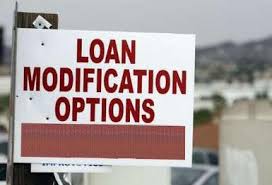 A year ago, the Treasury Department announced the Home Affordable
Modification Program, aimed at helping up to 4 million at-risk
homeowners avoid foreclosure by reducing their monthly payments. Banks
receive $1,000 for each modification and up to $1,000 a year, for as
many as three years, as long as the borrower remains current on
payments. A year ago, the Treasury Department announced the Home Affordable
Modification Program, aimed at helping up to 4 million at-risk
homeowners avoid foreclosure by reducing their monthly payments. Banks
receive $1,000 for each modification and up to $1,000 a year, for as
many as three years, as long as the borrower remains current on
payments.
Even with those incentives, Bank of America has ranked
near the bottom when it comes to modifying loans for homeowners
delinquent at least 60 days. Through January, 22 percent of the bank's
eligible borrowers had received permanent or three-month trial
modifications, compared to 38 percent for J.P. Morgan Chase and 50
percent for GMAC and CitiMortgage.
The Florida Attorney General's
Office says it has fielded 486 complains about Bank of America and a
company it took over, Countrywide - more than it has about any other
lender. Many of the gripes are from homeowners who have been unable to
get modifications despite repeated contact with customer service reps
who lose paperwork, give conflicting information or ignore them
altogether.
"Modifications that work are a permanent reduction in principal and
interest, and some lenders are doing those but Bank of America is not,''
says Alan M. White, a professor at Valparaiso University School of Law
and an expert on housing issues.
"It's pretty clear that Bank of
America and Countrywide, now one entity, are just unwilling to do
modifications on the scale that's needed. Somehow they're hoping against
hope that property values will suddenly come back.''
Bank of
America, which had a $6.3 billion profit last year, says it has found
that reducing interest and extending the life of the loan are the most
effective ways to make payments affordable.
It also says that the
volume of Florida complaints is misleading because many probably came
from homeowners whose loans originated with Countrywide, once a leader
in particularly risky forms of loans.
"When you hear Bank of
America complaints, it's really hard to decipher if it's against a Bank
of America-originated loan or a Countrywide loan,'' says Jumana Bauwens,
a bank spokesperson.
Read on... |
| Rates on 30-year home loans fall to 4.93% |
 Rates for 30-year home loans edged lower for the second straight week, a
report said Thursday, but remained above last year's record lows. Rates for 30-year home loans edged lower for the second straight week, a
report said Thursday, but remained above last year's record lows.
The average rate on a 30-year fixed rate mortgage was 4.93 percent this
week, down from 4.97 percent a week earlier, mortgage finance company
Freddie Mac said.
Rates dropped to a record low of 4.71 percent in early December, pushed
down by an aggressive government campaign to reduce consumers' borrowing
costs.
Freddie Mac collects mortgage rates on Monday through Wednesday of each
week from lenders around the country. Rates often fluctuate
significantly, even within a given day, often in line with long-term
Treasury bonds.
Mortgage rates have been at or near record lows due to a $1.25 trillion
Federal Reserve program to buy up mortgage securities. That program is
scheduled to run out at the end of March, but the Fed has held the door
open to extending it if the economy weakens.
Read on...
| |
Why Green is Worth it
For new and existing home buyers alike, the options to "green up" homes
abound. Green upgrades on homes offer two-fold benefits. They contribute to a
healthier environment, both now and in the future, and they can save
homeowners big when it comes to energy costs.
How much impact does a green home have on the environment, you
ask? The government reports that "Energy Star qualified homes built in
2009 are the equivalent of:
- Eliminating emissions from 51,645 vehicles
- Savings 312,399,672 lbs of coals
- Planting 85,372 acres of trees, and
- Saving in the environment 612,678,574 pounds of CO2."
Many homebuyers shy away from green construction and green upgrades
because of the upfront cost. But while some estimates have put
the construction cost difference at 17 percent, recent estimates from
The World Business Council for Sustainable Development put the cost of
green construction only 5 percent higher than traditional.
Green building means using recycled, renewable, and native
building materials. It also means tapping into the energy sources that
nature has to offer, including solar and wind. Read on...I hope you enjoyed this newsletter.
Sincerely Yours, Michael C. Blickensderfer, Esq.

This newsletter is not meant to substitute for legal advice. If you have a legal question, please contact our office and speak with an attorney. This newsletter is not an agreement for representation. If you would like to hire an attorney, please contact our offices to learn more.
|
|
|
|
|


