|
|
|
|
|
Will You Help?
Anesthesiologists and CRNAs
Be part of an important study on how difficult airway patients are identified in hospitals and other health care settings.
Click here to complete the brief survey.
Sponsored by SAM
(The Society for Airway Management) | |
|
|
Advertisement

| |
For more information about the ProShield, click here:
ProShields.info
For ProShield-enabled products, click here: | |
|
|
Featured Webinar | |
Did you miss the webinar,
Airway Management and Obesity, with
Calvin A. Brown III, MD?
Click here to view!
100% of the webinar attendees said they would recommend it to their colleagues!
| |
|
| Register Today! |  | |
|
|
Contact Us!
We'd love to hear from you.
Terry T. Steele (860) 679 - 9285 | |
Send us your questions, feedback and ideas. We'll get your questions to the right people and incorporate your ideas and feedback into our plans for Airway World!

|
|
|
|
| Airway World Update | |
 Content, Content, Content Content, Content, Content
It used to be "location, location, location." Now, it's all about content. In Airway World, we get the message. Here are some of the new resources added recently:
- Fourteen (15) new Journal Watch research summaries
- Fifteen (15) new videos found in the Carleton Collection of Intubation Training Videos
- Two (2) new recorded webinars: Dr. Walls' "Quarterly Airway Research Update" and "Airway Management and Obesity" with Calvin Brown, MD
- Two (2) video airway updates: "Predicting the Difficult Airway Using Mnemonics (Updated for 2012)" and "The 2012 Airway Algorithms."
Haven't been to Airway World yet? Register today to begin exploring the educational resources and events that keep people coming back for more!
Tip: When you register or log in next, check off "Keep me logged in on this computer" so you can bypass the log in step each time you go to Airway World! |
|
Spotlight on the Inventor:
Chris Christodoulou, MD |
 | | Pocket Bougie in Use |
Inventor of the Introes™ Pocket Bougie encourages others to believe that their ideas can make a difference.
Seven years. That is how long it took to bring his invention to market. "Patenting a medical device is not for the faint of heart," says Chris Christodoulou, MD, inventor of the Introes™ Pocket Bougie. "It's a long and complicated process that demands tremendous mental fortitude and belief in the idea and product."
The idea for the Pocket Bougie stemmed from Chris' personal experiences with airway management and the identification of a new conundrum that surfaced with the introduction of video laryngoscopy. He often heard statements like, "the video laryngoscope provided the best view of the glottis that I could not intubate." This increasingly common predicament fuelled Chris' desire to create a better intubation aid--one that would allow intubators to take full advantage of better glottic views. For this reason, the Pocket Bougie was designed with a customizable tip and shaft to accommodate a more acute viewing angle and is made of Teflon which has outstanding memory and glide characteristics.
As in most successful medical endeavors, collaboration was a fundamental component of the invention process. Chris worked with co-inventors, Dr. Trevor Lee and Dr. Stefan Harms who offered advice and wisdom at every step along the way. BOMImed (the product developer) and The University of Manitoba were "tremendous partners," according to Chris. "And we cannot forget Sr. Robert Macintosh, the inventor of the original bougie (in 1943), as we acknowledge everyone involved in this project."
Chris is now working on a product to solve the problem of hypoxemia during airway management. To aspiring inventors, he offers this advice: "Maintain the belief that your ideas can make a difference. Simple ideas have the power to transform the way we practice medicine and ultimately, the real rewards will lie with our patients and their families."
Dr. Chris Christodoulou is a Consultant Anesthesiologist and Assistant Professor in Anesthesia at University of Manitoba in Winnipeg, Canada. He is a member of the National Faculty of The Difficult Airway Course: Anesthesia™.
For more information about the Introes™ Pocket Bougie, click here. |
| Save The Date! | |
Preventing Ventilation Disasters Post Airway Control (Webinar)
Kevin M. Franklin, RN, EMT-P
May 10, 2012 6:00 PM EST
Airway World Auditorium
When was the last time you ventilated a patient? Was it with a BMV and an oral airway or after placement of an advanced airway? Did you have any problems with ventilating the patient? Did the patient survive beyond admission to the ED? Kevin Franklin RN, EMT-P, Flight Nurse for West Michigan Air Care and Research Coordinator for the Kalamazoo Center for Medical Studies, Michigan State University, presents what we think we know, might know, or don't know about ventilation management. Participants will have a better understanding of how to manage patients AFTER the airway procedure is done. Participants can submit questions and comments to Kevin during and after the presentation (via an accompanying chat box). Limit 100 participants.
This continuing education activity is approved by the Continuing Education Coordinating Board for Emergency Medical Services (CECBEMS). CECBEMS#: 12-CECB-F3-4951 CEH Type: 1.0 Basic.
For an Outlook Reminder: 1. Click here. 2. Open. 3. Save.
Quarterly Airway Research Review (Webinar)
Ron M. Walls, MD
June 13, 2012 1:00 PM EST
Airway World Auditorium
It's easy to stay current in the field of airway management with these quarterly research reviews! Dr. Walls selects the most relevant research from recently published articles, shares their results and discusses their impact on the practice of emergency airway management. Participants can submit questions and comments to Dr. Walls during and after the presentation (via an accompanying chat box).
For an Outlook Reminder: 1. Click here. 2. Open. 3. Save.
Hospital Physician Partners designates this live activity for a maximum of 1 AMA PRA Category I CreditTM. Physicians should claim only the credit commensurate with the extent of their participation in the activity.
CPAP Preoxygenation and Delayed Sequence Intubation (Webinar)
Scott Weingart, MD
June 28, 2012 5:00 PM EST
Airway World Auditorium
Scott D. Weingart, MD, Director of ED Critical Care at Mount Sinai School of Medicine, describes two cutting edge and somewhat controversial new approaches to the pre-intubation period. CPAP Preoxygenation may significantly increase the oxygen reserves in patients with shunt physiology. Delayed sequence intubation allows the safe preoxygenation in patients with illness-induced delirium--it is essentially procedural sedation for preoxygenation. Participants can submit questions and comments to Dr. Weingart during and after the presentation (via an accompanying chat box). Limit 100 participants.
For an Outlook Reminder: 1. Click here. 2. Open. 3. Save.
Follow us on Twitter for announcements of upcoming events! |
| Airway Challenge #6: A Sizable Problem | |
The Case
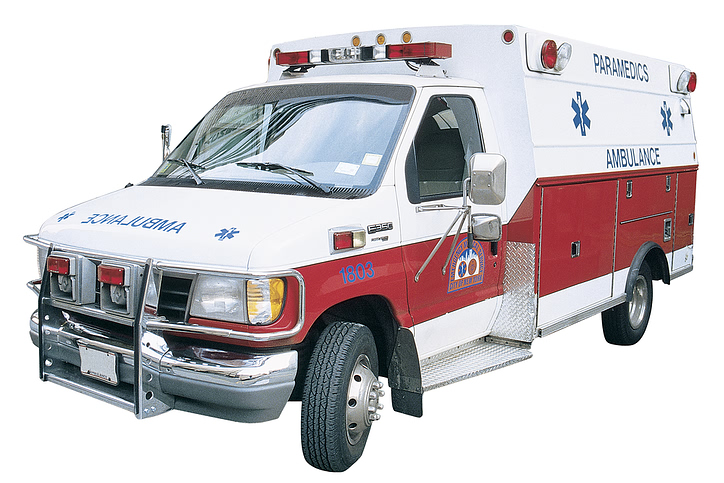 A 63 year old, 200kg (440 lbs) man arrives by EMS with mental status change. His wife last saw him normal about 5 hours ago before she went out for the day to do some shopping. When she returned, she found him sitting on the couch nonverbal, staring to the left and drooling. There were no signs of trauma. Upon arrival, he is nonverbal and has obvious right facial weakness and right-sided arm and leg paresis. He "gurgles" when he breathes and you get the strong sense he is aspirating. His head CT shows no bleed. You want to transfer to a primary stroke center that has the capability for intra-arterial thrombolysis but are concerned about his airway and want to intubate him before transfer. A 63 year old, 200kg (440 lbs) man arrives by EMS with mental status change. His wife last saw him normal about 5 hours ago before she went out for the day to do some shopping. When she returned, she found him sitting on the couch nonverbal, staring to the left and drooling. There were no signs of trauma. Upon arrival, he is nonverbal and has obvious right facial weakness and right-sided arm and leg paresis. He "gurgles" when he breathes and you get the strong sense he is aspirating. His head CT shows no bleed. You want to transfer to a primary stroke center that has the capability for intra-arterial thrombolysis but are concerned about his airway and want to intubate him before transfer.
Vital signs: HR 107r; BP 192/96; RR 14; SaO2 95% FM oxygen.
Which statement is true about airway management in obese patients?
- A. Direct laryngoscopy is always harder.
- B. Oxygen desaturation is slower than in toddlers.
- C. You will rarely intubate obese adult patients.
- D. Intrinsic airway pressures are higher than in normal sized adults.
- E. Trendelenburg is the best position for pre-oxygenation and rescue ventilation.
Compared to normal sized adults, all of the following are physiologic differences in morbidly obese patients EXCEPT:
- A. Increased cardiac output.
- B. Increased stroke volume.
- C. Reduced FRC.
- D. Higher drug peak plasma concentration.
- E. Increased peripheral O2 utilization.
Which of the following statements about RSI pharmacology applies to this patient?
- A. Induction with propofol should be based on TBW.
- B. The correct dose of succinycholine is 300 mg.
- C. The correct dose of rocuronium is 200 mg.
- D. There is a decrease in total lean body mass.
- E. The Vd is unaffected.
Click here to enter your responses, view the correct answers and see how your colleagues responded.
Click here to view the webinar, Airway Management and Obesity, with Calvin A. Brown, MD for a full discussion of the answers to these questions. You may also view this webinar in the Airway World Auditorium. |
|
|
|
|
|
Save
40% |
"Written by the founders of The Difficult Airway Course: Anesthesia™ and utilizing an instructive case-based approach, this text/DVD presents all of the leading-edge principles, tools, and procedures of airway assessment and management. The scope of the book encompasses the many airway devices that have been developed since the publication of the first edition, many of which have the potential to markedly enhance airway management." (McGraw-Hill website) | | Offer Expires: December 31, 2012 |
|
|



