|
|
 Greetings! Greetings!
Last month we did articles about Dog Stress and Home Alone Anxiety. In the past three weeks we have received at least 4 requests for service of dogs suffering from Anxiety. Some of these calls were from people who just could not leave their dogs alone - At All! The dogs were just great when their owners were home. Destroyed furniture, toys, crates, beds, shoes when left even for a few hours. A good animal trainer and behaviorist will be an excellent investment if you find yourself in this situation. Check out the past issues of our newsletters for more information.
We are going to continue to have articles each month that will be helpful to these and other pet owners. Dr. Karen Detweiler from Mobi-Vet writes for the Reliable Pet this month about Treatment - How far do we go? We hope that Dr. Detweiler will become a regular in our newsletter. Article....
|
 Choosing
Dog Chew Toys - What To Avoid Choosing
Dog Chew Toys - What To Avoid
When
shopping for chew toys for your dog, there are certain things you should avoid.
Chew toys are meant to please your dogs' natural tendency to chew but should be
safe.
Avoid chew toys with strings, buttons, small parts or loose
fabric. Stuffed toys and rope toys are not recommended because puppies can chew
through them ingesting the fabric or chew off parts like the eyes causing a life
threatening intestinal obstruction or a choking hazard.
Bones are not
recommended for dogs or puppies. They do not break down easily which means your
puppy may have to pass them through his stool causing serious impaction and
constipation.
Don't buy too many toys at first but have enough to
distract your puppy from chewing on your furniture, shoes and other items.
 | |
|
| Contact Us |
|
|
44 Lake Warren Road
Upper Black Eddy, Pennsylvania 18972
610-294-2901
www.reliablepetsitter.com
|
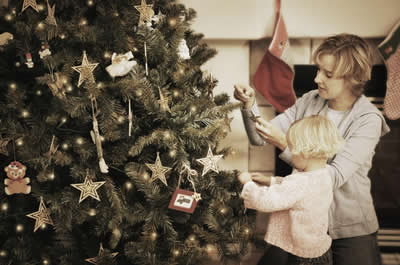
10 Steps for a Pet Safe Holiday Tree
The day after Thanksgiving kicks off the Christmas holiday season, and millions of homes sport either real or faux trees - glittering towers of beauty that can pose a threat to your pets. Before you put the tree up, take a few moments to go over some safety precautions.
1. Choose the Right Spot. Pick an area where the tree can be enjoyed by the family but so much in the center activity that it can be easily knocked
over. An area by the wall or in a corner is ideal and out of the
traffic flow pattern of the house. Try to place the tree near an outlet
so you don't have to run electrical cords long distances.
2. Prepare the Area.
Lay down plastic sheeting or buy a "tree bag." This is an extra large
trash bag used for live trees. Center the tree on the bag. When the
season is over and you have removed the tree ornaments, pull the bag over the tree. This will catch the pine needles as they fall from the tree - and prevent them from being chewed or swallowed by your pet. More....
|
|
|
|
|
|
|
To treat or not to treat - by Dr. Karen Detweiler - Mobi-Vet
In today's world of veterinary medicine the options for the
treatment of a pet's illness knows no bounds.
With veterinary specialists in every field of medicine your pet can be
diagnosed with MRI's, extensive bloodwork panels, and then have treatments and
procedures which until recently were only available in the human hospitals and
medical centers. Internal medicine,
endoscopic surgery, MRI, CT scan, organ transplants, oncology, chemotherapy,
radiation therapy and so forth are all available. The question then becomes, how far do we go? When is it reasonable to decline these
options? In human medicine this is
rarely an issue as most people will pull out all the stops to save a loved
one. But, if age is a factor it is
reasonable to decline treatments and accept a death with dignity. I had a friend who, when in his 70's, was
diagnosed with cancer chose to live the last 6 months of his life doing all the
things he always wanted to do before he died rather than deal with chemotherapy. He sailed to England on the QE II, took the
SST home and lived it up until he died.
He decided that it just wasn't worth dealing with the treatment to gain
a few more years.
In veterinary medicine we face the same decisions. Is it worth putting a pet through extensive
treatments to get a few more months or years if the quality of life will not be
very good? Veterinarians want to do
their best to save lives, but in the end it is up to the owner to decide how
far to go. This also goes for the diagnostic
tests. Whenever giving permission for a
test ask this question: "What will this
test tell me that will change the way we proceed?" For example, if you have a tumor removed from your 13 year old
dog, does it really matter if it is malignant or benign? We vets always want to know what it is
because it educates us and allows us to give some sort of prognosis, but in the
long run, it may not change the way we treat the patient if chemotherapy and
radiation therapy is not an option because of cost or we don't want to put our
pet through it.
One option that is not available in human medicine is
euthanasia. This, in my opinion, is a
decision that belongs to the owner of the pet.
Veterinarians can give advice but the final decision belongs to the owner. In some cases, the veterinarian has the
option to decline to euthanize a pet if they don't agree with the
decision. For example, I won't
euthanize a young dog that has simply become a nuisance because it was never
trained properly, or because the people are moving to an apartment. That dog deserves a chance to be adopted
from an spca or rescue organization.
Although money is a factor in many cases, sometimes it is
not about the money. Recently there was
a story about a woman in England that spent $20,000 to restore her elderly cat's ability to purr. The cat had a paralysed vocal chord and
after extensive surgery it could indeed purr once more. Do you think the cat would have opted for
treatments over the course of 6 months, including surgery of its throat, simply
to purr again? I can only imagine the
pain involved over this time frame just so the owner could hear the cat
purr. Is that love? Sometimes it doesn't matter how much money
you can throw at something, but rather, should you.
About Dr. Detweiler -
Karen Blumrick Detweiler, VMD
Born
and raised in Bucks County Karen attended Penn State where she earned a
BS in Animal Science in 1977 and an MS in Veterinary Science in 1979.
In
1986 Karen graduated from the University of Pennsylvania School of
Veterinary Medicine and opened a small animal clinic in Plumsteadville
which she ran for 17 years. Wanting to spend more time with her
children while they were small, Karen sold that clinic and worked part
time for the next 5 years. With her children now in school,
Karen decided in 2007 to go back into business for herself and to go
totally mobile since house/farm calls were always her favorite part of
practice.
Mobi Vet 381 Frogtown Rd Kintnersville,, PA 18930
Office: 215-892-3328 |
|
|
10 Steps for a Pet Safe Holiday Tree -- continued
3. Secure the Tree. Many trees have been sent swaying by a rambunctious dog or puppy. Dogs can knock over a tree by rubbing against or playing under it. Pet
can be injured if the trees or ornaments fall and break. You can place
the tree in a corner and secure it from two sides to small hooks in the
walls. Another trick is to place a small hook in the ceiling above the
tree and use clear fishing line from the top of the tree to the hook.
Apply gentle tension and tie. The clear line is invisible.
4. Hide the Cords.
Electrical cords are a grave danger to pets - especially puppies and
that tend to chew on anything. Cords can cause electrocution and
serious injury or even death. Secure the cords by positioning them
higher than the pet can reach or hiding them with special covers.
5. No Hooks.
Check your ornaments and replace hooks with a loop of string tied in a
knot. Ornaments often fall from the tree and pets may catch their
mouths on or swallow the hooks.
6. Choose Safe Ornaments.
There is no perfectly pet-safe bulb, as any ornament can be ingested
and cause an intestinal obstruction. Pet "safer" bulbs would be plastic
or wood. Glass bulbs on the lower limbs can be especially dangerous. If
broken, pets can step on them and cut their feet or worse yet - treat
the bulbs like a ball and chew on them causing them to break, resulting
in mouth or throat trauma and bleeding. Many pet owners
have learned the hard way not to place any ornaments on the lower
limbs. Ornaments made of food may be especially attractive to pets.
7. Ribbons.
Big red velvet ribbons are a lovely addition and may replace tinsel and
garland that can be eaten dogs and caught in their intestine. Cats are
especially attracted to the bright shiny tinsel and should really be
avoided in households with cats. Ingestion of this material can cause intestinal obstruction that may require surgery.
8. Presents. Dogs love to investigate and most don't understand that the
presents are not meant to be opened before Christmas Day. Decorative
ribbons and string can be ingested, gifts can be destroyed by a playful
pet. Consider storing the presents in a safe area until right before
the holiday or make sure your pet is always supervised while
investigating and searching for his special gift.
9.Sweep up the pine needles.
Ingestion of needles can cause vomiting and gastric irritation. Keep
the tree watered and only turn the lights on when you are at home. Risk
of fire is always there with a live tree. Do not allow your pet access
to the tree water to drink.
10. Supervise. The safest thing to do is to allow your pet access to the tree only when supervised. Pets that continue to want to bother the tree should be encouraged - using
positive reinforcement - to leave it alone. Bitter apple can be sprayed
on low branches for persistent chewers.
|
 |
|
|
| Save 20% |
On All Services except Holidays, if booked before January 31, 2009. Not combinable with any other promotion. Good for any service from one day to long term. |
|
Offer Expires: January 31, 2009 |
|
|