|
|
Greetings!
This month, John Francis, Dir. of Technical Services, offers technical insight in part 1 of his 2 part series "How RootShield WP Works". If you have questions, feel free to email John at jfrancis@bioworksinc.com. |
| Failing to Plan...Or Planning to Fail? |
|
By Rich Reineke, Midwest Technical Sales Manager
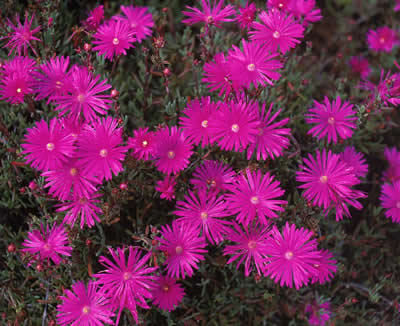 Greenhouses are filling up. Spring is coming, but not yet here. Do you have a plan to manage foliar diseases like Botrytis and powdery mildew, that are bound to show up as overfull greenhouses are closed up and cool moist air surrounds your plants on dark cloudy days or overnight as the weather warms? You know what they say about "failing to plan". Greenhouses are filling up. Spring is coming, but not yet here. Do you have a plan to manage foliar diseases like Botrytis and powdery mildew, that are bound to show up as overfull greenhouses are closed up and cool moist air surrounds your plants on dark cloudy days or overnight as the weather warms? You know what they say about "failing to plan".
You need to be ready to apply something when the conditions are favorable for disease development or at the first sign of it. MilStop® and CEASE® are the perfect proactive products to use under these circumstances. MilStop is a great curative for powdery mildew and preventative for Botrytis with a 1-hr REI and OMRI listing. CEASEis labeled for preventative control of both of these, as well as bacterial diseases with a 4-hr REI and OMRI listing. And, CEASEwill not burn blooms, so you can spray it all spring long. The combination of the two products together (CEASEat 4 qts/100 and MilStop at 1.25 lbs/100 gal) has shown extra effectiveness against bacterial spot diseases, such as Pseudomonas and Xanthomonas.
Add these products to your spray rotations for resistance management or use alone, but know how you will act when disease pressure builds. No one wants to admit to "planning to fail". |
| How RootShield WP Works |
|
Part 1: The Ins and Outs of Trichoderma harzianum By John Francis, Director of Technical Services
RootShield® WP's new, improved formulation using a water soluble carrier, makes it much easier to use than previous formulations of PlantShield® HC. This root biofungicide contains dormant spores of the effective, and well proven, active ingredient Trichoderma harzianum strain T-22. When mixed with water at the typical application rate of 4 oz/100 gallons, over 100 billion spores are applied to the growing medium in one application. There are many application options that can be utilized to get RootShield WP onto your crop: using an injector with a watering wand, overhead boom irrigation, watering tunnels, Chapin® tube system, drip tape or emitter systems, ebb and flood, sprayers, etc.
Once RootShield WP (or RootShield® Granules) is applied to the growing medium, the spores germinate within 16 - 24 hours. As the mycelium emerges from the spore it immediately starts coiling around the plant's roots and any plant pathogen propagules present. After 24 hours RootShield cannot be leached from the soil mix. RootShield will grow in a diversity of inorganic and organic growing media from sand, perlite, or clay, to pure peat or bark. RootShield grows tightly on roots in hydroponics systems, including those utilizing the nutrient film technique where there is no medium.
In the growing medium, RootShield can tolerate a wide range of pH (4 - 8) and grow at temperatures from 48o to 97o F. What is important to remember is that since RootShield grows on the plant's roots, it is the pH and temperature right around the root system that is most influential. RootShield is drawn to high concentrations of root exudates, seeks out and searches for plant roots and colonizes the root hairs, branching sites, the root surface and callus tissue. It will also colonize the callus which forms on cuttings in propagation. There are two primary modes of action: (1) competitive exclusion, which means RootShield gets to the pathogen-preferred sites first and prevents diseases like Pythium, Fusarium, Rhizoctonia and Thielaviopsis from getting into the roots, and (2) mycoparasitism, whereby RootShield encounters a pathogen mycelial strand, and secretes enzymes, including chitinases and glucanases, that dissolve the invading pathogen's cell walls.
****
Continuing next month - Part 2: "RootShield Compatibility and Additional Benefits" | |
|
|
Quick Links |
"Bug Patrol"
Click here to read Roger McGaughey's article
in the March issue of GrowerTalks.
*****
Did you miss a past issue?
***** |
|
BioWorks' Floriculture Scholarship |
|
|
|
|
RootShield WP now available in CA! |
|
EPA registered RootShield WP has been approved by the Department of Pesticide Regulation (DPR) in California.
For more information, contact Matt Needham (209-351-1664), West Reg. Technical Sales Manager. |
| Join our list |
 | |
|
| Biological Controls Report |
|
By Matt Needham, West Region Technical Sales Manager
In a January '09 seminar in California, Dr. Ann Chase (Chase Horticultural Research) spoke about her research on green products including biologicals. Dr. Chase had positive comments about biological controls and with BioWorks' CEASE® Microbial Fungicide/Bactericide. Here are some of my notes from her presentation:
-
Evaluation of materials for control of Pseudomonas leaf spot on delphiniums demonstrated CEASE at 1% to provide similar efficacy as copper products. Phytotoxicity with copper materials can be a problem if environmental conditions allow the foliage to stay wet for extended periods.
-
After evaluation of Cease efficacy for Xanthomonas on geraniums, the recommend rate for CEASE was 2%. The lower rates (1 or 1.5%) were not as effective on this pathogen.
-
Anthracnose on cyclamen has been frequently reported this year. Dr. Chase has observed some good efficacy with CEASE 1% on this disease.
-
A Ranunculus trial evaluating controls for Xanthomonas demonstrated CEASE to have some good control.
-
In one trial, Dr. Chase observed CEASE to be efficaceous on Powdery Mildew.
-
Dr. Chase feels that a good use of biological fungicides is in propagation.
CEASE is one of many biological products available from BioWorks. Contact your local Technical Sales Manager for information on other products. |
Chapin® is a registered trademark of Jain Irrigation Systems Ltd. Subdue® Maxx is a registered trademark of Syngenta Investment Corporation. TerraGuard® is a registered trademark of Uniroyal Chemical Company, Inc. | |
|
|
|
|


