|
|
|
|
|
|
|
|
High Honors for Conservation:
Two Big Awards for Meade Cadot |
|
 Two major awards in one week have been given to H. Meade Cadot Jr., the senior naturalist for the Harris Center for Conservation Education in Hancock. Two major awards in one week have been given to H. Meade Cadot Jr., the senior naturalist for the Harris Center for Conservation Education in Hancock.
Today in Boston, Cadot received the Environmental Merit Award for Lifetime Achievement from the U.S. Environmental Protection Agency, arguably one of the most prestigious awards for conservation in New England.
The award was given by Ira W. Leighton, acting administrator for the EPA's New England Region, during ceremonies at Faneuil Hall in Boston. Several other prominent conservationists were also honored at today's ceremony. The EPA has recognized the successful work of New England's conservationists for more than 30 years with its award program.
Cadot received his other award last week in Concord. The N.H. Fish and Game Commission named Cadot this year's recipient of its Ellis R. Hatch Jr. Commission Award of Excellence.
"Cadot's passion for conservation has had influence throughout the state and beyond - but his greatest success has been in the Monadnock Region, where he has lived and worked for some 33 years," says a statement from the N.H. Fish and Game Department. "His land protection leadership has resulted in what Cadot has named a Supersanctuary of more than 20,000 acres in cooperation with other conservation organizations in New Hampshire. Cadot's success in environmental education and habitat protection furthers the basic principles of Fish and Game's mission. He is dedicated to helping children and adults alike develop a deep respect for the natural world. Those who have been touched by his lessons will be among the future leaders of conservation in New Hampshire."
"I am very honored to be among the company of EPA achievement award winners, both today's and from the past," Cadot said. "And I'm very fortunate to have climbed aboard the Harris Center ship just when it was embarking on its long and successful maiden voyage with remarkable and dedicated crew members and scores of supportive passengers all along the way."
Hunt Dowse, chair of the Harris Center's board of trustees, said the organization is proud of Cadot's awards. "In his 30-plus years of working with many like-minded land conservationists, Meade has set the standard for linking important pieces of land together to preserve wildlife habitat, watersheds, and some of the best open spaces in the Monadnock Region," Dowse said. "His expertise, combined with the talents of our teacher/naturalists and the strong leadership from Executive Director Laurie Bryan, has created an organization that is delivering some of the best environmental education, public programs and land conservation in the state."
In the early 1970s, Cadot was teaching for what is now Antioch University New England, when he moved to Hancock and became naturalist and caretaker of New Hampshire Audubon's Willard Pond Sanctuary. By 1975, a five-year-old organization called the Harris Center for Conservation Education hired Meade as its first paid director. He held that post until this January, when he took a "sideways slide," to become the Harris Center's senior naturalist and land program director. Bryan, who joined the Harris Center staff in 1999, brings an extensive background in education and organizational management, as well as a love of the Monadnock Region's human and wild communities.
"Meade's vast knowledge of wildlife, passion for land protection, and dedication to using the outdoors as a classroom is inspirational," Bryan said. "His work sets a solid foundation from which the Harris Center continues to thrive - providing outstanding environmental education and land protection in the Monadnock Region." |
|
 |
| The Nature of April |

Spotted salamanders, wood frogs, spring peepers and many other amphibians have migrated to vernal pools to breed. Be sure to check out Tom Tyning's talk on this in Keene April 24, and Matt Tarr's talk at the Harris Center April 25. See below for details.
The male woodcock starts displaying, including its wild aerial dance and ground "peenting."
Male wild turkeys are also courting the affections of hens. Spring has sprung and love is in the air! |
Today atop Mount Skatutakee! Enjoy Earth Day!
Get Outside | |
|
| Understanding Wildlife
UNH and NH Fish & Game Team up for Bobcat Study |
 O One of New Hampshire's most secretive and fascinating wildlife species will be the subject of a new four-year study, part of which will likely take place in the Monadnock Region.
The University of New Hampshire and New Hampshire Fish and Game Department are teaming up for an ambitious research project on bobcats. The goal is to get a better understanding of the bobcat's population dynamics and its movement corridors.
"Right now, there's really a lack of good data available on bobcats," said Patrick Tate, furbearer project leader for the New Hampshire Fish and Game Department. The study will change that, in part through the help of residents who report their bobcat sightings, Tate said.
Southwestern New Hampshire Cats
The field phase of the study will likely begin this fall when UNH wildlife ecology professor John Litvaitis and graduate students will safely trap 10 to 15 bobcats, outfit them with radio-telemetry collars, and release them unharmed. Those cats will probably be in southwestern New Hampshire, which seems to have one of the state's highest densities of bobcats, Tate said. Another group of 10 to 15 bobcats will be trapped, fitted with radio collars and released in a large area west of Plymouth.
Litvaitis and his UNH grad students will then use radio-telemetry equipment to follow the cats' movements. That will be an important part of the study, Tate said, because currently little is known about bobcats' travel movements in New Hampshire. The study data might demonstrate the importance of protecting large, wild, forest blocks, such as the upland corridor between the Quabbin Reservoir in northern Massachusetts and Mount Cardigan near Canaan.
Researchers will also collect blood and DNA samples from the bobcats, which will provide data on health and population densities. In addition to reporting sightings, the public can help by using trail cameras to photograph bobcats following a standardized protocol that's now being developed.
Abundance and Distribution
Bobcats were hunted or trapped in New Hampshire until 1989, and the state or towns offered modest bounties until 1973. The bounty program offers historical data on bobcat abundance and distribution, though it also reflects the whims of fur prices and many other factors.
Habitat conditions have had a big influence on bobcat abundance. Once replete with agricultural land, New Hampshire's former pastures and fields started reverting to shrub- and woodlands in the first half of the 1900s. Bobcats and their prey - like snowshoe hare and ruffed grouse - responded with higher numbers. Though today's maturing forests are limiting prey base, legal protection of bobcats has likely helped sustain their numbers.
"This will be a very unique study," Tate said. "It's something that's been needed for quite a few years."
The $298,000 study is supported through the Federal Aid in Wildlife Restoration Program of the U.S. Fish and Wildlife Service and through funding from the University of New Hampshire.
· Residents can help the project by reporting bobcat sightings. If you see a bobcat, contact Patrick Tate (603-868-1095). He needs to know details of when and where the bobcat was seen, and whether it was alone or with young. · Click here for more information about New Hampshire's bobcats and the study. |
| Training for the Big Day:
Envirothon Training Day Comes to the Harris Center |
 S Small teams of high school students from throughout New Hampshire are hard at work right now, preparing for a big day next month in Hancock: the state Envirothon competition.
The New Hampshire Envirothon is an annual competition among high school teams who are tested on a range of natural resource issues. The four- or five-member teams are quizzed on aquatics, forestry, soils and wildlife, along with an environmental "current issue" problem that they're asked to solve. The winning New Hampshire team goes on to compete at the national level against other winning teams from throughout the U.S. and Canada.
The Harris Center recently hosted the annual Envirothon Training Day, where teams converge and are prepped on the various topics they'll face at the actual competition. That event will also be in Hancock, at Boston University's Sargent Center on May 26.
Representatives of several agencies and organizations helped the teams during the Training Day earlier this month at the Harris Center. ABOVE: Marty Curran of the U.S. Army Corps of Engineers shows Keene High School students Carolyn Johnson and Caitlyn Andrews how to identify a tree species.
|
| Making Tracks:
Building Solar Ovens at Great Brook School |
 Students in Ms. Kenney's fifth grade class at Great Brook Middle School in Antrim, Alex Lawrence and Noah Cass, bake cookies in their newly crafted solar oven. Harris Center teacher/naturalist Dori Drachman helped guide the students in engineering and using solar ovens. They were able to eat the results of their baking project, despite cold temperatures! |
| This Summer:
Farms to Community
A unique week for high school students |
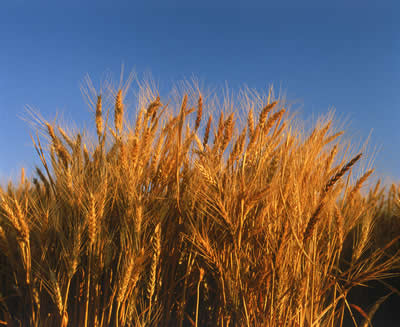 T The Harris Center is offering a unique opportunity for high school students this summer. Teens can spend a week in July learning about sustainable agriculture, working on local farms and discovering the challenges and opportunities of the growing local food movement. "Students involved in this course will have a terrific opportunity to work directly on local farms and explore the connections between sustainable agriculture and conservation practices," said Laurie Bryan, executive director of the Harris Center. "The week's experience will provide students with an active understanding of resource conservation, sustainability, and community that they can apply to real-life situations." "More and more people are becoming interested in food that's grown sustainably and locally, right here in the Monadnock Region," said Susie Spikol, outreach education coordinator for the Harris Center. "Because we've encountered many local youths who are interested in this movement, we wanted to offer a nice way for them to learn and be involved in local farming." Each day of the program will be a blend of working at area farms and discussing the issues and challenges facing farmers today, from economics to land management and conservation. The work will include harvest and helping to prepare a community supper. "The community supper will be a great way for kids to give back to the Monadnock community and highlight to the public the value of local foods," Spikol said. Among the farms that the students will work with are Sunnyfield Farm in Peterborough and the Daloz Farm Community Supported Agriculture in Hancock. College credit for this program may be available for high school juniors and seniors who meet the requirements of Keene State College's accelerated program for high school students. To register or learn more information about the Harris Center's Farms to Community program, contact Susie Spikol, 603-525-3394, or spikol@harriscenter.org. |
| Great Chances to Learn:
The Environmental Studies Institute |
|
The Harris Center's Environmental Studies Institute provides an array of opportunities for adults to learn about the Monadnock Region's natural history, connect to the outdoors, and engage in meaningful discussion about the environment.
Coming up this spring:
Spring Birds: Thursdays, April 30, May 7, 14, 21, 8 to 10 a.m. at the Harris Center. Cost $25 members/$35 non-members.
Join Julie Tilden as she explores Harris Center lands in search of spring birds. She'll visit various habitats throughout April and May and talk about the migrants passing through, as well as the residents. Come join this session to learn about spring migrants, their life histories, and how to identify all their songs and colors.
Julie is the Monitoring Site Coordinator for Hawk Migration Association of North America. She recently got her Masters degree in Conservation Biology from Antioch University New England and is particularly interested in migration ecology. Cost $25 members/$35 non-members. To learn more or register for a course, contact Susie Spikol at the Harris Center, 603-525-3394. |
|
The Bobcat's Tail: Phenology: A New Reason to Note the Seasons |
 by Eric Aldrich by Eric Aldrich
If you haven't heard of phenology, you certainly know what it's all about, and spring is a great season to think about it, or better yet, participate.
I'm not talking about phrenology - the 19th century pseudoscience of analyzing personalities by examining the skull. It's phenology: how we study the timing of life-cycle events for plants and animals and how they're influenced by seasons and climate. It's about bird migration, breeding, plant flowering, and leaf emergence.
Examples of how we study phenology abound, in both low-tech, personal ways and modern, ultra-scientific ways. And both low-tech and high-tech approaches are taking on an urgent new importance as scientists look for evidence of climate change. A bit on that later.
The concept of phenology goes way back to the first cuneiform tablets in Mesopotamia. Aside from keeping track of spring rains, the ancients recorded the blooming of plants, including all-important crops.
You and I, we're unwitting phenologists
Thomas Jefferson kept systematic weather records for more than 50 years in Virginia, often noting when cherry trees and other plants were blossoming. Henry David Thoreau noted the appearance of hundreds of wildflowers, insects and birds around Walden Pond. And closer to home, Abner Sanger's 18th century diary mentions sap runs and other seasonal events in the Keene area.
As denizens of a place where seasons rule our lives, you and I are unwitting phenologists, whether we keep records or not. In any given March, I'll bet you've at least once stepped inside after a walk and said, "Hey, I just heard my first red-winged blackbird!" Or spring peepers.
And I'm sure that you've noticed those early crocuses, poking through the old leaves (or snow) and thought to yourself, "Ah, spring is near!" That's all low-tech phenology, and it's as natural as can be.
Meet a closet phenologist
Neal Clark of Hancock has been a closet phenologist for decades. Clark has kept a journal on nature, personal activities and seasonal observations from 1978 to 2001 or so. He still jots down big events on the calendar, like hearing the first spring woodcock or a gobbling wild turkey. The journal helped him write Eastern Birds of Prey, a guide to hawks and other raptors.
Keeping bird records has also long been on the agenda of Meade Cadot, senior naturalist at the Harris Center for Conservation Education. Cadot was 11 when he first started keeping records of birds returning in the spring. In 1973, he got the Monadnock Region involved in the Audubon Society's Christmas Bird Count and later participated in the U.S. Fish and Wildlife Service's Breeding Bird Survey. Over time and with thousands of volunteers, the vast data gathered from these ambitious record-keeping activities lets biologists know which species are in trouble.
Bill Eva's phenology is based on his business, his Hancock maple sugaring operation. Eva needs records on when he tapped, how many trees he tapped and how much syrup he produced. His father also ran a sugaring business and kept records from the 1940s into the '60s. Bill Eva sent his dad's notes to the Proctor Maple Research Center in Vermont, where they analyzed scores of decades-old sugaring records. Researchers found that the maple sugaring season has progressively started earlier, with modern sugarers tapping in February, while their fathers tapped in March. And the season itself has shrunk in duration. The reason: "They figure it's due to global warming," Eva says bluntly.
The new urgency for all this
Climate change is one of the top reasons for an ambitious new project called the USA National Phenology Network ( www.usanpn.org). The project involves scores of organizations, agencies, and professional scientists. And by harnessing the power of the Internet, the project also involves thousands of ordinary folks who take notes on nearby plants, then submit the data online. They record when plants are flowering, leaf size, and whether they've borne fruit. The project will soon collect phenological information on wildlife, including birds, reptiles and amphibians.
By gathering such records from thousands of volunteers throughout the country the project is building robust, meaningful data to assess the impacts of climate change.
So, when you notice the first returning woodcock, the first spring peepers, or the first blooming maples, make a note of it. Fill out a form or jot it on the calendar. And let's hope that 40 years from now, your observations won't be much different.
- The Bobcat's Tail is a collaboration of the Monadnock Ledger-Transcript and the Harris Center. The column appears monthly in the Ledger-Transcript's Earth Friendly Living section. |
| Out and About with the Harris Center |
April 24 (Fri) - Wood Frog Frolic and Giant Salamander Safari. Our leader, as always for the last 25 years, is the famously funny and knowledgeable herpetologist and professor Tom Tyning. The event begins at Antioch's community room on Avon Street in Keene. 6:45 to 9:30 p.m. Co-sponsored by the Harris Center and Ashuelot Valley Environmental Observatory.
April 25 (Sat) - Vernal Pools and Wetland Wildlife. Matt Tarr, UNH Cooperative Extension Wildlife Specialist (and Hancock native) will conduct an indoor and outdoor session discussing ecology, identification and management of these habitats. Co-sponsored with the Monadnock Conservancy and UNH Cooperative Extension. 12:30 to 4 p.m. at the Harris Center.
April 26 (Sun) - Voices from the Land: A Report on the National Petroleum Reserve in Alaska. Richard Kahn, a Wilton resident and award-winning videographer and photographer presents a stunning story in words and photos about the challenges of this amazing place. 3 p.m. at the Harris Center.
April 26 (Sun) - Trail Clearing at NH Audubon's Willard Pond Sanctuary. Co-sponsored by N.H. Audubon. Meet Rachael Johnson at the Willard Pond parking lot at 8 a.m.
May 1 (Fri) - May Day Down the Brook: An Outing Suitable for Seniors to Casalis State Park. Meet Oliver Mutch and Jan Miller at 10 a.m. at the SE corner of the Ocean State parking area at the Jct. of Route 101 and 202 in Peterborough. Co-sponsored by Peterborough Recreation Department.
May 2 (Sat) Strenuous Trail Work on Bald Mtn. Spur Trail. Co-sponsored by N.H. Audubon. Meet Rachael Johnson at the Willard Pond Parking lot at 8 a.m. Done by 4 p.m.
May 2 (Sat) - "Seasons of the Turtle," an Illustrated Presentation by David Carroll, who has observed and studied turtles for decades, mostly near his home in Warner, New Hampshire. He is the author and illustrator of several books, including "Year of the Turtle," "Trout Reflections," and "Self-Portrait with Turtles: A Memoir." In 2006 Carroll earned the prestigious MacArthur Fellow "Genius Award" for his natural history studies and books. Following his presentation there will be a short naturalist-guided field trip to nearby turtle-inhabited wetlands. 9:30 at Harris Center.
May 8 (Fri) - Arrivals and Departures: A Celebration of Life's Great and Small Changes in Poetry, Prose and Music. Jane Eklund, Howard Mansfield, Sy Montgomery, Julia Older and Steve Schuch will read poems and stories about arriving in a new city, birth, friendship, epiphanies, leaving, migration, aging, and what endures. The readings will be accompanied by Steve Schuch, of the acclaimed Night Heron Consort, on violin and guitar. Co-sponsored by the Hancock Library in memory of Walter Clark and Thelma Babbitt. 7 p.m. at the Harris Center.
May 9 (Sat) - Hiking the Town of Francestown Forest Side of Crotched Mtn., a strenuous, but enjoyable trip to beaver meadows, high ledges and more. Meet Ben and Robin Haubrich at 10 a.m. at the trailhead at the jct. of Rte. 136 and Farrington Rd., approx. ½ mile northeast of the Greenfield town line.
May 9 (Sat) - Let's Go Fishing! Basics for Beginners. Learn the essentials of angling. Equipment and materials provided. Meet at 9 a.m. at the Harris Center. Register by contacting the Harris Center, 525-3394, or aldrich@harriscenter.org.
May 16 (Sat) - Peterborough Children and the Arts Day Wake-Up Walk with Teacher-Naturalists Janet Altobello and Polly Pattison. Meet at 7:30 a.m. on the Sand Hill Rd. Wapack Trailhead, 4.4 mi east of the jct. of Sand Hill Rd. and Rte. 202 in Peterborough.
May 16 (Sat) - Perley Swett: the Hermit of Taylor Pond. Perley's granddaughter, Sheila Swett Thompson, has written a great new book about this remarkable and complex man, entitled "Perley: The True Story of a New Hampshire Hermit." We'll join Sheila and Alan Rumrill, executive director of the Historical Society of Cheshire County (and book publisher), for a tour of Perley's haunts. Hike departs 10 a.m. from Shinbone Shack at the end of Aten Road (off North Shore Road by Granite Lake) in Stoddard. Co-sponsored by Historical Society of Cheshire County.
May 17 (Sun) - Dodge the Black Flies and Enjoy Scenes of Alaska and Mount Rainier. Jan Miller and Oliver Mutch present their adventure to Mt. Rainier and environs. 3 to 5 p.m. in the Harris Center Babbitt Room. | |
|
|
Contact Info:
Eric Aldrich
Harris Center for Conservation Education
603-525-3394
|
|
|
|
|
|


