|
|
It's fall in Maine and as the leaves show off their autumn colors and the smell of wood smoke fills the air, students and faculty are all now back at school and working on exciting projects and research. In this issue, we will share several late summer updates from UMaine Engineering to keep you current. We hope that you recently received our annual magazine, which gives you a well-rounded view of the College through news and features from 2011 of the faculty, departments, alumni and students that make up our College today. If you did not receive the magazine, be sure to let us know. Enjoy the fall and remember to keep in touch by checking us out on Facebook and sending us your updates and news too.We always love to hear from you. Let us know if your email has changed so we can continue to send you our e-newsletters and updates to keep you informed about the UMaine College of Engineering (by sending an email to coe.alumni@umit.maine.edu).
 Dana Humphrey Dana Humphrey Dean of Engineering University of Maine
dana.humphrey@umit.maine.edu Phone 207-581-2216
Fax 207-581-2220 www.engineering.umaine.edu
Mailing Address
University of Maine
College of Engineering
5796 AMC Bldg., Room 200
Orono, Maine, 04469-5796 |
Department of Interior Secretary Salazar visited the AEWC
As a result of an invitation by Senator Susan Collins, on August 18, U.S. Department of Interior Secretary Salazar visited the AEWC Advanced Structures and Composites Center to see first-hand the deepwater offshore wind research and the new Offshore
Wind Laboratory at the Center. AEWC Director Habib Dagher led a tour for Salazar, Collins, Assistant Secretary for Land and Minerals Management Ned Farquhar, Director of the National Park Service John Jarvis, Director of the Maine Office of Energy
Independence Ken Fletcher, and University of Maine President Paul Ferguson highlighting the laboratory's capabilities and the progress of the DeepCwind Consortium's research program.
After the tour, Secretary Salazar spoke briefly to the press and AEWC students, faculty and staff. Expressing words of praise for the Center, Salazar said, " Awesome. There is awesome technology and science that is going on right here at the University of Maine in this lab." He further stated that he would help streamline the leasing of federal waters for research and development of test sites and farms. "I don't want to wait six months and I don't want to wait a year," he said. "Time is of the essence."
|
UMaine Engineer Participates in Canadian Study of Animal Health
University of Maine chemical engineer Darrell Donahue participated recently in a Canada-based expert panel charged with reviewing animal health risk assessment practices in order to protect the health of animals and people, and the environment and economy.
The Council of Canadian Academies released Thursday the panel's report, "Healthy Animals, Healthy Canada" which provides an evidence-based independent assessment of approaches to animal health risk assessment in Canada.
Donahue is a professor of chemical and biological engineering at UMaine. His research interests include quantitative risk assessment of food systems.
The panel examined the risks associated with animal diseases and human health, including increased global trade and migration, higher population densities, and climate change. Donahue's major contributions to the report included evaluation techniques of risk assessments and implementation of an integrated multidimensional approach, which was part of a systems engineering focus.
"Canada is a strong trading partner with the U.S. and particularly Maine," Donahue said. "The report supports international efforts to harmonize food safety regulations across the globe - something that Canada and the U.S. have been collaborating on."
The review by Donahue and 11 other panelists took nearly two years. During the review, the panel determined that although animal health risk assessment in Canada is built on a solid foundation of knowledge and expertise, risk assessment practices may be enhanced by taking the integrated multidimensional approach, according to panel chair Alastair Cribb, a professor and dean of the faculty of veterinary medicine at the University of Calgary.
This approach refers to the consideration of a wide range of consequences, specifically those that address animal health, human health and the environment. Currently risk assessment practices only examine the likelihood of a risk occurring and how serious the direct consequences are. A multidimensional approach moves beyond the recognition of the signs and hazards of a potential animal health event, to considering a full range of direct (such as trade losses) and indirect consequences (such as economic impacts on local communities), and towards fully documenting and assessing management decisions for the future.
The panel also found that in order for Canada to stay at the forefront of animal health risk assessment there are numerous activities that can be improved such as: strengthening expertise and knowledge capacity; considering a broader range of consequences related to an animal health event; improving communication among risk assessors, managers and stakeholders; enhancing the transparency of the decision-making process; and setting aside resources for foresight assessments.
The report was sponsored by the Canadian Food Inspection Agency (CFIA). For more information or to download a copy of the report, go to www.scienceadvice.ca/en/animal-health.aspx.
|
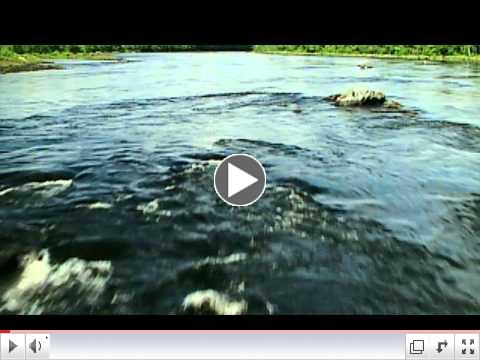
Tidal Power in Maine:
Assessing the Resource
 | | Tidal Power in Maine: Assessing the Resource |
|
Building a Better Clothespin
While some people might wonder what's wrong with the design and function of a clothespin, a detail-oriented designer from Winterport, Maine would argue plenty.
With assistance from the University of Maine Advanced Manufacturing Center (AMC), designer and inventor Charley Earley has redesigned the traditional clothespin for commercialization. He calls his round, 3-inch-diameter device "EKLIPSE."
"When you look at a traditional clothespin, there are disadvantages, which are widely accepted," says Earley, a project manager and senior designer with Bucksport's Lewis & Malm Architecture firm. "With a traditional clothespin, you need to provide energy to pinch it. Fifty percent of the commonly accepted products has nothing to do with holding anything, which to me represented waste."
Then there is the issue of spring clothespins popping apart into three pieces if they're not pinched carefully. And the traditional clothes peg without a spring "to me was weakest where it needed to be strongest," Earley says.

"EKLIPSE was designed from the beginning to be very simple," he says.
"It wasn't a huge project, but it was pretty interesting," says John Belding, director of UMaine's AMC. "He was concerned about the material's kinetic performance, so we looked at different raw materials for him."
Sixteen to be exact, before arriving on a polycarbonate ABS composite. The AMC also conducted fatigue tests on the materials to be sure the EKLIPSE would work in hot weather and in cold environments like a freezer, if used as a frozen food package clip.
Wooden clothespins and clothes pegs, he says, are destined to fail as they age. They accumulate mold spores in the wood, rot or rust, and it's awkward to hold a handful while trying to attach wet laundry to a clothesline.
So, Earley went to work with drawings and computations to design and build a better clothespin. The University of Maine School of Law's Maine Patent Program, "Search for Prior Art," research showed no patents existed on a circular design with a split center and internal "micro ribs" to grip fabric. Earley took his drawings to the UMaine AMC last fall for testing and refinement, at the same time preparing and processing his EKLIPSE application with the US Patent Office.
For the rest of the story, go to: http://umaine.edu/news/blog/2011/09/30/building-a-better-clothespin-with-amc-assistance/
|
UMaine Researchers Awarded Grant to Develop Cellulose Nanocomposite Materials
The field of nanoscience has shown that the smallest of particles are sometimes the strongest. Research into these infinitesimal objects - whose dimensions range from a few nanometers to less than 100 nanometers; by comparison, a sheet of paper has a thickness of 100,000 nanometers - has also shown these particles are well-suited for use in materials that must by necessity be lightweight and flexible.
Doug Gardner, a University of Maine professor of wood science and technology, has been awarded a $150,000 grant from the U.S. Department of Agriculture Forest Products Laboratory for his research into developing to produce powders made from nanoscale cellulosic particles, known as cellulose nanofibrils or CNF.
"Cellulose derived from wood - Maine's most abundant natural resource - is a promising source for low-cost, renewable nano-structured materials," Gardner said.
The composite materials produced with CNF will eventually be used in building materials, automobile parts, wind energy components and other green materials. The particles are recognized as having superior mechanical properties and can be produced at a lower cost than other nanofiller materials.
The USDA grant will kick off a five-year research project that aims to address some of the barriers to producing commercially viable CNFs, including the breaking down of biomass to components below the fiber level while preserving favorable nano properties.
Research into cellulose nanofibrils is a priority for the Department of Agriculture, which is seeking to develop efficient processing methods to create novel materials for use in advanced composites, high-end additives and fillers for high-end construction and manufacturing systems.
Yoosoo Han, UMaine biocomposite specialist in the AEWC Advanced Structures and Composites Center and graduate faculty in forest resources, is also involved in the CNF research.
Gardner, who is affiliated with UMaine's School of Forest Resources, the Advanced Structures and Composites Center, and the Forest Bioproducts Research Institute, is a UMaine graduate.
|
UMaine Receives $1.2 Million Grant to Develop Sensors for Power Plant Operations
The University of Maine's Laboratory for Surface Science and Technology (LASST) has received a $1.2 million grant from the Department of Energy to develop new high temperature sensor technology for reducing emissions and increasing the efficiency of fossil fuel energy plant operations. Mauricio Pereira da Cunha, a UMaine professor of electrical and computer engineering, and Robert J. Lad, a UMaine professor of physics, will lead the project to develop novel thin film electrodes, piezoelectric smart microwave acoustic sensor devices, and sensor encapsulation materials that will be engineered to function for long periods of time at up to 2200 degrees Fahrenheit in a power plant environment. The work also includes developing a radio-frequency wireless interrogation electronics unit that will be located outside the high temperature environment.
UMaine will partner with Environetix Technologies Corporation, an Orono-based spinoff company of LASST that employs recent UMaine graduates, to develop the novel sensors and controls. In its announcement of the funding opportunity, the Department of Energy said it was soliciting projects in the Sensors and Controls area of the National Energy Technology Laboratory's Advanced Research (AR) program. Research and development projects within the AR program are directed toward the implementation and operation of the next generation of fossil energy power systems and improvements to existing systems. The goal is highly efficient, near-zero emission power systems that use domestic resources. The UMaine technology is based on tiny wireless battery-free microwave acoustic sensors that can measure temperature and pressure in harsh environments. A large number of sensors will be tested at strategic locations in power plants, and the sensors will be used to help optimize the coal utilization process and provide information about the maintenance and status of the combustors and steam generator components. This project stems from more than a decade of research and development, done by LASST faculty, staff and students, on thin film materials and sensor devices that can withstand high temperature operation in harsh environments. The technology has also been supported by funding from the U.S. Air Force, which is interested in placing the sensors into jet turbine engines. |
Gorman Emeriti Faculty Brunch to Honor Claude Westfall this October 15th
Are you a School of Engineering Technology Grad? If so, you should know about an upcoming event that will honor Professor Emeritus Claude Westfall who taught engineering graphics from 1954 to 1990 in the School of Engineering Technology (SET).  The James and Maureen Gorman Emeriti Faculty Brunch will honor Claude Westfall this October 15, from 9:00 am to 11:00 am at Wells Conference Center. The James and Maureen Gorman Emeriti Faculty Brunch will honor Claude Westfall this October 15, from 9:00 am to 11:00 am at Wells Conference Center.
If you took CAD courses or worked with him, please send any thoughts, memories, photos from that time to victoria.blanchette@maine.edu so that she can put that into a booklet that is given out at the event. Would you like to attend?
RSVP to Victoria Blanchette at the same email or call the College of Engineering at 207-581-2204 to RSVP.
|
|
UMaine engineering has a proud tradition and a reputation for quality and innovation that is made a reality in part by the generous support of alumni, friends, and corporations who invest in our students, research, and facilities.
We are truly grateful for your support. As we induct outstanding graduates into the Francis Crowe Society, I am always impressed with the careers, can do spirit, and contributions of UMaine alumni to society.
Dean Dana Humphrey and I welcome the opportunity to hear your personal stories about how the College of Engineering has made a difference in your lives.
 | | Pat Cummings |
Please feel free to contact me to establish a relationship with your alma mater or to reconnect! Through your support for Maine Engineering as a donor or volunteer, you are helping the students of today become the leaders of tomorrow.
Thank you!
Warm regards,
Pat
Email: pat.cummings@umit.maine.edu
Phone: 800-671-7085
Be a catalyst for Innovation with your gift to UMaine Engineering. Support the College of Engineering or your department through THE FUND. To give on-line: www.umaine.edu/give.
Or Give By Mail: PO Box 370, Orono, Maine 04473-0370
Remember to put "College of Engineering" in the memo line.
It isn't just about how much you give, but the fact that you give that makes a real difference.
For more information about The FUND, contact Ullysses Tucker, Jr. (ullysses.tucker@maine.edu), Director of Annual Giving at 207-581-1157.
Again, thank you very much for your consideration and support.
|
|
|
|
|