MARCH 2011

SPRINGTIME


 Redruth Osteopathic Clinic


Greetings!


Welcome to our second e-mail newsletter. The features this time are about low back pain and gardening, and stretching. Both very useful as the gardening season is upon us. I have written a short summary about CranioSacral Therapy (CST), which is an area that a lot of people have asked for more information on and how CST works with Osteopathy.


We all wish you a happy and active Spring and Summer.


If you have a friend or colleague who might be interested in this quarterly newsletter then please forward it to them. Thank you.


Best wishes


Joe Gore


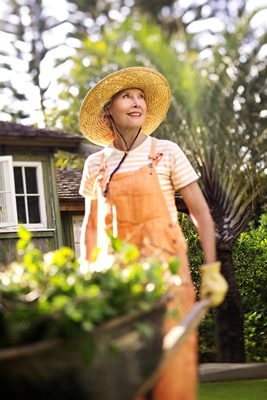
Gardening and Low Back Pain, by Tish Reid, Registered Osteopath


Spring is finally here and thoughts naturally turn to....gardening! After months of relative inactivity for many of us (too wrapped up in winter woollies) it is very tempting to leap into action, knowing that the growing plants wait for no-one. However, just like you wouldn't dream of entering a marathon without some advice and training, some simple things to consider before getting all gung ho with the digging fork could contribute to you staying injury free and therefore able to benefit from your hard labours without a legacy of back pain and discomfort.

Gardening can be very hard work and it is best to acknowledge this before you start. You need to prepare your body for the extra activity that will be demanded, plus all the different moves that will be involved. Be prepared for that 'new activity' ache that will inevitably happen after a session in the garden - get the radox in for the bath!

So, some tips to employ to help survive the gardening challenge:

1.       Make sure you are reasonably warm before you start any heavy duty work and get the blood moving around your body. Your muscles will work much more efficiently if they are warm, they will respond faster and be more able to cope with the demand placed upon them.  The easiest way to do this is go for a brisk walk, or go up and down a flight of stairs a few times.

2.       Try and make sure you don't overreach in your tasks - the worst position for your back is sustained slightly forward bending, and with the arms outstretched to any degree this massively increases the load, leading to easily over-strained tissues.

3.       The other action to try and avoid as much as possible is bending forward and then twisting - this is a very vulnerable position and can lead to the small joints in the lower back getting injured - lots of pain!

4.       At the end of the day don't just fall back into the sofa in a slump of exhaustion. Think about how you have been working your muscles, and try and stretch out the muscles a bit before you finally sit down to relax. Generally gardening will involve bent-over work, so a simple stretch would be to lie down on your back, point your toes while reaching over your head with your arms to get a full body length stretch. Hold the stretch for 10 secs or so, relax and repeat 3 or 4 times.

 Of course, if you have any concerns about any back/joint pain etc then make an appointment to see us by calling 01209 315701.

____________________________________________________

Soraya Coyte 

Massage, Sports Therapy, Aromatherapy 


Stretching - a forgotten skill


How often do we feel stiff after driving a long distance or sitting at at the computer for hours?

How many of us play a sport and then make a mad dash for our next appointment without cooling down?

As a result, the majority of joint or muscle dysfunction or injury I see in the clinic is due to a lack of time given to simple stretching.


Often the injury or pain is not due to a one off incident but years of disuse or overuse of a muscle or muscle group.

When muscles are overused, they can suffer trauma at a microscopic level (micro-trauma) where just one compartment or a very few fibres are torn.


The pathological changes which take place are the same as with any soft tissue injury: bleeding and swelling and the onset of secondary muscle tension in the surrounding tissue, followed by the formation of scar tissue.


Scar tissue is stronger than muscle fibre, but it lacks the elasticity and so creates a tight spot within the muscle. These tears in their early stages are too small to give any pain or problems, but as adjacent fibres have to work harder to make up for the deficiency, then these fibres too become over-used and so a cycle begins.


Massage and fascial release are a wonderful way to help you kick start good stretching habits. I can give you a functional assessment, both of your immediate problem area which is giving you pain or loss of function, but also of your whole body and any postural factors including any compensatory movements you have developed.


Massage can be useful in breaking down the tangled fibres of scar tissue to re-align them with muscle fibres, or to be broken down completely and be absorbed through our lymphatic system. A level of tissue flexibility can be achieved through massage which is not always possible through stretching alone and we often find that we have a greater range and freedom of movement after treatment


Once your needs have been identified, I will be able to set you a simple range of stretching and/or strengthening exercises for you to continue with at home.


Soraya Coyte is available for consultation on Tuesday evenings, Wednesday evenings, and Thursday and Friday mornings. Please call the clinic on 01209 315701 for further information or to make an appointment.

Issue: 2

REDRUTH OSTEOPATHIC CLINIC

01209 315701

In This Issue
Low Back Pain and gardening, by Tish Reid MA B Ost
What is CranioSacral Therapy?

What is CranioSacral Therapy?  (CST)


Patients often ask this question, as there seems to be some confusion about what this unique therapy is all about.


CST is bodywork that can create dynamic improvements in your life. It helps to release tensions deep in the body to relieve pain and dysfunction and improve whole-body health and performance


Few body structures have more influence over your health and well being than your central nervous system and few body systems have more impact on your central nervous system than the craniosacral system - which consists of the bones, soft tissues and fluid that surround and nurture your brain and spinal cord.


Every day we endure stresses and strains that our body absorbs, but it can only handle so much tension before the tissues begin to tighten or change. Other experiences, from physical injuries to emotional trauma, can create or add to restrictions. These may radiate out from or into the craniosacral system and can compromise the function of the central nervous system and the performance of other areas of your body.


CST's light touch techniques can release these tensions to allow the entire body to relax and self correct. By freeing the central nervous system to perform at its best, CST may reduce pain and stress and enhance your health and well-being. Because it is so gentle, CST may be effective for all ages, from newborns to older people.


Historically, CST has its roots in Osteopathy and Cranial Osteopathy, so it works very well along side these approaches - or as a stand alone therapy


If you are curious about how this approach may be helpful for you please do get in touch to discuss your specific queries.


Joe Gore

Join Our Mailing List

Jonathan Gore, Tish Reid, Soraya Coyte

Redruth Osteopathic Clinic

01209 315701