The Law Firm of Stephen M. Reck Files Notice of Intent to Sue Stonington for Nuisance
Attorney Scott D. Camassar has filed a notice of intent to sue the Town of Stonington and several Town officials on behalf of a Pawcatuck couple who allege that the Town has allowed a nuisance to exist next door to their Sunrise Avenue home. Mark and Margaret Tebbets's home is adjacent to 595 Greenhaven Road, Stonington, which is owned by EOF Realty, LLC (which will also be sued in the planned lawsuit). The couple alleges that the Town has allowed and continues to allow EOF to violate the law, including: illegal parking in a residential zone on a lot that never had a parking area; an unapproved use of the building at without the owners getting a variance; an increase in the size of EOF's building without regard to property line setbacks or required buffers between it and neighboring houses; excess noise; and an inadequate buffer between the properties.
In 1975, the then-owner of 595 Greenhaven Road was granted a variance to permit a light manufacturing use in a residential district. In granting this variance, the Town's Zoning board stipulated that a buffer zone must be constructed according to the satisfaction of adjacent property owners, and the noise was not to exceed the noise decibel level consistent with light manufacturing of electronics, which was to be the only use of the building. At and prior to that time, the vehicle parking for this building was located in a lot across Greenhaven Road. But when EOF acquired the property years later, it did not buy the land that served as the building's parking area. Since that time, and continuing through the present, the Town has permitted illegal parking.
The parties have had problems for several years. But on February 19, 2009, despite the denial of its variance application to reduce the size of the buffer zone, EOF destroyed all of the trees, shrubs, bushes, grasses, wild flowers, and undergrowth that constituted the buffer between 595 Greenhaven Road and the Tebbets's home. A cease & desist order was issued, but the Town has permitted EOF to simply plant several small trees and shrubs in the area that previously contained the buffer. Notably, EOF failed to consult the adjacent property owners to obtain their approval of the restoration plan. The new, sparse plantings are completely inadequate for a buffer. |
Airbag Amputates Thumb
 In a New York Times blog (6/17), Christopher Jensen wrote about the case of Ken Thompson of Pittsburgh, whose right thumb was partially amputated by his air bag after it deployed following a "minor impact." Thompson "said he planned to file a suit against BMW, the manufacturer of his 2006 BMW 325xi. But Jensen says "if there is a widespread problem with serious hand injuries, it is not obvious. At my request, the American College of Emergency Physicians asked their members if they had seen many hand injuries as the result of air bags." Of the 16 doctors who responded, "only one said he had seen a serious hand injury and that involved not just the amputation of a thumb, but 'the digit was thrown out the window.'" In a New York Times blog (6/17), Christopher Jensen wrote about the case of Ken Thompson of Pittsburgh, whose right thumb was partially amputated by his air bag after it deployed following a "minor impact." Thompson "said he planned to file a suit against BMW, the manufacturer of his 2006 BMW 325xi. But Jensen says "if there is a widespread problem with serious hand injuries, it is not obvious. At my request, the American College of Emergency Physicians asked their members if they had seen many hand injuries as the result of air bags." Of the 16 doctors who responded, "only one said he had seen a serious hand injury and that involved not just the amputation of a thumb, but 'the digit was thrown out the window.'" |
Chrylser, GM Avoid Product Liability
As reported in the Los Angeles Times, "Plaintiffs' lawyers tried unsuccessfully to have the new automakers that emerged from bankruptcy held liable for damages caused by their predecessors' products. They won a partial victory with GM, but both companies will shed liability for most claims." For people "who allege they were injured by defective cars, that's a grim prospect." As a result, some attorneys are changing focus of their product liability cases, targeting dealers and suppliers because of the automakers' immunity. Bloomberg News reported that GM and Chrysler dealers and suppliers "are becoming targets of product-liability lawsuits in the wake of the automakers' bankruptcies. Accident victims' lawyers in California, Texas, Ohio, South Carolina, Missouri and Colorado have sued dealers and parts-makers on finding that GM and Chrysler are shielded from litigation by bankruptcy law." The attorneys say they have no other way to seek compensation for some clients. |
Opinions on Malpractice Reform
In an op-ed in the New York Times (7/12), Tom Baker of the University of Pennsylvania Law School wrote, "Our medical liability system needs reform. But anyone who thinks that limiting liability would reduce healthcare costs is fooling himself. Preventable medical injuries, not patient compensation, are what ring up extra costs for additional treatment. ... Just as we need evidence-based medicine, we also need evidence-based medical liability reform."
In another Times op-ed, Harvard professors Amitabh Chandra and Michelle Mello wrote, "Doctors tend to believe capping damages on malpractice awards would solve their troubles. But the best evidence shows that although caps modestly constrain the growth of insurance premiums, they don't reduce the number of claims or address any of the fundamental pathologies of the system. ..."
The bottom line: arbitrary, "one-size-fits-all" caps on damages are completely unfair and should not be part of meaningful reforms. |
| Suggestion for Malpractice Reform: Hospital Liability
In Making Hospitals Accountable, Professor Philip Peters (University of Missouri-Columbia School of Law) suggests that malpractice reform should be based on holding hospitals vicariously liable. He writes:
"Modern health care is delivered by large teams of highly trained individuals in a complex web of interaction that demands coordination and oversight. For this reason, the traditional model of malpractice liability, in which the individual caregiver is liable, is outmoded: medical errors often are the result of system failures, and systemic changes best address these problems. For this reason, a robust regime of hospital vicarious liability has more potential than any other malpractice reform to realign the deterrent power of tort law with the goal of patient safety."
|
Problem Nurses Endanger Patient Safety
The L.A. Times examined over 2,000 cases of disciplinary action by the California Board of Registered Nursing from 2002 to 2008. "Among the findings:
* The board took more than three years, on average, to investigate and discipline errant nurses, according to its own statistics. In at least six other large states, the process typically takes a year or less. ...
* The board failed to act against nurses whose misconduct already had been thoroughly documented and sanctioned by others. ...
* The board gave probation to hundreds of nurses -- ordering monitoring and work restrictions -- then failed to crack down as many landed in trouble again and again. ...
* The board failed to use its authority to immediately stop potentially dangerous nurses from practicing. It obtained emergency suspensions of nurses' licenses just 29 times from 2002 to 2007. In contrast, Florida's nursing regulators, who oversee 40% fewer nurses, take such action more than 70 times each year." Read the article here. Thanks to Lynne Woodside, RN, Certified Legal Nurse Consultant. |
Tort Reformers Ignore Facts
In a column in the St. Petersburg Times, Susan Taylor Martin discusses how medical malpractice costs are handled in Canada. Martin comments that in this country, "Despite the push for tort reform, the facts don't warrant what Public Citizen, a nonpartisan research group, calls the 'politically charged hysteria surrounding medical malpractice litigation.' The number of U.S. malpractice payments in 2008 was the lowest since creation of the federal National Practitioner Data Bank, which has tracked payments since 1990. And the average payment - about $326,000 - was the smallest in a decade." |
UCLA Investigating Surgeon's Conflicts of Interest
The Wall Street Journal reported, "A top surgeon at the University of California, Los Angeles, has lost his position as executive director of its spine center and faces an investigation by the school into his research after allegedly failing to disclose he was being paid by several companies whose products he was studying." The school claims that Jeffrey Wang violated university guidelines by repeatedly failing to report to the state and the medical school "that he was receiving consulting payments, stock options, and royalties from five companies on whose products he was conducting research." A committee will "investigate Dr. Wang's work and determine whether the payments affected his research and 'if there are any mitigating actions needed to ensure the integrity of the research results." Further sanctions may be imposed against Wang. |
Columnist: Supreme Court "Deeply Political"
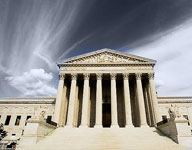
Ross Douthat writes in the New York Times that "complaints about the Supreme Court's power are almost as old as the Constitution, but they have more merit now than ever." He says, "According to calculations by the Harvard law professor Jed Shugerman, the Court has gone from overturning roughly one state law every two years in the pre-Civil War era, to roughly four a year in the later 1800's, to over 10 a year in the last half-century." He says that "there are bipartisan ways that the Court could be reined in, and the legislative branch reinvigorated." Otherwise, "the best reform would be term limits for the Justices, instead of lifetime tenure." Douthat concludes that "Such limits wouldn't reduce the Supreme Court's power directly, but it would help us see the Court for what it has become - a deeply political institution, as fallible as any other, and answerable, when all is said and done, to us." |
Researchers: Insurers Put Profits Over Health
Life, Health Insurers Invest in Tobacco Products
"More than a decade after Harvard researchers first revealed that life and health insurance companies were major investors in tobacco stocks - prompting calls upon them to divest - the insurance industry has yet to kick the habit, they say." An article on insurance company holdings, published in the New England Journal of Medicine, "shows that U.S., Canadian and U.K.-based insurance firms hold at least $4.4 billion of investments in companies whose subsidiaries manufacture cigarettes, cigars, chewing tobacco and related products." These products "currently contribute to the deaths of 5.4 million people worldwide annually, according to the World Health Organization," and are linked to strokes, heart attacks, lung disease and cancer. Read more. |
|
Tap Water More Regulated Than Bottled 
Congress has held hearings on two reports concluding that the EPA regulates tap water more carefully than the FDA does bottled water. The Wall Street Journal reported that the FDA, which "oversees" the $11.2 billion bottled water industry, "doesn't keep track of companies that produce bottled water and doesn't require companies to report positive tests for contaminants, federal officials told a House hearing Wednesday. Consumer advocates testified before the Energy and Commerce Committee's oversight and investigations panel that bottlers should be required to disclose more information to consumers."
Why drink bottled water anyway? Don't risk harmful plastics. Get a Sigg, the eco-friendly water bottle. Available locally at Papoose in Norwich. |
| Proposal for Consumer Financial Protection Agency Criticized
"In a Washington Post op-ed, Peter J. Wallison of the American Enterprise Institute says if the Obama Administration's proposal for a Consumer Financial Protection Agency (CFPA) "is adopted, many consumers will be told that they cannot have particular products or services because they are not sophisticated, educated or perhaps intelligent enough to understand what they have been offered." The Administration's plan "would allow the educated and sophisticated elites to have access to whatever financial services they want but limit the range of products available to ordinary Americans. This unprecedented result comes about because, under the proposed legislation, every provider of a financial service (a term that includes organizations as varied as banks, check-cashing services, leasing companies and payment services) is required to offer a 'standard' product or service -- to be defined and approved by the proposed agency -- that will be simple and entail 'lower risks' for consumers." |
Class Action Alleges Disease Linked to Contrast MRI Dye
Rhode Island's WPRI News reported that 517 plaintiffs are suing "pharmaceutical companies that make certain dyes used for magnetic resonance imaging (MRI)." The plaintiffs were "diagnosed with nephrogenic systemic fibrosis (NSF)...after being injected with a contrast-agent made with gadolinium." Patients with healthy kidneys are able to "simply flush the gadolinium out," but those with NSF "describe their skin turning wood-like, eventually cracking." The FDA "issued a warning in 2006 and 2007 not to administer the drug to those with kidney problems," but "gadolinium is still used in routine MRIs." The class-action suit "against five pharmaceutical companies that make gadolinium-based contrasting agents is getting larger as more and more are diagnosed with NSF." Some claim that they were "never warned about the possible side-effect because the medical community was in the dark at the time." |
Assumption of the Risk at Burning Man Festival
A California appeals court reaffirmed the assumption of the risk defense in Beninati v Black Rock Inc., LLC, a case arising out of the annual "Burning Man Project," in which tens of thousands of participants gather in Nevada's Black Rock Desert to celebrate "community, art, self-expression, and self-reliance." Anthony Beninati, who was attending his third Burning Man event, approached the 60-foot-high wooden "burning man" to toss in a photograph of a recently deceased friend (his suit alleged that attendees were allowed and invited "to approach the flames to deposit tokens, mementos and other commemorative objects into the fire so attendees can participate more fully and completely in the Burning Man experience") when he apparently tripped and fell, resulting in severe burns and more than $1 million in medical expenses. He sued organizers of the event, alleging negligence, but the appellate court said even if they were negligent, the organizers were not liable to Beninati as a matter of law, since he was fully aware of the risks of the Burning Man fire and chose to assume them. | |
 |
 |
 |
|
Newsletter Archive
New to our mailing list? To read our prior newsletters, click here. | |
Threats Against Federal Judges Increase
CNN reported that according to the U.S. Marshals Service, the number of threats against federal judges and prosecutors has exploded from 500 in 2003 to 1,278 in 2008, and is on track to go even higher in 2009. There are no statistics on threats against state and local judges. |
| Medicare Analyzes Best, Worst Hospitals
USA Today reported that "Too many people die needlessly at U.S. hospitals, according to a sweeping new Medicare analysis showing wide variation in death rates between the best hospitals and the worst." Click here to find and compare hospitals. |
U.S. News Ranks Best Hospitals
|
| Highway Deaths Still Falling
The AP reported that "highway deaths are continuing to fall in 2009 from their lowest levels in nearly a half-century. The government reported Thursday that an estimated 7,689 people were killed on the nation's highways in the months of January through March of this year. That's a 9 percent decline from a year ago." This is good news. In 2008, the government estimated that 37,261 people died in traffic accidents, the fewest since 1961. "If the 2009 fatality trends continue, fewer than 31,000 people would die. Experts have attributed the declines to the recession, record-high seat-belt use and fewer people driving." |
Sotomayor Hearings a "Waste of Time"
A New York Times blog presented the opinions of several legal scholars and commentators as to the value of Judge Sonia Sotomayor's confirmation hearings. Philip K. Howard said, "These hearings are almost devoid of substance, so the lessons are mainly negative. The one useful conclusion is that Judge Sotomayor's skill at parrying loaded questions demonstrates that she is as smart as her resume suggests. Otherwise, the hearings are a waste of time."
|
Walkers, Canes Involved in 47,000 Falls Per Year
The AP reports that a study in the Journal of the American Geriatrics Society notes "Health officials say more than 47,000 elderly Americans end up in emergency rooms each year from falls involving walkers and canes." |
ADHD Drugs Linked to Risk of Sudden Death
New research suggests that "stimulants used to treat attention deficit hyperactivity disorder could increase the risk of sudden death in children who have no underlying heart conditions." While the drugs "have carried warnings since 2006 about an increased risk of sudden death in children or teens known to have serious heart abnormalities", this new study is the first "to link the stimulants to sudden death in otherwise healthy young people," according to FDA officials. More research is needed to confirm the finding. Read more. |
Soldiers' Alcohol Abuse Climbs
"The rate of Army soldiers enrolled in treatment programs for alcohol dependency or abuse has nearly doubled since 2003 - a sign of the growing stress of repeated deployments in Iraq and Afghanistan, according to Army statistics and interviews." Read more.
|
| Study Finds Alcohol's Site of Action
The National Institutes of Health has released a new study that provides an explanation for how alcohol produces its intoxicating effects in the brain. "The breakthrough could lead to new treatments for alcohol abuse and dependence." Read more. |
Recall Central
To read about recent recalls and product safety news from the U.S. Consumer Product Safety Commission, click here.
Get the latest recall information from the National Highway Traffic Safety Administration here.
The Dept. of Agriculture's Food Safety and Inspection Service regulate meat, poultry products and processed eggs. Check their recalls here.
Click here for Food and Drug Administration recalls, market withdrawals and safety alerts.
For updates on the peanut products recall click here. |
FDA Targets E-Cigarettes
USA Today reported that the FDA, which was "recently granted the authority to regulate tobacco as a drug, is taking aim at electronic cigarettes--battery-powered cigarette look-alikes that deliver nicotine and produce a puff of odorless vapor." The FDA says tests show that "e-cigarettes contain known carcinogens and toxic chemicals, including diethylene glycol, an ingredient used in antifreeze." However, e-cigs do not have warning labels. |
Exploding iPods
KIRO-TV Seattle, WA reported on its website that its investigation "reveals an alarming number of Apple brand iPod MP3 players have suddenly burst into flames and smoke, injuring people and damaging property." It took "more than 7-months for KIRO 7 Consumer Investigator Amy Clancy to get her hands on documents" concerning iPods from the CPSC "because Apple's lawyers filed exemption after exemption. In the end, the CPSC released more than 800 pages which reveal, for the very first time, a comprehensive look that shows, on a number of occasions, iPods have suddenly burst into flames, started to smoke, and even burned their owners." Earlier this year "a lawsuit against Apple was filed in Cincinnati because, [a] lawyer claims, an iPod Touch, one of Apple's newest edition of iPods, also powered by a lithium ion battery, exploded and caught fire while in a teenager's pocket. The suit claims the boy suffered second-degree burns to his leg, and that the iPod was off at the time. This incident is not included in the CPSC's file." |
Anti-Meat Group: Hot Dogs Need Warnings
Suit Alleges Cancer Risk
An anti-meat advocacy group says hot dogs are "hazardous to your health and should carry warning labels." The group known as the Cancer Project filed a lawsuit last month in New Jersey on behalf of three state residents against Kraft Foods Inc., manufacturer of the Oscar Mayer brand; Sara Lee Corp.; Nathan's Famous; and the makers of the Hebrew National and Sabrett brands. "The lawsuit cites a report by the American Institute for Cancer Research that concluded regular consumption of processed meat can increase the risk of colorectal and other forms of cancer." |
| Teen Falls Into Sewer While Texting
Alexa Longueira, 15, of Staten Island was walking and texting when she fell down an open manhole into a sewer, where she immediately texted "hlp am trppd n swr pls rscu me."
Prof. Jonathan Turley notes that "While she was negligent in texting and walking, the courts have previously ruled that cities must anticipate inattentive people or people with disabilities who may not see an open manhole or ditch." E.g., Fletcher v. City of Aberdeen (1959) (city workers failed to replace barriers around an open hole; court found that city must anticipate individuals who cannot see such a danger). As the court held in Robinson v. Pioche, Bayerque & Co. (1855), "a drunken man is as much entitled to a safe street as a sober one, and much more in need of it." |
|
|
|
|
Proudly Serving Connecticut and Rhode Island
The trial attorneys at The Law Firm of Stephen M. Reck, LLC represent individuals in all types of personal injury cases throughout the state of Connecticut and the state of Rhode Island, including, in Connecticut: New London County, New Haven County, Middlesex County, Hartford County, Tolland County, and Windham County; and in Rhode Island: Bristol County, Kent County, Newport County, Providence County, and Washington County.
Referrals Welcome
| | |




 At
At