|
Join COGNOiSe.com, the largest independent, worldwide FREE IBM Cognos Support Community.
Access our
|
|
| Greetings!
Welcome to this month's BSP Newsletter. We appreciate all of the great feedback we've received on the newsletters, and this month we have included a few additional tips and tricks per your requests.
As always, we enjoy hearing your suggestions regarding the content you'd like to see. Please e-mail us at Newsletter@brightstarpartners.com if you have a topic you'd like to see discussed in future newsletters. |
"THE ECONOMIC REPORT" WITH GREG GUMBEL FEATURING BSP TO AIR IN CHICAGO AND MIAMI
| |
|
Schedule for Chicago and Miami-Ft. Lauderdale
As many of you are aware, BSP has been featured on an appearance of the television segment The Economic Report after the producers of the show approached us about appearing in a broadcast on Business Performance Management (BPM). This segment continues to air on various business networks like Fox Business Network, CNN Headline News, and 18 other regional news networks.
For those of you in the Miami-Ft. Lauderdale and Chicago markets, below is the list of upcoming airings in the month of June:
| Market |
Day |
Date |
Time |
Channel |
| Miami-Ft. Lauderdale |
Friday |
June 6th |
5:24 PM |
CNN Headline (Comcast) |
| Chicago |
Wednesday |
June 24th |
9:24 AM |
CNN Headline (Comcast) |
| Chicago |
Wednesday |
June 24th |
12:24 PM |
CNN Headline (Comcast) |
|
UNLEASH THE POWER OF SEARCH PATH TO SAFELY EXPLORE YOUR CONTENT STORE
| |
|
BSP Podcast Channel Episode 9
A search path is an expression used to navigate the Content Store hierarchy to locate any object. This video podcast will show you how to create and use search paths in MetaManager. Also check out the Cognos 8 Software Development Kit Developer Guide - Appendix A (Search Path Syntax) for more information.
Visit our Podcast Channel to learn more on Advanced Search Path!
|
| CREATE DYNAMIC REPORT MEASURES USING PROMPTS AND PROMPT MACROS |
By S.J. Van Jaarsveld, Sr. Consultant
This month's technique explains how you can dynamically change the measure of a Report Studio report using a prompt with a prompt macro. In this example, a product's measures are changed via a value prompt.
Click here to view the technique.
|
| IBM COGNOS ARTICLES OF INTEREST |
|
In the News...
Cognos KB - Where Did You Go
Cognos SupportLink Articles of Interest:
|
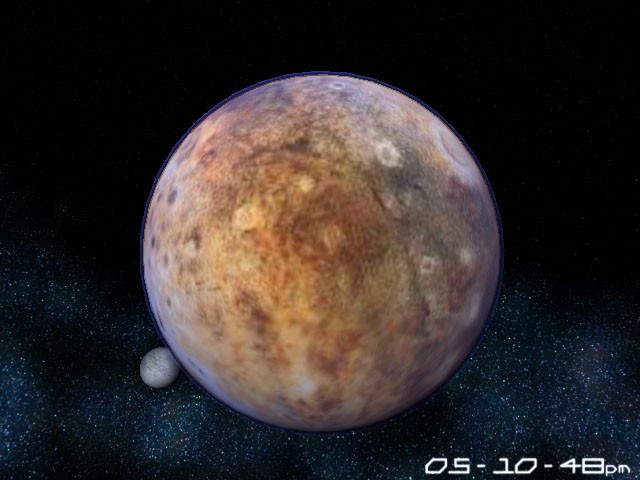 About Pluto About Pluto
- Pluto was discovered in 1930 by astronomer Clyde Tombaugh. After Neptune was discovered, astronomers noticed that something was changing the orbits of Uranus and Neptune and decided that there must be another undiscovered planet that was causing these changes. Mr. Tombaugh spent a long time taking photographs of the area of the sky where the unknown planet should be and finally discovered Pluto in one of the photographs.
- Pluto is the Roman god of darkness and the underworld. Perhaps Pluto got its name because it is always in darkness. It may have also gotten its name from the fact that its symbol "PL" is the initials of Percival Lowell, who founded the observatory where Mr. Tombaugh worked.
- Pluto is the ninth, or last, planet in the solar system. The orbit, or path the planet takes around our Sun is an ellipse, or stretched out circle. For this reason there are times when Pluto is the furthest away from the Sun.
- There are also times when it is closer to the Sun than Neptune (as it was from January 1979 thru February 11 1999). Right now, Pluto is the furthest planet. Pluto is a very long way from the Sun. Its average distance from the Sun is over 3.5 billion (3,500,000,000) miles.
- Pluto is the only planet that has not yet been visited by a spacecraft. Even the Hubble Space Telescope can resolve only the largest features on its surface (left and above). A spacecraft called New Horizons was launched in January 2006. If all goes well, it should reach Pluto in 2015.
- A year on Pluto lasts for 248 Earth years! A day on Pluto is also longer than a day here on Earth. It takes Pluto over six Earth days to spin around once.
- Pluto is also one of the planets that spins around in the opposite direction from Earth. This means that the distant Sun would rise in the West and set in the East.
- Pluto has one tiny moon, named Charon, that wasn't discovered until 1978. Charon is half the size of Pluto. No other moon in the solar system is as large, when compared to its mother planet, as Charon. Pluto and Charon are so similar in size that some astronomers think of them as a double planet.
- In late 2005, a team using the Hubble Space Telescope discovered two additional tiny moons orbiting Pluto. Provisionally designated S/2005 P1 and S/2005 P2, they are now known as Nix and Hydra. They are estimated to be between 50 and 60 kilometers in diameter.
- There has recently been considerable controversy about the classification of Pluto. It was classified as the ninth planet shortly after its discovery and remained so for 75 years. But on Aug 24,2006 the IAU decided on a new definition of "planet" which does not include Pluto. Pluto is now classified as a "dwarf planet," a class distinct from "planet."
- Little is known about Pluto's atmosphere, but it probably consists primarily of nitrogen with some carbon monoxide and methane. It is extremely tenuous, the surface pressure being only a few microbars. Pluto's atmosphere may exist as a gas only when Pluto is near its perihelion; for the majority of Pluto's long year, the atmospheric gases are frozen into ice. Near perihelion, it is likely that some of the atmosphere escapes to space perhaps even interacting with Charon. NASA mission planners want to arrive at Pluto while the atmosphere is still unfrozen.
- From Pluto, the Sun is not much brighter than any other star. Not only is Pluto a very long way from the Sun, but its orbit is tilted. If you could look at our solar system from an "edge," most of the planets would be on a line like a table top, with the Sun being in the middle. This line, also called a plane, is the ecliptic, and the rest of the planets' orbits stay on this line. Pluto's orbit, though, is tilted at an angle to the rest of the solar system.
|
|
|





