|
|
10/04/2009
 |
| |
Our priceless moments are right in front of us.
Greetings!
Our moments of joy are sometimes found in the little time we spend between doing our big things. Last week was my birthday! Yes, very exciting almost 40 and feeling great. Right up to when I pulled a thigh muscle practicing soccer with my son (Oh the compassion I have again for people in pain). God has a funny way of reminding us of our mortality.
The picture above is a spur of the moment photo I took when I went for a walk with my son and daughter at Stoneybrook. When my sister saw the photo she said it must be nice to be on vacation. Just as I was going to correct her, I thought she's right. Living in East Orlando I sometimes forget how amazing this place is. It really is a paradise, especially when compared to most of the other cities I've lived in.
The traffic gets a little congested but nothing like Atlanta or NY. The people get a little frustrated but only as much as a Floridian who lives in excellent weather year round can. Our homes are not on top of each other like Philadelphia. And best of all we truly live in one of the worlds most visited vacation spots on the planet.
I'm grateful for my life. I'm grateful you are in my life and I'm most grateful for the children I have been blessed with. Take a few moments today and be honest with yourself and your family about what you are grateful for. Take a moment to notice all of the beauty around you and be sure to let the people you love know it.
Our priceless moments are right in front of us every day!
(This photo was captured by my son when my daughter was asking me about the statue of liberty at Ellis island - more great moments!) |
|
|
It's not about you. 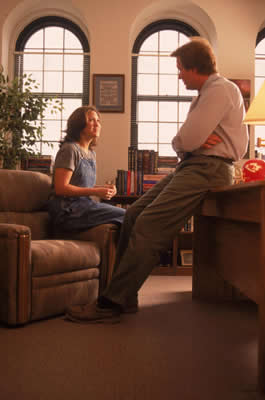
As a child, we arrived on the scene attempting to make meaning of the world and the actions of others. We often made incorrect assumptions, attaching me-centered meanings to events and situations. ("I caused my parents' divorce." "Others can't be trusted." "There's not enough." "I'm not smart enough." "The world is a dangerous place." "Be afraid of strangers." Etc.)
It's no surprise that the habit of making these short, life-limiting pronouncements, that put us in the center of the universe, continue as we age. This handicaps our ability to show up as a servant. It cripples us by seeking to be liked. It creates a selfishness that prevents us from prospering.
What other people do or don't do is not about you, nor is it under your control. If you want to make it about you; in fact, many people are inclined to do so. The price of this luxurious self-absorption - is a destiny of unfulfilled dreams and impaired relationships.
It's not about you. |
|
|
Fix Your Posture to Maximize Muscle
This months edition of Muscle & Fitness featured and excellent article about correcting your posture. In addition to your chiropractic adjustments you may also be prescribed specific exercises for your postural problems.
Almost everyone I see has a posture problem. After years of evaluating patients I've learned to spot an anatomical abnormality from the way a person walks through the mall, sits on a park bench, or stands at a bar.
The trouble isn't just that slumped shoulders make you resemble a Neanderthal. Over time, your poor posture takes a tremendous toll on your spine, shoulders, hips, and knees. In fact, it can cause a cascade of structural flaws that result in acute problems, such as joint pain throughout your body, reduced flexibility, and compromised muscles, all of which can limit your ability to burn fat and build strength.
But don't worry-all these problems can be corrected with regular adjustments and specific exercises. Are you ready to straighten yourself out? Use this head-to-toe guide to make sure your posture is picture-perfect.
Analyze Your Alignment
Strip down to a pair of shorts and ask a friend to take two full-body photos, one from the front and one from the side. Keep your muscles relaxed but stand as tall as you can, with your feet hip-width apart. Now compare your photos with the illustrations below to diagnose your posture problems. Then see the following repair plans.

|
|
Forward Head
Where pain strikes: Your neck
The problem: Stiff muscles in the back of your neck
Fix it: Stretch with head nods daily: Moving only your head, drop your chin down and in toward your neck while stretching the back of your neck. Hold for a 5 count; do this 10 times.
The problem: Weak front neck muscles
Fix it: Do this neck "crunch" every day: Lying faceup on the floor, lift your head so it just clears the floor. Raise your head, and hold for 5 seconds; do 2 or 3 sets of 12 reps daily.
Elevated Shoulder
Where pain strikes: Neck and shoulders
The problem: Your trapezius (the muscle that starts at the back of your neck and runs across your upper back) is shortened.
Fix it:Perform an upper-trap stretch. With your higher-side arm behind your back, tilt your head away from your elevated side until you feel the stretch in your upper trapezius. Apply slight pressure with your free hand on your stretched muscle. Hold for 30 seconds; repeat 3 times.
The problem: A weak serratus anterior, the muscle just under your pecs running from your upper ribs to your shoulder blades
Fix it: Try chair shrugs. Sit upright in a chair with your hands next to your hips, palms down on the seat, and keep your arms straight. Without moving your arms, push down on the chair until your hips lift off the seat and your torso rises. Hold for 5 seconds. That's 1 rep; do 2 or 3 sets of 12 reps daily.
Rounded Shoulders
Where pain strikes: Neck, shoulder, or back
The problem: Tight pectoral muscles
Fix it:Try a simple doorway stretch: Place your arm against a doorjamb in the high-five position (that is, forming an L), your elbow bent 90 degrees. Step through the doorway until you feel the stretch in your chest and the front of your shoulders. Hold for 30 seconds. That's 1 set; do a total of 4 daily.
The problem: Weakness in the middle and lower parts of your trapezius
Fix it:Use the floor L raise: Lying facedown on the floor, place each arm at a 90-degree angle in the high-five position. Without changing your elbow angle, raise both arms by pulling your shoulders back and squeezing your shoulder blades together. Hold for 5 seconds; do 2 or 3 sets of 12 reps daily.
Hunched Back
Where pain strikes: Neck, shoulder, back
The problem: Poor upper-back mobility
Fix it:Lie faceup on a foam roller placed about midback, perpendicular to your spine. Place your hands behind your head and arch your upper back over the roller 5 times. Adjust the roller and repeat for each segment of your upper back.
The problem:Weak muscles in your back
Fix it:Perform the prone cobra. Lie facedown with your arms at your sides, palms down. Lift your chest and hands slightly off the floor, and squeeze your shoulder blades together while keeping your chin down. Hold for 5 seconds; do 2 or 3 sets of 12 reps daily.
Anterior Pelvic Tilt
Where pain strikes: Lower back (because of the more pronounced arch in your lumbar spine). The tilt also shifts your posture so that your stomach pushes outward, even if you don't have an ounce of belly fat.
The problem: Your hip flexors, which allow you to move your thighs up to your abdomen, are tight.
Fix it: Kneel on one knee and perform a front hip stretch. Tighten your gluteal (butt) muscles on your kneeling side until you feel the front of your hip stretching comfortably. Reach upward with the arm that's on your kneeling side, and stretch in the opposite direction. Hold this position for a count of 30 seconds, and repeat 3 times.
The problem:Weak glutes
Fix it:The glute bridge is your solution. Lie on your back with your knees bent about 90 degrees. Squeeze your glutes together and push your hips upward until your body is straight from knees to shoulders. Hold for 5 seconds; complete 2 or 3 sets of 12 reps daily.
Pigeon Toes
Where pain strikes:Knee, hip, or lower back
The problem: Tightness in the outer portion of your thigh (your tensor fasciae latae)
Fix it: Stand up, cross your affected leg behind the other, and lean away from the affected side until you feel your hip stretching comfortably. Hold for 30 seconds. Repeat 3 times.
The problem: Weak gluteus maximus and medius muscles
Fix it: Use an exercise called the side-lying clamshell. Lie on one side with your knees bent 90 degrees and your heels together. Keeping your hips still, raise your top knee upward, separating your knees like a clamshell. Pause for 5 seconds; lower your knee to the starting position. Perform 2 or 3 sets of 12 reps daily.
Duck Feet
Where pain strikes: Hip or lower back
The problem: You lack flexibility in all the muscles in your hips.
Fix it: Drop to your hands and knees and place one foot behind the opposite knee. Making sure you keep your spine naturally arched, shift your weight backward and allow your hips to bend until you feel the stretch. Hold the stretch for 30 seconds, repeat 3 times, and then switch sides.
The problem: Weakness in your oblique muscles and hip flexors
Fix it: Try the Swiss-ball jackknife. Assume the top of a pushup position but rest your feet on a Swiss ball. Without rounding your lower back, tuck your knees under your torso by rolling the ball with your feet toward your body. Roll the ball back to the starting position. Do 2 or 3 sets of 12 reps daily.
|
Nutrition and Diet for Weight Loss
Donald J. Frisco, MD

Maintaining a good diet for long-term weight loss
Quite simply, obesity results when more calories are consumed than are burned by the body over a long period of time. Contributing to many Americans' obesity or overweight condition are the combined effects of insufficient exercise and a high-calorie diet.
The National Institutes of Health recommends that patients educate themselves on several nutritional issues to help manage their own diet and nutrition. The basic recommended guidelines for a healthy diet and good nutrition for weight loss include the following:
Reducing the number of calories in the daily diet
Eating smaller portions as part of the diet
Tracking meal composition, portion sizes, and nutritional content of the diet
Learning methods of food preparation for a healthy diet (5)
Choosing nutritious meals that are lower in fat (4)
Patients who reduce caloric consumption in their diet slowly but consistently are usually the most successful in maintaining their weight loss.
Steady, controlled progress during a diet and weight loss program is generally more effective than sporadic and inconsistent changes in caloric intake and portion sizes. It is commonly recommended that patients drink at least 8 large cups of water throughout each day. Drinking enough water is essential for a healthy back, as water transports nutrients and eliminates wastes in the body (6). The discs are comprised mostly of water and need to stay hydrated so that nutrients and fluids can be properly exchanged within the spinal structures. For patients undergoing exercise and dieting for weight loss, drinking adequate amounts of water helps the body to metabolize fat and avoid water retention.
Effects of behavioral and environmental factors on diet and weight loss.
Dieting programs should take into account behavioral and environmental factors that can influence a patient's eating habits. For example, stress, boredom, sadness and anger can all have an effect on a patient's diet in terms of the quantities and types of food the patient consumes (4). Behavioral factors, such as feelings and mood changes throughout the day, can induce patients to eat at times when they are not hungry or to eat unhealthy foods. Environmental triggers such as smells or stressful situations can also lead patients to eat when they are not actually hungry but instead are reacting to external stimuli (4).
Patients may find it helpful to keep a written log of what they eat and when over a period of several days or weeks, observing and recording information about the impact of behavioral and environmental factors on diet and nutritional choices.
In order to stay motivated and on-track with a weight loss and diet program, patients can reward themselves for positive behaviors, develop a support network of friends and family and use additional motivational techniques to maintain steady progress.
When weight loss is unhealthy.
Although weight loss with the use of a healthy diet and exercise program may alleviate back pain and improve overall fitness, there are several warning signs indicating that weight loss is unhealthy.
Patients should pay close attention if they experience any unexplained weight loss, loss of appetite, pain and neurological problems. Depression, malnutrition, some prescription drugs, and infections may also cause unintentional weight loss (7).
If the patient's weight has been steady for a long duration of time and then his or her weight drops unexpectedly or the patient experiences a loss of appetite, it may be an indication of a serious medical condition, such as cancer. It's important to communicate these issues with your doctor.
National Institutes of Health. National Institute of Diabetes & Digestive & Kidney Diseases. "Understanding adult obesity." 2001. http://www.niddk.nih.gov/health/nutrit/pubs/unders.htm.
American Obesity Association. "Obesity treatments." AOA Obesity Fact Sheets. 2002. http://www.obesity.org/subs/fastfacts/Obesity_Treatment.shtml.
Hochschuler, S. Back In Shape: A Back Owner's Manual. Boston: Houghton Mifflin Company, 1991: 149.
National Institutes of Health. "Weight loss - unintentional." MedlinePlus Medical Encyclopedia. 2003. .nih.gov/medlineplus/ency/article/003107.htm.
| |
|
|
|
|
I know it's another long one. Thanks for reading this far down.
Sincerely,

Dr. Brent Baldasare
Affinity Health & Wellness Center / www.familychiropractor.com
407-381-4040
|
|
|
|


