|
Dear Conservation Partners:
I hope everyone is having a great summer. A couple items of business:
1) Our buying network seems to be holding steady on the phones we resell. This means that we are continuing to upgrade the prices we pay for these types of phones. Unfortunately, the prices for certain models are still quite depressed. You will see this in the payout value of certain phones like the Motorola Nextels.
2) We are putting our new website in production very soon. The new website simplifies our current website so that it is easier to navigate. It will also, among other things, highlight the good works of our Silverback partners.
On a more personal note, I want to congratulate our part-time employee from Sudan, James Malou. He just graduated from the University of Louisville with a major in Psychology and a minor in Biology. He is an incredible person who has achieved so much against such incredible odds. I am truly grateful for all that he has taught me. I am a better person for knowing him and working with him.
Speaking of education, we have decided to make that the theme of our summer issue. While most students are on break from their studies, we thought it a good time to reflect on the power of education for good and for change. We have a growing number of teachers and students who have become ECO-CELL partners and they are incorporating cell phone recyling into their curricullums and studies in really creative and thoughtful ways. They are making a difference. Enjoy their stories!
Have a great rest of your summer and thanks again for your partnership. It means the world to us. |
|
High School Teacher Uses ECO-CELL to Illustrate a Point: Recycling to Understand Ethnic Conflict Jen Wilson is teaching a very important and innovative course at North East High School in Pennsylvania. She is focusing on the history of ethnic conflict and genocide across multiple cultures and using our cell phone recycling program to promote environmental conservation, highlight the connection between violence and resources, and raise money for STAND (the student-led division of the Genocide Internvention Network).
North East High School-Ethnic Conflict Course
By Jen Wilson, Teacher at North East High School, North East, PA
"My course is called "Ethnic Conflict: an Ethical Crisis." It is new to North East High School (I just began teaching it in the 2008-2009 school year) and is an elective course open to 9th through 12th grade. We study the history of ethnic conflict and genocide both in the US (focusing on the conflict between Native Americans and Europeans and also the Atlantic Slave trade) and the many instances that have occurred in the rest of the world (Armenia, the Holocaust, Cambodia, Rwanda, the Balkans, Darfur, etc). This course is also a social activist course. During the 2008-2009 school year, we put on a school wide "awareness" assembly, sent hundreds of postcards (from the STAND website) to Barack Obama regarding the issues in Darfur, held an auction during school lunches, and attempted to host a 5K Race but ran out of time to plan it. This brings me to the cell phones.
We wanted one more proactive campaign that we could do quickly-and after perusing the STAND website, which I belong to as a teacher, I was linked to your program which served both the environment (which many students are very concerned with in my school) and our cause, which is prevention of ethnic conflict and giving aid to victims. So, we went around to homerooms and collected cell phones. We also put collection boxes in our elementary schools as well. And what you received is what we collected! Thanks for the great, and easy, idea!"
|
Partner Profile 
Dr. Petra Tschakert: Inspiring Activism in the College Classroom
Talk about an inspiration, Professor Petra Tschakert developed a project involving her Geography class at Penn State. She wanted to collect phones as a project to illustrate the negative impact that the mining for cell phone components is having on the Congo. Since her students began collecting a little over a year ago, they have collected nearly $2,600. Each semester, her students vote on the African charity to whom they want to donate their proceeds. With her guidance, the project has taken off and inspired an ever increasing number of students.
Now that's teaching! |
|
This Environmental Studies Student is Seeing Green
This student sees cell phone collecting as a WIN-WIN-WIN idea. Not only is she raising money for her college tuition (she is working on her degree in environmental studies), but she also hopes to raise awareness, help the local environment and preserve the habitat of the Congolese gorillas.
"After talking to one of my professors, I decided to invite her to speak to an organization I am part of on campus at Penn State University, EcoAction. My professor came to one of our meetings and discussed the mining of minerals such as coltan and cassiterite that are used in our cell phones. She told our group about how the mining of these minerals in the Democratic Republic of the Congo in Africa harms gorillas in the area because the miners poach the gorillas for food.
After hearing my professor speak about this, I decided that our group, being an environmental activism group, should start a cell phone recycling project on campus. With our Earth Day celebration approaching, I thought what better way to get the word out and have people bring their cell phones to one place. Our group advertised for the event on campus and in the downtown area for people to bring old cell phones to Earth Day so we can recycle them. I also put a collection box at a daycare I work at in town. On Earth Day, I set up a booth with collection boxes and information about how the mining of certain minerals in the DRC effects gorillas in Africa.
People were very interested in the topic and were eager to learn more. I think this is great way to be green and recycle as well as help people and gorillas in Africa, just by recycling an old cell phone!" |
|
Compost Anyone?  | |
|
|
 ECO-CELL is the premiere cell phone recycling program for environmentally minded fundraisers. Our passion is to provide our conservation partners with the most profitable, easy to use and environmentally sound cell phone recycling program possible.
We recognize that we are in the midst of an e-waste crisis. That is why we designed a program that encourages organizations to collect all used cell phones and accessories, including batteries.
From the start, we knew this approach would take away from our profits. However, we have always maintained that this endeavor is about a lot more than just collecting the 'profitable' used cell phones. The further we get into this endeavor and the more people we come in contact with, the more we realize just how much more there really is. | |
|
|
|
|
"Tell me and I'll forget; show me and I may remember; involve me and I'll understand."
--Chinese Proverb
~~~~~~~~~~~~~~~~~~~
"Education is not the filling of a bucket, but the lighting of a fire."
--W.B. Yeats |
|
Wordsworth says...
And hark! how blithe the throstle sings!
He, too, is no mean preacher:
Come forth into the light of things,
Let Nature be your teacher.
She has a world of ready wealth,
Our minds and hearts to bless-
Spontaneous wisdom breathed by health,
Truth breathed by cheerfulness.
--Willam Wordsworth, "The Table Turned: An Evening Scene on the Same Subject"
|
The ABCs of Composting are Really the RRRs: Reduce, Reuse and Recycle your Old Fruit and Veggies
I learned about composting at my child's preschool (yes, that was humbling!) but you don't have to do the same. There is plenty of great information on the web:
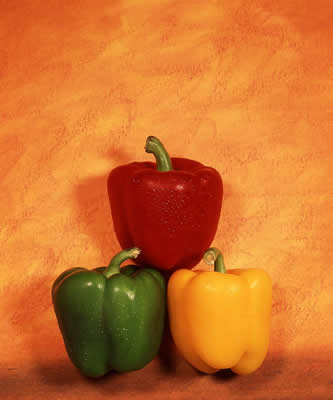
"Yard trimmings and food residuals together constitute 24 percent of the U.S. municipal solid waste stream. That's a lot of waste to send to landfills when it could become useful and environmentally beneficial compost instead! Composting offers the obvious benefits of resource efficiency and creating a useful product from organic waste that would otherwise have been landfilled." --EPA website
To find out more, go to the EPA's web page on composting. There you will find, a general description of what compost is and which materials should and should not be composted, information about regional and state composting programs, an explanation of how composting benefits the environment, discussion of how the composting process works and the different methods of composting. --Lindsey Ronay
(BTW, I am squeamish and don't care for worms. You don't have to use worms if you use a tumbler or other composting bin.) |

|
|