|

More Flower Nibblingby Carol Ann Kates Last Saturday, we splurged and purchased squash blossoms at the farmers' markets. While they can be a bit pricey, the season for this very perishable delicacy is relatively short. I stuffed them with ricotta cheese and fresh herbs and then fried them-their typical preparation. My husband loved their flavor and subtle crunch. I have a new citrus balsamic, infused with oranges, tangerines, and limes. We used it as a dip for the fried blossoms. The results-positively delicious! Fried Zucchini BlossomsStuffed with Ricotta Cheese and Fresh Herbs For the filling: 1 cup whole milk ricotta cheese 1 tablespoon fresh basil, chopped 1 ½ tablespoons fresh chives, minced Salt to taste Large grind black pepper to taste In a small bowl, combine ricotta cheese, basil, and chives. Season to taste with salt and pepper. Set aside until ready to stuff blossoms. For the batter: Vegetable oil for deep-frying 1 ½ cups unbleached all-purpose flour 1 ½ cups chardonnay wine Pour vegetable oil into a deep, electric skillet and heat to 375 degrees F. In a medium bowl, place flour. Add ½ cup chardonnay wine and whisk until smooth. Continue adding ½ cup wine at a time, whisking after each addition, until the mixture is the consistency of pancake batter. For the zucchini blossoms: 12 to 18 zucchini blossoms Salt to taste Shake each blossom to remove any insects. Delicately wash blossoms under a fine mist of water. Drain and transfer to paper towels to dry. Carefully blot each petal with a paper towel. Using a pair of tweezers, remove the pistil and stamen. Cut off stems. Press hard bulbs to flatten, then separate and extend the petals until the flower shape is visible. Stuff each blossom with a rounded teaspoon of the ricotta mixture. Twist the tops closed. When vegetable oil reaches 375 degrees F, dip blossoms into batter one at a time, allowing any excess batter to drip off. Slide blossoms six at a time into hot oil. Do not overcrowd, as this will cause the temperature of the oil to drop. Fry blossoms, turning frequently with tongs, until crisp and golden, about 3 to 5 minutes. Remove with tongs and transfer to paper towels to drain. Season to taste with salt. Repeat until all zucchini blossoms have been fried. Cooking tip: If the oil isn't hot enough, squash blossoms will be soggy. Cleaning edible flowers: It is important to wash flowers before you eat them. Shake each flower gently to remove any insects that may be hiding in the petals. Delicately wash the flowers under a very fine mist of water. You may also clean flowers by placing them in a strainer and immersing them in a large bowl of cool water. Drain and transfer to paper towels to dry. Carefully blot each petal with a paper towel. If flowers dry quickly, they will retain their natural odor and color. Be carefully not to expose them to direct sunlight. Preparing edible flowers: Using a knife, cut off the stem. Using a pair of tweezers, remove the pistil and stamen. Storing whole flowers: Edible flowers are very fragile. It is best to eat them the day of purchase. When you bring them home, place the stems in a bit of cool water to help keep them fresh. Storing whole flowers in a glass of cool water and then refrigerating them, will extend their shelf life a day or two depending upon the flower. Carol Ann Kates is the author of Secret Recipes from the Corner Market, selected as one of the top ten favorite cookbooks by the Denver Post Food Staff. For more information, visit www.cornermarketsecrets.com.  |
Melon Mania
By Liz Marr, MS, RD
An award winning registered dietitian, Liz is founder and principal of Liz Marr and Associates, LLC, Longmont, CO, an independent, strategic communications consultancy, specializing in food, nutrition, health, wellness and sustainability. Liz serves on the Boulder County Food and Ag Policy Council.
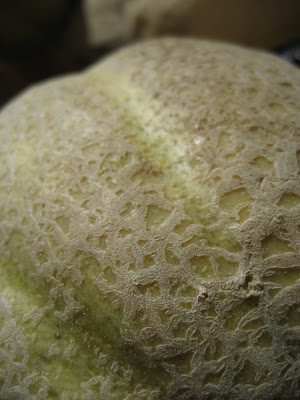
Mouthwatering Colorado cantaloupes and other melons are showing up at the Boulder County and Longmont Farmers Markets. Colorado-grown cantaloupes have a well deserved and widespread reputation for superb flavor and texture. Our climate and soil conditions, along with a little help from honey bees, are just right for superior melons.
Low in calories, a good source of fiber and packed with vitamins and minerals, cantaloupes are real nutritional bargain. A half-cup serving of diced cantaloupe (about one wedge - 1/6 of a whole cantaloupe) provides only 30 calories but 60% of the daily requirement for vitamin A, 54% of daily requirement for vitamin C and 7% of the daily requirement for potassium. Additionally, cantaloupe is a source of polyphenol antioxidants, phytonutrients (plant-based nutrients) which provide benefits to cardiovasular and immune systems as well as help with chronic disease risk reduction.
Honeydew melons are closely related to cantaloupe and have a similar nutritional profile, except vitamin A content is much lower (the orange color of cantaloupe is a giveaway that the fruit is high in vitamin A).
In May, the FDA issued an advisory about cantaloupes imported from Honduras being associated with a salmonella (type bacteria that can cause food borne illness) outbreak. While the outbreak was isolated to these specific imports versus U.S. grown cantaloupes, the FDA provides the following suggestions to help ensure food safety related to cantaloupes:
· After purchase, refrigerate cantaloupes promptly.
· Scrub whole cantaloupes by using a clean produce brush and cool tap water immediately before eating. Don't use soap or detergents.
· Wash hands with hot, soapy water before and after handling fresh cantaloupes.
· Use clean cutting surfaces and utensils when cutting cantaloupes.
· If there happens to be a bruised or damaged area on a cantaloupe, cut away those parts before eating it.
· Leftover cut cantaloupe should be discarded if left at room temperature for more than two hours.
· Use a cooler with ice or use ice gel packs when transporting or storing cantaloupes outdoors.
While a good melon stands on its own merits when chilled and sliced, melons can be served in a variety of ways. Here are some simple suggestions:
· Make and freeze melon balls - use as a delicious, attractive garnish or to cool your summer drinks.
· Add melon balls to your tossed salad. The sweetness of the melon provides a delightful balance with the slight bitterness of mixed greens as well as the tartness of vinaigrette dressings.
· When making salsa to serve with seafood or chicken, add diced melon.
· Grilled melon makes a unique and easy dessert. Slice melon in half and grilling three to four minutes; serve with ice cream or drizzle with a mixture of honey, lemon juice and toasted sesame seeds.
 |
 Longmont Farmers' Market Longmont Farmers' Market
"The day is coming when a single carrot, freshly observed, will set off a revolution."
--Cezanne
Plan Ahead! We will be hosting a blood drive at the market on Saturday August 23rd, from 8:30 am to 1:30pm. For more information or to schedule an appointment, call Bonfils at 303-363-2300, or go to www.bonfils.org. The site number is 6829.
Vendors arriving for the season: Blue Sky Farms is here with their delicious corn. We will have Oscar's local apples from Wide Horizons orchard beginning this weekend. And a new farmer, Plateau Gardens at Mallory Farm, also joins us with a variety of summer vegetables.
If you read only one thing about food this summer, make it Wendell Berry's "The Pleasures of Eating", reprinted in the latest edition of Edible Front Range. This beautifully-written 1990 essay manages, in three pages, to address the key issues facing us around food today: "Eaters, that is, must understand that eating takes place inescapably in the world, that it is inescapably an agricultural act, and that how we eat determines, to a considerable extent, how the world is used." The magazine is available free at the Farmers' Markets.
Eat Your Veggies:
Studies of chimpanzees at the Copenhagen Zoo and at an animal sanctuary in Bend, Oregon have shown that the animals will preferentially eat organic bananas over conventionally-raised ones; also, the chimps peel the conventional bananas before eating them, while they eat the organic ones whole.
Today's Daily Camera covers:
Taylor's Tinys Organic Doughnuts booth at the Longmont Farmers' Market - Linked here |
Culinary School of the Rockies
Recipe: Colorado Corn Gazpacho
Come out to the Boulder Farmers' Market to visit our Market Chef every Wednesday evening and Saturday morning. Watch demonstrations, pick up free recipes, and gather advice for cooking with seasonal ingredients fresh from the market.
Serves 4
Ingredients:
2 each English cucumber, seeded
1 each Red onion
1 each Red bell pepper
1 each Yellow bell pepper
1 each Green bell pepper
1 each Large vine ripened tomato
4 cup Heirloom cherry tomatoes, stemmed and cut in half
2 ears Fresh corn
2 each Celery stalks
3 Cloves garlic, minced
½ Bunch green onion
1 qt. Tomato Juice or V8
¼ cup Red wine vinegar
1 cup Extra-virgin olive oil
2 each Limes, juiced
2 Tbsp. Tabasco sauce
½ Bunch cilantro, chopped
Salt and Pepper to taste
Method:
Pre-heat oven to 350 degrees. Cut cucumbers, peppers, large tomatoes and onion into a medium dice removing core and seeds first. Slice green onions very thin. Gently peel husks away from the corn leaving them connected to the stem. Remove silk and soak in salted water for 15 minutes. Pull husk back over corn and roast in 350 degree oven until tender. Cool corn and cut kernels off the cob scrapping the cob to extract the juice.
In a blender puree tomato juice, lime juice and vinegar, slowly add olive oil to emulsify. Add juice mix to vegetables and season with Tabasco, salt and pepper. Gently fold in cherry tomatoes. Pour into bowls and top with chopped cilantro.
|
|
Book Review:
Deep Economy: The Wealth of Communities and the Durable Future,
by Bill McKibben (Times Books, 2007).
Even if the idea of reading an economic book makes your eyes glaze over, this book is worth a look. McKibben makes the point that our present system, which relies on continued economic growth, is not sustainable due to limitations on resource availability and environmental impacts of continued consumption. Perhaps more importantly, climbing consumption is no longer making us happier. For these reasons, he encourages us to consider alternatives to prevailing economic wisdom, to pay attention to community as a way to bolster personal happiness and non-monetary wealth.
Chapter Two, The Year of Eating Locally, applies these ideas to our food systems. He examines the history of the consolidation of food systems (The conglomerate formed by the 2000 merger of Phillip Morris and Nabisco collects almost 10 percent of American food dollars), and the emphasis on efficiency. Small farms actually produce more food per acre than large farms, and employ more people-this has been considered inefficient in the past, due to the availability of inexpensive oil, but in these times makes sense for our selves and our communities.
The final chapter, The Durable Future, explores new models for a world in transition, and concludes with the hope that, rather than bringing suffering, this challenge may bring us pleasure.
Review by Dr Audrey
|
|
The definition of the use of the word heirloom to describe plants is highly debated.
One school of thought places an age or date point on the cultivars. For instance, one school says that the seeds must be over 100 years old, others 50 years, and others prefer the date of 1945 which marks the end of World War II and roughly the beginning of widespread hybrid use by growers and seed companies or industrial agriculture. It was in the 1970s that hybrid seeds began to proliferate in the commercial seed trade.
Another way of defining heirloom cultivars is to use the definition of the word "heirloom" in its truest sense. Under this interpretation, a true heirloom is a cultivar that has been nurtured, selected, and handed down from one family member to another for many generations.
Additionally, there is another category of cultivars that could be classified as "commercial heirlooms," cultivars that were introduced many generations ago and were of such merit that they have been saved, maintained and handed down - even if the seed company has gone out of business or otherwise dropped the line. Additionally, many old commercial releases have actually been family heirlooms that a seed company obtained and introduced.
Regardless of a person's specific interpretation, most authorities agree that heirlooms, by definition, must be open-pollinated. They may also be open pollinated varieties that were bred and stabilized using classic breeding practices. While there are no genetically modified tomatoes available for commercial or home use, it is generally agreed that no genetically modified organisms can be considered heirloom cultivars. Another important point of discussion is that without the ongoing growing and storage of heirloom plants, the seed companies and the government will control all seed distribution. Most, if not all, hybrid plants, if regrown, will not be the same as the original hybrid plant, thus insuring the dependency on seed distributors for future crops. from Wikipedia
|
Not a sweet proposition
GMO sugar beets sneak into the food supply
Source: Gristmill
Excerpt: As you may know, Roundup Ready sugar beets are genetically altered to resist Monsanto's toxic weed killer, Roundup, and its active ingredient, glyphosate. But here's the scary truth about these beets:
When the USDA first approved GE sugar beets for commercial planting in 1998, the EPA also increased the maximum allowable residues of glyphosate on sugar beet roots from just .02 parts per million to 10ppm. That's a staggering 5,000 percent increase of allowable toxins on beet roots. And, it's littlesurprise that EPA made this policy change at the request of Monsanto.
Sugar beet roots contain sucrose that's extracted, refined, and processed into the sugar used in the foods we eat. What this means is that the more GE ingredients that find their way into our food, the greater the likelihood that we are ingesting more toxic chemicals.
Thankfully, GE sugar beets have never been grown in the U.S. for sale to food manufacturers -- that is, until this year, when Western farmers planted their first crop of Monsanto's Roundup Ready sugar beets. Right now, over half of the sugar used in U.S. processed foods comes from sugar beets, with beet and cane sugars combined in those products. What's most disturbing is that once GE sugar beets hit the market, which could be as early as next year, there will be no way to know if we're eating GE sugar because GE ingredients are not labeled.
Currently, only four major GE crops are sold commercially -- corn, cotton, soy, and canola. Most of these are engineered to withstand repeated, large doses of herbicides. For the most part, these crops and their byproducts are largely fed to animals with the exception of some minor food ingredients and oils. GE beet sugar breaks with this tradition in that it could become the first major GE ingredient added to almost all processed foods on our grocery store shelves.
|
MARKET BUCKS
In order to enhance the payment options that are available to customers, Boulder County Farmers' Markets are now accepting Visa, MasterCard and Debit cards. You may purchase Market Bucks at the t-shirt/information booth during the market. Market Bucks can be used to purchase anything at the Farmers' Market. Market Bucks are sold in $20.00 booklets with four - five buck coupons inside. Card processing services are provided through First National Bank of Colorado. There is no fee for purchasing Market Bucks.
| |


