|
|
Greetings!
I have a NEW website! Click on the link to your right to view the new changes.
Happy St. Patrick's day! In honor of this "holiday", I have included information on the history of Saint Patrick. You will also find tips for running in cold weather, and what type of running shoe you should be wearing based on your foot type. As always, feel free to contact my office if you or someone you know is experiencing foot or ankle problems. If you know of anyone who could benefit from my newsletters, forward them on. Referrals are our best compliment.
Warmest Regards,
Dr. Christopher Vittori
|
|
|
|
HISTORY OF ST. PATRICK'S DAY
| |

St. Patrick's Day is a religious holiday celebrated on March 17th and is dedicated to Saint Patrick, who lived AD 387 - 461. He was born in Roman Britain in the 4th century to a wealthy family. Both his father and grandfather were deacons in the Church. When he was 16 yrs old, he was kidnapped by Irish raiders and taken captive as a slave. It is said that he was instructed by God in a dream to flee from captivity, board a ship, and return to Britain. When he returned to Britain, he joined the Church and studied to be a priest.
He did go back to Ireland when he was a Bishop. The Irish folklore says that he used a shamrock while teaching to explain the Christian doctrine of the Trinity. He died on March 17, 461.
Interesting fact: The original color associated with Saint Patrick was blue, not green.
Interesting fact: Chicago has been dying the river green since 1962. Originally 100 lbs of vegetable dye was used to turn the river green and it lasted a whole week. Today only 40 lbs of dye is used and it only lasts a few hours.
|
TIPS FOR RUNNING IN THE COLD
| |
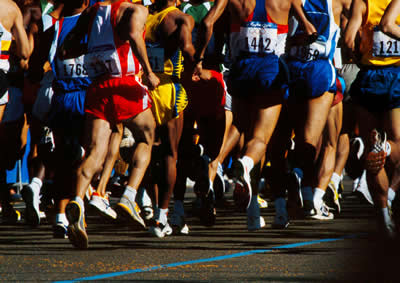
Now that St. Patrick's day is upon us, that means that race season is here. Whether you plan on running a 5k, half-marathon or full marathon, you need to take precautions when running in the cold weather. We do live in Chicago so that means it will still be chilly for awhile. Follow these tips to keep your feet warm during cold weather running.
- Wear the right socks. I know its tempting to grab your regular old cotton socks, but they don't wick away moisture. Wicking socks are made of fabrics like acrylic or wool.
- Use two pairs of socks. Saying Chicago can get pretty cold is an understatement. If it is really cold, wear one lighter sock made of synthetic material and then a thicker wool sock over the thinner sock. Be advised that your running shoes may not fit properly with two pairs of socks. In that case, purchase a second pair of running shoes 1/2 size bigger than you normally wear.
- Use hand warmers in your running shoes. Put them inside your sock on top of your toes. Once your feet are warm, they can be taken out as to not overheat.
- Avoid puddles, slush, and snow. Use a little common sense!
- Choose the right shoes.
For running in cold weather, choose a shoe with little mesh since that is where water and cold can get through.
- Wear a hat. What do hats have to do with feet? You can lose up to 40% of your heat from your head. To keep the rest of your body warm, wear a hat.
|
TYPES OF RUNNING SHOES
| |
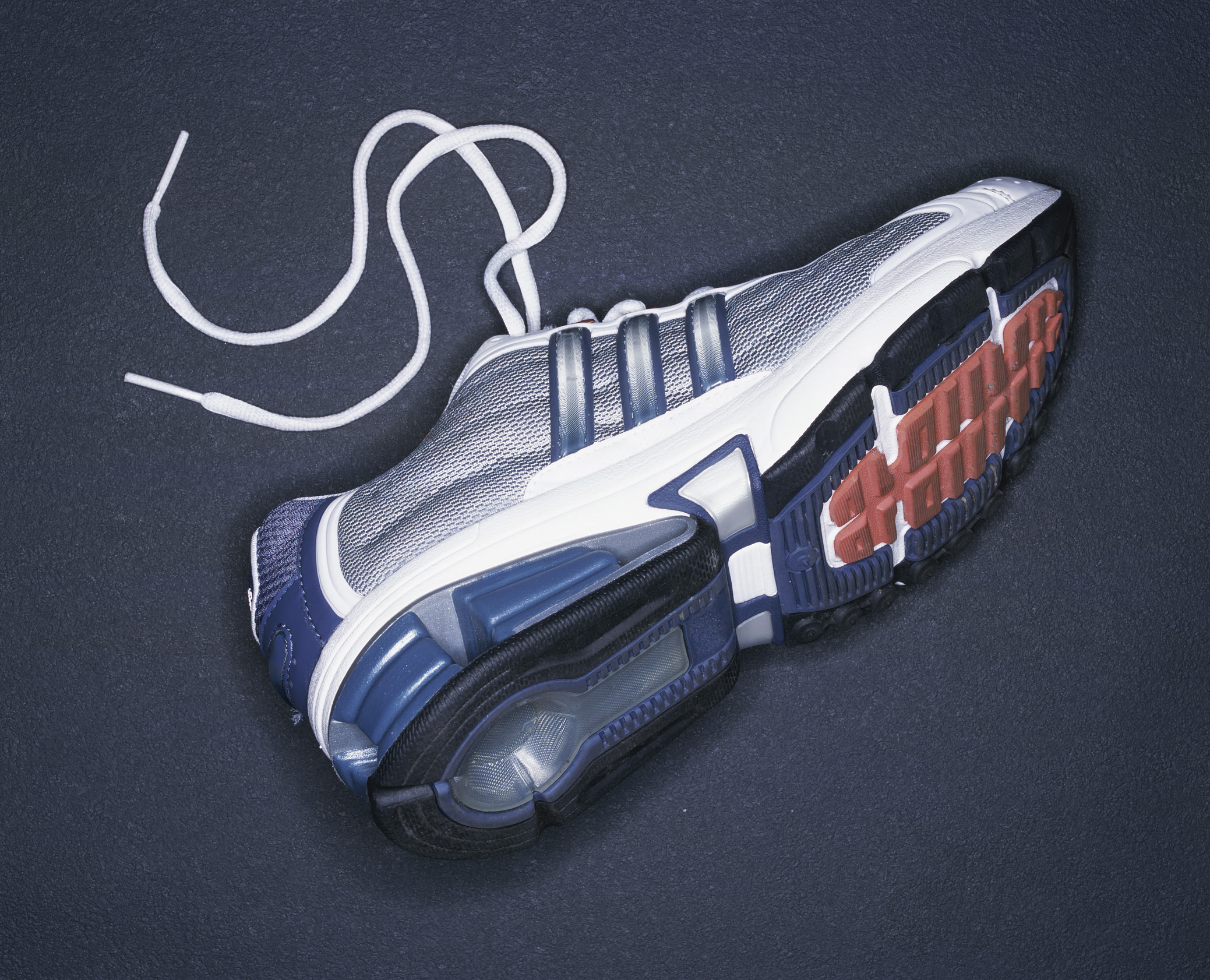
There are many types and brands of running shoes available. Which pair do you choose? Focus on what type of feet you have first! First, take a look at your foot. Do a fun experiment... examine your footprint by running in the sand or on paper with wet feet.
Most people fall into one of three types of feet.
Flat Feet
Do you have an arch? If not, you have flat feet. The bottom of your foot, from your toes to your heel, is flat. If you do one of the experiments above, you won't see an inward curve. So what kind of shoes do you need? A running shoe that maintains stability. Look for desciptions with the words "motion control" or "stability". Most likely you will also need orthotics.
High-arched Feet
Look to see if you have high arches. If you do the foot test, your print will curve inward, making the middle part of the foot look very skinny. People with high arches need to examine thier feet periodically since running will cause the arches to gradually fall, making the feet longer. What kind of shoes do you need? You need flexible shoes with a soft midsole that absorbs shock. Look for descriptive words such as "flexible" or "cushioned".
Neutral or Normal Feet
Your feet are not flat nor have a high arch. Your footprint will have a noticeable curve inward, but not by more than 3/4 of an inch. People will neutral feet can choose from a wide variety of running shoes but stay away from shoes that have a lot of stability or motion control.
|
|
|
|
| $25 off out of pocket expenses or Free Consultation |
Please notify staff upon scheduling. Consultation excludes treatment or X-rays.
| | Offer Expires: April 15, 2011 |
|
|