Contact Us
|  | LOCATIONS:
Dedham
781.461.9300
ftdedham.com
Cohasset
781.383.8004
ftsouthshore.com
Norwell
781.659.0034
ftsouthshore.com
Westborough
508.366.0099
ftwestborough.com
|
Tip of the Month

| Eat More Anti-Cancer Veggies!
Did you know that brassica vegetables, such as Brussels sprouts, cabbage, cauliflower and broccoli, are associated with a decreased risk of several types of cancers? Why not start the NEW YEAR out on a healthy note by pledging to eat some of Mother Nature's anti-cancer veggies on most days of the week?
|
 |
Rise and Shine
| 5 Morning Exercise Benefits
Why exercise in the morning? After all, 500 calories burned at 6 a.m. is no different than at 6 p.m.
The answer is the fringe benefits. For the person who wants to add exercise to an otherwise sedentary lifestyle, here are 5 excellent reasons to work out in the morning: 1. Time flies when your workout's not done.
You plan to work out, but your busy day throws a curveball, leaving you scrambling to finish your to-do list by bedtime.
So instead of hitting the gym, you hit the sack - annoyed that you missed yet another workout.
That's why you should exercise first thing in your day. In fact, about 90% of people who exercise consistently do it in the morning. It's the only way to guarantee you won't skip it. 2. Your metabolism won't boost itself.
You roll out of bed, throw on some clothes and stumble out the door on your way to another busy day. Are you even awake yet? Your metabolism certainly isn't.
The average person can expect the metabolic boost to last for 30-60 minutes post-exercise. EPOC typically accounts for a few paltry calories - 10-60, depending on the intensity of the workout.
Not only does morning exercise help you burn calories during the actual workout, but its effects linger after you're finished. It's called EPOC - excess post-exercise oxygen consumption - and it's a fancy way of saying you burn extra calories even after your workout's over. 3. It's your choice to be a night owl or an early bird.
Tick-tock. You have an internal clock that thrives on routine. It's your circadian rhythm, and it regulates your body on a 24-hour cycle.
Give yourself a strict bedtime, force yourself to wake up when your alarm goes off (no snoozing!), and exercise each day - even if it's only for 10 minutes. 4. A.M. exercise helps you sleep better in the p.m.
Hitting the gym in the morning helps you hit the sack at night. A study published in the scientific journal Sleep showed that overweight women who began a regular morning exercise routine slept better than those who exercised regularly in the evening. 5. A morning workout is better than coffee.
Oxygen, not caffeine, is what your brain wants in the morning. So instead of reaching for the coffeepot, reach for your sneakers and you'll get all the brain-boosting benefits you need.
Source: LifeSource |
|
FIT Videos
 | |
Get Fit. Together!
|
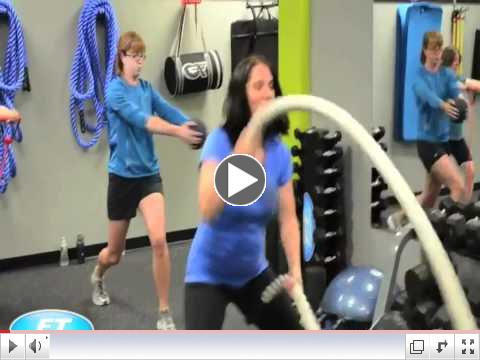 | |
PACK Small Group Personal Training
|
|
|
Happy New Year!
| |
Fitness Resolution
Consider these tips to help you keep your new year resolution. Not all of them will apply to you, but they are direct pieces of advice that can help in your journey. Try them out, see what works, and take stock that little victories--like tracking foods or exercising 3 times in a week--are more important than the scale. After all, you need to change your behaviors before you can change your wardrobe. And doing so will keep you motivated and inspired for the long haul.
Small Changes
*If you're struggling to lose weight, don't eliminate any single macronutrient (proteins, carbs, fats). It's a recipe that makes sticking to your diet harder than it needs to be. However, replacing some carbs and fat for protein will help jumpstart your weight loss. Why? The process of digesting protein burns significantly more calories and keeps you fuller.
*Not sold on the protein thing? How about this: When you bump up your protein intake, you eat fewer calories, says University of Missouri researchers. Doesn't mean you just need to eat protein, but make a conscious effort to include more in each meal, or as a replacement for a carb source like pasta. Try eating any of these protein-rich foods: eggs, chicken, fish, protein powders, cottage cheese, pork, Greek yogurt, or turkey. If you don't like meat or dairy, go for tofu, seitan, beans, lentils, quinoa, and nuts/nut butters.
*Snack LESS. Some people love eating 4 to 6 meals per day-it's a perfectly healthy diet strategy. But it doesn't work for everyone. In fact, research shows that snacking actually causes cravings. So if you struggle to control your appetite, it might be better for you to eat larger meals, less frequently.
*Do you hate exercise? Maybe try taking caffeine. Research indicates that taking caffeine (coffee works) makes exercise seem more enjoyable.
Not a caffeine person? Then bring your iPod to the gym (or ask your FT trainer to hook it up to the speaker system). Here's why: The bad music at the fitness center can actually make your workout feel worse, according to the journal Perception of Motor Skills. So do yourself a favor and play the music you love. It'll make a difference and help the time pass, whether you're lifting, running, or just going for a walk.
Sleep 8 hours. Seriously, it'll make a massive difference in your appetite. When you're tired, scientists have found that it's harder to resist foods that are loaded with calories. The more tired you are, the less control you have over your hunger. So don't place yourself at a disadvantage.
Eat real food: Listen, a lot of trainers enjoy protein shakes (we know, weird). But there is nothing magical about the powder before, during, or after your workout-or at any time of the day, for that matter. Actually, whole food sources are ALWAYS a better option. Powders are just lower quality. So reach for the real protein sources first. But if you're in a bind, go with the powder over fast food or a meal that completely lacks protein.
Track your calories: Use a website like LiveStrong or our new 360FT integrated nutrition tracking program to track your calories. It works, and here's why: Even when you exercise, you can't eat whatever you want. Research shows that we overestimate how much we exercise and underestimate how much we eat. So by logging your foods, you have a built-in system of accountability that helps prevent you from making mistakes that will crush your weight loss goals. But the added bonus: When you log foods, you actually start learning serving sizes. It empowers you to take control of what you eat no matter where you are, and you learn what foods are bad for your health and what you should avoid. It all starts with education.
And please: Stop doing crunches and situps to lose your belly. It doesn't work, and science proves it. A better way: Lowering your calories and starting a workout program with a direct goal. We've found that weight training is the most efficient way to drop pounds, but walking or playing sports is a great way to start being active. The crunches will only frustrate you and possibly hurt you.
Try some or all of these out and stick to your resolution in 2012!
Read more: http://www.livestrong.com/blog/blog/cut-through-bs/#ixzz1ic8fqGHv
|
|
Physical Activity of Parents Influences Kids
|
Healthy Parent Makes a Healthy Child?
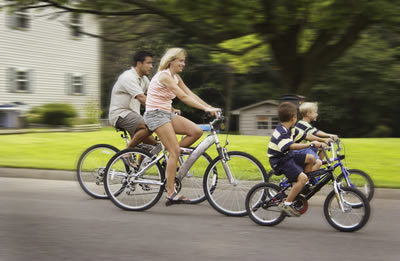
Are you a parent? If so, your exercise and activity choices aren't affecting just your health, but also the lifetime health of your children. According to The Role of Family in Promoting Physical Activity by the President's Council on Physical Fitness and Sports, there are some sobering statistics for parents who want their children to grow up healthy and active... "The physical activity-related behaviors and attitudes of parents are excellent predictors of the physical activity behaviors and attitudes of their children."
"Researchers in the Framingham children's study examined the physical activity behavior of children ages 4 to 7 years and their parents and found that children of two 'active' parents were 5.8 times more likely to be 'active' than were children of two 'inactive' parents."
"Children from families with one 'active' parent and one 'inactive' parent were still 3.5 times more likely to be active as were children from families with two 'inactive' parents."
So, parents, get out there and get moving... for your kids' sake. Source: 360Cardio
|
|
Healthy Recipe of the Month
|
Roasted Anti-Cancer Vegetable Medley
Using a bag of pre-washed, precut veggies makes this nutritious side dish simple to make and fast!
Ingredients:
Yield: 4 servings (serving size: ¼ of the recipe, 99 grams or ~ ½ cup)
- 2 tablespoons extra virgin olive oil
- ½ tablespoon soy sauce
- Freshly ground black pepper to taste
- 1 (12 ounce) bag of "Eat Smart" vegetable medley (broccoli, cauliflower, carrots), available in the supermarket produce section
- 6 cloves of garlic, sliced
Directions:
Preheat oven to 450°F. Spray a baking sheet with non stick spray. In a large mixing bowl, combine olive oil, soy sauce and black pepper. Whisk together until blended. Add in bag of vegetables and garlic and stir to coat. Spread veggies in a single layer on baking sheet. Roast vegetables for ~ 10 minutes until browned. Serve warm.
Nutritional Information Per Serving (1/4 of the recipe or ~ ½ cup):
Food weight: 1.5, Calories: 124, Fat: 7 g, Cholesterol: 0 mg, Sodium: 202 mg,Carbohydrate: 13 g, Dietary Fiber: 3 g, Sugars: 3 g, Protein: 3 g
|
|
Foods That Trigger Headaches |
 Headaches are a common problem affecting people of all ages and from all walks of life. More than 100 million people suffer from different types of chronic headaches. There are many wide varieties of causes why people get headaches like stress, sickness and allergies. But in many patients, eating certain foods may also cause headaches. Headaches are a common problem affecting people of all ages and from all walks of life. More than 100 million people suffer from different types of chronic headaches. There are many wide varieties of causes why people get headaches like stress, sickness and allergies. But in many patients, eating certain foods may also cause headaches.
Food-related headaches are becoming a common problem these days. Food-related headaches are generally felt on both sides of the head. They occur within a specific amount of time after a particular food is consumed and fade away when the substance is eliminated from the diet. Interestingly, not only can specific foods trigger a headache, but dietary habits like fasting, dehydration or skipping meals may also cause headaches in some people. The foods, additives and beverages that are commonly associated with headaches are listed below:
-
Cheese: Cheese contains an amino acid called tyramine, which has been linked to various types of headaches, particularly migraine. Tyramine is formed from the breakdown of protein in certain foods. Generally, the longer a high-protein food ages, the greater the tyramine content is. Due to the variations in processing, fermenting, or aging of different cheese, the amount of tyramine may differ in different cheese. Other foods high in tyramine include red wine, smoked fish, processed meats, pickles, certain beans such as lima, avocados and nuts.
-
Foods containing nitrite or nitrate additives: Additives like sodium nitrite or sodium nitrate are used as a preservative, coloring and flavoring in foods like hot dog, bacon, salami, sausage and other processed meats. These additives may dilate blood vessels causing headaches in some people. Headaches induced by additives are usually sensed on both sides of the head. This differs from classic migraines which are felt on one side of the head.
-
Foods containing monosodium glutamate (MSG): Monosodium glutamate is a food additive/flavor enhancer found in soy sauce, chinese foods, meat tenderizer and many packaged foods. Headaches induced by MSG can occur within 20 to 30 minutes after its consumption and can case symptoms like pressure in the chest, dizziness, headache pain across the front or sides of the head, abdominal discomfort, or burning sensation in the chest, neck or shoulders.
-
Cold foods: Eating or drinking something too cold can cause headache which usually lasts for less than five minutes. Previously also known as "brain freeze" or ice cream headache, the pain in this type of headache is usually felt in the middle of the forehead. More than 90 percent of migraine sufferers report a sensitivity to ice cream and need to be cautious with cold foods and drinks.
-
Other foods: Some headache sufferers also report other foods which can trigger headaches. These include onions, bananas, citrus fruits, chocolates, and aspartame and other artificial sweeteners.
It can be difficult to determine which foods exactly are to blame if your headaches start after the meals. Maintaining a headache diary is one way to identify specific foods that trigger your headaches. In the diary, track when your headache starts and what you have eaten that day. After a few weeks, you will start to see a pattern that will help you identify the foods that you should avoid. Consider getting help if your headaches don't improve.
Source: lifemojo
|
|