Greetings!
Hello to everyone! Apologies for the tardiness of this newsletter. I chose to put my father's 95th birthday party/family reunion on the top of the list and it crowded out everything else for a couple of weeks! Most of his great grandchildren were present along with his grandchildren, children and spouses. We had a great time and already miss all the chaos that descended on our home for the weekend.  The teacher in me couldn't miss a "bulletin board" opportunity, as evidenced by the WE ARE FAMILY photo wall you can see behind my Dad and his greats. I wish you all the very best start to your new teaching year. I hope to be able to share with you many wonderful teaching ideas over the next months! Please be sure to email me your questions, and of course, anything you'd like to see more of in this newsletter! Happy Teaching! --Marcia |
|
Question from a Teacher:
| QUESTION FROM A TEACHER: I am a high school teacher turned middle school Life Science teacher so any insights in this area would greatly be appreciated. Love your site.
Marcia's Answer:
If you like what you see on my website then what I have to say will be something you can use. I hope this will be helpful for you.
I am asked quite often if I have similar lessons for Life and Physical Science. Although I have taught both, I don't have active learning lessons for those areas available for teachers and don't anticipate that I will in the future. I am concentrating on Earth Science.
However, if you study my lessons (and perhaps purchase the Lab Safety Packet?) you will begin to see a pattern to my methods and be able to transfer this knowledge to your own curriculum.
 In a nutshell, here is what I believe to be important when working with middle schoolers using the active learning approach. (BTW, I have taught high school science as well.)
1. Don't lecture. EVER. There are always better ways to input material. Power-Points with active followsheets, for example.
2. If you can find an alternative to a boring worksheet, use it! Not that a simple worksheet doesn't have a place in your classroom--it does, but a more active approach works better every time, if you can find one.
3. I believe in using active learning games every day, if at all possible. Games can be very educational and shouldn't be used if they aren't. All my games are very useful in introducing or reinforcing materials.
4. Use a timer for transitions. Works like a charm. Give kids one minute or less to move between activities. Move very quickly from one activity to the next. Keep your classroom VERY busy with meaningful learning activities of varying lengths.
5. Use a team lab if possible to meet each major objective.
6. Work from objectives ALWAYS. Test these objectives.
7. You should work very hard before class but once class starts, your students should be working harder than you are! You should be quietly walking around the room interacting with your students while they work.
8. Do one foldable per unit.
9. Always chose teams YOURSELF for games and labs and activities! Divide the smarter kids between groups. Ditto lower and middle kids. Keep track of who's in each group so they have different people in their groups most of the time.
10. Know the difference between procedures and rules. See my advice for new teachers page. This is MORE important for middle school than high school!
11. NEVER lecture! There is ALWAYS a better way!
I hope these ideas ring true for you and give you some ideas on how to approach this new chapter of your teaching life. I actually enjoyed the middle schooler more than the high schooler. I hope that happens for you, too!
Best of luck,
--Marcia
|
Teaching to "Listening" Students
|  Confession Time: In my early years of teaching, I couldn't get my students to LISTEN WHILE I TALKED! I couldn't figure out how to get the kids quiet so they would listen to my directions long enough to know what to do next! It was a real problem and I was really HELPLESS to know what to do to get them
to listen to me!!! Has this ever happened to you?! If not, then you are one lucky teacher! If yes, then I have some suggestions for you!
It all comes down to the concept of CLASSROOM PROCEDURES. I've talked about this concept before, but since the new school year is only MINUTES away, I thought I would bring it up again. This is your chance to rethink what you can to do restructure your room to eliminate many discipline problems. Yes, that's right! ELIMINATE!
It was a surprise to me how easy it actually was. When I structured my classroom routine around some simple, TRAINABLE procedures for myself and my students, SURPRISE! The most common discipline problems I couldn't figure out how to control just disappeared!
The truth is this: When you structure your classroom for every common classroom occurrence, like handing in papers, taking tests, etc, the classroom simply runs better and you don't find yourself talking over talking students!
It's also IMPORTANT to know the difference between procedures and rules! Broken Procedures are never punished with consequences! Rules can be punished--have consequences--if not followed. Broken Procedures are RETRAINED! Broken Rules have CONSEQUENCES!
Check out this VERY interesting idea on how to get their attention. (From wholebrainteaching.com.)
Here is a quote from a teacher who wrote me after she implemented
classroom procedures a few years ago:
"I want you to know that I started out this year taking
all of your advice (teaching procedures, picking up
papers, etc.) and everything has gone more smoothly
than it has in my 8 years of teaching." Email me for more details on how to organize and set up classroom procedures that will help eliminate many common discipline problems.
|
Teaching Map Skills
| The beginning of the year begs some simple map skills. If you don't want to teach a full-blown unit, try adding in simple one-skill worksheets during a lull in the period or for homework. Below are several suggestions for these kind of worksheets. These are from other teachers and websites. I think we are all better off if we share our work with other teachers!
Simple Map Skill: Measuring Distances in Metric
Simple Map Skills: Measuring Distance and Direction
Using Google Maps in the Classroom
A Sample Lesson from Basic/NOT Boring 6-8+ Map Skills |
| Teaching with Technology | I would like to explore teaching with many of the new technologies exploding into our world. We know there are many reasons for using technology in the classroom, including "hitting them where they live" and teaching them what they will need to know for their futures.
A. USING CELL PHONES IN THE CLASSROOM: Check out this SIMPLY FABULOUS Podcast by Liz Kolb crammed full of good ideas on how to teach your students GOOD ways to use their cell phones in the classroom! Be sure to listen all the way to the very end!
Marvelous ideas! Click here. B. USING SKYPE IN THE CLASSROOM: Jeni DeFeo, the 2011 TEACHER OF THE YEAR from my school district, is a wonderfully enthusiastic teacher full of great ideas! Check out this YouTube video about how Jeni uses Skype in her classroom:
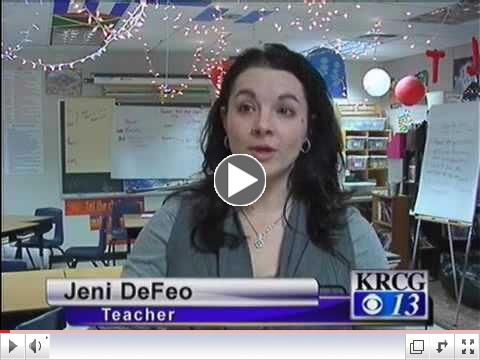 | | Jeni DeFeo takes her students on a virtual field trip using Skype. |
|
|
Feel free to forward this on to other teachers you know who might be interested! Or sign them up on Join Our Mailing List!
And as always: EMAIL ME if you have topics/questions you'd like to see in future issues!
Happy Teaching!

Marcia Krech
Marcia's Science Teaching Ideas |
|
There are many hypotheses in science which are wrong. That's perfectly right; they're the aperture to finding out what's right. Science is a self correcting process. To be accepted, new ideas must survive the most rigorous standards of evidence and scrutiny. - Carl Sagan
|
|
|
|  | |
From a Teacher:
I have been teaching
for 35 years and I still
find new ideas and great reminders in your
Teaching Tips. Thanks.
***********************
From a Teacher:
Re: the July Newsletter: Again great newsletter. Filled with great new ideas and food for thought.
|
The
Complete
Package
| |

Now available via
email delivery for $300.00.
NOTE:
This will involve LOTS of downloading!
Go here to
check it out!
|
Khan Academy
| 
Check out this great
FREE resource! My nephew uses Khan Academy all the time in
his Milwaukee school!
Khan Academy has wonderful teaching videos on many topics, including great Astronomy videos! Scroll down the linked page to see the Astronomy links!
There are also many
practice sessions for various topics. |
Science Joke
|

Never lend a geologist money. They consider a million years ago to be recent.
|
|
|



