| Greetings!
I am so impressed by the many emails and purchases I've been receiving so far this summer from teachers who are supposed to be taking a TEACHING BREAK! Many of you are already looking ahead to your next teaching year, thinking and exploring and trying to make it a better year. BRAVO!
This is exactly why each of you has become a better teacher by your actions from this past school year. Every year you try to make it better makes you a better teacher. You are storing up for yourself a mountain of teacher wisdom that makes it easier to teach every year.
So keep on planning for your next year and take a break every once in a while, too! Take it from one teacher who's been there and knows that BOTH planning and relaxing are important for you to have a good new teaching year!
Happy Teaching!
--Marcia
|
 Question from a Teacher: Oceanography |  QUESTION FROM A TEACHER: QUESTION FROM A TEACHER:
I was hoping that you might have a section on Oceanography for your Earth Science page. Do you happen to have anything along those lines? I have to reinvent new curriculum materials for an Oceanography class. Our school isn't a Title 1 but let's just say the incoming 9th graders are only reading on a 4th grade level. So I have to tweak the curriculum map to fit. Any ideas?
MARCIA'S EXPANDED ANSWER:
You are so right! No Oceanography on my website! BUT that is about to change! In fact, I've added a basic Oceanography page and the readers of this newsletter are the first to know!
CLICK HERE TO CHECK OUT
MARCIA'S NEW OCEANOGRAPHY WEB PAGE! I've put up what are the bare minimum, usual Oceanography objectives along with some suggested activities. If I don't have something of my own, I've added links to other websites with good ideas. If there is anything more anyone needs, please email me! As to how to write an entire curriculum for an Oceanography class, my advice is to always start with your objectives. You need to know where you are going! Check out my web page on How to Write a Good Science Lesson. This applies to an entire course as well. If you have any of my teaching packets, you can use them as a guide to how to set up an entire curriculum and how to tailor each day to include an Opening Bell, an active learning experience, a team game, and some closing experience. I am also including a couple of my Oceanography Teaching Ideas in this newsletter for you all! |
Teaching with Calculators
|  I've always had a class set of basic scientific calculators. We had several lessons over the course of the school year that required the use of calculators. They were ALWAYS needed for unit tests! However, our district believes that you can't require something like a calculator of each student, because the cost is sometimes too much for a family to bear. So we each had a classroom set. Students could bring their own to class, but we outlawed the fancier graphing calculators because so much more can be programmed into those, including test answers! I've always had a class set of basic scientific calculators. We had several lessons over the course of the school year that required the use of calculators. They were ALWAYS needed for unit tests! However, our district believes that you can't require something like a calculator of each student, because the cost is sometimes too much for a family to bear. So we each had a classroom set. Students could bring their own to class, but we outlawed the fancier graphing calculators because so much more can be programmed into those, including test answers!
|
Teaching with Labs
| In Response to the New Jersey Teacher who asked how I choose labs and how I schedule them into a class period.
 My number one criteria is ALWAYS "Does it teach an objective that I must teach?" Teachers can't really do labs anymore just because they are fun. I remember the time we interviewed a really good teacher for an opening in our Earth Science department. His pet project every year was building rockets with his students and launching them. We had to tell him that was NOT going to happen at our school! Not in the curriculum! Everyone has to stay on schedule now; tests are all done the same week and have a set of core questions that are the same on every teacher's test. No time to add pet projects. Of course, he withdrew his name from the hat, not wanting to give rockets up. My number one criteria is ALWAYS "Does it teach an objective that I must teach?" Teachers can't really do labs anymore just because they are fun. I remember the time we interviewed a really good teacher for an opening in our Earth Science department. His pet project every year was building rockets with his students and launching them. We had to tell him that was NOT going to happen at our school! Not in the curriculum! Everyone has to stay on schedule now; tests are all done the same week and have a set of core questions that are the same on every teacher's test. No time to add pet projects. Of course, he withdrew his name from the hat, not wanting to give rockets up.
So when I say, does it teach an objective, that really is a priority. If there is a different way to achieve an objective, I will often do that. But that said, I believe in having labs EVERY week. PERIOD. It's a SCIENCE class, after all.
I also believe in doing BELLWORK every day. At least one TEAM GAME every day. At least one FOLDABLE per unit. It's a real juggling act. There are some classic labs that are mentioned in most textbooks. I've always tried to do some version of those. It's possible to shorten and tailor a longer lab into a shorter version so you can get it done in one period. Some need to broken into two day events.
It's a real juggling act! Just give it your best shot. Each teaching year is better than the last, especially in the wisdom you acquire as a teacher. The million little things that crowd your days eventually add up to knowing more about how to juggle all the things you want to get done each week, each unit. Email me for a download link and password that covers How to Set Up Science Labs. It also contains NSTA's official position on Science Labs at the Middle and High School level. They encourage labs several times a WEEK! Something we should all aspire to, for sure! |
Teaching The Scientific Method
| I hope you have all realized by now that there is a NEW Scientific Method out there! If not, here is your chance to brush up on it! Basically, the OLD method is still acceptable, but there is an increasing realization that this method is not as linear as we have taught it, but much more circular. Scientists double-back, start over, repeat-repeat and also use hunch, intuition, and happy accident to make scientific discoveries.
The NSTA has said this: "There is no fixed sequence of steps that all scientific investigations follow." Missouri added this to its state GLEs: 7.1.A.f. (9-12) Acknowledge there is no fixed procedure called "the scientific method," but that some investigations involve systematic observations, carefully collected and relevant evidence, logical reasoning, and some imagination in developing hypotheses and other explanations. all scientific investigations follow." Missouri added this to its state GLEs: 7.1.A.f. (9-12) Acknowledge there is no fixed procedure called "the scientific method," but that some investigations involve systematic observations, carefully collected and relevant evidence, logical reasoning, and some imagination in developing hypotheses and other explanations.
A few years ago, I had to add an activity to our Earth Science department because of this added teaching objective. We still teach the traditional scientific method, but added this worksheet and a discussion to round out the lesson.
TIP: Run the small triangles the students cut out in several different colors, cut strips ahead of time going DOWN the page. Each student gets one strip. Then they can trade with each other so they have several different colors of triangles to glue down.
Email me for a download link and password for several activities on both the OLD and the NEW Scientific Method!
|
Teaching the Ocean Floor
| |
I love putting students to work, in case you haven't  noticed! noticed!
If I can walk around the classroom assisting, answering questions, observing, or just plain chatting with my students, I'm One Happy Teacher! Put some music on, turn the glaring classroom fluorescent lights off and turn on some table and floor lamps, with twinkle lights around the doors and above the whiteboard, and I'm even HAPPIER!
So this paper mache project is right up my alley! If you can stand the mess, I would say give it a try! Or have students bring in homemade play-dough. Recipe here. LOT less mess!
I've put together my version of something that is all over the web. None were exactly what I wanted, so I made up my own. CLICK HERE FOR MY OCEAN FLOOR MODEL ACTIVITY. It has the students design and build their own cross section of the ocean floor in a shoe box. Then they tape it shut with a box lid that has a line of holes down the center. THEN they trade with another team!
When they get another team's shoe box, they use their straws shoved down the row of holes to "read" that ocean floor and plot it on a graph. Once they are done, they can look inside! Sounds like fun, doesn't it!
This would be especially nice if your state requires they not only know about the ocean floor but also HOW WE KNOW, WHAT METHODS WE HAVE USED.
Check out this article on using Google Earth to view the latest ocean floor mapping.
Top it off with a visit to Google Earth or Google Maps to see the latest ocean floor up close on your white board or projection screen. Be sure to check out southeast of the Hawaiian Islands to see the new volcanic island already forming under water!
|
Teaching the Water Planet
|

Teaching the Oceans and Continents in a slightly new and different way!
I got the idea to have a column represent the entire surface of the planet. Then divide in half. The left side represents the water and land percentages.
You can dramatically see water is about 2/3 of the surface of the planet, the land is the rest.
The right column then breaks down the water and land by oceans and continents. The small reds on the right side represent the seas not covered in the rest of the coloring of the oceans and the land not covered in the coloring of the major continents.
Pretty dramatic, I think!
I added in some math which can be done together as a class using CALCULATORS. Make it fun to do this part of the assignment. Encourage everyone to punch in the numbers and see if they got the right answer. If some don't want to or can't do it fast enough--that's okay, too, I think.
Put the answers up on the overhead or the white board, or have a student volunteer run up to record.
Then have them do the coloring. Walk around the room to be sure they are on the right track.
Let small groups or pairs work on the questions together. Put some music on. Have a good time walking around the room while they color the columns and work on the questions!
This would be a Happy Teaching Day, I think! Especially if you've done the online Continents/Oceans Quiz first so they are up to par with what they are coloring!
|
|
Feel free to forward this on to other teachers you know who might be interested! Or sign them up on Join Our Mailing List!
And as always: EMAIL ME if you have topics/questions you'd like to see in future issues!
Happy Teaching!

Marcia Krech
Marcia's Science Teaching Ideas |
|
Tell me and I forget. Teach me and I remember. Involve me and I learn.-- Benjamin Franklin
|
|
|
|  | |
From a NJ Teacher:
...would love to read how you choose labs for classes...I teach 7th and 8th graders and am always looking for labs that are inexpensive (we have a science lab) and how you schedule a lab into a 40 minute period a week...any ideas?
***********************
From a Teacher:
I would love the link to the endangered species and planets mini unit! Thank you so much---my students and I love all your creative ideas!
|
The
Complete
Package
| |
Now available via
email delivery for $300.00.
NOTE: This will involve LOTS
of downloading! So be sure you can commit to this!
Go here to check it out!
|
Super-Kewl Videos!
|
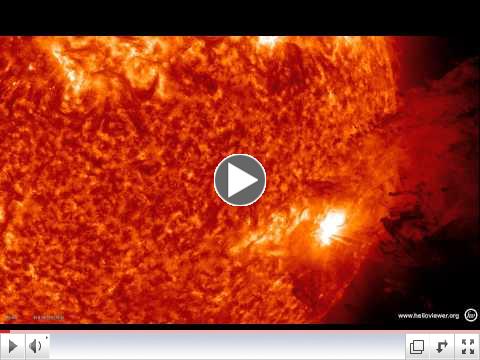 | |
Solar Flare
|
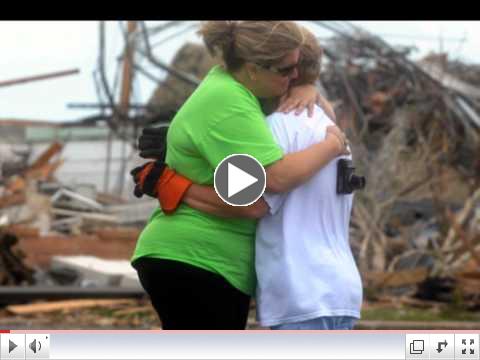 | |
Promise to Joplin after the Tornado - We Won't Let Go
NOTE: Video made by a colleague of my husband's.
Seven families who work for his company here in Missouri have lost their homes.
|
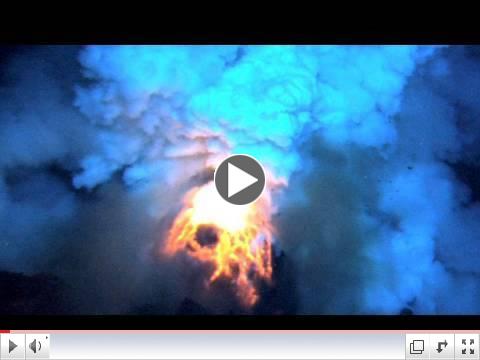 | |
Undersea Volcano Eruptions Caught On Video
|
 | |
Earth the Biography: Oceans
|
 | |
iPads in Education:
Tales from the Classroom
|
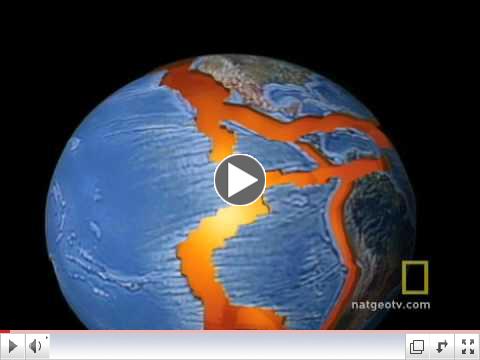 | |
Earthquake Destruction
|
 | |
Inside the Tornado
|
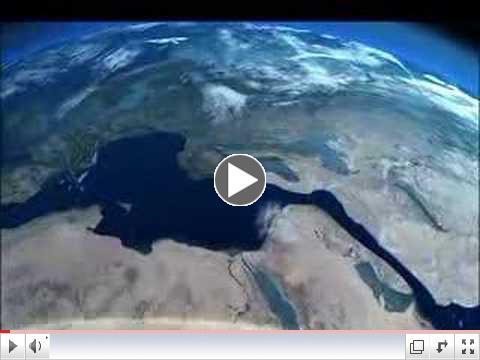 | |
Why Earth Science
|
 | |
Planet Earth (Views From Space)
|
 | |
Science Lab Safety Rules
|
|
Science Joke
| |

A chemistry professor couldn't resist interjecting
a little philosophy
into a class lecture.
He interrupted his
discussion on balancing chemical equations, saying, "Remember,
if you're not part
of the solution, you're part of the precipitate!"
|
|
|


