|
Help Save Rivers and You Could Win 2 Tickets to Packers v Bears at Lambeau!
 When you make a gift to the River Alliance from now until September 6 you will automatically be entered into a drawing for a pair of tickets to the Packers vs Bears game on September 13 at Lambeau Field! When you make a gift to the River Alliance from now until September 6 you will automatically be entered into a drawing for a pair of tickets to the Packers vs Bears game on September 13 at Lambeau Field!
River Alliance supporters Keith Nelson and Karen McKim generously donated two tickets to the game which we will pass on to the lucky winner to be drawn on September 7.
Make your gift today and enter the drawing! »
No contribution necessary to win. Click for official rules & regulations.
|
|
Close to Dried Up, Again: DNR Urged to Address the Suffering Little Plover
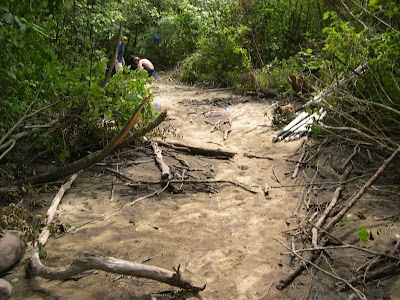 For long-time followers of the River Alliance, you may think this piece is recycled from the archives -- the Little Plover River, in Portage County, is nearly dried up. Sadly it's an almost-annual occurrence. For long-time followers of the River Alliance, you may think this piece is recycled from the archives -- the Little Plover River, in Portage County, is nearly dried up. Sadly it's an almost-annual occurrence.
It's not quite dried up yet this summer, but its levels are well below the so-called "public rights flows" established by the Dept. of Natural Resources in 2008. The public rights flows are set so that the river doesn't drop below levels that sustain the river's aquatic life.
Those flows were established after considerable negotiations and cajoling of the DNR and the big water users by river friends in the area. It's not just the Little Plover River that's threatened by excessive groundwater pumping; several other lakes and streams in the Central Sands region are like slow- draining bathtubs in the summer.
A newly formed coalition of lake and river groups has asked the DNR to examine the public rights flows for the Little Plover. The Central Sands Water Action Coalition hopes that better management of the Little Plover's water will lead to broader discussions, especially with the potato and vegetable growers, about how to bring some sensible balance to water use in the region so that potatoes and fish, farmers and boaters, will win.
|
|
The Evidence Mounts: Protecting Water Quality is Better for the Bottom Line
 The facts are in: according to a recent study by the DNR protecting clean water has a clear economic benefit to the residents of Wisconsin. Analysis of two new environmental rules (shoreland zoning and phosphorus management) indicate that implementing these rules is a sound environmental and economic decision. The facts are in: according to a recent study by the DNR protecting clean water has a clear economic benefit to the residents of Wisconsin. Analysis of two new environmental rules (shoreland zoning and phosphorus management) indicate that implementing these rules is a sound environmental and economic decision.
The estimated benefit to Wisconsin residents of implementing shoreland zoning rules is about $14M. The shoreland zoning rules analysis predicted the value of improved water clarity and increased enjoyment of clearer water (unfortunately the study left out the additional benefits from increased tourism, scenic beauty or improved habitat for wildlife). Economic costs included predicting the expense of bringing homes into compliance and costs to implement and enforce the rules.
Putting phosphorus rules into effect would have an even greater net economic benefit to Wisconsin residents of over $18M. According to the analysis of the phosphorus rules this means that each pound of phosphorus reduced by the regulations would bring $23.56 in benefits above the cost of reducing it.
While neither of these studies directly addressed the benefit of tourism, a national study released by the Outdoor Industry Association shows that outdoor tourism is big business in the US - a $646B dollar a year industry supporting over 6 million jobs, to be exact. Prevention of additional pollution to our waters will always be far less expensive than cleaning up the mess later. It's not big government, it's smart regulation.
|



