| Featured Article |  |
The school season is upon us! Here are some articles that you may find of interest. You can see the AAP information sheet for more details. |
Join Our List

|
|
|
Dear WPC Families,
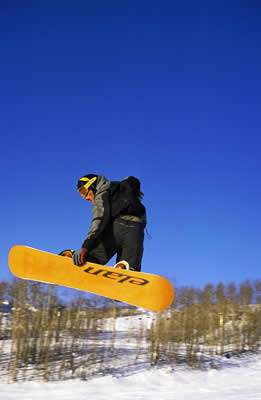
Well, we have made it to mid-winter! Hopefully everyone is taking the opportunity to enjoy some winter sports. If that's not your style, then hold on - spring is around the corner! Don't forget that you can get your school/sports physical done early and your form will be good for the next year. Call now for your well child check appointment!
Your friends at Williamsville Peds |
| Early Initiation of Solid Foods May Lead to Obesity |
The American Academy of Pediatrics (AAP) recommends waiting to introduce solid foods until infants are between 4 and 6 months old. A new study in the March issue of Pediatrics found that among formula-fed infants, introduction of solid foods before age 4 months was related to a higher risk of obesity.
The study, "Timing of Solid Food Introduction and Risk of Obesity in Preschool-Aged Children," published online February 7, compared obesity rates among 847 children at age 3. Among children who were breastfed for at least four months, the timing of solid-food introduction did not affect the odds of becoming obese at age 3. Among children who were never breastfed or who stopped breastfeeding before the age of 4 months, the introduction of solid foods before the age of 4 months was linked to a six-fold increase in the odds of obesity at age 3 years.
Researchers found this increased risk was not explained by rapid early growth. Researchers suggest greater adherence to guidelines regarding the timing of solid food introduction may reduce the risk of childhood obesity.
Healthychildren.org |
| Ear Infections and Hearing Loss | Cold and flu season is upon us and unfortunately many child ren will experience ear infections or "otitis media" this winter. Otitis media is an inflammation in the middle ear (the area behind the eardrum) that is usually associated with the buildup of fluid. The fluid may or may not be infected. ren will experience ear infections or "otitis media" this winter. Otitis media is an inflammation in the middle ear (the area behind the eardrum) that is usually associated with the buildup of fluid. The fluid may or may not be infected.
Symptoms, severity, frequency, and length of the condition vary. At one extreme is a single short period of thin, clear, non-infected fluid without any pain or fever but with a slight decrease in hearing ability. At the other extreme are repeated bouts with infection, thick "glue-like" fluid and possible complications such as permanent hearing loss. Fluctuating conductive hearing loss nearly always occurs with all types of otitis media. In fact it is the most common cause of hearing loss in young children. Seventy-five percent of children experience at least one episode of otitis media by their third birthday. Almost one-half of these children will have three or more ear infections during their first 3 years of life.
So how does otitis media cause hearing loss? Well, there are three tiny bones in the middle ear that carry sound vibrations from the eardrum to the inner ear. When fluid is present, the vibrations are not transmitted efficiently and sound energy is lost. The result may be a mild or even moderate hearing loss. Therefore, speech sounds are muffled or inaudible.
Generally, this type of hearing loss is conductive and is temporary. However when otitis media occurs over and over again, damage to the eardrum, the bones of the ear, or even the hearing nerve can occur and cause a permanent hearing loss.
Hearing loss due to otitis media can also cause speech and language problems. Children learn speech and language from listening to other people talk. The first few years of life are especially critical for this development. If a hearing loss exists, a child does not get the full benefit of language learning experiences.
Otitis media without infection presents a special problem because symptoms of pain and fever are usually not present. Therefore, weeks and even months can go by before parents suspect a problem. During this time, the child may miss out on some of the information that can influence speech and language development.
So, how can you tell if your child has otitis media? Well, even if there is no pain or fever, there are other signs you can look for that may indicate chronic or recurring fluid in the ear:
- Inattentiveness
- Wanting the television or radio louder than usual
- Misunderstanding directions
- Listlessness
- Unexplained irritability
- Pulling or scratching at the ears
So, what should you do if you think that otitis media is causing a hearing, speech, or language problem for your child? Your first step would be to contact your pediatrician at Williamsville Pediatrics to handle the medical treatment. If your child has frequently recurring infections and/or chronic fluid in the middle ear, an audiologist and a speech-language pathologist should be consulted. An audiologist's evaluation will assess the severity and type of hearing impairment, even in a very young or uncooperative child. A speech-language pathologist measures your child's specific speech and language skills and can recommend and/or provide remedial programs when they are needed. All of these services can be provide within the Wehrle Professional Center.
For more information, contact:
Anne Orsene, Audiologist, Hearing Evaluation Services of Buffalo 633-3344
Cindy Stando, Speech Language Pathologist, Hearing & Speech Center of WNY 631-7503
Did you know that Williamsville Pediatrics shares space with Audiologists and Speech Language Pathologists at our new location? Having these specialty areas right in our building is a great benefit for our young patients and their families. In each newsletter, our neighbors from Hearing Evaluation Services and the Hearing and Speech Center of WNY will be sending helpful hints regarding your child's hearing or speech language development. We hope that you enjoy!
|
| Flu Vaccines |
- The flu vaccine is recommended for all children 6 months and older. At Williamsville Pediatrics, we are currently scheduling appointments for the injectable flu vaccine only. Call now if you would like to schedule an appointment.
- The nasal flu vaccine is no longer available at our office.
|
| Facebook! | |
Williamsville Peds is now on Facebook! Check out our page for updates and announcements, interesting articles and other helpful info.
 |
| Dr. Roland in Sierra Leone | |
Recently, Dr. Roland traveled with Let Them LOL and Global Outreach Mission to the Mokanji region of Sierra Leone, Africa, on a humanitarian mission providing medical care and clean water wells. Here are some of his experiences.
First day, visited a couple of villages that have had wells dug in the last year, then went to an orphanage where the next well is going in. We planned on just doing some general medical check-ups on the kids there, but almost half of them had some sort of significant bacterial infection (most pneumonia, some skin infection and an abscess). Due to the civil war that lasted 11 years, a large part of the infrastructure of the country was destroyed, most notably there is almost no access to healthcare. They don't seek medical care, because there is none to seek. Nearest "clinic" is 15-20 miles away (walking) and there is no guarantee that they have any medications when they get there. Mokanji has a once weekly clinic for pregnant mothers, but that is it. Nearest facility capable of emergent care or surgery is 2 hour drive, and none can afford it. an orphanage where the next well is going in. We planned on just doing some general medical check-ups on the kids there, but almost half of them had some sort of significant bacterial infection (most pneumonia, some skin infection and an abscess). Due to the civil war that lasted 11 years, a large part of the infrastructure of the country was destroyed, most notably there is almost no access to healthcare. They don't seek medical care, because there is none to seek. Nearest "clinic" is 15-20 miles away (walking) and there is no guarantee that they have any medications when they get there. Mokanji has a once weekly clinic for pregnant mothers, but that is it. Nearest facility capable of emergent care or surgery is 2 hour drive, and none can afford it.
Second day, plan was to run clinic at the abandoned Mokanji hospital (previously prominent hospital, destroyed in the war - now empty building donated to mission organization). We arrived at 8:30 am and there was a line-up of probably 100-150 people, and growing. The morning went smoothly, but more and more people kept arriving. We had seen 90 patients in the morning, but by the end of lunch we realized we would never be able to see all of the people waiting outside (numbered over 250 still to be seen by that point). We ended up seeing another 140 patients and told the rest to come back the next day.
When we arrived on the third day, there were between 600-700 people in the courtyard. Tension levels were high. We couldn't possibly see that many, but also couldn't send them away without anything. After some discussion with the chiefs of the area, we decided to give numbers to 200 patients, and then provide anti-parasite medication to all of the rest. The chiefs got them all to line up and we went down the line and gave the med t o each one to take. With some "urgent cases" added to our 200, we ended up seeing about 250 that day, and the ones that were sent away did get their intestinal parasites treated. o each one to take. With some "urgent cases" added to our 200, we ended up seeing about 250 that day, and the ones that were sent away did get their intestinal parasites treated.
The most common problem is diarrhea, due to the contaminated water supply (see picture at left). Often they are getting the water from local streams, the same water that the village upstream washes in. They will sometimes have shallow wells (30 feet), but they dig their latrines to the same level, so they are contaminated. 30% of children die before the age of 5 yrs. and the number one cause of death is diarrhea, followed by pneumonia.
Each day, other team members were going out to villages to assess them and see where future clean water wells can go in. On each of the first two days, they came back with a critically ill child. The first clinic day, they brought back two children with kwashiorkor. This is a syndrome of severe malnutrition. Essentially, they were starving to death. It is characterized by being severely underweight, lethargic, with muscle wasting, skin breakdown and slowly progressive organ damage. Holding them was like holding a dead baby. One was aged 21 months, weight 5 kg ( 11 lbs.) and the other was 11 months and 4 kg (8 lbs.). We were able to provide a medical nutritional supplement called Plumpy Nut (peanut butter based in packaged in small sealed containers for the parents to take home), and the local missionary will follow up with them in two weeks. The next day, they brought in a 2 yo child with pneumonia and severe dehydration that was critically ill. We gave him injections of antibiotics, then placed a nasogastric tube to rehydrate him. Within a couple of hours, he had perked up quite a bit and we felt comfortable sending him home with his parents. Sending him to the hospital was not an option. We heard through the grapevine that he was doing much better the next day (see picture at right). Very difficult days - emotional and lots of crying throughout the days over what we saw. Felt good to at least provide a little hope for people who basically have none. the grapevine that he was doing much better the next day (see picture at right). Very difficult days - emotional and lots of crying throughout the days over what we saw. Felt good to at least provide a little hope for people who basically have none.
The next day, we went out with the village assessment teams and were able to get some more insight on how the people are living in the villages. No electricity, no water. There is a general shortage of food - most have a diet of rice and Casava ( a leafy vegetable that they make a cereal out of). Occasionally they can grow pineapple, bananas and a few other things, but usually barely enough to eat and almost never enough to trade. The poverty is not only severe - it is widespread. Once you leave the capital city of Freetown, it is pretty much a continuous state of poverty for hundreds of miles. Even compared to its African neighbors, this is extremely bad. Trying to obtain any product that is not handmade and primitive is very costly.
In passing this along, if anyone wants to learn more about the clean water initiative, you can always refer them to the web site http://ltlol.com/#/home/, and for information on the hospital, here http://www.missiongo.org/Mokanji.html.
|
| Meet Our Staff | |
Denise Sokolofsky, MD, FAAP
Dr. Sokolofsky joined Williamsville Pediatric Center in March of 2006. She originally graduated from Niagara University with a Bachelor of Science degree in Nursing (Magna Cum Laude), before receiving a Bachelor of Science degree (Cum Laude) from SUNY @ Buffalo in 1991. She then proceeded to attend medical school at SUNY @ Buffalo and graduated with her MD (Magna Cum Laude) in 1995. Dr. Sokolofsky participated in Pediatric Residency at Children's Hospital of Buffalo from 1995-1998, and served as Chief Resident of the program from 1998-1999. She worked in private practice for 7 years before joining Williamsville Pediatrics. Dr. Sokolofsky is board certified in Pediatrics and is a Fellow of the American Academy of Pediatrics. She currently holds the title of Clinical Assistant Professor of Pediatrics from SUNY @ Buffalo School of Biomedical Science.
Dr. Sokolofsky is married and has 4 children. Her leisure time is spent enjoying the company of her family.
|
|
At Williamsville Pediatrics, we are proud to be designated as a "Patient Centered Medical Home".
Our team of highly regarded Board-Certified Pediatricians and Nurse Practitioners are committed to providing exceptional health care for your children. Pediatrics is our passion - come grow with us! Located in Williamsville, a suburb of Buffalo, New York, Williamsville Pediatrics serves the Western New York pediatric needs of the communities of Williamsville, Clarence, East Amherst, Amherst, Depew, Lackawanna and beyond. It has been our pleasure to deliver acute and preventive pediatric care at the highest level since 1989. Nurse Practitioners are committed to providing exceptional health care for your children. Pediatrics is our passion - come grow with us! Located in Williamsville, a suburb of Buffalo, New York, Williamsville Pediatrics serves the Western New York pediatric needs of the communities of Williamsville, Clarence, East Amherst, Amherst, Depew, Lackawanna and beyond. It has been our pleasure to deliver acute and preventive pediatric care at the highest level since 1989.
Sincerely,
Williamsville Pediatric Center |
|
|