Sit Means Sit of Palm Beach County presents
Pawsitively Amazing
March 2011 Thirty Fifth Edition
|
|
|
|
|
|
| Dear, Pet Enthusiast |
Welcome to this edition of our electronic newsletter designed for dog lovers who might want some helpful tips on training. This is also to help keep our Palm Beach clients informed on what's happening in our local area. To manage your subscription to this newsletter just scroll over to the sign up section. If you feel that your friends could use some information, or our services, then forward this to them. Bob Burnell Sit Means Sit of Palm Beach County 561-543-5583 RobertBurnell@sitmeanssit.com www.palmbeach.sitmeanssit.com |
Commentary- Dog Parks
|
I chose this months topic to be Dog Park Etiquette/Safety in part because one the members of the Sit Means Sit Family of Palm Beach had a traumatic experience. Sally, a Weimaraner, was brutally attacked to the neck area by another dog.
Dog parks can be a fun place for you and your dog. It provides a location for socialization and exercise for your dog. However, it can also be a place of great misuse and sadness. Too many people go to the park with ill-mannered and unsocial dogs, that cause problems for everyone there. One thing everyone should remember is that you are responsible for the actions of your dog and the dog owner should not be socializing on one side of the park while their dog is on the other. If your dog is causing a problem, leave. Better to spent only a few minutes at the park, then to regret a bad situation.
We wish Sally a speedy recovery and thank the staff of Simmons for the care they offered her.
|
|
|
|
Dog Park Topics
|
Dog Owners/Visitors and their dogs - Identifying barking and growling techniques to determine if dog is friendly enough to socialize with other dogs and dog owners. Owner Responsibility - Control Dog's actions from; Molesting pedestrians - chasing vehicles - Damaging property of someone other than the owner of the animal - Without provocation, chases or approaches a person in an attitude of attack - Attacks or bites a person - Kills or inflicts severe injury to a domestic animal - Follow park rules and regulations Most problems occur when the owner isn't paying attention. How to recognize aggressive and non-aggressive canine behaviors; Aggression in dogs is the most serious behavior that pet owners must deal with and it is largely preventable if the owner understands how to control and direct their dogs' energy. - Genetic and hereditary factors play a major role in aggression. Breeds that are bred for protection will display a higher percentage of aggression naturally but every breed is capable of biting under the right circumstances. - Dog approach with its tail held high is a dominance posture, this can provoke a confrontation. - Dog holds its tail between its legs equals a stressed or submissive dog. - Wagging tail does not necessarily mean a happy friendly dog (a dog that is confident and loves to be aggressive will wag its tail when fighting or biting) - There are several types of aggression; Defensive (induced by fear, pain or punishment, known as fear biter.) - Dominance (confident, macho, stand tall up on their toes, tail high, mounting, staring, stiff gait, posturing, lunging, low pitched bark/no bark at all) - Possessive - Territorial - Predatory/Prey ("pack" attitude that can take hold of a cluster of dogs) - Parental - A dog may exhibit more than one type of aggression. |
Dog Park Etiquette
| |
Here are some general guidelines:
Dog Park Etiquette Following are some basic guidelines that should be taken into consideration when bringing your dog to a dog park. An ideal park will have all the desirable items and none of the undesirable items. However, just because a park doesn't have everything or does have an undesirable item doesn't mean it is not a good dog park. These guidelines are for dog park patrons to use as a guide - different items will be important to different people. Following are some basic guidelines that should be taken into consideration when bringing your dog to a dog park. An ideal park will have all the desirable items and none of the undesirable items. However, just because a park doesn't have everything or does have an undesirable item doesn't mean it is not a good dog park. These guidelines are for dog park patrons to use as a guide - different items will be important to different people.
Be sure to take your dog's temperament into consideration and don't assume s/he's having a good time - watch your dog's demeanor and make an informed judgment about how happy s/he is to be there. Some dogs will have no desire to play, yet will love to sniff all the bushes and trees; other dogs will be thrilled to race another dog from one end of the park to the other. Both of these dogs can benefit from the dog park - they just enjoy it in different ways. If you take the time to be an informed dog owner, you will be able to judge for yourself if the situation you and your dog are in is a good situation - so, have fun at the dog park and get yourself a pooper scooper! Don't- ever bring a dog that is under 4 months of age
- take sensitive dogs to an enclosed dog park where there are more than 2 dogs per every 20 square yards of space
- take your dog to a dog park if s/he is uncomfortable -- take your dog to a place that s/he enjoys
- bring or use treats and toys when other dogs are nearby
- allow dogs to form loose packs
- allow a dog to bully another
- ever let your dog off-leash in an un-fenced dog park if he/she is not responsive to your verbal commands
- worry if some dogs don't play with other dogs in a dog park
- spend your time talking on a cell phone - you must supervise your dog at all times and be able to give your dog your full attention
- bring a female in heat
Do- consult your veterinarian about your dog's overall health before going to a dog park
- make sure your dog is up-to-date on his/her vaccinations
- observe the dogs in the dog park to see if there are any potential health or behavior problems
- clean up after your dog
- supervise dogs when they are playing and interrupt any rough play
- be willing to leave a dog park if you feel that your dog is either being a
bully, the play is getting too rough or your dog is just not having fun - check to be sure there aren't a large number of intact males at the park
- make sure your young dog is not being bullied or learning bad manners from the other dogs
- be cautious about taking advice from other park patrons who are not dog professionals
- check to see if there is a knowledgeable human on staff to supervise the park - most parks will not have this, but if there is someone, it is a bonus
Association of Pet Dog Trainers
Here is Alfredo Rivera of Sit Means Sit with some insight into dog park etiquette
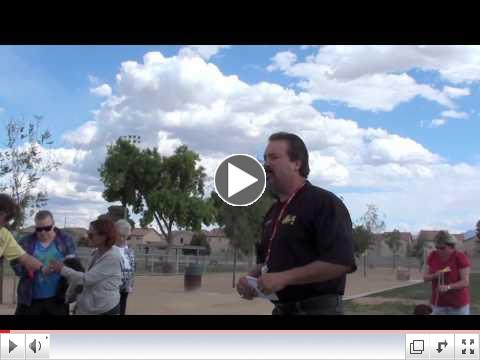 | | Responsibility at the Dog Park (Part 1) |
 | | Responsibility at the Dog Park (Part 2) |
|
Saying Farewell
| Eileen and I recently had the all too familiar experience that all dog owners have, we had to say good-bye to one of our own dogs. Smokey, a warm and loving Akita of 11 years, passed away on 3/09/11. Smokey had been battling Cushing's Disease for sometime now. The entire family is greatly saddened by the loss. Smokey has gone to the Rainbow Bridge where he is playing with his brothers K9 Sabre and Sampson and his sister Nikka.

|
Videos- Visit our You Tube Channel for all of our videos
|

|
|
About Your Trainer
| Bob grew up on Long Island, New York
and upon graduation from High School spent four years serving this country in
the U.S. Army. Bob graduated from
Hofstra University Summa Cum Laude with a Bachelors Degree in Business and
earned several academic achievement awards.
Bob spent several years as an Operations Executive for a major retailer
until he joined the N.Y.P.D. Bob
graduated #1 in his class from the police academy, earning the highest academic
achievement award. Bob is currently a
full time Police officer. Bob was a K9 Handler for 5 years with his partner Sabre. Bob has
certifications in dog training through The Animal Behavior College and The No
Limitations School for Remote Collar Training.
Bob has worked with some of the most influential dog trainers. Bob has studied under Brian Kilcommons (noted
trainer and author) and Fred Hassen (founder and creator of Sit Means Sit). Bob has over 10 years of experience in training dogs and receives a real sense of accomplishment when he witnesses the success his clients have with our program.
|
Thank you for allowing us the opportunity to work with your family. We appreciate everyone of our clients and value the relationship that we have with you. The highest compliment that you can give us, is the referral of your family and friends. Remember, we are never too busy for your referrals. If you know someone that would benefit from our services or that might enjoy what we do, please forward this newsletter to them. We are always looking to improve our service. If you have any comments or suggestions, please send them to us. We are always looking for testimonials from our clients so that we can show others how our training has helped you. Please feel free to visit my Training Blog to obtain additional information and view some more great videos. Missed an earlier edition of this newsletter? Go to my blog and view past editions that are archived at this location.
Sincerely,
|
|
|
|
|



