|
GHHN eNewsletter
Fall/Early Winter 2011 Edition
2199 Saw Mill River Road
Elmsford, NY 10523
914.592.6726
www.greaterhudson.org
Priscilla Brendler,
Executive Director
Kerry Sclafani,
DHP Regional Coordinator, Editor | |
|
|
Emergency Aid Funding Available
Click here to learn more | |
|
|
SAVE THE DATE! | 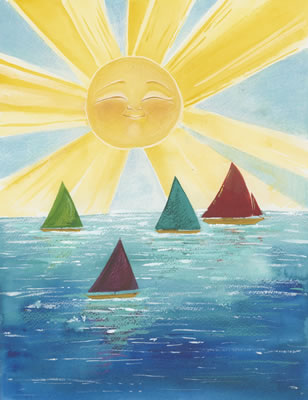 | |
GHHN Member Appreciation Boat Cruise
June 22, 2012 |
|
Upcoming GHHN/DHP Programs
--------------
Just click on the program name to register -- it's quick and easy!
Let's Talk About Historical Photographs
December 5, 2011
9:30 - 12:30 PM
Locust Grove
2683 South Road
Poughkeepsie, NY
Let's Talk About Grants
December 15, 2011 9:30 - 12:30
Mount Gulian Historic Site
145 Sterling Street
Beacon, NY
-------------------------------
GHHN member: $8.00
non- member: $10.00
Fee includes informational packet and a light morning breakfast
These programs are made possible with funds from the Documentary Heritage Program of the New York State Archives, a program of the New York State Education Department and the Greater Hudson Heritage Network. |
|
|
|
|
|
GHHN eNewsletter
Fall/Early Winter 2011 |
Greetings!
Welcome to the inaugural edition of the GHHN quarterly e-Newsletter! We are delighted to present this new online version which contains important information for the heritage field. The next e-Newsletter will be the Late Winter edition and keep your eye open for the monthly e-blasts as well.
At the October Annual Meeting at West Point, many members asked if there was a way to learn more about the day's theme "Universal Design" and specifically information from the break-out presentations. By popular demand, below is the information you were asking for! If you were not able to attend this year's meeting, we are pleased to share with you the meeting highlights.
We learned that today's museum community is becoming more inclusive and how we can make our cultural heritage more accessible to people from all walks of life, including those with disabilities and special needs. Thank you again to all who presented and attended--the day was met with much success. And a big thank you to our gracious hosts at the West Point Museum!
Priscilla Brendler
Executive Director |
|
Access to Places that Matter: Enriching Experience For Everyone
Increasing accessibility for people with disabilities can make a historic place more alive for everyone by engaging all five senses - touch, hearing, taste, smell and sight. That was an overarching theme of this year's annual meeting of the Greater Hudson Heritage Network, which focused on universal design. Invited to give the keynote address because of the law division's longstanding work on accessibility for historic places, I was pleased to address an audience enthusiastic about the possibilities of enriching experiences for all visitors through a broader approach to accessibility - universal design. Continue reading |
Accessibility and Inclusion at Museums -- National and Global Perspectives
By Joan Pursley, Editorial Director, Art Beyond Sight
Art Beyond Sight (formerly named Art Education for the Blind) was founded by Elisabeth Salzhauer Axel in 1987; its goal is to make art and culture accessible to people with vision loss and other disabilities. Among its many programs are (1) a multi-site museum accessibility study, (2) coordination of the Art Beyond Sight collaborative and its annual (October) Art Beyond Sight Awareness Month, (3) Project Access and Project Access New York, (4) New York Beyond Sight (an online program that makes NYC's landmark buildings and public artworks accessible to people who cannot see through verbal descriptions recorded by prominent New Yorkers), and (5) the Art Beyond Sight Lab, which provides hands-on programs for children and adults with vision loss, developmental and learning disabilities.
Continue reading |
Museums in Partnership with Students with Disabilities and Their Families:
The Museum Educator as a Beacon of Accessibility
By Kimberly Arruda, MA ,Program Supervisor, Howard Haber Early Learning Center
Children with disabilities are like leaves that fall from trees on a breezy autumn day; observe their marvelously complicated colors. No two are exactly the same hue. These children are like snowflakes that slide down from the winter sky; look at their mesmerizingly jagged patterns. No two are exactly the same shape. Place your finger on a mirror the next time you hold one to your face. See the unique web of details its print leaves behind. Behold it, for no one else on the planet is capable of leaving such a mark. It is your story and yours alone. Such is the child with a disability. And so must this child's education be: His story. Her story. Different. Unique. Colorful. Thoughtful. Mesmerizing. Worthy of leaving an imprint as beautiful and meaningful to this child as that which your finger left on the mirror held to the face that is uniquely yours. That which is remembered by this child for a lifetime.
Continue reading |
Universal Design for Museum Educators
By Sarah Latvin, Director of Education, Lower East Side Tenement Museum
At the Lower East Side Tenement Museum we have been working to make the job of Museum Educator universally designed. We have aimed to create a culture of awareness and sensitivity to disability, and, with an open stream of communication, have learned how to build accessibility into new material designs, and identify places where "quick fixes" can make pre-existing materials more accessible to all. Our process has been iterative and ongoing, and we certainly still have a long way to go. We have had the benefit of working with Daryl Hamilton, an educator who has been a partner in brainstorming how we might adapt our materials to better suit his needs as a person with low vision. Continue reading |
|
Immersed In Our Cultural Heritage Through the Senses: Developing Sensory Programs for Visitors with Dementia
This presentation provided an overview of the different levels and stages of Alzheimer's disease and other related dementias. Ms. Marks Kahn gave examples of how museums and historic sites can address the needs of patients and family members through the use visual art in order to stimulate memory and discussion. View presentation |
|
Universal Design and Accessibility at the Derfner Judaica Museum at The Hebrew Home at Riverdale
By Susan Chevlowe, Ph.D., Chief Curator and Museum Director, Derfner Judiaca Museum at the Hebrew Home in Riverdale
In 2009 the Derfner Judaica Museum moved into the light-filled, open and universally accessible space that the architect Louise Braverman designed on the main floor of the Jacob Reingold Pavilion at The Hebrew Home at Riverdale, a long-term geriatric care facility. This new space helped to integrate the museum more fully into the Home, compared with its former location on the fifth floor of an independent living apartment building on the Home's 19- acre campus in the Riverdale section of the Bronx, where it had been located since 1982.
Continue reading |
The Derfner Judaica Museum: A Design Model for our Aging Baby Boomers
By Louise Braverman, FAIA, Louise Braverman, Architect
Our baby boom generation is charting its own course. Boomers are living both longer and younger, rapidly becoming the largest population group in our country. By 2012, 40% of all households will be 55 years or older. Today there are 80 million people born between 1946 and 1964. That means every 7.5 seconds a boomer will turn 60. This demographic group is changing the perception of what it means to be elderly, fighting the traditional notion of old age every step of the way. To paraphrase Patricia Wallace of The New Marketing Network, "boomers are so obsessed with the perception of aging that their attitude is that they will become seniors 3 years after they are statistically dead." Continue reading |
|
|
Evaluating Universal Design at the Home of Franklin D. Roosevelt National Historic Site
Of all Presidential homes, the Home of Franklin D. Roosevelt must excel at welcoming visitors with disabilities, and at the same time encourage public understanding of FDR's own disability and the personal resilience and energy for which he was known. For many years, the National Park Service (NPS), which manages the site, has recognized the unparalleled importance of facilitating the visits of wheelchair-users to this house. Ironically, achieving both these goals together remains a continuing challenge. Continue reading |
|
Save a stamp!
Renew your membership online
--
it's quick and easy! | |
|
To learn more about GHHN and the programs and resources we offer, please visit us at www.greaterhudson.org!
|
|
|