FREE ALBUM
| |

| |
A FREE 128k MP3
Schubert
Trout Quintet
Artur Schnabel, piano
Alphonse Onnou, violin
Germaine Prévost, viola
Robert Maas, cello
Claude Hobday, double bass
Rec. 1935
"The performance, by some of the finest musicians of the period which spanned the First World War and the two decades after it, communicates not so much rigour of utterance as sublime joyfulness..."
Gramophone, 1983
Download it now - for one week only - it's only free from our Cover Page!
"UPGRADE" to full quality lossless 16-bit or 24-bit FLAC downloads with notes here:
PACM 034
|
LATEST REVIEW
| Audiophile Audition
12 August 2012
Kirsten Flagstad recital
by Gart Lemco.
"Pristine resurrects important post-War inscriptions from Kirsten Flagstad, once heralded as the most powerful soprano in music"

| |
The art of Kirsten Flagstad (1895-1962) receives excellent service by way of Pristine and master restoration engineer Mark Obert-Thorn, who revive inscriptions the great Norwegian soprano made for RCA, 1950-1952. The original vinyl LPs from which many of the songs derive (LM 1094, LM 1870, LM 1738) have passed into obscurity, since RCA seems to have lost interest in Flagstad's post-war efforts. Of particular note, the Grieg cycle Haugtussa (26 April 1950), which Flagstad taped in Hollywood, stands between her other readings from 1940 and 1957, the latter having been issued by Decca. The extended cycle by Schumann (17 March 1952), after poems by Chamisso, rivals in Flagstad's performance the equally heralded version by Kathleen Ferrier.
The 1840 cycle by Schumann traces, from the feminine point of view, her encounter with her beloved whom she will marry and accompany through various stages of life, until his death. Schumann omits the ninth song from the cycle, a consolation of sorts, and so ends with bereavement and a sense of the eternal return. The opening keyboard motif, with its falling figure, sets the tone of natural destiny. Flagstad excels in "Ich kann's nicht fassen, nicht glauber," capturing the awe and disbelief that her dreams of love move to fruition. Despite what may be construed as "stereotypical" feminine sentiments, the narrative infuses her inner life with pure poetic sensibility. Even the pregnancy blatantly stated by Chamisso has been excised to by Schumann to concentrate on the intensely personal connubial bliss of the couple. While the Kathleen Ferrier/Bruno Walter collaboration testifies to an almost extra-musical valediction, this performance retains an authenticity of style and clarity of delivery that warrants every consideration.
Grieg's song-cycle (1898) Haugtussa takes its inspiration from the 1895 circle of poems, written by Norwegian author Arne Garborg, a neo-Romantic and Symbolist poet. The themes of the poems are closely related to Garborg's rural background, and a number of supernatural beings, like the draug, the hulderpeople and other creatures, make an appearance. A Haugtusse is originally a female subterrestrial (a Hulder), but in this story it is an eponym of the main character, a psychic young girl, usually called Veslemøy (the "Little Maiden" of Song No. 2). Grieg set eight of the twenty poems he had worked upon, and they loosely describe events that concern the visions and somewhat thwarted love-life of the protagonist. Often, the piano part imitates at once a watery kingdom and the sense of fate. Flagstad's head-tone still resonates, and her smoky bottom voice reaches into the mezzo range without strain. Much of the vocal style utilizes a ballad or parlando style in the manner of direct story-telling, with Flagstad's occasionally taking a high or long-held note (as in the silvery "Bilberry Slopes") to add pathos to the narrative. Her rendition of Elsk ("Love") captures the mercurial, frisky, and bittersweet anticipation of the tryst. The "Kidlings' Dance" with its yips might remind a few of her Wagnerian moments as Brunnhilde.
The Schubert (17 March 1952) and Brahms (10 April 1952) provide just the kinds of vocal elegance and virtuosity in which Flagstad exhibits as much restraint as she does vocal prowess. Schubert's "Die junge Nonne" offers another of his 'dark and stormy nights' narratives that could bathe in 'religious' treacle, if permitted. Of the Brahms group, "Meine liebe ist gruen," Op. 63, No. 5 bursts forth with a vehemence not easily matched, either by the composer or fellow vocalists. The "Sind es Schmerzen, sind des Freudes," Op. 33, No. 3 offers wonderful accompaniment from McArthur, the song taken from the Tieck cycle of courtly love and loss, Die Schoene Magelone. The tissue of medieval ardor that Flagstad and McArthur weave suggest that this opus stood as his personal version of Tristan.
The sentimental aria by Ernest Charles, in English, proves that a torch song from Flagstad has the same power we might have expected from Helen Traubel or Dorothy Kirsten.
(PACO 079, 76:59)
|
LATEST REVIEW
| MusicWeb International
10 August 2012
Hamilton Harty
by Jonathan Woolf
"This well selected programme has been finely transferred"

| |
The centrepiece of this disc is Hamilton Harty's 1927 recording of Dvořák's New World Symphony. It has been issued before, on Symposium 1169 and on Hallé Tradition CD HLT8000, but this Pristine Audio comfortably surpasses them both. The lifelike but noisy Symposium had a number of annoying ticks, and the Hallé Tradition was a dead duck, being badly over-processed. Pitching has also been corrected in this latest transfer.
Though repeats were light on the ground in this Columbia recording, the basic elements of Harty's performance are intact. Its linearity is coupled with intensity to produce a performance of volatile drive. There are even times when one thinks of Harty's English contemporary Albert Coates. Harty certainly drives to the crest of the climax in the first movement with powerful zest. One appreciates too the Mancunian winds, as individualistic as ever, and the famed, taut brass. The strings play with considerable dash led, I think, by Alfred Barker - this recording was made just after Harty and his leader Arthur Catterall fell out with spectacular results. It's a recording in which Allegro molto means just that and in which con fuoco means con fuoco. Idiosyncrasies noted, there is a huge amount to admire, not least in the poetic sensibility brought to bear on the music which, combined with its masculine fervour, alerts one to the all round stature of the direction and music making. Harty made very few bad records.
Harty, at the turn of the twentieth century, one of London's most admired piano accompanists, was joined by Myra Hess for a clubbable and ebullient Slavonic Dance in C major, the first of the Op.46 set. At a time when most of Harty's acoustic piano recordings lie languishing in limbo, it's good to find this 1933 electric restored to the marketplace. I remember it fondly from a Pearl LP transfer. The Carnival Overture (with the London Philharmonic this time) was recorded a few days before the Symphony in a mini Dvořákfest. This makes it the earliest of the pieces in this disc. Once more we feel Harty's liking for lithe and directional intensity - purposeful, dynamic, and alive with kinetic energy. His accelerandi are truly inspiring. To complete the Czech theme we have the overture to The Bartered Bride from 1933, another brisk, zesty traversal.
Don't overlook the famous Doppler arrangement of Liszt's Hungarian Rhapsody No.12 in which the Halle principals can be heard in their vivid splendour, as can some truly luscious portamenti from the Hallé strings. Nor the two Brahms arrangements where the sound in the Free Trade Hall is more recessive than Central Hall, Westminster two years later. The boxier sound for the Brahms duo is not fatal.
This well selected programme with its Czech and Hungarian theme has been finely transferred.
(PASC 331, 65:36)
|

|
|
CONTENTS
| |
Editorial Sargent's Pirates and Sullivan's cylinders
Sargent G&S - The Pirates of Penzance
PADA Huberman & Friedman play the Kreutzer Sonata
|
The Pirates of Penzance
And some very old Sullivan recordings repitched As you may have read last week, I've been a little under the weather since falling and breaking a rib a few days previously. I'm glad to say my recovery seems to be progressing well, and I trust it will be further helped by my taking a two-week holiday as of tomorrow (Saturday), well away from the endless temptations of musical work. I had a number of projects in mind for this week but ultimately settled for something cheering and long overdue - a Savoy opera by Gilbert and Sullivan. The Pirates of Penzance was recorded by Sir Malcolm Sargent for EMI in 1959-60 and apparently marked one of the earliest examples of this kind of work taking advantage of stereo, albeit in a mild and terribly tasteful kind of way, according to The Gramophone's reviewer. Although well recorded for its day, it's certainly benefited greatly from a good sprucing up in the remastering suite. The more vocal work I carry out with XR remastering the more I marvel at just how effective it can be with the human voice, and this recording really is an excellent example of that. 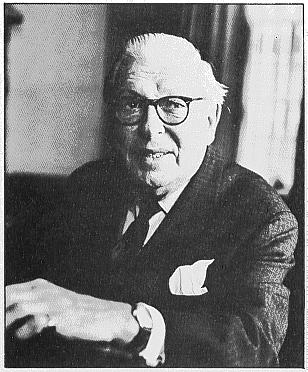 | | George Baker |
Add to that a superb, humorous and musically excellent performance from a top-notch cast and it's a winning formula - with a 75-year-old George Baker in superb form as the "modern Major-General". But of course Messrs. Gilbert and Sullivan weren't writing for CD durations, and the roughly one and a half hours this recording runs to is a tad too long for a single disc - but unfortunately makes for a very short double set. This left me wondering what might best complement the Pirates recording if I was to add to it for this release. Having loved his Major-General, I would have been delighted to discover a stash of George Baker recordings tucked away in the darker recesses of my 78rpm collection, but diverse as it is, there appears to be nothing - despite the baritone's extensive recording career running to thousands of discs. Then my thoughts drifted to the last major Sullivan release on Pristine - a collection of early cylinder recordings that came up so well sonically when I remastered them three years ago. Three years can be a long time in terms of audio technology advances, but probably the most revolutionary step forward we've taken since 2009 is the ability to address problems of pitch instability - not just wow and flutter but all sorts of other issues of tuning - which was simply not an option until mid-2011, and is still a very new and seldom-heard technology outside of Pristine and a handful of specialist studios. It'll come as no great surprise to hear that the pitch of those very early recordings - and here we're talking about cylinders cut between 1899 and 1914 - is less than stable. I'm not sure quite how cylinder recorders were driven in the early days, but I'd not be surprised to hear it was often something very similar to the gramophone disc cutters of the same era. Prior to the introduction of electric motors to drive cutting lathes, these had to be situated approximately three storeys high in a tall building. This allowed the lathe to be driven by a weight - as the weight dropped down the requisite distance it gradually "unwound" some kind of rope that was wrapped around the cutting lathe, thus driving its rotation. Quartz-timed phase-locked-loop this is not! Happily we can now repair at least some of the wayward pitch this kind of thing can induce, reducing a sense of warbling and firming up the sound of some of the oldest recordings on the Pristine label. There were two Pirates selections in the original Sullivan release, and I've dropped these in at the end of CD1 as "interval music", after leaving a reasonable gap at the end of the main recording. The remainder follow the end of Act 2. All are Gilbert and Sullivan compositions (though some are instrumental-only versions) with the exception of the final number, The Willow Song, a setting of Shakespeare by Sullivan and sung in 1904 by Louise Kirkby Lunn to piano accompaniment, and all have been through Capstan for pitch correction for this release. This last song was one of the most badly affected cylinders as far as pitch instability was concerned, with the piano sounding particularly watery as a result. Using Capstan has really firmed up the short unaccompanied piano sections where a lot of flutter was evident, but the recording also highlights the limitations of this technology where a strong leading voice is concerned. 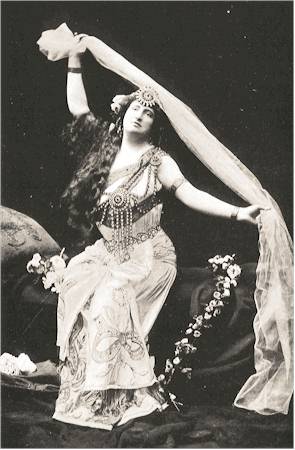 | | Louise Kirkby-Lunn |
When Capstan analyses a recording it looks for harmonies and tracks the most dominant components. Whilst this works very well indeed in a piano or orchestral setting, it can be less helpful with a single dominant singing voice, where the deliberate vibrato of the singer is easily confused with the unintended pitch variations caused by the recording technique. When this happens, as it did with the Kirkby-Lunn recording, the only solution is to tone down the degree of correction. With most recording this allows longer-term pitch fluctuations to be fixed while the very fast wavering up and down that characterises vibrato (and, unfortunately, flutter) get left alone. Even so there's a lot of improvement to be had here and, coupled with a general re-pitching to something more realistic (the original was very flat in this particular case), it's worth taking a second listen to the recording. It's interesting also to note how many of these Sullivan cylinder recordings were essentially "tasters" of his music, short medleys of the best-known tunes, rather than full-length songs or arias. Naturally the duration of cylinder recordings - in their regular-play formats often little more than a couple of minutes was available - led to efforts to fit as much in as possible. This inspired me to put a medley of highlights together for this week's sample MP3 rather than just a single song, something I'll probably continue in future where applicable. You'll note too that a number of vaguely anonymous "military" bands were brought in to play Sullivan's music - with the happy result that the notes tend to be more clearly audible and the frequency range rather higher than often expected with acoustic horn recordings, with the extra high frequency energy of the powerful brass instruments sometimes able to extend recording ranges significantly higher than the majority of recordings of the era. Naturally none of them comes anywhere near close to the wonderful clear stereo recording of Sargent's Pirates of Penzance with which they share this release, but I hope you'll find they complement it well. Imagine the music as an interval curiosity at the theatre, and something interesting playing in the background as you leave at the end of the evening if you like - or simply omit the tracks and listen through Pirates without interruption. The choice is yours! Summer Vacation newsWe're closing down our studio and office operations for two weeks as of tomorrow (Saturday 17 August), but our website operations will continue as normal. This means there'll be no technical support for a while - but if you do have questions these will be responded to after September 3rd, at which point CD orders placed during the next two weeks will be quickly fulfilled. Andrew Rose
17 August 2012
|
Sir Malcolm Sargent conducts a fabulous stereo Pirates of Penzance
"a superb cast of principals, a first-class orchestra and a fine chorus" - The Gramophone
 GILBERT & SULLIVAN GILBERT & SULLIVAN
The Pirates of Penzance
Recorded 1959/60
Producer and Audio Restoration Engineer: Andrew Rose
CAST
Major-General Stanley GEORGE BAKER
The Pirate King JAMES MILLIGAN
Samuel, a pirate JOHN CAMERON
Frederic, an apprentice pirate RICHARD LEWIS
Sergeant of Police OWEN BRANNIGAN
Mabel ELSIE MORISON
Edith HEATHER HARPER
Kate MARJORIE THOMAS
Ruth, a pirate maid MONICA SINCLAIR
THE PRO ARTE ORCHESTRA GLYNDEBOURNE FESTIVAL CHORUS
Conductor SIR MALCOLM SARGENT
Web page: PACO 081
Short notes
"This set is to be welcomed with enthusiasm. It is the most musical performance of the Pirates that we have ever had on records. Having heard every complete recording from the first in the early 1920s I can say this with some authority...
The hero, of course, is George Baker, who was 75 when the recording was made. His verve and the immaculate clarity of his diction in the famous patter-song are something to marvel at, as also, by the way, is the beautifully rippling accompaniment to his "Sighing softly to the river"..."
- The Gramophone, 1971
One of the very finest recorded Pirates of Penzance is here given a full 32-bit XR aural revival and sounds better than ever - a real joy to listen to, both sonically and in this wonderful performance. As an added bonus there's a selection of pre-First World War Sullivan cylinder recordings, in astonishing sound and newly pitch-corrected.
Notes on this recording
This new transfer is taken from immaculate pressings of the 1971 LP reissue as reviewed here. It was indeed a superlative performance, nicely recorded with subtle and sensible use of stereo and very occasional and tasteful inclusion of minor sound effects. As has often been the case with recordings of this era, an apparent sonic veil over the voices has been lifted by the 32-bit XR remastering process, bringing a vibrance and immediacy to the sound and a clarity to the all-important words of W. S. Gilbert.
The duration of the recording allowed me to revisit Pristine's 2009 release of Sullivan Cylinder recordings, two of which hail from The Pirates of Penzance and have been programmed here as "interval music" at the end of Act One on CD 1. At the time of transfer and remastering there was no available technology to allow an assualt on the wow and flutter which bedevilled a number of those very early recordings, but the development of Capstan software in 2011 means a further improvement in sound quality is now possible, dealing with this precise issue. All of the cylinder recordings suffered from pitch drift of one kind or another, and some had particularly bad flutter issues, all of which here have been either resolved entirely or much improved. It is indeed amazing to listen to these wonderfully clear early recordings, which just overlap the life of their composer, and recall that all of them pre-date not just the First World War, but also - by over a decade - the recording microphone.
Andrew Rose
REVIEW Pirates original LP issue
Hitherto, in their series of Gilbert and Sullivan opera records with picked casts and Sir Malcolm Sargent conducting, H.M.V. have been content to give straightforward "concert" versions with no attempt at the greater realism made possible by stereo, other than that of added spaciousness and some degree of positioning. Here they introduce effects designed to give a greater sense of the atmosphere of the stage as well as suggesting both movement and positioning. This is apparent immediately after the overture when the curtain goes up to the opening orchestral bars leading to the first chorus. Over the orchestra comes a crescendo of conversation and laughs from the crowded stage before the chorus begins to sing. One senses, as it were, the raising of the curtain as one did for the first time so far as I remember in the Decca/Stolz Merry Widow of two years ago.
I am all for this sort of thing so long as it does not descend to mere gimmickry, and of course it does not here. The new possibilities are exploited with discretion, and they demonstrate as little else could the benefits of stereo, very good indeed as the mono version is within its limits. It is in such things as the glorious "Paradox" trio, the lovely duet for Mabel and Frederic, "Ah, leave me not to pine", beautifully sung by Elsie Morison and Richard Lewis, and the superbly rippling accompaniment to the Major-General's song "Sighing softly to the river" that stereo comes into its own musically. Without undervaluing by one iota the fine singing and excellent characterisation of the other principals Pirates revolves around Major-General Stanley and here is magnificently portrayed by veteran George Baker. In stereo one can almost see him sitting in the moonlight under the arches of the ancient chapel muttering over his ancestors. Incidentally, I do not recall ever hearing Mabel's song "Poor wandering one" as well sung as it is here by Elsie Morison.
A comparison with the D'Oyly Carte recording of two years ago is inevitable, I suppose, and as this was made before Decca started their policy of including dialogue I have not that distinction to help me out this time. The answer must be quite firmly that musically this new recording is substantially the better of the two, and well worth the extra cost. But if you must have all the traditional bits and pieces without exception then the Decca set is a very good one.
W.A. Chislett, The Gramophone, January 1961
REVIEW LP reissue - 10 years later
At the new, cheaper price this set is to be welcomed with enthusiasm. It is the most musical performance of the Pirates that we have ever had on records. Having heard every complete recording from the first in the early 1920s I can say this with some authority. Sir Malcolm Sargent was a great conductor of Sullivan's operettas and here he has with him not only a superb cast of principals, but a first-class orchestra and a fine chorus. Incidentally, this was the first record in this series to exploit the potentialities of stereo to create atmosphere, positioning and movement.
Musicality, however, does not deny us anything of the humour. George Baker, Owen Brannigan and James Milligan see to this. The hero, of course, is George Baker, who was 75 when the recording was made. His verve and the immaculate clarity of his diction in the famous patter-song are something to marvel at, as also, by the way, is the beautifully rippling accompaniment to his "Sighing softly to the river". Being a reissue I am told I must be brief, but I cannot resist calling attention, as I did in January 1961, to the beauty of the duet "Ah, leave me not to pine" as sung by Elsie Morison and Richard Lewis, the former's brilliant "Poor wandering one", and the splendid "Paradox" trio among other jewels. The sound is still remarkably fresh, immediate and realistically balanced.
W.A. Chislett, The Gramophone, December 1971
MP3 Sample Highlights Selection Listen
Download purchase links:
Stereo MP3
Stereo 16-bit FLACStereo 24-bit FLAC CD purchase links and all other information: PACO 081 - webpage at Pristine Classical
|
Huberman plays Beethoven's Kreutzer
 | | Bronislaw Huberman |
PADA Exclusives
Streamed MP3s you can also download
Beethoven
Violin Sonata No. 9 "Kreutzer" in A, Op. 47
Bronislaw Huberman violin
Ignaz Friedman piano
rec. 11 September 1930
Central Hall, Westminster, London
Issued as Columbia 78s
LX72-75
Matrix Nos. WAX 5730-33, WAX 5736-39
Remastered by Dr. John Duffy Additional remastering by Andrew Rose Over 500 PADA Exclusives recordings are available for high-quality streamed listening and free 224kbps MP3 download to all subscribers. PADA Exclusives are not available on CD and are additional to our main catalogue.  Subscriptions start from €1 per week for PADA Exclusives only listening and download access. A full subscription to PADA Premium gets you all this plus unlimited streamed listening access to all Pristine Classical recordings for just €10 per month, with a free 1 week introductory trial. Subscriptions start from €1 per week for PADA Exclusives only listening and download access. A full subscription to PADA Premium gets you all this plus unlimited streamed listening access to all Pristine Classical recordings for just €10 per month, with a free 1 week introductory trial.
|
|



