FREE ALBUM
| 
| |
A FREE 128k MP3!
Beethoven
Piano Concerto 4
Artur Rubinstein
Royal Philharmonic Orchestra - Beecham
Recorded 1947
"Rarely, rarely as comes the spirit of delight, there is the infrequent occasion which makes the reviewer's life really worth while : such an occasion is the issue of this recording. I cannot remember a finer or more deeply satisfying performance of this great concerto, one which more effortlessly overcomes every obstacle and in which every detail is so meticulously polished and so absolutely right..."
GRAMOPHONE, 1949
Download it now - for one week only - it's only free from our Cover Page!
"UPGRADE" to full quality lossless 16-bit or 24-bit FLAC downloads with notes here:
PASC 165
|
LATEST REVIEW
| Audiophile Audition
12 March 2012
TURANDOT
By Gary Lemco
"Leopold Stokowski's immortalized MET debut in Puccini's last but flawed masterpiece returns to us in its spectacular triumph with a stellar cast"

| |
It took conductor Leopold Stokowski (1882-1977) seventy-eight years to mount the podium at the MET, leading a performance (4 March 1961) that had first been assigned to the late Dimitri Mitropoulos. Having suffered a hip injury, Stokowski made his painful way to the podium via crutches, but once in front of his ensemble, he shed any encumbrances with a controlled fury. The revival of Puccini's 1924 Turandot by the MET had waited for thirty-one years; and while the opera (incomplete at the time of Puccini's death), might not represent the composer's most inspired work, it still communicates an exotic adventurously harmonic splendor and dramatic punch that find memorable lyric moments that culminate with "In questa Reggia" and the immortal "Nessun dorma!" The use of a kind of leitmotif in the form of the children's chorus in Act I after the invocation to the moon serves to introduce the icy Princess Turandot.
Edilio Ferraro enacts the doomed Prince of Persia, who has failed to answer the three riddles required to win the Princess' hand. Birgit Nilsson (1918-2005) embodies the cold-hearted Turandot with an almost metallic relish in her voice, her sustaining power notoriously greater than that of her co-star Franco Corelli. Corelli's intimidation by Nilsson's vocal powers became legend when he purportedly bit her on the ear! Anna Moffo (1932-2006) emerges as a major dramatic force in her portrayal of Liu, who loves the Calaf to the point of death. Her Act I "Signore, ascolta!" proves heartbreaking in its agonized intimacy. Corelli consoles Liu, "Non plangere, Liu!" urging her to remain with his father should he fail in his quest. A weird combination of comedy and pathos had erupted in Act I, in which Ping (Guarrara), Pang (Robert Nagy), and Pong (Charles Anthony) try to convince the young suitor to desist in his suicidal courtship of Turandot, whose three riddles have undone so many. Corelli emerges in full voice, declaring his will to pursue the ice princess. The ensemble piece that ends Act I "Ah! Per l'ultima volta!" conveys a crushing power of conviction.
After the preparations and nostalgic lamentations from the ministers that open Act II, which includes some soulful singing from Frank Guerrera, longing for his Honan country house, situated by a lake surrounded by bamboo, they recall that too often their preparations have involved both weddings and funerals. The palace trumpet's sounding at dawn ("Udite trombe! Altro che pace!") ushers in the thought of impending death, as Alessio de Paolis tremulously admonishes The Prince to withdraw his challenge of the three riddles in his "Un giuramente atroce mi costringe." The MET Chorus intones in radiant colors over the ominous bass chords of impending fate. Turandot's "In questa Reggia" explains the Princesses' rancor, since she embodies the spirit of a ravaged and murdered ancient, a victim of Tartars, Princess Lo-u-Ling, and has sworn that no man shall possess her. When Nilsson hits "grido," the effect proves shattering. Corelli replies with sterling energy that though the riddles are three, life is one. The posing of the three riddles enjoys Stokowski's dire pacing, the silences between each word of the questions rife with menace. The Prince's first answer, "La Speranza!" (Hope) achieves the desired shock effect. Corelli's "Il Sangue!" (Blood) has Nilsson virtually screeching in agony. Her taunt about fire and ice in the third riddle evokes his "Turandot!" as the paradoxical answer. "Son of Heaven" praises the populace in response to the lifting of the curse. Nilsson's voice becomes inflamed by misery and high-note fury as she pleads to be released from the condition of marriage, and the Prince offers to release her if she can produce his secret name ("Tre engmi m'hai proposto), already infused with figures from the upcoming "Nessun dorma!"
Act III opens with the chorus' invocation ("Cosi comanda Turandot") that everyone seek the name of the Prince, in order to release Turandot from her vow. Typically, Stokowski's coloring of the orchestra highlights the audacious scoring by Puccini. Corelli has his immortal moment of tragic longing in "Nessun dorma!" floating the high B and A in marvelous chest tone. His final "Vincero!" brings down the house. Once again, Anna Moffo demonstrates her combination of vocal and dramatic acuity in the extended scene of Liu's torture and martyred death for love, "Tanto amore segreto" and its sequel, "Tu che di gei sei cinta." Baritone Bonaldo Gialotti as the blind Timur has his shining aria in "Liu! Liu! Sorgi!" Subsequent to Liu's funeral procession, the Prince rends Turandot's veil, a vehement "Principessa di morte!" planted upon Turandot's cold lips by an impassioned Corelli, the harmonies a step away from Bernard Hermann. One enamored kiss proves potent to melt the ice princess, the pheromones magical enough to teach Turandot compassion. Franco Alfano completed Turandot, proclaiming the Calaf's name as 'Love" reintroducing "Nessun dorma!" as a closing motif; and for those who admire this incomplete and perhaps flawed masterpiece, the epithet suits the Stokowski debut perfectly.
LINK
|
LATEST REVIEW
| MusicWeb International
March 13 2012
BEECHAM
by Rob Barnett
"A fearlessly brilliant and contrasted disc"

| |
Arnell has been well served in the last decade by the industry or, more accurately, by Dutton who have recorded symphonies, concertos, tone poems and chamber music in profusion. Before that there were very few commercial recordings. Beecham's LP of Punch and the Child was one in almost complete isolation. This is the fearlessly brilliant Arnell with a scathing edge variously approximating to Bliss, Copland and Rawsthorne. In 1986 Arnell wrote his Ode to Beecham (orator and orchestra) for the fortieth anniversary of Beecham's founding of the RPO. Punch and the Child is presented here in a single track. Lord Berners' ballet suite The Triumph of Neptune has had two more modern recordings in good stereo, by the RLPO conducted by Barry Wordsworth (EMI Classics CDC 7 47668 2) as well as in the Marco Polo Berners series with David Lloyd-Jones and the English Northern Philharmonia (8.223711). It's a glossy fest of balletic levity. This jocular and sometimes touching music merits only the occasional hearing. The sincerely poetic Frozen Forest movement acts as a relief from the predominance of 1920s fluff, slapstick and quirky Graingerisms. Just as expected, the Philadelphia - on a rare outing with Beecham - proves polished and ebullient.
Delius's Arabesque has been recorded more than once but this was its première recording back in 1955. In 1968 John Shirley-Quirk, impressively cloud-hung, sang the piece in Liverpool with Groves for EMI. Shirley-Quirk sang an English translation of the Jacobsen verse. Einar Nørby - singing in Danish - is slower but certainly catches the requisite blend of sighing melancholy, flaring passion and mercurial ecstasy. It is a typically lovely piece to place between the individualistic Arnell ballet and the predominance of charming superficialities in the Berners score.
These mono recordings were once issued by Sony Classics in their Graham Melville-Mason Beecham series: Arnell and Berners; Delius and before that on Sony Essential Classics SBK62748 and Masterworks Portrait MPK 47680.
Would that Pristine - who have a serendipitous touch - could next run to ground that impossibly rare 1955 Argo LP RG 69 of Richard Austin conducting Balfour Gardiner's Overture to a Comedy and, more to the point, his magically impressionistic April and Philomela. These works for choir and orchestra have a are remarkably Delian patina. Now a freshened up transfer of that would be a red letter event - but Mr Rose will need to find not only a good example but also a suitable coupling.
LINK
|

|
|
CONTENTS
| |
Editorial Nothing lasts forever - data down the ages
Chorale Roger Wagner's tackles Walton, Bach, RVW...
Backhaus Moonlight Sonata, and three more
PADA Reiner conducts Bach Orchestral Suite No. 4
|
Pop goes a hard drive
RAID to the rescue once more Nothing lasts forever; we know this. And as time progresses it seems things are less and less likely to last. Nobody's building pyramids these days, even though we know they can last a good few thousands of years. A news report on the radio last week concerned the auction of a Wanted poster ( below) issued by Oliver Cromwell concerning the man who would later be King Charles II - despite being 350 years old it was well preserved because paper in those days was made to last, "unlike today's paper" according to the expert. 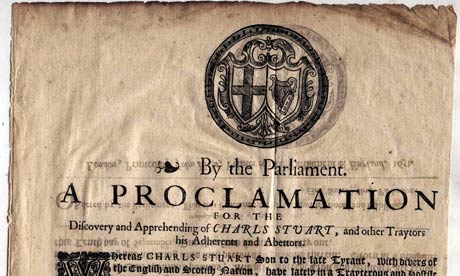 In recorded media we see a similar pattern. Shellac 78s, apart from their habit of snapping when bent, are remarkably robust - you can even recover the data off them when they're broken, providing you have a clean snap, a good eye, some sticky tape and a reasonable de-clicker. Move into the vinyl and tape era and certain aspects of longevity and data recovery fall away. Yes, a snapped tape can be edited back together again, not so for snapped vinyl. On the other hand the vinyl disc doesn't suffer from demagnetisation (causing treble loss), print-through (causing pre-echo and post-echo), random drop-outs, stretching, brittleness, oxide shed, and so on. They just get scratched, warped, encrusted in grime... Our little silver friend from the 80s seems reasonably robust, but we've all heard CDs skipping, most of us have suffered a bronzed disc or two, and we know that once they stop playing properly that's usually just about it. Like all things binary they either work or they don't - there's no hissy or scratchy midway point between perfection and intolerable deterioration. Enter stage right, the magnetic hard drive. Increasingly looking like a device coming to the end of its reign for bulk storage on the domestic computer, it's something we almost all currently rely on - as you're reading this the chances are there's one whirring away near you right now. But things that whirr tend to wear out, just like your car and your washing machine will, and in addition digital storage things (as already pointed out) tend either to work or not to work. A dying hard disk drive very quickly becomes a dead hard disk drive, taking all its secrets (and your precious music, video, photos, and other data) with it. In the bright, shiny, digital future this particular mechanical flaw won't be an issue. Already many of us are relying, for a part of our digital lives at least, on memory chips rather than magnetic drives to keep our data secure. There's no hard drive in an iPad or a mobile phone; digital cameras both still and video record onto memory cards. 16 years ago I paid £180 for a 0.4GB hard drive - now I can buy a 32GB SD-RAM card for peanuts. With nothing moving they should be an ideal long-term replacement for paper, tape, discs of varying sorts - just so long as they can be persuaded to maintain their electrical charge... But back to today. Why am I going on about this? Because once again a vital storage device in my system has shown computer-measurable signs of mortality. It's one of the really important ones - the hard drive which holds locally all the Pristine master download files (which also live on our web servers), as well as all the master files which we transfer onto our increasingly popular Digital Music Collection disc drives. The drive got perilously close to being completely full, but the most pressing issue is the drive errors its started reporting, making it hard and slow to access. Because I'm a good boy and (just for once) actually followed my own advice a couple of years ago, the drive in question is a RAID drive, which menas in this case there are actually two disc drives in a single box, set up in a 'mirrored' configuration. This, after all the doom and gloom above, is digital's saving grace: built-in redundancy. Pop open the top of the box and there are the two disc drives whirring away in there. The one on the left is marked "A" and the one on the right is marked "B". The diagnostic software tells me it's drive B that's starting to feel a little poorly, whilst drive A is hale and hearty. Because digital data is totally clone-able data, and they're set up to mirror each other, the contents two drives should always be a perfect match. If one disc goes down, pop it out, drop an new one in, power the box up and let the drive's internal system get on with making a new and perfect copy of its existing "good" drive. Nothing's been lost - and I get a brand new back-up of all that precious data. This of course depended on (a) being able to prise the existing drive out of the case, something it seemed reluctant to do at first, and (b) once out, finding a matching drive to replace it with. But even if the latter had turned out to be impossible (in fact I ended up replacing both and doubling the capacity of the unit, but that's another story) it's still be possible to copy the data across from the good drive onto a new RAID drive, like the network one I ordered when this one started acting strange, again, one that's twice the size of the old one. With so much data to handle, the transfer process might not be quite as quick as taping together two halves of a broken 78 together and getting them to play without skipping, but ultimately it does a much better job - a perfect replica, down to the last bit of data, of all that precious information. That's the digital pay-off, a small one (of many) that makes mankind's gradual transition from hand-chiselled stone tablets to pdfs, eBooks and Word documents and from tinfoil cylinders to 24-bit digital music files a worthwhile progression. Hopefully the next time I have to confront this particular problem I'll be able to buy (and afford) solid state "drives" big enough to replace the heavy, noisy, delicate, and slow (by comparison) magnetic types that are surely in their last throes of market dominance. Hard drives: soon to go the way of the floppy disc. Remember them? Andrew Rose
16 March 2012
P.S. Please always keep regular and secure back-ups of all your digital music, photos, videos, documents etc...
UNANSWERED E-MAILS
My apologies for letting a backlog of e-mail build up recently - the last two weeks have left little or no time to devote to correspondence, for a variety of reasons. Hopefully next week should allow me the time to catch up and reply to those who are still waiting to hear from me!
PRISTINE AUDIO @ TWITTER
I must admit to knowing little about the workings of Twitter, but it's my intention to post the occasional "tweet", as well as the announcements of newsletters and new recordings through Twitter, which half the rest of the world seems already to have adopted. You can sign up to follow my occasional messages here: http://twitter.com/pristineaudio - I'll be appearing as @pristineaudio
I just hope I've have time to use it!
|
The Roger Wagner Chorale superb in three stereo 1960 recordings
First release outside US for their Walton Belshazzar, Vaughan Williams Mass, and Bach Cantata 4
 ROGER WAGNER CHORALE ROGER WAGNER CHORALE
WALTON, BACH, VAUGHAN WILLIAMS
Recorded 1960, stereo
Producer and Audio Restoration Engineer: Andrew Rose
WALTON Belshazzar's Feast
John Cameron baritone
Royal Philharmonic Orchestra
Roger Wagner conductor
J. S. BACH Christ lag in Todes Banden, BWV4
VAUGHAN WILLIAMS Mass in G minor
Doralene McNelly soprano
Alice Ann Yates alto Michael Carolan tenor Charles Scharbach bass Paul Salamunivich cantor
Concert Arts Orchestra
Roger Wagner conductor
Web page: PACO 074
Short notes
"Virtuoso! is the title of this record, and in so far as virtuosity is concerned with a machine-like accuracy of delivery, at all tempos and at any dynamic, the Roger Wagner Chorale earns the title..."
- Gramophone, 1960
Unusually, the album review quoted above refers not to the music on this release, but to another LP recorded at the same time. This is because these recordings, despite including two major British works, have never been released outside the USA before now.
This is indeed surprising - the Walton was recorded by EMI in London, whilst the Roger Wagner Chorale was renowned as one of the best in the world, as these recordings amply demonstrate! In fine stereo therefore, and with superb 32-bit XR remastering, we're proud to offer you an album to treasure - with every note perfectly on song, of course!
Notes On this recording
These transfers came from the generous collection of Edward Johnson, to whom I am once more grateful. The discs were both issued in the USA in 1961 but we do not believe elsewhere, nor have they been reissued before. XR remastering has done much to clarify diction and relieve a somewhat "plummy" tonal quality, and I've attempted to ameliorate the rather unpleasant and obvious reverberation used on Belshazzar's Feast with careful use of a modern convlution reverb. The average pitch of the recordings was around A=443Hz - given that altering this to 440Hz would have lengthened the overall duration to beyond that of a CD I elected to keep it. I've also dealt with quite a lot of pre- and post-echo, particularly in the Walton recording.
Andrew Rose
MP3 Sample Walton - Praise Ye The God Of Gold
Listen
Download purchase links:
Stereo MP3
Stereo 16-bit FLAC
Stereo 24-bit FLAC
CD purchase links and all other information:
PACO 074 - webpage at Pristine Classical
|
Fourth volume in Backhaus's magnificent first Beethoven Sonata cycle
Long only available on rare imports, and in new 32-bit XR remasters - this is unmissable
 BACKHAUS BACKHAUS
Beethoven Sonatas 4: 14-17
Recorded 1952-3
Producer and Audio Restoration Engineer: Andrew Rose
Sonata No. 14 in C sharp minor Op. 27 No. 2 "Moonlight"
Sonata No. 15 in D major Op. 28 "Pastorale" Sonata No. 16 in G major Op. 31 No. 1 Sonata No. 17 in D minor Op. 31 No. 2 "The Tempest" Wilhelm Backhaus piano
Web page: PAKM 054
Short notes
Wilhelm Backhaus's tranversal of the Beethoven Piano Sonatas reaches its halfway point this week, with our fourth of eight volumes documenting the only complete cycle this great interpreter ever recorded.
The four sonatas in this volume, from No. 14, the "Moonlight" to No. 17, "The Tempest", were all recorded in 1952 and 1953 in Geneva by Decca for mono LP release.
The stereo re-recording of the sonatas in the 1960s by a very much ageing Backhaus (born 1884) has kept these earlier interpretations somewhat in the shade outside of a Japan-only issue and a brief appearance in the Italian market, yet there are many who regard this series to be one of the great pinnacles of recorded Beethoven interpretation, more than worthy of rediscovery.
Notes on this recording
Generally speaking these recordings provided reasonably straightforward work for the remastering engineer, especially coming, as this volume has, a good number of sonatas into the series, with many carefully-chosen settings now determined for the series, restoration techniques suitable for the material worked out, and only minor variations to be found. The Moonlight offers slightly higher background hiss - this seems to be a characteristic of this work in a number of recordings, possible as a result of the works intrinsically wide dynamic range.
Andrew Rose
Reviews
"It is disagreeable to write about artists of distinction as if they were candidates at a competitive festival, but it would be ingenuous not to make a comparison between Gieseking's and Backhaus's playing of the " Moonlight " Sonata. I have spoken elsewhere in this issue of the moving interpretation Gieseking gives of the Adagio. Backhaus takes a much more matter-of-fact view, is wayward over the rhythm, and makes a very decided ritardando before the recapitu lation. I find here a serious meditation devoid of poetic impulse, a lack which shows in the treatment of the accompanimental triplets. There is rather a heavy stress on the first beats of the Allegretto and, in the second section, the quaver figure sounds jerky (Gieseking plays it smoothly, using no emphasis).
The last movement, needless to say, is played in the grand manner and is undeniably exciting, but without the fine nuances of phrasing and articulation Gieseking gives us. The recording stands up pretty well to the pianist's assault on the last movement and is rather fuller in tone than Gieseking's in the preceding movement, although never more than adequate."
A.R. The Gramophone, October 1953
(Reviewing LXT2780, excerpt concerning Sonata No. 14)
"His " Pastoral " Sonata can be compared with that of Denis Matthews on Columbia 33SX1021, reviewed by L.S. last month (a review I am entirely at one with). In I Matthews is smooth, reflective and sober ; he observes the repeat. Backhaus, without repeat, is rougher ; on the last page he disregards the pianissimo. In the first section of II Matthews is far steadier and more sensitive than Backhaus, but he smooths down the discords too much. In the section marked l' is tesso tempo Backhaus suddenly achieves that sparkling elegance which is a mark of his playing at its best here Matthews conveys the impression of alertness but with unsuitable timidity. In III the English pianist is too tame, slightly too slow. And his lack of power in IV is all too apparent ; how exciting Backhaus is as he works towards the climax."
A.R. The Gramophone, June 1954
(Reviewing LXT2903, excerpt concerning Sonata No. 15)
MP3 Sample Moonlight Sonata, 3rd mvt.
Listen
Download purchase links:
Ambient Stereo MP3
mono 16-bit FLAC
Ambient Stereo 16-bit FLAC
Ambient Stereo 24-bit FLAC
CD purchase links and all other information:
PAKM 054 - webpage at Pristine Classical
|
 | | Fritz Reiner |
PADA Exclusives
Streamed MP3s you can also download
Bach
Orchestral Suite No. 4 in D major, BWV 1068
RCA Victor Symphony Orchestra
Fritz Reiner conductor
Recorded 23 October 1952
Issued as Victor LM-6012
This transfer is remastering by Dr. John Duffy. Over 500 PADA Exclusives recordings are available for high-quality streamed listening and free 224kbps MP3 download to all subscribers. PADA Exclusives are not available on CD and are additional to our main catalogue.  Subscriptions start from €1 per week for PADA Exclusives only listening and download access. A full subscription to PADA Premium gets you all this plus unlimited streamed listening access to all Pristine Classical recordings for just €10 per month, with a free 1 week introductory trial. Subscriptions start from €1 per week for PADA Exclusives only listening and download access. A full subscription to PADA Premium gets you all this plus unlimited streamed listening access to all Pristine Classical recordings for just €10 per month, with a free 1 week introductory trial.
|
|



