| International Peace & Security Institute |
|
PEACE & SECURITY REPORT
IPSI's Peace & Security Report (PSR) is a concise weekly e-publication intended to brief busy students, academics, advocates, and practitioners in the conflict management community on pertinent global news, events, and trends. Meticulously researched and written by IPSI, the PSR empowers us all to take a step back from our immediate deadlines each Friday and gain a greater understanding of the week's global events.
|
|
| Featured Article
UN Special Rapporteur Delivers First Annual Report
International Center for Transitional Justice
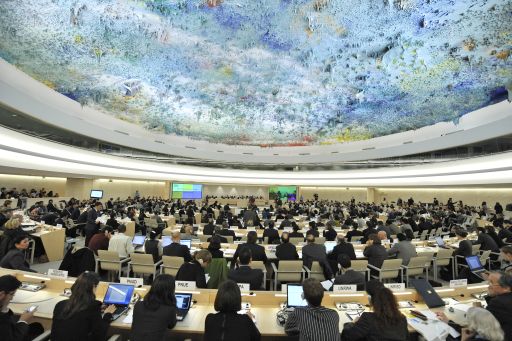
On August 9, 2012, UN Special Rapporteur on the promotion of truth, justice, reparation, and guarantees of nonrecurrence Pablo de Greiff presented the first annual report to the Human Rights Council. The report provides an overview of key activities undertaken by the Special Rapporteur between May 1 and July 25, reviews the foundations of the mandate and outlines the strategy for its implementation.
In the overview of activities, the report charts de Greiff's consultations with a great number of experts, civil society organizations and UN bodies about the priorities and strategies for fulfilling the mandate. It details his involvement in discussions centered on transitional justice approaches, including recent meetings on complementarity held in Stockholm and the regional meeting on prevention of torture held in Rabat.
|
Africa
KENYA: Killing of prominent Muslim cleric sparks riots in Mombasa
The shooting of controversial Islamic cleric Aboud Rogo Mohammad, popularly known as 'Rogo,' by an unknown gunman sparked riots throughout the city of Mombasa on Monday. Hundreds of protesters smashed cars and torched churches, claiming the cleric had been deliberately targeted by the police and that it constituted an attack on all Muslims. Kenyan police have denied any involvement in Rogo's death, who was faced with terrorism charges for allegedly recruiting non-Somali Africans for Somalia's al-Shabaab militant group. On Tuesday, al-Shabaab posted a statement on social media site Twitter urging Kenyan Muslims to protect their religion at all costs and boycott next year's presidential election, "Muslims must take the matter into their own hands, stand united against the Kuffar (non-believers) and take all necessary measures to protect their religion, their honour, their property and their lives from the enemies of Islam." Comment: In February, Rogo and Samir Khan were released on bail after being charged with possession of 102 bomb detonators, three guns and 119 bullets, with the case to be heard in court on October 17. (AFP, All Africa, Deutsche Welle, Reuters)
SOUTH AFRICA: Country seeks peace accord in mine strike wage deal
Two weeks after a violent strike at Lonmin mine in Marikana which left 44 people dead, South African officials on Wednesday sought to broker a "peace accord" with unions and Lonmin representatives. The London-listed firm and the workers' leaders kept a tight lid on discussions, but an immediate resumption of mine operations looked unlikely. Strikers, who reportedly earn about 4,000 rand (USD 500) per month, insist they are unwilling to settle for a pay raise less than their demands of 12,500 rand (USD 1,500). Comment: 34 participants of the 3,000 man strike were shot by police in the deadliest security action since apartheid ended in 1994. Ten people, including two police officers and two security guards, were hacked to death days earlier. Lonmin, the world's largest platinum producer, relies on the Marikana mine for about 92 percent of its annual production. Labor Market Analyst Loane Sharpe told Reuters that, "It is costing Lonmin over a billion rand so far, they are losing significant production just every week, and this continues." (AFP, Al Jazeera, BBC News, Reuters)
TOGO: Women of the collective "Let's Save Togo" initiate week-long sex strike
On Monday, the female wing of the coalition of nine civil society groups "Let's Save Togo" urged women throughout the nation to stage a sex strike for the week to demand the resignation of the country's President Faure Gnassingbe. Leader of the opposition Isabelle Ameganvi, a lawyer, stressed that "Women are the first victims of catastrophic situation that we live in Togo." Ms. Ameganvi was inspired by a similar strike initiated by the women in Liberia for their campaign of peace throughout the country, saying that sex could be a "weapon of battle" for political change. Comment: Togolese activists say that the strike will push men to become more involved in the political processes. Although the sex strike seemed to please many women, some men from both parties and human rights groups did not believe it would be a success. On Saturday, the political opposition party National Alliance for Change additionally held a peaceful demonstration against the president, capping last week's protests forcefully put down by the Togolese security forces. (Associated Press, BBC News, France 24)
|
Americas
COLOMBIA: Exploratory FARC and government peace talks planned
President Santos announced on Monday the Colombian government will hold exploratory talks with the FARC. Negotiators from both sides signed a preliminary agreement in Havana and talks are scheduled to begin in October in Oslo. In the general agreement for the termination of the conflict, both sides enumerated negotiation points, including: ending the conflict, political participation, illicit drug trafficking, victims, agriculture policy, and the abandonment of arms. Cuba will be the permanent seat in the peace dialogue between the Colombian government and the FARC, with support from Norway, Venezuela and Chile. President Santos stated the Ejército de Liberación Nacional (ELN), a separate rebel group in Colombia, may also begin peace dialogues if they are interested. ELN leader Nicolas Rodriguez stated he is interested in negotiations, but will not end kidnapping and bombing campaigns ahead of the talks. Comment: The last major attempt at peace talks between the FARC and the Colombian government were held with former Colombian President Andres Pastrana launched in 1998. The FARC were granted a safe haven in the south-east to facilitate the talks, but the territory was used to rebuild forces that resurged when the peace talks failed in 2002. (El Tiempo, El Espectador, Semana, Colombia Reports)
VENEZUELA: Prominent oil refinery explosion
On Saturday, an oil refinery exploded killing 48 people, injuring over 80 more, and leaving six people unaccounted for in the Amuay refinery. Fires burned for days as firefighters struggled with increasing and changing winds. The fires are blamed on a gas leak that created a cloud which ignited. An estimated 500 homes were damaged. There are reports of state oil company PDVSA under-investing in production and safety standards. President Chavez stated that there is no evidence the explosion was due to poor maintenance and ordered an urgent investigation into the event. The four-day fire is now extinguished. Comment: The Amuay refinery is one of the largest in the world. It is located in the northeastern Falcon state in Venezuela. (El Universal, El Pais, Noticias Sin)
REGIONAL: Sicilia destroys AK-47; Peace Caravan continues
The Caravan for Peace, led by famous Mexican poet Javier Sicilia, destroyed two high-caliber guns on Sunday in Houston: an AK-47 and a Magnum .357. The guns were wrecked with an electrical saw and hit with a mallet, and then buried in wooden boxes in a cemetery. Two of the marches' participants went to a gun fair in Pasadena, TX, and bought the weapons without proper documentation, identification, or paper work, in order to demonstrate the ease that guns are being sold. Sicilia maintained that he is not against the Second Amendment of the U.S. Constitution, which permits the sale and right to bear arms, but rather favors stricter controls to prevent organized gangs from stockpiling weapons. Participants of the march later held a vigil in honor of victims of the violence in Mexico as a result of drug trafficking and criminal activity. Comment: Sicilia is leading the march to gain the attention of the U.S. government to take responsibility for the declared war on drugs in Mexico, which resulted in an estimated 60,000 deaths in Mexico. The Caravan is expected to arrive in Washington on September 12. The Caravan hopes to bring U.S. citizens' attention to the fact that most of the guns used in drug trafficking are sold to organized gangs in Mexico. (Excelsior, Proceso, Impre Media)
|
East Asia
MYANMAR: Captive UN aid workers pardoned
In a move to alleviate concerns over the progress of his reformist agenda, Myanmar president Thein Sein pardoned three UN aid workers who had been detained in July under charges on "inciting revolt." The pardons, issued with "the loving kindness and generosity of the state," were given shortly after Myanmar courts sentenced the workers to prison for their alleged roles in agitating the civil unrest. The three men, who work for the UN Refugee Agency, allegedly encouraged local Rohingya civilians to violence while working in the conflict area. Two employees of the humanitarian organization Doctors Without Borders remain in the custody of Myanmar police forces. Comment: Sectarian violence continues in the western Myanmar province of Rakhine, which erupted in May following the alleged rape of a Hindu woman by ethnic Rohingya Muslims. The violence has left at least 90 individuals dead and tens of thousands of refugees displaced, creating an acute humanitarian crisis in South Asia. (CNN, LA Times, Global Post, Bangkok Post)
REGIONAL: Japan and North Korea to restart peace talks
Japanese officials confirmed that negotiations with North Korea began on Wednesday, the first such discussions between the two governments since 2008. "We have been working based on the principle of settling the unfortunate past and on restoring normal relations," said Osamu Fujimura, Japan's chief cabinet secretary. While he continued to remark that the conversations taking place were mid-level and preparatory in nature, he did indicate that the dialogue would likely focus on the repatriation of the remains of Japanese nationals lost in North Korean territory, as well as the release of details regarding North Korea's kidnapping of Japanese citizens during the 1970's and 80's. Comment: North Korea and Japan have never formally established diplomatic relations. Previous efforts to open diplomatic channels have failed over acrimony regarding North Korea's nuclear program and abduction of Japanese citizens, in addition to Japan's standing military alliance with the United States. (Al Jazeera, Wall Street Journal, NY Times, BBC)
REGIONAL: U.S. Secretary of State to meet with Pacific allies in Asian tour
Secretary Hillary Clinton will begin her diplomatic tour of East Asia and the Pacific on August 31, when she attends the Pacific Islands Forum in the Cook Islands. The visits, part of the Obama administration's stated "pivot towards Asia," will be followed by stops in Indonesia, China, Brunei, East Timor, and Russia. While the exact details of the discussions between Clinton and the various Asian governments are unknown, State Department spokeswoman Victoria Nuland suggested that the intensifying maritime disputes in the region would be a central focus. "We don't want to see the disputes in the South China Sea or anywhere else settled by intimidation, by force. We want to see them settled at the negotiating table," Nuland said in a prepared statement. In addition, concerns over the growth of Chinese military power and intentions in the Pacific are also likely to be relevant topics. Comment: President Obama intends to shift American naval forces towards the Pacific, where 60 percent of its ships are scheduled to be based by 2020. While the United States asserts that it intends to be a beneficial and stabilizing presence in the region, Chinese officials have expressed concern that the change in strategy reflects a policy to contain increasing Chinese influence in East Asia. (Chicago Tribune, Washington Post, Sydney Morning Herald, China Daily)
|
Europe & Central Asia
NORWAY: Anders Breivik sentenced to a maximum prison sentence of 21 years
Last Friday, a Norwegian court found mass killer Anders Breivik sane, and convicted him for terrorism and premeditated murder. Family members of the victims had feared Breivik would be declared clinically insane and unfit to be held criminally responsible for his actions. Breivik must serve at least 10 years in prison, which can be extended to a maximum of 21 years. Comment: The sentence comes after Breivik killed 77 people in bomb and gun attacks in 2011. Norwegian law permits retention of Breivik for longer than 21 years if he is deemed a threat to society. (BBC, The Guardian, Reuters)
RUSSIA: Political activist given double the prosecution's requested prison sentence
On Tuesday, Taisiya Osipova was sentenced to eight years in prison for possession of heroin. The prosecution had initially requested a four year sentence, but the judge doubled the term without explanation. There is speculation that the drugs found on Osipova were planted by police in retaliation for her refusal to testify against her husband, a leader of the Other Russia movement. The movement is a coalition of members who are opponents of President Putin. Ex-President Dmitry Medvedev requested a retrial after Osipova was originally sentenced to 10 years; a verdict he found to be too "harsh". Comment: Following the conviction of three members of a Russian band for speaking out against Putin, this sentence is another in a series of freedom of speech cases. Earlier this month, three members of "Pussy Riot" were condemned to two years in prison for dissent expressed towards Putin. (BBC Reuters, Huffington Post, The Guardian)
RUSSIA: Suicide bomber kills Islamic Cleric
On Tuesday, an ethnic Russian woman detonated a bomb killing Muslim cleric Said Afandi and five of his followers. Afandi was known to have been a strong critic of extreme forms of Islam. Escalating religious tensions in Dagestan has created violence throughout the region, with Muslim fighters saying that their struggle is for a separate Islamic state among the Russian provinces. Comment: The attack was the second of its kind within the past month. Last month a moderate Muslim cleric was killed in similar circumstances. In response to the attacks, Putin has called for religious and ethnic tolerance, to "not allow anyone to tear our country apart", by creating a strong and unified Russia. (BBC, Reuters, Al Jazeera)
Researched/Written by A. Max Jones
|
Middle East & North Africa
ISRAEL/PALESTINIAN TERRITORIES: Gaza Strip will not be "a liveable place" by 2020 UN report
The Gaza Strip will not sustain its growing population by the year 2020 unless basic services are improved, according to the UN Country Team (UNCT) in the occupied Palestinian territory report released on Monday. The UNCT estimates that the population will increase from 1.6 to 2.1 million by 2020, which will overload basic infrastructures such as electricity, water, sanitation, as well as municipal and social services. Already pressed by housing shortages, the territory will need to double the number of schools and add 800 more hospital beds to meet future demands. The report warns the coastal aquifer may be unusable by 2016, which is the territory's only natural source of fresh water. Comment: UN Humanitarian Coordinator Maxwell Gaylard said, "Action needs to be taken now if Gaza is to be a liveable place in 2020 and it is already difficult now." Israel imposed a blockade on Gaza after Hamas seized power in the territory in 2007 in order to prevent weapons from reaching the group. According to BBC, the blockade restrictions are seen as "collective punishment" by Palestinians and human rights groups. (Al Jazeera, BBC, Washington Post)
SYRIA: Syrian Army accused of 'massacre,' 320 bodies discovered
The Local Co-ordination Committees (LCC) accused the Syrian Army of committing a 'massacre,' as an estimated 320 bodies were found in Daraya over the course of Saturday and Sunday following a sustained five day assault by the army. Anti-government activists claim the victims were killed "execution style" at close range or shot by sniper fire and then burned. The majority of the victims were young men, but bodies of women and children were also discovered. Comment: According to Al Jazeera, the UN previously released a report earlier this month indicating both members of the opposition and the Syrian Army have committed "execution-style" killings, but the Syrian Army and militia loyal to Assad perpetrated several more of this particular war crime. According to the LCC and Syrian Observatory for Human Rights, over 440 people were killed across the country on Saturday, marking one of the highest daily death tolls since the conflict began. Also, an additional 90 died on Sunday. (Al Jazeera, BBC, Reuters)
SYRIA: Assad optimistic about defeating uprising, rejects proposal for humanitarian "buffer zones"
In a television interview with pro-government al-Dounia TV broadcast on Wednesday, President Assad claimed the government's initiative to halt the mass uprising is "heading forward" and the situation is "better" but requires more time to bring it to a "decisive end." Assad criticized the French backed Turkish proposal of creating a UN sanctioned "buffer zone" for humanitarian aid and to shelter refugees. He responded, "Talk of buffer zones firstly is not on the table and secondly it is an unrealistic idea by hostile countries and the enemies of Syria." Assad also remarked that both citizens fleeing the country and officials defecting from his government are helping "cleanse" Syria. Comment: French foreign minister Laurent Fabious acknowledged on Wednesday the buffer zones would be "very complicated" to establish and requires a partial no-fly zone along with coordination from other countries. The UNHCR reported on Tuesday that 5,000 Syrian refugees are fleeing to the Turkish border on a daily basis, adding to the 74,000 currently there. According to BBC, there are 1.2 million internally displaced and 2.5 million people in need of humanitarian assistance in the country. (BBC, Al Jazeera, Al Arabiya)
|
South Asia
AFGHANISTAN: Seventeen villagers beheaded by the Taliban
On Monday, the bodies of 17 villagers (two women and 15 men) were found alongside a road in Kajaki district, Helmand province. Officials claim that the beheading was carried out by the Taliban as punishment for attending a party that included music and mix-gender dancing. The Taliban, however, has denied involvement in the killings, while President Karzai has issued a formal investigation into the case. Comment: The Kajaki district is one of the locations in which U.S. forces have long-battled Taliban insurgents. Analysts state that these killings are an indication of the Taliban beginning to reassert itself in the province following the announcement of NATO pull-out in 2014. (Reuters, Guardian, BBC)
INDIA: Appeal by Mumbai attacks gunman rejected
On Wednesday, India's Supreme Court upheld the death penalty for Mohammed Ajmal Kasab, the only surviving gunman in the 2008 Mumbai attacks. A Mumbai court convicted Kasab of murder, terrorism, and waging war against India which was also confirmed by the state of Maharashtra High Court. Kasab may still legally appeal to the president of India for mercy. Comment: In November 2008, Kasab and nine others attacked two hotels, a Jewish center, and a train station in a period of three days which led to 164 deaths and over 300 injured civilians. (Al-Jazeera, Washington Post, New York Times)
PAKISTAN: Red Cross scales back operations in the country
On Tuesday, the International Red Cross Committee (ICRC) issued a statement that the organization will be halting most of its aid programs in Pakistan. The action comes after the beheading in April of a Red Cross worker, Khalil Rasjed Dale, who managed a health program in Quetta, Balochistan. As a response to the beheading, and deteriorating security, ICRC had shut down most of its offices across the country but will continue maintaining a small presence in Peshawar. Comment: The ICRC has been active in the country since 1947 providing health and relief services to victims of violence and natural disasters. (ICRC PR, Reuters, DAWN, NPR)
Researched/Written by Nishat Jafreen
|
|
|
|
|
IPSI News

IPSI Advisor Jan Eliasson to focus on food security, poverty, and Syria as UN Deputy Secretary General
Read Article >>
___________________ |
IPSI Leadership
Cameron M. Chisholm Dr. I. William Zartman
Dr. P. Terrence Hopmann
Alexander Little
George Foote
Pamela Aall
Ahmedou Ould-Abdallah
Betty Bigombe Dr. Francis Deng
Jan Eliasson
Gareth Evans
Dr. Ted Robert Gurr
Amb. Jacques Paul Klein
Peter Kyle
Dr. Jean Paul Lederach
Jeffrey Mapendere
John Marks
Susan Collin Marks
Dr. Joyce Neu Dr. Valerie Rosoux
William Stuebner
Dr. Ruth Wedgwood Dr. Craig Zelizer About Us >> ___________________ |
|