| International Peace & Security Institute |
|
PEACE & SECURITY REPORT
IPSI's Peace & Security Report (PSR) is a concise weekly e-publication intended to brief busy students, academics, advocates, and practitioners in the conflict management community on pertinent global news, events, and trends. Meticulously researched and written by IPSI, the PSR empowers us all to take a step back from our immediate deadlines each Friday and gain a greater understanding of the week's global events.
|
|
Featured Article
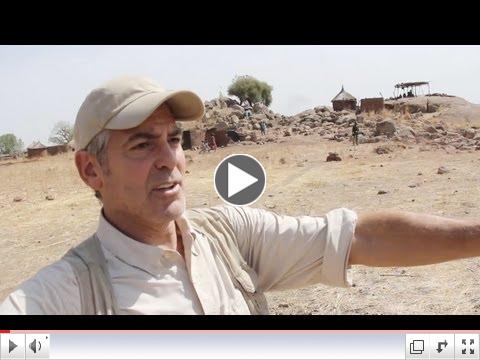
Video: George Clooney Behind Front Lines in Sudan's Nuba Mountains
JUBA, South Sudan -- Except for a few early risers, Yida refugee camp in Unity State, South Sudan was sleeping when an unlikely assortment of people headed north to the border with Sudan and over into the embattled Nuba Mountains. In the front seat of the ragged Land Cruiser sat Academy Award winning actor George Clooney, Co-founder of the Enough Project John Prendergast, and a handful of human rights researchers. Here is what we saw:
 The conflict in South Kordofan and in neighboring Blue Nile is rooted in the same dynamics that have left much of Sudan battle-torn and chronically unstable. From newly independent South Sudan to Darfur and East Sudan, the history of conflict fits a similar pattern: Neglected and discriminated against by the central government, Sudanese across the country's periphery have risen up, some demanding representation and equal treatment, and others calling for government overthrow. Whether deploying its secret police, its crude Antonov bombers, or its proxy militias, Khartoum's response is invariably brutal and indiscriminate. The case could be made that the Nuba people in South Kordofan have had an exceptionally difficult plight, even among Sudan's many marginalized groups. Read the rest of the article >> |
Africa
DEMOCRATIC REPUBLIC OF THE CONGO: ICC delivers first verdict
On Wednesday, the International Criminal Court (ICC) at The Hague convicted Congolese warlord Thomas Lubanga of war crimes for conscripting children into his rebel army in the Democratic Republic of the Congo (DRC); it is the court's first verdict since it was set up 10 years ago. Lubanga, as the leader of the Union of Congolese Patriots (UPC), was found guilty of recruiting, enlisting and using children in combat during the four-year conflict in the Ituri region, which ended in 2003. He will be sentenced at a later date and faces a maximum of 30 years in prison. Comment: There were a number of hitches in the trial, and many observers and victims expressed concern that the trial took too long. The ICC has come under increasing pressure from member countries to improve its efficiency; however, United Nations High Commissioner for Human Rights Navi Pillay welcomed the conviction as the "coming of age of the ICC." (BBC, France24, Reuters AlertNet)
NIGERIA: Militant group kills two hostages
On March 9, two European hostages - one British, one Italian - were killed by their captors as a joint British-Nigerian rescue mission stormed a compound in Sokoto, northwest Nigeria. Sources claim the captors are from a breakaway faction of Boko Haram. Comment: Last Friday, the Italian government condemned Britain's failure to warn it ahead of the failed rescue operation, but London said it had been forced by the situation to act swiftly. The suspected mastermind of the kidnapping Abu Mohammed died in police custody on Wednesday. The State Security Service said Abu Mohammed had died of gunshot wounds sustained when he was captured. (Vanguard, All Africa, BBC)
SENEGAL: Belgium opens extradition case at ICJ
Hearings began on Monday on Belgium's application requesting Senegal proceed with former Chadian President Hissène Habre's prosecution or extradition. Habre is accused of war crimes, crimes against humanity, and torture of opponents in Chad from 1982 to 1990 during his time in power. He has been living in exile in Senegal since being ousted in 1990 and was arrested in 2005, but never prosecuted. Senegal has previously refused four extradition requests from Belgium. Comment: Belgium took up the case under its "universal jurisdiction" law after a Belgian of Chadian origin lodged a complaint. Last year, Senegal stopped plans to repatriate Habre to Chad following statements from the UN and human rights organizations, which fear he would not receive a fair trial in his home country. (BBC, Al Jazeera, All Africa, France 24)
|
Americas
COLOMBIA: Protestors arrested, bus stations destroyed following Friday "chaos"
Seventy people were arrested and 10 injured after protests against Colombia's TransMilenio bus system turned disruptive on Friday in Colombia's capital of Bogotá. Early in the morning protestors occupied bus stations and set up street blockades to prevent the free flow of traffic. Approximately 5 bus stations were "destroyed" and others vandalized during the protests, which will require an estimated USD 566,600 in city funds for station repairs. More than one thousand police were sent to subdue the disturbances and used tear gas and water cannons against protestors. Comment: Protests stemmed from opposition to the perceived lack of services offered by TransMilenio, including rising fares and insufficient transportation alternatives, as well as demands for increasing route coverage. The city's mayor, Gustavo Petro, criticized protestors for preventing "direct agreements being reached with the citizenry" and called for a reevaluation of the city's contract conditions with TransMilenio. Petro also speculated the Communist Party and the Independent Revolutionary Workers Movement are inciting the protests. (LA Herald Tribune, BBC, Colombia Reports)
MEXICO: Treaty signed with Costa Rica
Mexico and Costa Rica made headway on Sunday after signing a bilateral treaty that will allow for a greater exchange of information and assistance in combating regional organized crime groups. The treaty calls for cooperation between the Mexican and Costa Rican governments for the investigation and prosecution of crimes, according to the Mexican Foreign Relations Secretariat. Comment: Mexico's Attorney General Marisela Morales Ibañez and Costa Rican presidential advisor on security affairs Mauricio Boraschi Hernandez signed the treaty during a meeting on organized crime in Mexico City. The treaty strengthens bilateral relations with the Latin American countries, as both nations have been combating the spread of drug consumption and production in the region. The treaty comes a month prior to the Summit of the Americas, to be held in Colombia. (LA Herald Tribune, CNN, TMCN)
PERU: Mining protests turn deadly
On March 14, clashes between protesting illegal miners and police in southeastern Peru escalated, resulting in 3 deaths and more than 30 injuries. Local officials said police were outnumbered by the protesters, who were trying to take control of the airport in the city of Puerto Maldonado. The miners are protesting against harsher penalties for illegal mining, claiming the new penalties will force them out of work, while the government says the sanctions will encourage miners to get the necessary permits. Comment: Currently an estimated 50,000 miners do not have the proper licenses to operate in Peru. (BBC, WSJ, Peruthisweek)
|
East Asia
CHINA: Premier calls for Political Reform
On March 14, Chinese Premier Wen Jiabao made an unexpected call for political reform, saying that without changes, the nation's economy could stall and the mistakes of Mao Tse-tung's Cultural Revolution could be replicated. The 69 year-old Wen, who is set to retire this year, is seen as one of China's most progressive leaders, but not a "trouble maker." During the news conference, Wen touched upon a myriad of sensitive issues including corruption, lack of transparency, income inequality, and elections. Comment: The 1966-1976 Cultural Revolution Wen worries of being repeated was a decade of instability initiated by revolutionary leader Mao Zedong to bring down what he perceived as "capitalist" forces. It is estimated that over three million perished in the turmoil as anyone who challenged the government was purged. (ABC, Latimes, AlJazeera)
PHILIPPINES: Arrest warrants for Gloria and Jose Arroyo
On March 13, a court issued arrest warrants for former President Gloria Arroyo and her husband Jose Miguel Arroyo on corruption charges stemming from a controversial government contract with Chinese telecommunications company ZTE Corp. Mrs. Arroyo is also currently under arrest on a separate charge of election fraud. Mr Arroyo has been released on bail, while Mrs. Arroyo remains under arrest in a military hospital; both deny the charges. Comment: Gloria Arroyo served as leader of the Philippines for nine years, and by the end of her tenure, she was widely unpopular. (BBC, AJC, AP)
VIETNAM: Eight arrested in connection with ethnic violence
On March 14, a Vietnamese court imprisoned eight members of the Hmong minority for up to two-and-a-half years each in connection with ethnic violence that took place last May. During the violence, security forces clashed with thousands of Hmong, a mostly-Christian group, holding a religious celebration. Christian human rights groups note that those gathered were members of a sect who believed a messiah was coming to establish a Hmong kingdom. The presiding judge said the men were convicted of assaulting authorities and inciting others to mutiny in a call for an independent state. Comment: There is a history of mistrust between Vietnam's government and the Hmong. During the Vietnam War, many Hmong fought alongside the U.S. against the communist North. (SFGate, CBS, BBC)
|
| Europe & Central Asia
AZERBAIJAN: Suspected terrorist plot foiled, arrests made
Twenty-two Azerbaijani citizens were arrested Tuesday for allegedly planning to attack both the Israeli and U.S. embassies in Baku. The National Security Ministry of Azerbaijan released a statement earlier this week claiming that the Iranian Revolutionary guard recruited, trained, and armed the 22 Azerbaijanis in order to garner intelligence on foreign powers via companies, embassies, and religious organizations. "Sepah [the Iranian Revolutionary Guard] wanted to set a special contingent in Azerbaijan under a cover of religious activity," the statement said. It is unclear how those suspected of terrorist activity were found or detained, but the Ministry revealed that firearms and "espionage equipment" were confiscated during the arrests. Comment: Tensions between Azerbaijan and Iran have escalated in recent months after Iran accused Azerbaijan of assisting Israeli intelligence in assassinating Iranian nuclear scientists earlier this year. (Al Jazeera, The Guardian, BBC)
SWITZERLAND: Bus crash on Italian border kills 28
A bus en route from Switzerland to Belgium crashed in a tunnel on the Swiss-Italian border Tuesday night, killing 28 of the 52 on board. Twenty-two of the victims were children of Belgian and Dutch origins, and all of them were around 12 years-old. The bus driver, who also died, was only 25 minutes into the return journey from the Swiss ski resort of Val d'Anniviers when the bus hit a curb and slammed into the tunnel wall. Over 200 police and rescue workers at the scene were "traumatized," according to the Valais police chief, at the worst incident of its kind since a 1982 bus crash killed 49 German tourists. Belgian Foreign Minister Didiers Reynders commented on the accident, saying, "It is an event which will really shake the whole Belgian population." The Foreign Ministry has prepared Switzerland-bound private flights for parents, relatives, and psychiatric counselors. Comment: Further investigation into the accident found that the bus driver was not speeding nor was he tired. (NYT, Al Jazeera, The Telegraph)
REGIONAL: EU responds to Iran's request for nuclear talks
EU High Representative Catherine Ashton wrote to Iran on Tuesday, accepting Iranian Nuclear Chief Saeed Jalili's request to resume nuclear talks. The talks will include Iran and the P5+1 group, which consists of France, Britain, Germany, China, the U.S., and Russia. Baroness Ashton initially wrote a request for negotiations last fall, to which Tehran responded on February 14. The response to Tehran stated that talks will focus on a long-term solution, "while respecting Iran's right to the peaceful use of nuclear energy." On Wednesday, Iran promptly responded to the EU, asking the P5+1 to set an immediate date for talks. Comment: Some politicians are skeptical of Iran's cooperation, including Israel's national security advisor Yaakov Amidror who said Wednesday that Iran might use negotiations "as an umbrella under which it continues to develop its military capability." (Reuters, AFP, NYT)
Researched/Written by Kate Elci
|
Middle East & North Africa
ALGERIA: Leader of Maghreb al-Qaeda sentenced to death in absentia
An Algerian court sentenced Abdelmalek Droukdel, leader of al-Qaeda in the Islamic Magreb (AQIM), and eight co-defendants for premeditated murder on Tuesday. Eighteen people were tried in connection with a string of bombings carried out in Algiers on April 11, 2007 in which 20 people were killed and 222 injured. Comment: AQIM operates in Algeria, Niger, Mali, and Mauritania and was founded in the late 1990s with the aim of toppling the Algerian government and creating an Islamic state. Abdelmalek Droukdel, who attained leadership in 2004, fought in Afghanistan and is said to consider Jordanian-born Abu Musab al Zarqawi, who was killed by the U.S. military in 2006, as his mentor. (BBC, The Nation, AFP)
EGYPT: Bedouins occupy military base in Sinai
Armed Bedouins surrounded a military base used by peacekeepers in Egypt's Sinai region on Wednesday in an attempt to pressure local authorities to release fellow tribesmen from Egyptian prisons. The occupation began last week when the Bedouins cut through a perimeter fence and surrounded the base, blocking all vehicles and staff from entering or leaving. A Bedouin in contact with the protestors remarked "They are ready to storm the buildings at any time." The targeted base is used by the multinational force that oversees observance of Egypt's peace treaty with Israel by patrolling the heavily guarded Sinai frontier. Comment: Sinai Bedouin complain of unfair treatment and government neglect. In the past they have pressed their demands by blocking roads and occasionally taking tourists hostage, releasing them soon after negotiations with the authorities. (WaPo, BBC, WSJ)
ISRAEL: Truce ends four days of violence between Israel and militants in Gaza
An Egyptian-brokered truce between Israel and militant groups in the Gaza Strip began to take hold on Tuesday after four days of violence in which 25 Palestinians were killed and 200 rockets were fired at Israel. The attacks started on Friday following an Israeli air strike that killed a senior leader of the militant group, the Popular Resistance Committee. Officials from Hamas, which governs Gaza, stated that Israel had agreed to stop targeting leaders of militant groups in Gaza if rocket attacks on its southern Israeli cities ceased. Comment: Israel reports that 20 of the dead were militants with five civilian casualties. The Israeli army said the latest round of rockets fired from Gaza into Israel could possibly endanger the ceasefire. (alJazeera, BBC, MSNBC)
YEMEN: Car bomb kills 4 soldiers
At least 4 Yemeni soldiers were killed on Tuesday when a suicide bomber detonated a vehicle laden with explosives near a checkpoint in the south of the country. Ansar al-Sharia, an al-Qaeda-linked group, claimed responsibility in a text message stating 27 soldiers and three militants were killed in the attack. Tuesday's bombing is the latest in a string of attacks undertaken by Islamist militants in southern Yemen since President Abdrabbuh Mansour Hadi took office last month vowing to fight al-Qaeda and its allies. Comment: Fighters from Ansar al-Sharia earlier this month launched a wave of coordinated attacks on government forces outside Zinjibar, capital of the province of Abyan, killing at least 110 soldiers. The attacks were cited as revenge for a series of drone attacks that killed at least 59 anti-government fighters last week. (YemenPost, Reuters, CNN)
|
South Asia
AFGHANISTAN: U.S. soldier enters Afghan homes, shoots 16 civilians
On Sunday, at least one U.S. soldier left the U.S. military base in Panjwai, Kandahar Province, and shot 16 civilians in their homes. The soldier is known to be a 38 year-old staff sergeant who served at Joint Base Lewis-McChord. A U.S. delegation investigating the incident insisted on Tuesday that only one soldier committed the shootings; Afghan witnesses, however, insist that at least two were involved. At least five of the victims were women, and eight were children from one family. Before the shooting rampage, several Panjwai villagers claimed to witness 15 soldiers running outside of the U.S. military base, but it is unclear whether or not these soldiers took part in the killings or if they left the base to search for the Staff Sergeant who initially left the base. The unnamed soldier accused of the massacre was flown to a "military complex" in Kuwait Wednesday evening, a day after U.S. Defense Secretary Leon Panetta arrived in Afghanistan to discuss the event. Comment: After a meeting with British Prime Minister David Cameron, President Obama announced that NATO would switch to a "support role" in 2013, ahead of the 2014 deadline; reports widely speculate this is due to recent bloodshed between Afghans and NATO/U.S. troops. (NYT, NYT, Dawn, AP)
BANGLADESH: Ferry sinks near Dhaka
A ferry carrying over 200 people sank early Wednesday morning on the Meghna River, around 30 miles south of the capital Dhaka, killing at least 110 passengers. Relatives of those on the ferry gathered at the banks of the river to greet the roughly 50 persons who managed to swim to shore. The ferry sunk 70 feet into the river after colliding with a cargo boat, and rescue teams worked throughout Wednesday "scouring the riverbed downstream" to search for more bodies, according to Navy Commander Gulzar Hossain. A passing ferry that witnessed the incident managed to rescue several stranded passengers, but many are still missing. Comment: Ferry accidents are common in Bangladesh, which is netted with many water-ways and rivers. "We need to have maritime police to improve night time navigation," Shipping Miniser Shahjahan Khan said on Wednesday. (Hindustan Times, BBC, NYT)
PAKISTAN: Suicide bombing at funeral kills dozens
A suicide attack disrupted the funeral for the wife of a Lashkar Political leader in the village of Badhber, Peshawar, on Sunday, killing at least 43 mourners and injuring over 50 more. A local police officer noted that the attack appeared to be aimed at Khushdul Khan, a member of the secularist Awami National Party known for its efforts in eliminating the Pakistani Taliban. Muhammad Afridi, one of the spokesmen for the Tehreek-e-Taliban Pakistan (TTP), affirmed the TTP's responsibility for the attack, promising that the Taliban "will continue to lodge attacks as [those targeted] are creating hurdles in our cause." Comment: The Lashkar have been fighting Taliban influence in the Peshawar region since 2008, and this is the second Taliban-executed suicide attack against the Lashkar since 2009. (Al Jazeera, Dawn, NYT)
Researched/Written by Tarek J. Nasser
|
|
|
|
|
IPSI News

Want to attend an IPSI Symposium this summer in Bologna or The Hague, but need financial aid? You have TEN DAYS until the application deadline!
Details here >>
___________________ |
IPSI News

Betty Bigombe, IPSI Advisor and Bologna Symposium Lecturer, discusses her interactions with Joseph Kony and responds to KONY2012. Read Interview >>
___________________ |
IPSI News

Juan E. Méndez, UN Special Rapporteur on Torture and faculty at The Hague Symposium, says wikileaks suspect endured cruel treatment.
Read Article >>
___________________ |
IPSI News

ICC convicts Lubanga - The Hague Symposium Keynoter Fatou Bensouda breathes "sigh of relief." Read Article >>
___________________ |
IPSI Leadership
Cameron M. Chisholm Dr. I. William Zartman
Dr. P. Terrence Hopmann
Alexander Little
George Foote
Pamela Aall
Ahmedou Ould-Abdallah
Betty Bigombe
Jan Eliasson
Gareth Evans
Dr. Ted Robert Gurr
Amb. Jacques Paul Klein
Peter Kyle
Dr. Jean Paul Lederach
Jeffrey Mapendere
John Marks
Susan Collin Marks
Dr. Joyce Neu Dr. Valerie Rosoux
William Stuebner
Dr. Ruth Wedgwood Dr. Craig Zelizer About Us >> ___________________ |
|