| International Peace & Security Institute |
|
PEACE & SECURITY REPORT
IPSI's Peace & Security Report (PSR) is a concise weekly e-publication intended to keep busy students, academics, advocates, and practitioners in the conflict management community briefed on pertinent global news, events, and trends. Meticulously researched and written by IPSI, the PSR empowers us all to take a step back from our immediate deadlines each Friday and gain a greater understanding of the week's global events. |
|
Featured Article
ICG 
Bosnia faces its worst crisis since the war. State institutions are under attack by all sides; violence is probably not imminent but is a near prospect if this continues. Seven months after elections, there is no state government and little prospect for one soon. The authorities of the larger of the entities, the Federation, were formed controversially - a main state institution said illegally - in March and are disputed by Croats, who have created a parallel Croat National Assembly.
The other entity, Republika Srpska, has called a referendum that could provide support for a Serb walkout of Bosnian institutions. With such trends, it is all too easy to imagine Bosniak parties overseeing a failed state whose institutions Serbs and Croats have abandoned. Compromises are needed so every Bosnian side can claim enough victory to justify retreat from the brink. The international community needs to step back from over-involvement in local politics to calibrate goals to a realistic appraisal of diminished powers and best guarantee stability. Then work needs to begin to create a context for renewing Dayton and achieving EU membership. Read Full Article >> |
Africa
IVORY COAST: 70 killed in Abidjan clashes
The heavy fighting in Abidjan ended on Wednesday as forces loyal to President Alassane Ouattara defeated pro-Gbagbo forces hiding in the town of Yopougon. The clashes began on Monday after Ivory Coast troops launched a military operation to overcome the remaining militias that refused to disarm. According to Reuters, Red Cross officials have collected 70 bodies thus far in the Yopougon district. Comment: The violence occurred on the same day a delegation of former United Nations Secretary-General Kofi Annan, Archbishop Desmond Tutu, and former President of the Republic of Ireland Mary Robinson completed their two-day visit. The mediators visited Gbagbo, who is under house arrest in the north, and Annan remarked "he seems to have accepted that Ouattara is the new president." (Reuters, BBC, CNN)
RWANDA: Germany tries Rwandan rebels for Congo massacresThe trial of the two Rwandan Hutu leaders accused of ordering massacres and mass rapes in the eastern Democratic Republic of Congo (DRC) began on Wednesday in Stuttgart, Germany. The two men are Ignace Murwanashyaka, the alleged head of the Hutu guerrilla group the Democratic Forces for the Liberation of Rwanda (FDLR), and his deputy, Straton Musoni. The men face 39 charges of war crimes and 26 of crimes against humanity, and if found guilty, could receive a life sentence requiring a minimum of 15 years in jail in Germany. A third FDLR leader, Callixte Mbarushimana, was arrested in France last November and transferred to the International Criminal Court. Comment: The trial comes under a new law that allows the prosecution of foreigners for crimes committed outside Germany. The UN hailed the trial as a breakthrough after repeated calls by the Security Council to bring FDLR commanders living abroad to justice. The Congolese government also welcomed the trial and called on other nations harboring rebel leaders to follow suit. (CNN, BBC, Reuters)
UGANDA: Riots after Besigye's arrest
Last Thursday, police officers again arrested Ugandan opposition leader Kizza Besigye assaulting him with pepper spray as he participated in the "walk to work" protests of rising living costs. Clashes broke out the next day in Kampala between security forces and protestors objecting Besyige's arrests and expressing discontent with the government by chanting "Museveni must go." The Ugandan minister of internal affairs said at least four people were killed, 120 were injured, and 360 were arrested during the riots. Besigye is being treated at a hospital in Kenya. Comment: On Wednesday, hundreds of Ugandan lawyers, as part of a three day strike, gathered around courts throughout the country to protest the government's excessive use of force. The brutal government crackdown on protestors is causing further demonstrations which are leading to concerns that North African-style uprisings could erupt in sub-Saharan Africa. (CNN, VOA, Reuters)
|
Americas
COLOMBIA: Bogota Mayor Suspended
Attorney General Alejandro Ordóñez revealed Tuesday that Bogota Mayor Samuel Moreno will be suspended for three months; during this period Colombian authorities will investigate mishandled public contracts, high additional costs, irregularities in the granting of projects, and significant delays on some projects under Moreno's leadership. Moreno denies any wrongdoing and plans to contest the suspension. Comment: The mayor of Bogota is considered the second most powerful position in the country behind that of the president. This suspension comes at the heels of a corruption scandal that includes the arrests of Moreno's brother and several others. (BBC, El Tiempo, El Universal)
HONDURAS: Charges against Zelaya dropped
Monday, a Honduran court dismissed the remaining corruption charges pending against former president Manuel Zelaya. He was charged with fraud and falsifying documents, but he maintains that the allegations were false and politically-motivated. Zelaya is living in exile in the Dominican Republic and has refused to return to Honduras unless he is given immunity against these charges. Comment: Federal prosecutors are considering appealing the decision, but have just 60 days to file the necessary paperwork. The dismissal of charges may pave the way for Honduras' return to the Organization of American States, a regional organization from which it was expelled following the coup that unseated Zelaya. (AFP, BBC, AP)
UNITED STATES: Bin Laden Killed in U.S. operation
Osama Bin Laden was killed in U.S. Operation "Neptune's Spear" on Monday, culminating a ten-year manhunt for the man responsible for 9/11. Bin laden was allegedly hiding in a safehouse in Abbottabad since 2004. No American forces were killed in the operation, although a helicopter malfunctioned and was destroyed to avoid it falling into foreign hands. Bin Laden's identity was confirmed by multiple methods, including DNA testing and facial recognition software. He was promptly buried at sea, and President Obama has stated that photos of his dead body will not be released. Comment: Some fear that his death may lead to reprisal attacks. It remains to be seen whether the Pakistani government was aware of Bin Laden's presence given his close proximity to a military base. The operation also resulted in the capture of documents, thumb drives, hard drives, computers, and DVDs that may prove to be valuable intelligence. (Reuters, AFP, AP)
|
East Asia
AUSTRALIA: Detainees charged over Sydney Detention Center riots
On Thursday, seven men were charged with offenses, including affray and destroying property, stemming from last month's riots at the Villawood Immigration Detention Center in Sydney. The men started protesting last month after three of them were rejected for asylum and due to complaints over poor conditions and length of detention at the facility. The protests later turned violent and spread, ultimately involving approximately 100 people. Nine buildings at the facility were destroyed by fire as firefighters were prevented from entering the facility by the enraged asylum-seekers. Comment: Australian authorities vowed to deal strongly with the detainees amid growing unrest in Australia's increasingly cramped immigration facilities. The government already plans to expand detention facility capacity by 1,900 beds to accommodate an influx of asylum-seekers from Afghanistan, Sri Lanka, Iran, and elsewhere. (The Australian, ABC Online, BBC)CAMBODIA/THAILAND: Agreement reached in renewed effort to halt clashes in disputed border zone Cambodia and Thailand agreed to a set of conditions outlined by the 7th terms of reference (TOR) Wednesday that paved way for Indonesian monitors to be deployed to the border as previously agreed to on February 22. Under the agreement, Thailand agreed to remove a controversial outpost in the disputed area around the Vihear Buddhist temple. A final agreement on specific arrangements for the deployment of monitors is expected to be made at a meeting with Indonesian officials on May 6. Comment: Thailand and Cambodia are embroiled in a persistent low-intensity border conflict that flared up in early February when the two sides engaged in a cross-border firefight. At least 15 people were killed since the conflict started, and both sides blame the other for sparking the clashes. (Bangkok Post, Xinhua, Bernama)
VIETNAM: Thousands of ethnic Hmong protest in remote province
The largest instance of ethnic unrest in Vietnam since 2004 erupted early this week when the rural Hmong ethnic group held protests in the northwestern province of Dien Bien near the border with Laos and China. The protesters were calling for increased autonomy and greater religious freedom for the mostly Christian and Animist Hmong. The Vietnamese military was deployed to the area and forcibly dispersed the protesters. There is no verified information on causalities. Comment: The Hmong ethnic group lives throughout rural Southeast Asia and are thought to be one of the poorest people in the region. They were heavily persecuted in Vietnam and Laos following the Vietnam War for allying with the CIA in the secret war in Laos; many ended up fleeing to Thailand or resettled in the U.S. (BBC, AFP, Radio Australia News)
|
| Europe & Central Asia
ROMANIA: U.S. and Romania move forward with missile defense plan
On May 3, the United States and Romania announced an agreement regarding the base location for American anti-missile interceptors in Romania. The Romanian-placed interceptors are part of a larger program designed to intercept potential Iranian missiles. Russia protested the agreement claiming the missile defense shield undermines Russia's nuclear deterrent and ignores commitments made by the U.S. to include Russia in decisions regarding missile placement. American officials rejected the Russian complaints and cited the invitation from the United States and NATO for Moscow's participation in a common missile-defense system for Europe. Comment: Russia seeks legal guarantees that the missile defense system would not target Russian missiles. Russia also revived objections from when Moscow and Washington were negotiating the New START treaty in 2010. (MoscowTimes, NYT, GlobalSecurityNewswire)
RUSSIA: Former intelligence officer charged with treason and desertion
A Russian intelligence official was charged in absentia on Wednesday with treason for exposing Russian sleeper cells in the U.S. last summer. Law enforcement officials stated Alexander Poteyev was the director of spy operations in the Russian Foreign Intelligence Service's American section. Russian intelligence suggests he left the country for the U.S. shortly before the FBI raids exposed the cells. Comment: The operation uncovered the largest Russian spy network in the United States since the end of the Cold War and dealt a major blow to the prestige of Russia's intelligence services. It is unclear what will happen to the suspect. Officials currently plan to hold a classified trial in the Moscow military court that will try Poteyev in absentia. (Reuters, AFP, NYT)
SWITZERLAND: Swiss freeze near 830 million Swiss Francs in Ben Ali, Qaddafi, Mubarak assets
On May 3, the Swiss Foreign Minister announced the government froze nearly $1 billion worth of assets belonging to North African leaders. Sources reveal that 410m SFr were linked to former Egyptian President Hosni Mubarak and his circle, 360m SFr were believed to belong to Col Gaddafi's regime, and 60m SFr were tied to former Tunisian leader Zine al-Abidine Ben Ali and his associates. At a conference on Tuesday, the government announced that the funds had been frozen in February when Ben Ali and Mubarak were toppled and Qaddafi began attacking civilians. Comment: The freeze was ordered by the Swiss government on the basis that the funds were "potentially illegal." The assets consist of both monetary and real estate holdings. Both Tunisia and Egypt attempted to claim the funds; however, the Swiss government will not release the funds until more information is obtained. (BBC, AHN, FinancialTimes)
Researched/Written by Daniel Pechtol |
Middle East & North Africa
PALESTINIAN TERRITORIES/ISRAEL: Rival factions sign reconciliation pact
Fatah and Hamas signed a momentous reconciliation pact on Wednesday, ending their four-year rivalry. Under the unity government, the accord will allow Palestinians to ask the UN to recognize Palestine as a state during the General Assembly session in September. The alliance sparked celebrations throughout the Palestinian territories. The United States and Tony Blair both warned that the new Palestinian government must recognize Israel or risk international isolation. Comment: The Israeli government denounced the alliance between Fatah and Hamas as "a mortal blow" to peace. The pact puts the Israeli-Palestinian peace process into deeper uncertainty. (AP, Al Jazeera, BBC)SYRIA: Tanks and armored vehicles surround cities On Wednesday, Syrian government deployed tanks and armored vehicles near Rastan to quell protests. In the southern city of Deraa, troops gathered hundreds of men in house-to-house raids over the weekend who participated in demonstrations. The army is not allowing anyone into Derra; according to residents, supplies of food and medicine are running low. Syrians are protesting in several cities, including Damascus where police and plain-clothed security forces continue to fire upon protesters. Comment: UN Secretary General Ban Ki-moon called on President Assad to end the six-week crackdown. Close to 2,500 people are allegedly detained, although campaigners say the total is closer to 8,000 people. Some campaigners say detainees are subjected to torture; those released in the city of Zabadani had their fingernails pulled out by pincers. Syria barred foreign journalists from Syria, making reports difficult to verify. (BBC, Day Press News, Reuters)
TUNISIA: Ben Ali and wife facing charges of inciting violence
On Wednesday, the Tunisian government charged Ben Ali and his wife for inciting violence following his January ouster. The charges include plotting against the security of the state, inciting disorder, and "murder or pillaging" on Tunisian soil. The charges stem from an incident that occurred the day after his ouster in the central town of Ouardanin when four youths died as a crowd tried to prevent Ben Ali's nephew from fleeing the country. According to the victims' families, Ben Ali allegedly ordered security forces to open fire on the youths. Comment: Ben Ali faces a total of 18 charges, although he is reportedly in Saudi Arabia with his family. The Tunisian government asked Saudi Arabia to extradite Ben Ali, but Tunisian authorities claimed the request went unanswered. (AP, Reuters, AFP)
|
South Asia
AFGHANISTAN: Reactions to OBL's death and steps forward
On May 3, President Karzai made a statement confirming Osama bin Laden's death and emphasizing that ongoing attention to eradicating terrorist threats needs to focus on terrorist hideouts and training sites outside of Afghanistan. On the same day, Afghanistan, Pakistan, and the U.S. pledged support for an Afghan-led reconciliation effort to bring peace, security, and development to Afghanistan and the region. The Afghan-Pakistan Transit Trade agreement and challenges to peace and stability were emphasized in the talks. While diplomatic leaders appear unified in their response, bin Laden sympathizers and supporters are mixed in their reactions. Ayman Al-Zawahiri, a founding member of Egypt's Islamic Jihad, is now set to succeed bin Laden, though supporters warn he is more extreme than his predecessor and will use the leaders' martyrdom as an "excuse" for revenge attacks. Alternately, friend of Zawahiri and fellow bin Laden supporter, Aboud al-Zumar, told reporters that while Osama bin Laden's death will not affect the al-Qaeda institution, he "pleaded" with sympathizers not to take revenge for the assassination. Zumar told reporters that the movements in Egypt and Tunisia proved there was another path to regime change and therefore "there is no need to violence." Comment: It is unclear how directly nonviolent movements in the region will impact al-Qaeda going forward, but preliminary discussions of political integration bring hope. (Pajhwok, Baktar News, AFP)BANGLADESH: Violence on the rise On May 3, Human Rights Watch sent a statement to Prime Minister Sheikh Hasima Wazed calling for the Bangladeshi government to end the legal harassment of Bangladesh Center for Worker Solidarity (BCWS) leaders and staff. While three NCWS leaders face a litany of charges -- including attempted murder, violence against civil servants, violations of the Explosive Substances Act of 1998, amongst others -- the prosecution lacks evidence connecting leaders to the violence. According to an independent news source, 39 people were killed and 3,756 others were injured in politically-motivated violence from January through April. In that time, the source reports 37 people died as a result of extrajudicial killings by different lay enforcement agencies. Comment: While few details are published about the political violence, media reports suspect the BNP is behind many of the offenses. Bangladesh also faces increases in religious violence, extremist threats, as well as a rise in ethnic conflict, most recently between the Jammu and the Bengali settlers. (HRW, BDINN, Sinhale, UCA News)
PAKISTAN: Pakistani Taliban threatens revenge attacks
On May 2, a Tehrik-e-Taliban Pakistan (TTP) spokesman threatened attacks inside Pakistan to avenge bin Laden's death. The spokesman indicated that Pakistani leadership, including President Zardari and the Pakistani army, is the primary target and the U.S., including government and security forces, is secondary. The TTP told reporters that they plan to work jointly with al-Qaeda to coordinate attacks inside Pakistan. Pakistani Interior Minister Rehman Malik told media sources that officials are receiving threats from the Taliban, and security forces across the country are on high alert. Comment: According to media sources, the TTP was still looking to confirm whether Osama bin Laden was, in fact, assassinated. Attacks are said to be dependent upon confirmation. (Daily Mail News, India Times, Reuters) Researched/Written by Jennifer Clemens
|
|
|
|
|
|
IPSI Symposiums
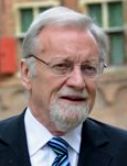
Meet IPSI's Faculty:
Gareth Evans, former Foreign Minister of Australia and author of Responsibility to Protect, will offer his extensive negotiation expertise as well as discuss the use of R2P in Libya at the 2011 Bologna Symposium >>
Watch an interview with Gareth on YouTube >>
See the full list of invited faculty >>
___________________
|
IPSI Leadership
Cameron M. Chisholm Dr. I. William Zartman
Dr. P. Terrence Hopmann
Alexander Little
Nadim Salti
Pamela Aall
Ahmedou Ould-Abdallah
Betty Bigombe
Jan Eliasson
Gareth Evans
Dr. Ted Robert Gurr
Amb. Jacques Paul Klein
Peter Kyle
Dr. Jean Paul Lederach
Jeffrey Mapendere
John Marks
Susan Collin Marks
Dr. Joyce Neu Dr. Valerie Rosoux
William Stuebner
Dr. Ruth Wedgwood Dr. Craig Zelizer About Us >> ___________________ |
|