| International Peace & Security Institute |
|
PEACE & SECURITY REPORT
IPSI's Peace & Security Report (PSR) is a concise weekly e-publication intended to keep busy students, academics, advocates, and practitioners in the conflict management community briefed on pertinent global news, events, and trends. Meticulously researched and written by IPSI, the PSR empowers us all to take a step back from our immediate deadlines each Friday and gain a greater understanding of the week's global events. |
|
| Featured Article
Sexual Violence against women in the context of the Colombian armed conflict 2001 - 2009
U.S. Office on Colombia
 For more than six decades Colombia has endured one the longest armed conflicts in the world. Land concentration and usurpation, severe social inequalities, and the geostrategic control of territories for drug smuggling, among others, continue to be the main reasons for the initiation and continuation of the conflict. The armed confrontation between different actors: the armed forces, paramilitaries, and guerrillas, and the impacts on civil society have produced grave human rights violations and violations of international humanitarian law, including sexual violence against women. The different types of violence against women in Colombia continue and are exacerbated in the context of the armed conflict. For more than six decades Colombia has endured one the longest armed conflicts in the world. Land concentration and usurpation, severe social inequalities, and the geostrategic control of territories for drug smuggling, among others, continue to be the main reasons for the initiation and continuation of the conflict. The armed confrontation between different actors: the armed forces, paramilitaries, and guerrillas, and the impacts on civil society have produced grave human rights violations and violations of international humanitarian law, including sexual violence against women. The different types of violence against women in Colombia continue and are exacerbated in the context of the armed conflict.
Therefore, to know the magnitude of the different types of violence against women and their links to the armed conflict becomes an unavoidable challenge in seeking alternatives for its eradication. The present research therefore seeks to establish solid statistics, bring public attention to the plight of women victims of violence, and urge the Colombian government and the international community to take concrete and effective measures to prevent and eliminate this type of violence and overcome the high levels of impunity for this crime.
The results of this research, carried out between 2001-2009, show the high rate of sexual violence: 7.58% for the 407 municipalities that have an active presence of the armed forces, guerrillas and paramilitaries. This means that during the nine years in which the study was carried out, 489,687 women were victims of sexual violence. This is an average of 54,410 women per year, 149 per day, or 6 women every hour suffering sexual violence. Based on these numbers it can be inferred that sexual violence constitutes a habitual and frequent practice in the context of the armed conflict and therefore can be described as being "generalized" according to international humanitarian law.
|
Africa
BENIN: Rival rejects presidential win of Benin's Boni YayiOn Tuesday, Benin opposition leader Adrien Houngbedji challenged the win of Bon Yayi, declaring the outcome of the March presidential elections were "manipulated." The constitutional court announced Houngbedji won 36 percent of the votes to Boni Yayi's 53 percent. International election observers maintain the voting was "peaceful, fair, and transparent." Comment: The regional bloc, ECOWAS is concerned about this latest power struggle and the escalating tensions in the region. ECOWAS issued a statement that called on the candidates "to be gracious enough to abide by the results of the election and to direct all complaints through constitutional channels." (Reuters, Bloomberg, Allafrica).
IVORY COAST: Thousands of young supporters join Gbagbo's armyThousands of young pro-Gbagbo activists on Monday lined up at the army's headquarters in Abdijanto to enlist for military service. The youth answered a call from Gbagbo's youth minister, Charles Ble Goude, who at rally on Saturday urged his young supporters to join the army and "liberate" the country. In addition to the increased recruitment, Gbagbo is reportedly readying an attack helicopter and rocket launchers. Comment: West African heads of states, worried the crisis will destabilize peace and security in the region, met in Nigeria for an ECOWAS summit. ECOWAS issued a statement on Wednesday requesting the UN to adopt stricter sanctions and to "strengthen the mandate of the UN operation in Ivory Coast enabling the mission to use all necessary means." (BBC, Vanguard, Reuters)
SOMALIA: Somali PM vows to defeat rebels in 90 daysOn Tuesday, the interim Somali PM Mohammed Abdullahi Mohammed, pledged to defeat the Al Shabaab insurgency within three months. His statement comes after Somalia and AU troops made "remarkable" gains in the capital of Mogadishu by destroying the insurgent's line of defense and reclaiming key positions in the capital. The PM's statement highlights the recent government offensive against the militant group that began in February 2011 and aims to regain the areas in southern and central Somalia controlled by the rebels. Comment: The nationwide offensive and escalating fighting has allegedly led to the increased recruitment of child soldiers. Rebel forces, especially Al Shabaab, and pro-government forces are accused of conscripting children; however, the government denies the allegations. The exact number of child soldiers is unknown, but the number is suspected to be between 2,000 and 3,000 children in various armed forces. (IRIN, Washington Post, Reuters)
Researched/Written by Haja Kakay
|
Americas
CUBA: Castro no longer party leaderFidel Castro confirmed Tuesday that he had resigned all official positions in the Communist Party in 2006, when he fell ill with intestinal problems. This revelation comes shortly before the next Communist Party Congress in April, which will be the first since 1997. Raul Castro is set to introduce substantial economic reforms during the party congress, and there is speculation that the Castros will name a new number two in the party; a possible successor to Raul. Comment: This news came as a surprise to many and is seen as a move to add legitimacy to Raul's presidency. The naming of a successor will give a glimpse of the future the Castros envision for Cuba. (Miami Herald, Reuters, Al Jazeera)
GUATEMALA: First Lady to run for presidentSandra Torres announced her plans to run for president March 9, but in order to do so she had to divorce her husband, President Colom. Guatemala's constitution has an anti-nepotism article, prohibiting close relatives of the president from running for the office. Papers were filed March 11 and should be finalized quickly. The divorce came after opponents questioned the legitimacy of Torres' candidacy. Comment: Opposition party leader, Perez Molina, is calling the divorce a fraud and suggests that it undermines the institution of marriage. Another candidate, Zury Rios, who is the daughter of former dictator Efrain Montt, is also having eligibility issues. (AFP, BBC, Prensa Libre)
VENEZUELA: H1N1 OutbreakAs of March 22, there have been more than 100 cases of H1N1 in Venezuela, 56 of which are in Merida. Precautions are being taken in the western state, including cancelling classes for five days and banning close-quarter venues like nightclubs. Unlike the recent spread of Cholera, this outbreak of H1N1 did not originate outside of the country. Comment: The outbreak is contributed to a lack of a Venezuelan vaccination plan as implemented in 18 other countries in the region to avoid the type of outbreak seen in 2009. Venezuelan officials state that they have enough vaccines to deal with the current outbreak. (El Universal, Xinhua, WSJ)
|
East Asia
JAPAN: Food and tap water found to have high levels of radiation
Authorities announced Wednesday that higher-than-normal radiation levels were found in Japanese tap water around the area affected by the Fukushima nuclear plant crisis, and although the heightened radiation levels are not a threat to adults, authorities urged parents to avoid giving tap water to infants. In addition to water contamination, Japanese agricultural products were found to have unusually high radiation levels prompting a growing number of countries, including the U.S., to ban food exports from Japan that originate from the affected region. Meanwhile, workers at the Fukushima plant made marked progress this week as two of the six troubled reactors are now considered stable. While the other four remain volatile, nuclear experts are increasingly optimistic that those reactors will continue to cool. Comment: Since power lines were restored to the Fukushima plant Monday, the situation has stabilized considerably, although Japanese officials warn that it will take at least two more weeks before the other four reactors are stabilized. (Yomiuri, BBC, Reuters, Taipei Times)
LAOS: UN warns of massive food shortage before next rice harvest
The Food and Agriculture Organization and the World Food Program warned Tuesday that up to 111,000 people in central and southern Laos will likely face serious food shortages until the rice harvest season begins in October; both organizations called for immediate food aid from the international community to support at-risk populations. The food shortage is the result of a series of natural disasters in 2009, including a typhoon, drought, and flash floods. Comment: Laos is one of the poorest countries in the world, and its mostly rural population relies on rice as a staple food. In recent years, the Lao government pursued reforms to encourage economic development with Chinese assistance, but success has been limited in the small agrarian country. (The Jakarta Post, CBC, Straits Times) MALAYSIA: Authorities probe WMD transit point
Malaysian authorities continue to investigate the contents of two containers seized from a ship earlier this month at Port Klang in western Malaysia. Equipment found in the containers is suspected to include dismantled material used for weapons of mass destruction (WMD) or nuclear items. The ship originated in China and its stop in Malaysia is believed to be a transit point on its way to an undetermined destination in the Middle East. According to Home Minister Hishammuddin Hussein, Malaysia is likely being used as a transit point for WMDs. This latest seizure is not the first time suspicious containers have been found on ships in the country's ports. Comment: The Malaysian government has not spoken publicly about previous seizures, but said that if the contents of the containers are confirmed to be weapons-related, the issue will be dealt with strictly. (Strait Times, AFP, BBC)
|
Europe & Central Asia
BRUSSELS: European Commission hit by major cyber attackOn March 23, the European Commission was subject to a large scale cyber attack and shut down all external access to intranet and email, a day before a two day summit regarding economic strategy and the Libyan intervention. EU officials admit to being the target of cyber attacks before, however this one was particularly large and effective and has been described as "pure espionage." Comment: Initial reports indicate data transited through Chinese servers, but the EU will not speculate whether China is involved in the attack. Another possibility is the "Anonymous" group, who has recently mounted attacks on international institutions. (BBC, UPI, EU Observer)
NETHERLANDS: Former Serb general transferred to Estonia to serve prison sentenceOn Wednesday, Dragomir Milosovic was transferred to an Estonian prison to serve out the remaining 25 years of his sentence for crimes against humanity. Milosovic was allegedly in charge of the sniper unit that laid siege unto Sarajevo for over a year. Milosovic had also allegedly ordered the shelling and sniping of vegetable farmers, people attending funerals, or patrons simply waiting in line for bread. Comment: During the trial, the evidence provided did not prove he ordered the attacks, however the charges are being held because he did not stop the orders from being carried out. (Radio Netherlands, Southeast European Times, Deustche Presse-Agentur)
RUSSIA: Moscow calls for immediate ceasefire in LibyaOn Tuesday, the Russian government called for an immediate ceasefire in Libya, stating concerns about the reports of mounting civilian casualties. Speaking in Moscow, Secretary Gates stated NATO has been very precise about their targets and the majority of civilian casualties have come from Gadhafi's forces, and that once a no-fly zone can be safely established, military operations will be scaled back. Comment: Russia abstained from the Security Council vote regarding the no-fly zone last week but has been vocal about non-intervention. This week, Vladamir Putin compared the operation to the Crusades; however, the comment was quickly rebuked by President Medvedev. Russia will also be removing all of their diplomats from Libya. ( CNN, BBC, RIA Novosti)
Researched/Written by Daniel Pechtol |
Middle East & North Africa
ISRAEL: Rockets and reprisals in Israel and Gaza
The Israeli army confirmed that a total of nine long-range Grad rockets were fired from the Gaza strip on Thursday landing south and north of the port city of Ashdod. According to a BBC correspondent in Gaza City, there were at least three Israeli air and artillery strikes in Gaza later in the day, leaving one Palestinian injured. The rocket attacks come a day after Israeli air strikes on Hamas-controlled territory in response to a Jerusalem bus attack on Wednesday that left one dead and many wounded. Comment: The Islamic Jihad militant group carried out earlier attacks in reprisal for the killing of eight Palestinians on Tuesday. Exchanges since Saturday between the Islamic Jihad militant group in Gaza and Israel are among the most serious since Israel's major offensive in the Gaza Strip between December 2008 and January 2009. (Al Jazeera, BBC, AP)
LIBYA: Coalition forces establish a no-fly zone The coalition bombardment of Libya struck artillery, arms depots, and parked helicopters on March 24, but failed to stop Gaddafi's forces from shelling opposition held towns. News correspondents on the ground report that Ajdabiya, a key town about 125km away from Benghazi, continues to be heavily hit by Gaddafi forces, and opposition forces in Benghazi are unable to move forward due to lack of organization and weapons. Government officials accused coalition forces of killing dozens of civilians, but U.S. military officials deny the charge. Comment: Coalition forces successfully established a no-fly zone over Libya's coastal areas; however, NATO members have not yet reached a consensus on how to proceed. Though the U.S. is ready to relinquish its current control, disagreements about who should take the lead created a stalemate in a series of meetings held since Monday. (BBC, Al Jazeera, Reuters)
SYRIA: Amid unrest, government pledges reformsOn March 24, around 20,000 Syrians chanting freedom slogans marched at the funerals of nine protesters killed by security forces on Wednesday in the southern city of Daraa. The army, anti-terror police, and riot police set up checkpoints at all entrances to the city, and journalists are not allowed to visit. Pro-democracy demonstrators across Syria called for mass protests on Friday in response to recent events and political reforms. Comment: Meanwhile, Syrian leaders on Thursday pledged to introduce reforms to meet protesters' demands. The government also claimed it would bring to trial those responsible for the deaths of protesters in Daraa. Bouthaina Shaaban, the presidential spokeswoman, confirmed the government would raise workers' wages, introduce health reforms, relax media restrictions, permit more political parties to compete in elections, and fight corruption. (Al Jazeera, BBC, AP)
|
South Asia
BANGLADESH: Fate of Yunus could strain U.S.-Bangladesh tiesFrom protests to diplomatic consequences, the international response to Dr. Mohammad Yunus' removal from the Grameen Bank continues to escalate. In Dhaka on March 22, U.S. Secretary of State Robert Blake cautioned the Bangladesh government that a failure to reach an amicable solution would affect U.S.-Bangladesh ties. In fact, Blake added that Hillary Clinton's "potential visit" to Dhaka in April is dependent on a successful negotiation of the issue. Yunus' removal is being disputed by the Grameen Bank whose legal advisors indicate that the bank is compliant with applicable laws and therefore maintains that Yunus will continue his office. Though Yunus lost his initial legal battle in the High Court, his appeal is scheduled for late March. Comment: Yunus was relieved of his duties at Grameen Bank on March 2 after the central bank said Yunus failed to seek its approval in 2000 when he was reappointed as managing director. Sources report that the smear campaign against Yunus and his forced removal from Grameen Bank are attempts by the government to subvert his political power. (The Financial Express, Business Standard, Telegraph India)
INDIA: Amnesty International report cites abuse of detention lawAccording to an Amnesty International report released on March 21, the Indian government is using its Public Safety Act (PSA) to detain hundreds of people annually, without trial or charge in Jammu and Kashmir. The report details how the government abuses the law to arbitrarily detain minors, political leaders, activists, opposition groups, lawyers, journalists, etc., in order to suppress anti-government activity. Amnesty International estimates that between 8,000 and 20,000 people were detained in the past two decades; with over 300 held between January and September of last year during a wave of anti-government protests. According to the report, Jammu and Kashmir authorities consistently thwart High Court orders for the release of improperly detained individuals by issuing successive detention orders; detainees become trapped in a cycle of detention and remain 'out of circulation.' In addition, the PSA provides immunity from prosecution for officials operating under it, leaving detainees without legal representation, unable to challenge their detention, and powerless to seek compensation or justice afterward. India's Chief Minister Omar Abdullah denies that so many people were detained under the act. Comment: Amnesty International says the PSA undermines the rule of law and reinforces deeply held perceptions "that police and security forces are above the law." The report calls for an investigation into allegations of abuses against detainees and their families, including instances of torture, ill-treatment, denial of visits and medical care, and other violations. Under the Public Safety Act, persons can be taken into preventive custody for two years without charge or trial if they are deemed a threat to the state. (Kashmir Observer, Reuters, CNN, Amnesty International)
NEPAL: MJF signs four-point deal; agrees to join governmentOn the morning of March 23, Madhesi Janadhikar Forum (MJF) chairman Yadav, Prime Minister Khanal of CPN-UML, and UCPN (Maoist) chairman Dahal signed a four-point agreement at the Prime Minister's residence. The MJF agreed to join the Khanal-led government after an agreement with present coalition partners UML and UCPN (Maoist) outlined the implementation of pacts on Madhes issues (in the Tarai region). In addition, the agreement reportedly includes a consensus between the parties concerning the allocation of ministerial portfolios to the party, creation of a mechanism to run the government, and completion of the statute drafting and peace processes. The three leaders are said to have agreed to allocate three ministries, including foreign affairs, to the MJF-N. Comment: While MJF leaders were expected to name the leaders that will represent the party in government this week, no names were reported in the media. (Nepal News, The Himalayan Times, eKantipur)
Researched/Written by Jennifer Clemens |
|
|
|
|
|
IPSI Symposiums

The application deadline for the 2011 Bologna, Italy Symposium on Conflict Prevention, Resolution, & Reconciliation at the Johns Hopkins SAIS Bologna Center is APRIL 25th!
Learn More >>
Read about a typical day in Bologna >>
___________________ |
IPSI News
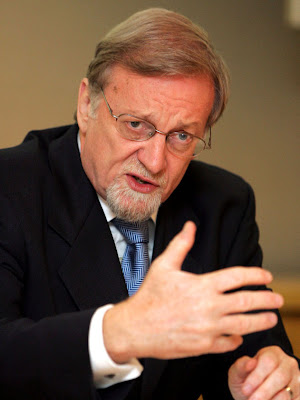
Gareth Evans, IPSI Board of Advisors and author of Responsibility to Protect, writes the following article: The U.N. Security Council mandate does not call for Gadhafi's head ___________________ |
IPSI News

Luis Moreno Ocampo, IPSI lecturer and Prosecutor at the ICC, answers the following question in a radio interview: Could Col Gaddafi be prosecuted for crimes against humanity? ___________________ |
IPSI News

U.S. Center for Citizen Diplomacy recognizes Raymond Shonholtz, Trainer at the 2011 Bologna Symposium, for "his lifetime of work in developing fellow citizens with skills in nonviolent dispute settlement." ___________________ |
IPSI Leadership
Cameron M. Chisholm Dr. I. William Zartman
Dr. P. Terrence Hopmann
Alexander Little
Nadim Salti
Pamela Aall
Ahmedou Ould-Abdallah
Betty Bigombe
Jan Eliasson
Gareth Evans
Dr. Ted Robert Gurr
Amb. Jacques Paul Klein
Peter Kyle
Dr. Jean Paul Lederach
Jeffrey Mapendere
John Marks
Susan Collin Marks
Dr. Joyce Neu Dr. Valerie Rosoux
William Stuebner
Dr. Ruth Wedgwood Dr. Craig Zelizer About Us >> ___________________ |
|