| International Peace & Security Institute |
|
PEACE & SECURITY REPORT
IPSI's Peace & Security Report (PSR) is a concise weekly e-publication intended to keep busy students, academics, advocates, and practitioners in the conflict management community briefed on pertinent global news, events, and trends. Meticulously researched and written by IPSI, the PSR empowers us all to take a step back from our immediate deadlines each Friday and gain a greater understanding of the week's global events. |
|
Featured Article
Next Year's Wars: The 16 brewing conflicts to watch for in 2011 Across the globe today, you'll find almost three dozen raging conflicts, from the valleys of Afghanistan to the jungles of the Democratic Republic of the Congo to the streets of Kashmir. But what are the next crises that might erupt in 2011? Here are a few worrisome spots that make our list. READ MORE >>
Originally published in Foreign Policy 12/28/2010 |
Africa
IVORY COAST: Violence erupts as President Gbagbo refuses to step down after electionsIvory Coast is facing a political standoff due to current President Laurent Gbagbo's refusal to cede power to President-elect Alassane Ouattara, and violence erupted this week between the each man's supporters. On January 11, a police raid in the pro-Outtarra district of Abobo left five people dead, with six more killed the following day. On January 12 the Ivory Coast government imposed a curfew for the Abobo district that will continue until January 15. As violence continues, many citizens are fleeing to neighbouring Liberia. The Liberian government and the UN plan to build a camp for the refugees. Comment: The relationship between Gbagbo and the UN is further deteriorating with Ivorian forces currently blocking pro-Outtarra areas and barring UN peacekeepers from entering. In 2011, as many as 15 African countries will hold national elections, and the violence in Ivory Coast is a reminder of the possibility for conflict and other humanitarian crises during times of transition. (CNN, Reuters, AP)
NIGERIA: Nigeria's ruling party to pick presidential candidate Nigeria's ruling party, the Peoples Democratic Party (PDP), will pick a candidate on January 13 for the April presidential elections. The elections are occurring amid violence between the predominantly Muslim north and the mainly Christian south, and the presidential nomination echoes this division. The current president is Goodluck Jonathon, a Christian southerner who became President after his predecessor, a northerner, died. Although Jonathon is favored by many members of the party, there are others who support his challenger, the northerner Atiku Abubakar. The dispute between the members arises from an agreement in the PDP that rotates presidential power between the north and the south every two terms. Comment: The presidential nomination threatens the power sharing agreement that has been key in placating each region's desire for compete control and power over the nation. Region and religion will continue to play a significant role throughout Nigeria's presidential elections. (Reuters, VOA, Washington Post)
SUDAN: Referendum vote reaches 60 percent threshold requirement According to the Sudan People's Liberation Movement (SPLM), the 60 percent threshold needed to make the referendum vote valid was reached after three days of polling. The voting began January 9 and will end January 15, and more than 2.3 million people have already cast their votes. A spokesperson for the SPLM said they are aiming for a 100 percent turnout. The preliminary results for the referendum are expected to be available in early February. Comment: The voting process in Sudan has been relatively peaceful, although there continues to be some violence at the tense north-south border. With the threshold being reached, the outcome of the election will be regarded as valid and must be upheld. President al-Bashir and the international community stated their commitment to accepting and supporting the election outcome. (BBC, Reuters, Sudan Tribe)
|
Americas
CHILE: State of Palestine recognition in South America spreadsOn January 7, Chile became the seventh country in South America to formally recognize the State of Palestine. Since meeting with President Abbas, President Piñera felt pressured to join Bolivia, Uruguay, Argentina, Brazil, Ecuador and Venezuela in recognizing Palestine. This trend marks an effort by President Abbas to gain more formal recognition as bi-lateral peace talks degraded. While the other six countries specified that their recognition was based on the 1967 borders, Chile did not address that particular issue. Comment: Abbas believes these recognitions will positively influence the peace process by giving Palestine more legitimacy. Israeli officials, however, believe that these are empty gestures. This trend is likely to continue as other South American countries are expected to follow suit and recognize Palestine. (Jerusalem Post, AFP, NY Times)
CUBA: Spy detention is sticking point in migration talks Cuba and the U.S. entered into immigration negotiations on January 12; their fourth round since the return of the Cuba Migration Talks in 2009. These talks are designed to "promote safe, legal, and orderly migration" and curb dangerous and illegal migration from Cuba to the U.S. However, negotiations have been overshadowed by the imprisonment of Alan Gross, a suspected U.S. spy. Cuba imprisoned Gross in December 2009 but has yet to charge him with espionage. The Cuban delegation described the talks as fruitful, and both sides acknowledge the decrease in risky migration attempts. Comment: The meeting between Senior U.S. and Cuban officials dates back to a 17 year-old agreement where the U.S. provides 20,000 visas for Cuban immigrants. Since the two countries do not have formal diplomatic relations, this bi-annual forum is often used to air grievances. (U.S. State Department, Reuters Latin America, El Nuevo Herald) MEXICO: Drug Violence Continues; 28 found dead over the weekend Acapulco, Mexico was once again marred by the ongoing drug war on January 7, with the discovery of 15 bodies near a local shopping mall, all but one decapitated. Messages found near the scene reference Joaquin "El Chapo" Guzman, leader of the Sinaloa cartel, indicating their involvement in these murders. The violence is attributed to increasing competition between the Sinaloa Cartel, La Familia and Los Zetas. Over the same weekend, an additional 13 bodies were found, also resulting from competition amongst the drug cartels. Comment: These murders underscore the growing competition amongst the cartels. Two of the three largest have emerged in the past year, and the violence has only continued to escalate. Insecurity, due to drug-related violence, may affect investment from foreign companies. (Reuters, The Christian Science Monitor, AP)
|
East Asia
AUSTRALIA: Major flooding devastates BrisbaneHeavy rains caused the Brisbane River to overflow this week, sending powerful floodwaters surging through the Brisbane metropolitan area. At least 15 people were killed, tens of thousands were displaced, and over 30,000 homes and businesses affected. The Australian government estimates the damage to be worth nearly $5 billion, but as cleanup and recovery begins that number is expected to swell substantially. Comment: The Queensland province declared the flooding its worst ever natural disaster; however, the water levels did not rise as high as initially feared. (Sydney Morning Herald, Brisbane Courier-Mail, BBC) CHINA: U.S. Defense Secretary Gates visits Beijing U.S. Defense Secretary Gates arrived in Beijing this week for a three day visit with top Chinese officials in advance of Chinese President Hu Jintao's official state visit to Washington later this month. In addition to meeting with President Hu Jintao and Chinese Defense Minister General Liang Guanglie, Secretary Gates took a tour of China's nuclear warfare headquarters. The two sides agreed on concrete steps to enhance mutual trust through enhanced military cooperation and dialogue. Comment: Secretary Gates' visit was meant to quell remaining bi-lateral tensions in advance of President Hu Jintao's visit to Washington. China severed military ties after the U.S. sold defensive weaponry to Taiwan last year. (Xinhua, AP, VOA)
PHILIPPINES: Monsoon causes major floodingHeavy monsoon rains caused massive flooding damage across the archipelago nation over the past two weeks. Surging floodwaters and mudslides killed at least 40 people and displaced an additional 400,000. In all, the Philippines government estimates that 1.2 million people have been affected, and the military continues to evacuate people from the central islands of Samar and Leyte. Comment: The Philippines frequently suffers torrential rains and subsequent mudslides. Filipino President Aquino cited illegal logging as an exacerbating factor in such disasters. President Aquino will visit the affected regions this weekend. (Manila Standard Today, Reuters, BBC)
|
Europe & Central Asia
BELARUS: UN calls for release of Belarusian political prisoners
This week, Secretary-General Ban Ki-moon called for the release of Belarusian political prisoners being held since their mid-December elections. Secretary Clinton and EU officials have condemned the detention of opposition members and have discussed reinstating a travel ban on President Lukashenko. Comment: After the OSCE described the December elections as unfair, Lukashenko shut down the Minsk office. Lukashenko has drawn increasing attention to himself over the last few weeks, being described as Europe's last remaining dictator and has used state police to quell opposition support. Later this month, the EU will meet to discuss putting sanctions on the country. (DeutcheWelle, BBC, Reuters)
RUSSIA: Violence in Chechnya leaves one dead, eight injured
On January 9, a gunmen in an unidentified vehicle opened fire on a checkpoint in Chechnya, injuring eight and killing one Russian serviceman. The body of an unidentified man, suspected to be one of the gunmen, was found nearby. Comment: Although major offensives have died down over the last ten years, small scale police operations continue on an almost weekly basis. (ITAR-TASS, RIA Novosti, Hurriyet Daily News) SPAIN- ETA declares permanent ceasefire
On January 10, the Basque separatist group ETA declared a permanent ceasefire against the Spanish government. ETA had previously declared a ceasefire in September, but announced it will go further, calling this a "permanent and general cease-fire which will be verifiable by the international community." The Spanish government remains wary of ETA, as illustrated by President Zapatero's rejection of the ceasefire the next day. A permanent ceasefire was also called in 2006, but only lasted nine months. Comment: A nonnegotiable point with the Spanish government is that ETA must give up their arms. In addition, ETA is still pushing for a referendum in which the Basque nation can decide if they wish to stay part of Spain or break off, which Madrid is viewing as a demand in exchange for their nonviolence. Last September, Gerry Adams of Sinn Fein announced he had met with several ETA leaders to discuss how to go about creating a peace agreement. (Washington Post, El Pais, Reuters)
|
Middle East & North Africa
LEBANON: Unity government collapses On January 12, the Lebanese national unity government collapsed after Hizbollah and its allies resigned from the 30-member cabinet over controversial issues stemming from the UN investigation into the assassination of the former Lebanese prime minister. Eleven ministers submitted their resignations on Wednesday after Prime Minister Hariri refused their request to convene a cabinet meeting over the investigation. Lebanon's President Suleiman asked Prime Minister Hariri to stay on as a caretaker prime minister while Lebanon seeks a new government. Comment: The continued political tension between Hariri and Hizbollah paralyzed the government for months, amid indications that Hizbollah members could be indicted. According to Hizbollah, the tribunal has been politicized and used by the U.S. and Israel to discredit their legitimacy. Prime Minister Hariri refuses to break any cooperation with the tribunal, and succumb to Hizbollah's pressure. (Al Jazeera, BBC, Now Lebanon, BBC) TUNISIA: Violence increases between police forces and protesters In response to violent protests, the Tunisian government imposed a dusk-to-dawn curfew in several districts of the capital, Tunis, on January 12. Hundreds of Tunisians took to the streets in response to rising food and fuel prices, high unemployment and corruption. Excessive use of tear gas by security forces was reported. Comment: Communications Minister Samir Laabidi accused extremist movements of fomenting the unrest. President Ben Ali created a committee to investigate corruption within his government and non-government groups. The UN, U.S., and EU expressed concern over the government's response to the unrest, and urged the Tunisian government to launch a "transparent, credible, and independent investigation." (Al Jazeera, al-Bab, BBC) YEMEN: Surprise visit from U.S. Secretary of State U.S. Secretary of State Clinton made a surprise visit to Yemen on January 11, the first visit by such an official in more than 20 years. Clinton met with President Saleh to broaden ties beyond a military role. Clinton stressed U.S. aid will shift focus to address Yemen's current social and economic challenges. The need for more dialogue between the two countries was discussed along with a joint vision for a unified, democratic Yemen. Comment: According to analysts, Yemen's current series of major threats, such as a rise in al-Qaeda operations and violence from southern secessionists, is so serious that the country risks becoming a "failed state." Yemen is the Arab world's poorest economy, with weak rule of law in its rural areas, and depleted oil and water reserves. Terrorists operating in Yemen have been responsible for numerous anti-U.S. attacks since 2000. (Al Jazeera, BBC, The Christian Science Monitor)
|
South Asia
AFGHANISTAN: Biden affirms U.S. commitment to AfghanistanOn January 11, during a surprise visit, U.S. Vice President Biden met with Afghan President Karzai, emphasizing, "We're not leaving if you [Afghans] don't want us to leave." During the discussion, Biden also stressed U.S. presence was not there to govern or nation-build, but rather to support. Biden added that aid and training would continue in Afghanistan even after security responsibilities were transferred. Following their November meeting in Lisbon, NATO allies agreed that Afghan forces started the transition to take over Afghanistan's security responsibilities. Although the U.S. led military coalition plans to hand over control of security operations in 2014, U.S. commitment to Afghanistan will remain intact. Comment: Analysts disagree over the reasons and intentions behind continuing U.S. presence. While some argue the U.S. is attempting to arrest Afghan fears of abandonment, others purport the extension is a mode of maintaining U.S. influence in Afghanistan while not appearing weak to the international community. (CNN, Pajhwok, The Bangladesh Today)
NEPAL: Post-UNMIN tasks and concerns The United Nations Mission in Nepal (UNMIN) will terminate on January 15. With the UNMIN departure, the government and political parties are working to agree on an alternative for carrying out monitoring responsibilities. Civil society leaders, Maoist representatives, and PM Nepal have each expressed concern over whether UN departure will lead to a collapse in the peace process. With thousands of Maoist rebels still held in camps across the country, the issue of ex-combatant integration and rehabilitation remains unresolved. Amongst all parties there is fear that without the UN, both armies may revert to civil war. Comment: Maoist rebels fought government troops for a decade until 2006, when they gave up their armed revolt and joined a peace process. The UN monitored seven different camps across the country since 2007. The peace process encountered multiple delays and is marked with significant accusations of blame on both sides. (Washington Post, Nepali Times, Himalayan Times, BBC) PAKISTAN: A society divided The assassination of Punjab's governor, Salman Taseer, on January 4 revealed a contentious divide within Pakistani society. Fueled by the controversial Blasphemy laws, the young, conservative "Zia generation" is gaining voice and influence in Pakistan. In opposition, Bilawal Bhutto Zardari spoke out against the religious conservatives, saying: "This shall be our jihad. Jihad against those who use our religion as a tool to justify their violence, suicide attacks and mass murder." In the global community, Pope Benedict urged Pakistan to reverse the Blasphemy laws citing them as an affectation for violent religious intolerance. Comment: Scholars continue to debate the reasons underlying Pakistan's emerging societal divide. Though the conservative movement is characterized by young professionals, the trend is not restricted to youth. Instead, it has been suggested that this religious conservatism is a confluence of factors including socioeconomic status, educational curriculum, and the latent effects of a military dictatorship. (NY Times, Pakistan Times, Times of India)
|
|
|
|
|
|
Bologna Symposium

Two weeks until the early decision application deadline for the 2011 Bologna, Italy Symposium.
Learn More >>
Apply Online Now >>
View 2010 Photos >>
Read 2010 Blog >>
___________________ |
Who Applies?

What is a "future peace and security leader"? Click here to find out what we think. ___________________ |
IPSI News
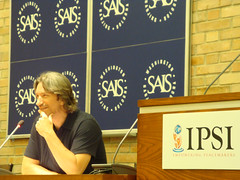
IPSI Contributor John Prendergast launches the Satellite Sentinel Project as a conflict early warning mechanism for Sudan. Learn More >> ___________________ |
IPSI Originals

IPSI International Programs Intern Daniel Pechtol writes the following analytical thinkpiece, EU Integration: Serbia's new regional relationships ___________________ |
IPSI Originals

IPSI Research Assistant Donatello Osti writes the following op-ed, Japan's new national defense program - shaping up for the 21st century? ___________________ |
|