| International Peace & Security Institute |
PEACE & SECURITY REPORT
IPSI's Peace & Security Report (PSR) is a concise weekly e-publication intended to keep busy students, academics, advocates, and practitioners in the conflict management community briefed on pertinent global news, events, and trends. Meticulously researched and written by IPSI, the PSR empowers us all to take a step back from our immediate deadlines each Friday and gain a greater understanding of the week's global events. |
|
|
Featured Article
Iran's real nuclear strategy may be marked by restraint
by Gareth Evans
Gareth Evans, IPSI Board of Advisors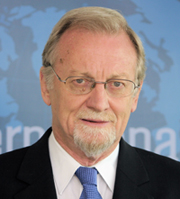 |
Is Iran really hell-bent on becoming a nuclear-armed state? Or will it settle for nuclear capability, able to make weapons but choosing not to? Does the difference matter?
Few international questions involve higher stakes than these. An immediate concern, if deep pessimism about Iran's intentions prevails, is a preventive Israeli strike, leading to another major Middle East war - with catastrophic consequences for the global economy likely. Read More >>>
Originally published in the Daily Star on 9/21/10 |
|
Africa
ERITREA: Africa's next failed state?
A report released September 21 by the International Crisis Group (ICG) warns Eritrea could be the next failed state. According the report, Eritrea is not yet in crisis but under "severe stress." The ICG urges international engagement to prevent complete collapse. Comment: Eritrea, while relatively stable, suffers from militarism and increasing authoritarianism. As covered last week, Eritrea is also accused by Ethiopia of supporting the ONLF rebels, which could lead to renewed conflict between the countries. (BBC, Somaliland Press, Associated Press)
NIGER: France deploys troops
Following last week's kidnappings of seven people -- five from France, the other two natives of Togo and Madagascar -- in Niger, France deployed troops to search the Sahara. Al-Qaeda in the Islamic Maghreb (AQIM) claimed responsibility for the kidnappings from a French-owned uranium mine in northern Niger and threatened to bring the attacks to France if Paris intervenes. Comment: The move may mark the beginning of a stronger French stand against terrorism in Africa. France opposed the U.S.-led "War on Terror," primarily over opposition to the invasion of Iraq. (Associated Press, RFI, Ennahar Online, UPI)
NIGERIA: Election commission plans to delay elections
The Independent National Election Commission (INEC) of Nigeria plans to delay the upcoming national elections to allow for more complete preparation and voter registration. The move is supported by a majority of the sixty three registered political parties, as well as President Goodluck Jonathan. Comment: Nigeria is attempting to deal with rampant corruption and avoid the pitfalls of the 2007 elections, including fake names on voter registration roles. Successful, fair elections would be a positive step for the country, however, the constitution must first be adjusted to allow for the delayed elections. (Daily Trust, Vanguard, This Day)
SOUTH AFRICA: Spain seeks extradition of Rwandan general
Spain filed a formal petition for the extradition of Rwandan General Faustin Kayumba Nyamwasa on September 22. France and Spain want to prosecute Nyamwasa, who is recovering from an assassination attempt in July, for his role in the murder of three Spanish aid workers in 1997 and reprisal killings against Hutus following the 1994 genocide in Rwanda. Comment: Nyamwasa fled to Johannesburg in February after a falling out with Rwandan President Kagame. Kigali is pushing for his return on domestic charges, but South Africa does not have an extradition treaty with Rwanda as it does with Spain. (Associated Press, Rwanda News Agency, El Mundo, Reuters)
SUDAN: Referendum a top priority at UN summit
A referendum in which southern Sudan is expected to vote for independence is scheduled for January 9, 2011, but top UN officials warn that preparations are dangerously far behind. South Sudanese President Salva Kiir called for increased international engagement, and UN Secretary General Ban has called Sudan one of his "top priorities" and appointed a monitoring panel on September 21. President Obama also plans to send a strong message at the September 24 UN Summit. Comment: The referendum is the final step in the 2005 Comprehensive Peace Agreement. Southern independence may return the country to violence, however, as many suspect Sudanese President Bashir will not let the oil-rich region secede. (AllAfrica.com, UN News Services, Human Rights Watch, AFP)
ZIMBABWE: Unrest continues
Hearings to revise the constitution were suspended after a man drew a gun to settle a disagreement at a meeting on September 17. The meetings had been marred by raucous disruption and violence, which some attributed to President Mugabe's ruling ZANU-PF party. Government minister Didymus Mutasa vowed that Tsvangirai, currently Prime Minister, will never be President, even if elected. A business coalition called for a five-year suspension of elections, saying polling could interfere with economic growth. Comment: The changes to the constitution would include weakening Mugabe's grip on power. Zimbabwe's economy and government have been in near constant turmoil since independence, but the economy is slowly growing under the current coalition government. (Wall Stree tJournal, The Herald, The Standard, The ZimbabweIndependent, SW Radio Africa)
|
|
Americas
BOLIVIA: Bolivia's cocaine problemOn September 19, Bolivian President Morales admitted drug trafficking activities generate between $300 and $700 million for the Bolivian economy, representing between 1.5 and 3 percent of gross domestic product (GDP). Vice President Linera stressed the figures are low when compared to Bolivia's overall GDP of $17 billion and do not represent a significant portion of Bolivia's true economic growth. Comment: In Bolivia, coca leaves have cultural and medicinal purposes, but have been diverted to illegal manufacturing for cocaine. Although the Bolivian government has seized over 17 tons of cocaine this year, there has been an overall increase in cocaine production in Bolivia. (El Nuevo Herald,Los Tiempos,La Razon) CHILE: Mapuche Indians hunger strike continuesOn September 17, Chilean President Sebastian Pinera said his government would engage in dialogue with Mapuche Indians, their families, the Church, and civil organizations in response to an over 70-day hunger strike by 35 jailed Mapuches protesting Chile's anti-terrorist law. The law allows the state to detain people up to two years without charges, restricts defense attorney's access to evidence, and promotes the use of anonymous witnesses. On September 21, the families of the jailed Mapuches rejected any engagement of dialogue with the Chilean government and stated the government would not resolve the demands of the strikers. Comment: There are close to 600,000 Mapuches in more than 2,000 communities throughout Chile, many of which are battling to keep their ancestral lands from large agribusiness take-over. (The Latin American Herald Tribune, El Nuevo Herald, El Mercurio, La Nacion)
COLOMBIA: Deadly government raid on the FARCColombian security forces raided a Revolutionary Armed Forces (FARC) camp in the Putumayo region near the Ecuadorian border over the weekend. Colombian forces killed at least 22 FARC rebels, most notably "Domingo Biojo," who was responsible for spearheading the attack that left eight national policemen dead earlier this month. Comment: Colombian President Santos pledged he would continue the tough security policies of his predecessor against the guerrilla groups. He reported that the neighboring Ecuadorian government supported the operation, although Ecuadorian Minister of Defense Miguel Caravajal denied any involvement in the raid. ( El Universal, BBC, Caracol Radio, Caracol Radio) EL SALVADOR: Anti-gang law to combat national crimeOn September 19, a law penalizing gang membership and funding went into effect in El Salvador. Parliament passed the "Anti-Maras" law on September 1, which forbids negotiating with Maras, gangs, or any criminal groups. According to a local El Salvadorian newswire, the general population received the law with skepticism because most areas suffering from high levels of violence lack police or military presence. Comment: There are at least 10 to 13 daily reported gang related assassinations in El Salvador, mostly committed by the Mara Salvatrucha (MS) and the Mara 18 (M18). The law is an attempt to foster security and crack-down on criminal activities in areas highly affected by crime. ( El Nuevo Herald, La Prensa Grafica,La Prensa Grafica)
|
|
East Asia
AUSTRALIA: Rooftop protest at Sydney detention center
The Villawood Detention Center in Sydney saw two separate rooftop protests by detainees. A group of 11 detainees, mainly Sri Lankan Tamils, conducted a 30-hour protest threatening to jump off the roof if their claims for asylum were not dealt with. This was followed by a similar 2-day protest by 9 Chinese detainees, including a pregnant woman, demanding approval of their refugee visas. Officials managed to convince the detainees to call off both protests, however the terms of agreement were unclear. Comment: Australia is witnessing an increasing influx of refugees from countries such as Sri Lanka, Iraq, and Afghanistan. Opposition parties in parliament have criticized weak immigration policies of the Labor Party. The detention facilities are overcrowded and claims are taking a long time to process. Experts warn the detention system is in chaos, which may cause an increase in the number of such protests. (AP, Bloomberg, Radio Australia, ABC)
CHINA/JAPAN: China-Japan diplomatic row worsens
Chinese Premier Wen Jiabao on Wednesday made a statement threatening further retaliatory action against Japan if the Chinese fishing boat captain arrested last week by Japanese authorities is not released. The skipper was arrested following an incident where his boat rammed into two Japanese coastguard vessels in the disputed waters of East China Sea. Japan called for high-level talks to ease tensions but China rejected the offer stating Japan's actions harmed bilateral relations. Meanwhile, anti-Japan protests continue in various parts of China, including Beijing and Hong Kong. Comment: Analysts state that China is becoming increasing assertive in its stance and making strident territorial claims. It signals that China's expanding economy and military capabilities may become a matter of growing concern among its neighbors. (Bloomberg, BBC, AFP, Reuters)
NORTH KOREA: North Korea may convene rare party meet this month
According to North Korean state media sources, the Communist Party will hold a convention this month, indicating the government intends to pave the way for the heir apparent Kim Jong-Un, youngest son of Kim Jong-Il, to assume powers. It is expected that Kim Jong-Un and his supporters will be appointed to top party posts, and possible policy shifts will be announced. The conference will take place on September 28, although it was originally scheduled to be held earlier this month. Comments: Kim Jong-Il is believed to have suffered a stroke earlier this year and his health seems to be deteriorating, therefore he is reportedly speeding up the transition process. The postponement of the conference to later this month, according to South Korean sources, was due to concerns about the devastation caused by recent floods. (AFP, AP, Channel NewAsia)
|
|
Europe & Central Asia
FRANCE- France raises terror alert
Six days after the evacuation of the Eiffel Tower, French intelligence agencies received information on a possible suicide attack, likely on the transportation system. Police presence has been increased around landmarks and transportation systems throughout the country. Comment: The threats come shortly after the French senate passed a bill to ban face-covering veils in public and as French military searches Niger for French nationals, suspected kidnapped by al-Qaeda in the Islamic Maghreb. In July, France provided logistical support on a raid by Mauritanian forces against AQIM. (Le Monde, BBC, AFP)
KAZAKHSTAN- SCO holds war games
In an operation called "Peace Mission 2010," the Shanghai Cooperation Organization (SCO) began war games this week in Kazakhstan. Russia, China, Kazakhstan, Kyrgyzstan, and Tajikistan are all taking part, while Uzbekistan is the lone member not participating. The games include information-based, tactical, and logistical operations and are training more than 5,000 soldiers. Comment: Billed as an exercise in counter-terrorism and cross-border cooperation, one of the biggest events so far has been a test of Chinese long-distance air strike and mid-air refueling capabilities. Chinese officials also stated that the SCO is not a military alliance and the games are not a threat to one particular country. (Times of India, ITAR-TASS, Xinhua, China Radio International)
POLAND- Moscow seeks to extradite Chechen leader
On September 21, Russia filed a formal request to extradite Chechen independence leader Akhmed Zakayev from Poland after being detained and released in Warsaw on a Russian warrant. Zakayev was attending a Chechen separatist congress when he was arrested. Moscow tried to extradite him in 2002 from the U.K. but was denied since London feared he would be subject to torture and an unfair trial. Comment: The arrest warrant was through Interpol, but the Warsaw court was unable to act on the Russian request for extradition because Zakayev was granted political asylum by the U.K. in 2003. (Reuters, ITAR-TASS, Voice of Russia)
TAJIKISTAN- Government clashes with militants
Suspected militants attacked a Tajikistan military convoy on Monday, killing twenty three servicemen. According to officials, the militants were from Afghanistan, Pakistan, and Chechnya, and linked to warlords who fought against the government in the 1990s. On Wednesday, five militants believed to be connected to the attack were killed 200 km outside of the capital of Dushanbe. Comment: The attack comes just one week after suicide bombs were detonated outside of a nightclub and police station, and one month after twenty five militants escaped from prison. Tajikistan also is said to have clashed with Taliban soldiers as recently as one week ago. (Radio Free Europe, Reuters, Al Jazeera)
|
|
Middle East & North Africa
IRAN: Negotiating nuclear program with world powers
During a meeting at the European Union Mission in New York on September 22, the five permanent UN Security Council member countries and Germany reaffirmed their long held commitment to negotiations with Iran over its nuclear program. Iranian President Ahmadinejad expressed interest in the new talks that could resume dialogue and reengagement from the major powers, especially with the U.S. According to analysts, the Iranian president's conservative rivals worry of any political deal with the U.S. that could grant Ahmadinejad a permanent influence within Iran's political system. Comment: Iran's uranium enrichment program caused the six negotiating powers to pursue harsh economic sanctions against the country. The U.S. and European officials believe that Iran's enrichment program is weapons-related, despite Iran's continual assertions of peaceful intentions. Many in the international community claim that economic penalties are costly to Iran due to the forced and voluntary divestment schemes of world firms. (VOA News, The Christian Science Monitor, AFP)
ISRAEL / PALESTINE: The Quartet calls for further pressure
A statement released on September 21 by the Quartet of the Middle East peace mediators, comprising of the U.S., EU, UN, and Russia, called for further pressure on Israeli Prime Minister Netanyahu to extend the ten month settlement freeze in hopes of reaching a peace deal within the next year. The Quartet condemned continual violence and supported holding an international Middle East peace conference in Moscow in the near future. U.S. Middle East peace envoy George Mitchell held meetings with Israeli and Palestinians officials on Tuesday to ensure that negotiations move forward. Comment: Israel originally seized the Jewish settlements in the West Bank during the 1976 war, which the World Court deems illegal. On September 22, a Jewish settlement guard opened fire at a group of citizens in Silwan, an Arab neighborhood, in East Jerusalem, highlighting the challenges Israeli and Palestinian negotiators face in peace talks. In addition, Hamas continues to act as a spoiler through daily rocket attacks on Israel. (Reuters, Aljazeera, Aljazeera)
YEMEN: Attack against al-Qaeda fighters in Southern Yemen
Over the past few days, between 8,000 and 15,000 Yemeni civilians fled their homes in the southern Shabwa region as government forces battle against suspected al-Qaeda fighters in the town of Hawta in an effort to uproot the network's local strongholds. Since Sunday's initial attack, three al-Qaeda militants were killed and four wounded out of the 100 or more militants believed to being taking refuge. The provincial governor, Ali Hassan al-Ahmadi, said that the siege will continue until the militants turn themselves in and Yemini forces take over the region. Comment: U.S. presidential adviser John Brennan was in Yemen on September 20 to discuss a military aid package intended to step up Yemen's training and intelligence in response to al-Qaeda's failed attempt to blow up a U.S. plane last December. Since then, Yemen in increasingly a global security concern, as al-Qaeda fighters continue to carry out attacks on state targets in southern Yemen. (The Daily News Egypt, Reuters, BBC, Yemen Post)
|
|
South Asia
AFGHANISTAN: 2010 deadliest year for NATO troops in Afghanistan
A helicopter crash on Tuesday in the Zabul provice of Afghanistan killed 9 NATO troops. According to a U.S. Defense Department statement, all 9 troops were American. The Taliban claimed responsibility for the attack but the spokesperson for the provincial governor of Zabul stated that the helicopter crashed due to technical issues. The crash raises the troop's death toll to 530 making 2010 the deadliest year for NATO in Afghanistan. The previous high was 521 deaths which occurred in 2009. Comment: The UN special representative's report to the Security Council states that violence is 69% higher over the past three months as compared to the same time period last year. In addition, there is an 82% increase in road-side bomb attacks. (AP, NYT, The Guardian)
INDIA: Indian all-party delegation visits Kashmir
A 39-member delegation of Indian lawmakers visited Kashmir on September 20 on a two day fact-finding mission. The mission was set up following an emergency all-party meeting earlier this month on the increasingly violent situation in Kashmir attended by the Prime Minister Singh. The delegation led by Home Minister P. Chidambaram met local leaders and people's groups from the state of Jammu and Kashmir. The delegation is expected to provide facts and guidance to the central government on the future course of action for the region. Members of the delegation also met with hardline separatist leaders even as crowds in parts of Kashmir jeered the visiting dignitaries. Comment: Analysts state that the ruling coalition government has neglected the Kashmir situation since assuming power in 2004 and lacks a long-term plan. Separatist leader Mirwaiz Farooq questions the Indian government's commitment, stating, "...as soon as the immediate crisis subsides, the demonstrated and inherent political complacency and negligence is restored." (BBC, BBC, Wall Street Journal, The Hindu)
SRI LANKA: Military tribunal recommends three-year sentence for Ex-Army Chief Fonseka
On September 17, a military tribunal found Sri Lankan ex-Army chief and opposition leader General Sarath Fonseka guilty of corruption in defense procurement deals and sentenced him to a three-year imprisonment. The decision will likely be ratified by the President upon his return from the UN summit. General Fonseka has been in military custody since February. Comment: Geneal Fonseka led the country to a military victory over the Tamil rebels last year. A rift formed between Fonseka and President Rajapakse following the General's entry into politics and subsequent election to the Parliament. The two had differences over who should be credited with the military's victory. Moreover, Fonseka agreed to testify before a UN war crimes tribunal, a move Rajapakse was highly against. (AFP, The Hindu, Spero News)
|
|
|
|
|
| UN General Assembly:
What's the Point?

Jan Eliasson, former UN General Assembly President and member of IPSI's Board of Advisors, explains the General Assembly and what it aims to accomplish. |
Why IPSI Matters!

Board of Advisors Member, Dr. Craig Zelizer, explains the importance of practical skills training in a recent USIP Special Report. |
|