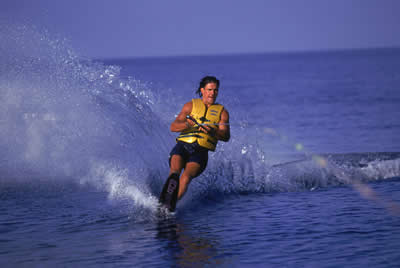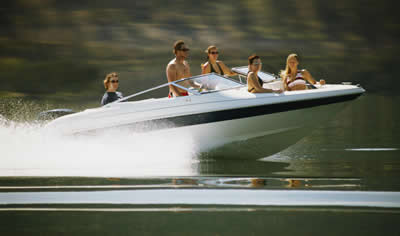
Do you know the nautical rules of the road? Check out our featured article for some helpful tips on being safe on the water this summer. |
|
Contact us
530-673-8862
www.roseinsuranceca.com |
|

Find us on Facebook! |
|
|
Dear Rose Insurance Agency Customer,
Summer is in our midst! BBQ's, camping, vacations, motorcycle road trips, and boating! But before you make a splash, put safety first. As your insurance agents, we want to keep you prepared and safe this summer. We hope you find the following articles informative, and please don't hesitate to contact our office should you have any questions.
We appreciate your business, and hope you have an exciting summer.
Rose Insurance Agency, Inc. |
|
|
Nautical Rules of the Road
An ancient Greek is credited with the saying, "A collision at sea can ruin your whole day." Realistically speaking, a serious boating accident can be far worse. Each year boats are damaged or totally destroyed; people are injured, and some are killed.
Do you know about the rules that govern how vessels are required to maneuver, and communicate to prevent collisions? Unlike the licensing requirements to drive a car, you can purchase a boat and legally operate it almost anywhere on the waterways of the United States without a license or any previous boating knowledge.
The rules of the road for boats (known as navigation rules) exist for one reason- to prevent collisions. These rules are worth knowing. Would you send your child out in the family Chevy without someone knowing the rules of the road? Most people wouldn't consider driving without knowing who goes first at a 4-way stop sign or what the red, green, and yellow lights at signals meant. So why don't boat owners feel compelled to know the appropriate maritime rules?
If you are involved in a boating accident, the Navigation Rules will be used to determine who is at fault, or in most cases, what proportion of the fault is attributable to each vessel involved, whether or not the involved parties have any knowledge of these rules. A basic understanding of these rules can prevent collisions in the first place, saving the hassle and inconvenience of filing a claim to repair or replace your boat.
What is the level of knowledge out there about the nautical rules of the road? It ranges from Coast Guard licensed professional mariners who passed a comprehensive test to earn their "captain's license" to some boaters who don't know rules exist! In between, some boaters know just enough to be dangerous. No matter how well you know the rules to prevent collisions, you can always learn more.
Here are some basic navigational rules for operating vessels on the water:
1. The Navigation Rules govern all vessels, recreational as well as commercial.
2. The law requires a copy of the Inland Rules to be carried onboard every vessel of 12 meters(39.5") or greater when on inland waters.
3. There is a "pecking order" that defines which vessels "give way" (keep clear) and which "stand on" (hold their course of speed so a give-way vessel has a chance to keep clear)
For more information boating safety, visit http://www.uscgboating.org/
And for a boat quote, visit www.roseinsuranceca.com, or give us a call 530-673-8862 |
|
Boating Safety Tips
Before you make a spash, put safety first! Freedom, exhileration, the wind and waves.....Operating a boat can be fun and exciting, but it has risks. Most can be avoided by remembering simple safety tips before you leave the dock.
- Be weather wise- Listen to local and national weather reports before leaving the shore.
- Be prepared- Bring a flashlight, extra batteries, clothing, blankets, maps, flares, and a first aid kit. Remember sunscreen and sunglasses. As the sun's rays reflect off the water, glare and sunburn is highly possible.
- Gear Up- Everytime you go boating, be sure to carry basic safety equipment. Always wear a U.S. Coast Guard approved Personal Flotation Device (PFD), and have one for each person on board. A PFD must fit well and be in good condition to meet Coast Guard requirements. Also make sure you have a throwable personal flotation device in case someone falls overboard. Other important safety gear includes: a tow line, jumper cables, extra paddle or oar, fire extinguisher, something to use for bailing in the event that your vessel takes on water and distress signaling devices such as a whistle, air horn, orange smoke device and flare.
- Have a float plan- Provide a responsible person with details about where you are going, when you are leaving and when you plan to return.
- Fuel Safely- Fill portable tanks on the dock. Never smoke when fueling your boat. Close all hatches and be sure to turn off engines and any electrical appliances or equipment. After fueling, open all hatches to ventilate the vessel, then run the blower for at least four minutes. Check the bilges for vapors before starting your engine. If you smell fumes, wait until all traces are eliminated before starting your engine.
- Check it out- Check that your boat is running properly before coasting off. Your vessel should be in top working condition and free of fire hazards, tripping hazards and any other conditions that could result in injury.
- Load Carefully- When loading your boat, keep the load low and evenly distributed. When changing seats in a small boat, stay low and near the center. Be sure you know your boat's capacity; this should be labeled on the Capacity Plate on your boat. Don't overload or use a motor that is too big for your vessel.
Call our office for a free boat quote 530-673-8862, or visit our website www.roseinsuranceca.com
|

Early Season Motorcycle Care
It's that time of year again. The weather is getting warmer and you just can't wait to get out on your bike. But, it's been in storage all winter. What do you need to do to get it ready again? Here are some quick tips on getting your motorcycle out of winter storage and ready to ride.
- Clean the entire motorcycle with a mild detergent and water solution. Remove any metal protecting agents.
- Remove any plastic or rubber covers that you put on the air box intakes, exhaust pipes and air box drain.
- Make sure the battery is in good condition and fully charged. Be sure the vent hose is connected and routed properly.
- Drain and replace the oil that was in the engine while the bike was in storage. Replace the oil filter if applicable.
- Lubricate all areas as instructed in the operator's email.
- Change the spark plugs.
- Check the engine coolant and be sure it is at the proper level. Replace if necessary.
- If the bike is chain driven, inspect the chain and drive sprockets for excessive wear or loosening. Adjust if necessary.
- If your bike is shaft driven, inspect the oil level in the final drive unit. Make sure it is filled to the proper level.
- Inspect the tires. Tires should not have cracks, bulges or excessive wear. Also, tires should be inflated to the proper manufacturer's specifications.
- Inspect the brake pads and shoes. If they show excessive wear, they should be replaced.
- If your bike is equipped with hydraulic brakes, check the fluid level to ensure it is at the proper level. Most manufacturers recommend changing this fluid at least once a season to eliminate moisture in the master break cylinders. Moisture can cause corrosion and eventual break failure. Follow the manufacturer's recommendation on fluid type.
- Inspect coolant hoses and break lines for signs of deterioration or cracking. Replace if necessary.
- Inspect all cables for ease of operation. Sticking, binding, or broken cables should be replaced.
- Inspect all electrical accessories for proper operation. Check the headlight, turn signals, reverse lights, horn and kill switch. Correct any problems.
- Before starting the engine, slowly crank it over with the kick starter and listen for any abnormal noises. Also check for smooth movement.
- Do a complete inspection of the bike. Then start it and let it run for a few minutes in a well ventilated area. If there are any abnormal noises or anything seems unusual, have your bike checked out by a factory-trained mechanic.
- Use a fuel system cleaner additive for a couple tanks.
- Take the motorcycle safety class you signed up for.
- Get ready to enjoy another riding season!
Follow this list, and in one afternoon, you should be able to get your bike in great working order and avoid any immediate problems. However, you never know when something could go wrong. In addition you should make sure that you have adequate insurance coverage with towing and roadside assistance. There is peace of mind in knowing that if something goes wrong, you have a customized insurance policy to cover it.
Call us to obtain a motorcycle quote 530-673-8862, or visit our website www.roseinsuranceca.com
|
|
|
|
|