|
Tech Corner: Translating research into revolutionary technologies
| | |
Great Lakes Bioenergy Research Center Celebrates First Issued Patent
The Great Lakes Bioenergy Research Center (GLBRC) is marking the arrival of summer with a milestone: the first patent issued on GLBRC technology. The patent protects a new heat-tolerant enzyme capable of breaking down the sturdy plant cell walls of cellulosic biomass into biofuel. The pioneering piece of intellectual property is based on research conducted at the GLBRC's Middleton, Wisconsin-based industry partner, C5-6 Technologies.
Cellulosic biomass, the leaves, stems and other non-edible parts of plants like grasses and corn, is valued for its potential to help replace fossil fuels as a renewable energy source. The patented discovery makes it possible to transfer from laboratory to industry a technology that converts biomass to ethanol and other advanced biofuels.  | | The climate at the Kamchatka Peninsula's is influenced by volcanic activity, and geysers and hot springs create a unique habitat for thermo-tolerant bacteria. Photo by MOBmole via Flickr. Licensed under Creative Commons CC BY-NC-SA 2.0. |
"We've reached a milepost-this patent signifies the maturation of the GLBRC," says David Pluymers, the center's intellectual property manager. Phil Brumm, C5-6's Chief Scientific Officer, agrees that this achievement symbolizes the development of a successful collaboration among the GLBRC, C5-6 and its partner company, Lucigen, since the center was established by a Department of Energy grant in 2007. "It is a sign of how well the collaboration between the university and industry is progressing," Brumm says. Produced by a species of bacteria called Dictyoglomus turgidum, the newly patented enzyme is found in the hot springs of Russia's remote Kamchatka Peninsula. Heat-tolerant enzymes are prime candidates for use in biofuel labs because researchers use scalding temperatures to help weaken the sturdy cellulose polymers that hold plant cell walls together.
|
|
Biofuels Beat: An inside look at the latest GLBRC science
| | |
| New Processing Approach Accelerates Ethanol Production
Developing technologies to produce biofuels is a little like bargain hunting: the goal is to come up with a valuable product for a competitive price. To prepare these technologies for commercial use, researchers at the Great Lakes Bioenergy Research Center (GLBRC) are challenged with figuring out how to generate large quantities of biofuel both efficiently and affordably.
Fortunately, GLBRC researchers at Michigan State University's Biomass Conversion Research Laboratory (BCRL) have found a way to turn corn stover, a common cellulosic feedstock, into ethanol much more quickly without sacrificing quantity or quality.
The lab's new technique, described in a recent issue of Energy and Environmental Science, brings the total processing time down from nearly two weeks to just two days, and potentially increases ethanol yields.
"The BCRL process is simple and industrially relevant, with a lot of potential to help commercialize cellulosic biofuel production," says Mingjie Jin, an MSU chemical engineering doctoral student and GLBRC researcher. Jin is developing the process with Bruce Dale, who leads the BCRL and the center's deconstruction research team.
Read the full story at GLBRC.org. |
|
Ask an Expert: Answers to your bioenergy questions
| | |
Ask an Expert: What is an enzyme?
Great Lakes Bioenergy Research Center research assistant Katie Helmich explains what an enzyme is. 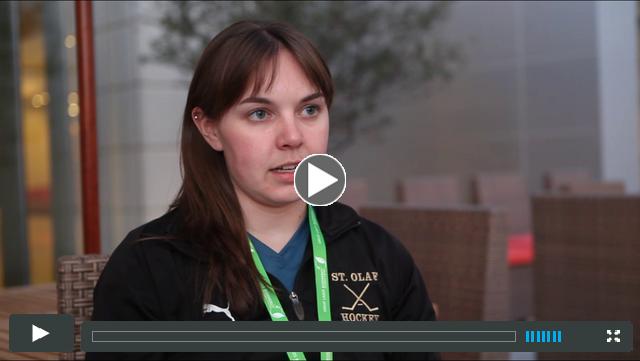 | Ask an Expert: What is an enzyme?
|
|
|
|
|
Upcoming Events
 Inaugural Energy Summit Inaugural Energy Summit
This year the Wisconsin Bioenergy Initiative and UW-Madison Energy Institute are teaming up to present the inaugural Energy Summit. The Summit will address the full spectrum of energy challenges and opportunities facing our nation, and highlight UW-Madison innovation in energy research, education and outreach.
_________________________

WEI Building Update
Opening in 2013, the Wisconsin Energy Institute building will solidify a UW-Madison energy research corridor. The state-of-the-art WEI facility will serve as a center of excellence for clean energy research to support our leadership in energy systems research and education. It will also bring together coordinated energy activities and house cutting-edge research in advanced fuels, renewable energy and energy storage systems. View the building brochure.
Stay on top of WEI building news by signing up for the e-newsletter! _________________________
Find more upcoming events on our website.
|
|





