|
|
|
 Project Food, Land and People Project Food, Land and People FLP Today
A News Digest for the State Coalitions, Educators, Patrons, and Friends of FLP
|
Volume 1, Number 1
|
March 2010
|
Project Food, Land and People (FLP) seeks to develop citizens literate about the relationships between agriculture, the environment, and human populations | |
|
|
|
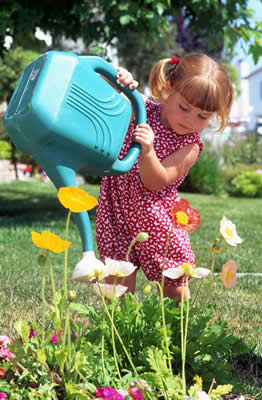
"I know of nothing so
pleasant to the mind, as the discovery of anything which is at once
new and valuable -- nothing which so lightens and sweetens toil, as
the hopeful pursuit of such discovery. And how vast, and how varied
a field is agriculture, for such discovery."
|
|
 From A Book To National Legislation: A Movement Grows  Children no longer get up and get out to discover the great outdoors. They surf, they drag, they point, and they click, but they remain indoors. Surrounded by walls, they stare at media screens, with no more activity than it takes to move a mouse, click a remote or press a cell phone. (For the full feature click Outdoors ) For a related news article on the proposed Elementary and Secondary Act providing precedent-setting funding for environmental literacy click Act For a list of Web sites about the No Child Left Inside movement, subsequent legislation, and work by various states, click Sites |
|
 FLP National Conference:
Addressing Outreach, Delivery
The 2010 National Conference for Project Food, Land and People will be held April 29 - May 1 in Durham, North Carolina. FLP leaders plan for this conference to be one of the most in-depth for looking at the organization, its materials, its delivery system, and the stability and growth of its state coalitions. For conference highlights, registration, and site, please see FLP Conference. |

America's Heartland and FLP
Partner For Agriculture Literacy
FLP will teach students about the agricultural practices and people they see on America's Heartland; America's Heartland will show the students how their FLP lessons are used and applied by people. To learn about this win-win partnership click Heartland |

FLP Lessons Provide Learning Gains
University researchers find significant learning gains for elementary students using FLP lessons. For the news account click FLP Lessons. For an abbreviated version of the study, click The Study. To read testimonial comments from the researcher click Students In Action. |
|
FLP Today:
Chair Betty Wolanyk Sees A Renewal of Mission and Materials
Steering Committee Chairperson Betty Wolaynk discusses the renewal of purpose, products and people she sees going on within FLP as the organization heads into the next decade and its own adulthood. Her thoughts and words can be found at FLP Today .
| |
|
YOUR SUPPORT AND CONTRIBUTIONS SUSTAIN OUR WORK FLP owes its existence and successes to its numerous patrons and friends who have helped sustain the organization and its educational efforts throughout its 20-year history. If you cannot make the 2010 National Conference, but you want to be a part of FLP and its efforts to enhance agricultural literacy for the students of America, please consider making a finanical contribution. FLP is embarking on updating and expanding its Resources for Learning collection at this time, so contributions to support that endeavor will make the difference. Your donation will be appreciated and is tax deductible. Your contribution can be sent to: Food, Land and People, 65 Poinsettia Road SE, Scio, Ohio, 43988. Make checks payable to FLP. For more detail, write John Davis, FLP CFO, at johndavis41@hotmail.com or JD. We thank you from the wheat fields of Kansas and the grape vineyards of California to the citrus groves of Florida and the apple orchards of New York and all parts in between. |
 Project Food, Land and People (FLP), a 501 (C)3 non-profit organization, began in 1988. FLP is committed to helping people of all ages better understand the interrelationships among agriculture, the environment, and people of the world. Food, Land & People's science- and social sciences-based curriculum, Resources for Learning, currently serves Pre-K to 12th grade students throughout the United States. The curriculum consists of 55 hands-on lessons, developed and tested by more than 1,500 educators. Operating largely by volunteer commitment and activities, FLP's financial headquarters is in Scio, Ohio. The lessons have been endoresed by internationally acclaimed actor Morgan Freeman; they have been praised by university professors; and they make a diference with students. Resources for Learning (Second Edition) includes almost 1,000 pages. It is made available on CD. A Spanish edition also has been published. Project Food, Land and People (FLP), a 501 (C)3 non-profit organization, began in 1988. FLP is committed to helping people of all ages better understand the interrelationships among agriculture, the environment, and people of the world. Food, Land & People's science- and social sciences-based curriculum, Resources for Learning, currently serves Pre-K to 12th grade students throughout the United States. The curriculum consists of 55 hands-on lessons, developed and tested by more than 1,500 educators. Operating largely by volunteer commitment and activities, FLP's financial headquarters is in Scio, Ohio. The lessons have been endoresed by internationally acclaimed actor Morgan Freeman; they have been praised by university professors; and they make a diference with students. Resources for Learning (Second Edition) includes almost 1,000 pages. It is made available on CD. A Spanish edition also has been published. |
|
The FLP Steering Committee:
Betty Wolanyk, Chairperson (New York)
Vernon Caldwell, Vice Chairperson (Minnesota)
Jill Vigesaa, Secretary (North Dakota)
Elmer Eckart, Treasurer (California)
Sandee Brown, Materials Development Chairperson (Connecticut)
Sue Qunicy, Marketing and Implementation Chairperson (Connecticutt)
Susan M. Anderson (Minnesota)
Gail Benson (North Dakota)
Katherine Griffin (Georgia)
Terry Hughes (New York)
Jay Jackman (Kentucky)
Daland R. Juberg (Indiana)
Kitchka Petrova (Florida)
Commitee Staff:
John Davis, Chief Financial Officer, (Ohio)
Doty Wenzel, General Manager, (Florida)
Rod Wenzel, General Manager, (Florida)
Organization Contacts: Betty Wolanyk, Chairperson of the FLP Steering Committee, can be contacted at 716-930-0125; John Davis, the Chief Financial Officer, can be contacted at 330-627-5712; and Rod Wenzel, Newsletter Coordinator, can be contacted at 850-219-1175.
About FLP Today
This is the pilot edition of FLP Today. Please pardon any technical errors and construction issues. Your comments, suggestions or news items can be sent to FLP.News@gmail.com. .
------------------------------------------------------------------------------------- |
|
From A Book To National Legislation:
An Environmental Literacy Movement Grows
 Children no longer get up and get out to discover the great outdoors. They surf, they drag, they point, and they click, but they remain indoors. Surrounded by walls, they stare at media screens, with no more activity than it takes to move a mouse, click a remote or press a cell phone. Children no longer get up and get out to discover the great outdoors. They surf, they drag, they point, and they click, but they remain indoors. Surrounded by walls, they stare at media screens, with no more activity than it takes to move a mouse, click a remote or press a cell phone.
America's children are missing out by being in where the sun doesn't shine, the grass doesn't grow, and the marvels of nature remain unknown. America's child of the 21st century is born to watch TV, view movies, play video games, search the Internet, talk on the cell, and text away. The tweets children know are not from the songbird. The blackberry they know is not edible. They do not have either as much open space available to them or the same sense of public safety that past generations enjoyed. Security risks and parental fears hinder America's children from playing in their neighborhood, discovering the outdoors and learning the world around them, as did children of a few years ago. The practical warning of "don't talk to strangers," has become an unintended consequence of "don't explore outdoors."
A Screening Habit, A Nature-Deficit Disorder
Today, children ages eight to 18 years old spend more than 53 hours a week using entertainment media during a typical day. That is an average of 7 hours and 38 minutes a day. America's children are edging closer to spending about half of their waking hours seeing most of their world through media screens. Also stunning is that the amount of time children spend with media increased by an hour and 17 minutes a day during the past five years -- an average annual increase of more than 15 minutes or about 4 percent. In its media use study released in January 2010, the Kaiser Family Foundation also found that due to media multitasking, the total media content consumed by youths averages 10 hours and 45 minutes a day.
The changes in school, family life, and entertainment have culminated in children plugged into technology, but disconnected from the outdoors. A "nature deficit disorder" has resulted in most children. Originating in the book Last Child in the Woods by author Richard Louv, the phrase "nature-deficit disorder," explains children's increased alienation from nature and their growing illiteracy about it. A veteran journalist, Louv articulated and spread to the mainstream what many educators have known for years. That is, children are not involved in nature and science. Many children have very little contact with their environment creating disrespect for their immediate surroundings; apathy for issues, a lack of problem solving and inquiry skills, and decreased self-esteem and group cooperation. Louv links children's disconnect from their natural world to such disturbing childhood trends as a diminished use of the senses, and rises in attention disorders, physical illnesses, depression, and obesity.
Proposed Funding for Environmental Literacy
As a significant step toward addressing the concerns articulated by Louv, proposed funding increases in President Barack Obama's proposed budget released February 4 may set precedent for environmental literacy. Under a program component titled "A Well-Rounded Education," President Obama proposes $265 million (a 17 percent increase) to expand support for the subjects critical to a complete curriculum, including environmental literacy, history, the arts, foreign languages, and economic and financial literacy. The proposed increase for "A Well-Rounded Education" is part of a proposed $3 billion increase to $28 billion total that the President seeks in the Elementary and Secondary Education Act. The budget inclusion by Obama supports the original No Child Left Inside legislative bills of Senator Jack Reed of Rhode Island and Congressman John Sarbanes of Maryland that proposed additional education funding for environmental studies, teaching and literacy.
Outdoors Has Been For The Birds
The necessity for environmental learning to ensure that children connect to the great outdoors may not be more evident. In addition to the 53 hours a week spent with media, various studies and observation further identify the trends such as: > Dramatic decreases in the past decade in outdoor activities including swimming, fishing, camping, and even bike riding.
> Visitors to state parks have declined about 25 percent in the past 20 years, although the U.S. population has increased by about that same percentage. When visiting state parks, more people report either not leaving their vehicles or not exploring anything off a designated trail;
> Developers design communities that destroy the natural habitat, minimize open spaces, maximize the use of asphalt and cement, and discourage contact with nature, having neighborhood covenants that often prohibit building forts and tree houses while permitting wall upon wall of privacy fences;
> When children play outside, much of the time is spent with regimented sports, but no trees grow on soccer or football fields, no rivers run through tennis or basketball courts, and no birds, bees or butterflies pollinate the baseball bases; and
> In a British study, children could more easily identify Pokemon characters than objects such an otter, a beetle or an oak tree.
Likewise, schools have not been of much help in the era of standardized testing that obligate many teachers to spend significant time on the subjects to be tested, taking time away that could be used for field trips, outdoor discovery, and environmental studies. Where schools once tried to provide investigations and field studies, they now face restrictive curricula, time and finances.
"Passion is lifted from the Earth by the muddy hands of the young; it travels along grass-stained sleeves to the heart," Louv states in his book. "At a deeper level, when we challenge schools to incorporate place-based learning in the natural world, we will help students realize that school isn't supposed to be a polite form of incarceration, but a portal to the wider world."
The Movement To Take It Outdoors for The Good of The Child
 Since the 2005 release of Louv's highly praised book, American and international movements have occurred creating a groundswell of renewed green awareness. Connections to nature and science have grown. Representative of this groundswell is the establishment and work of the No Child Left Inside Coalition comprised of about 1,500 members including environmental, educational, and public health organizations, businesses, civic organizations and other public enterprises, all supporting environmental literacy and dedicated to ensuring a comprehensive education. Since the 2005 release of Louv's highly praised book, American and international movements have occurred creating a groundswell of renewed green awareness. Connections to nature and science have grown. Representative of this groundswell is the establishment and work of the No Child Left Inside Coalition comprised of about 1,500 members including environmental, educational, and public health organizations, businesses, civic organizations and other public enterprises, all supporting environmental literacy and dedicated to ensuring a comprehensive education.
"Advancing the environmental literacy of our students is key to addressing today's increasingly complex environmental and related economic, social, natural resource, and energy issues," said Don Baugh, director of the No Child Left Inside Coalition. "It will not only better prepare students for collect and the 21st century workforce, but help to combat childhood obesity and related health problems by getting kids outside to learn about their natural world."
Other actions include programs created at the organizational, local and state levels to encourage discovery of the natural world and many states developing, revising or updating environmental literacy plans. Initiatives in several states have created opportunities to have children and families connect with nature through state parks. Connecticut created an initiative that birthed the trademark name of No Child Left Inside - patterned after the national education legislation and funding initiative.The special initiative of Connecticut Governor M. Jodi Rell as coordinated by the Connecticut Department of Environmental Protection encourages Connecticut families and visitors to enjoy all the recreational resources and outdoor activities available in Connecticut's state parks, forests and waterways. Subsequently,cooperative programs in various states have been initiated by state departments, educational centers, environmental programs, science museums, agricultural entities, and focus groups - all devoted to linking students to nature. Most of these programs use the subtitle of Louv's groundbreaking book, "Saving Our Children From Nature-Deficit Disorder" as either a mission or main objective.
Connecting With Environmental Literacy Planning
The environmental literacy plans from each state will most likely be a critical component and a required element of any federal funding. Without an approved plan to show how the professional development of educators will support outdoor investigations and activities that link classroom to environment, states likely will not qualify for grant monies. This means the environmental and education communities in states must work together. To apply for funding under the proposed Congressional legislation, each state's plan also will have to show how environmental education will be integrated across core-subject areas and how training and preparing teachers in environmental studies will improve education of sciences and connect students to their environment.
Many states have started work on their environmental literacy plans. Maryland is the first to have adopted a plan and Rhode Island has completed its review draft. Those two states also are the home states of the Senate and House sponsors of the federal legislation. Other states are bringing together coalitions of people to start the process. Consequently, precedent-setting funding for environmental education provides a significant opportunity for environmental groups and agricultural education to support each other.
From Louv's best seller to Obama's funding proposal, renewed opportunities flourish for the mission and work of Project Food, Land and People (FLP). The organization's integrated approach toward teaching about agriculture, the environment, and people of the world, and its focus on teaching kids how to think, not what to think can be critical components in either environmental or agricultural literacy.
Credits: Developed and written by Rod Wenzel, FLP consultant and newsletter coordinator with contributing research from Sue Quincy, of the Kellogg Environmental Center, Connecticut Department of Environmental Protection and the FLP Marketing Committee Chairperson.
--------------------------------------------------------------- |
Back To Top
President's Proposed 2010-11 Budget Includes Precedent Funding for Environmental Literacy
A $265 million component in President Barack Obama's recently released Elementary and Secondary Education Act provides precedent-setting funding for environmental education, including support for the No Child Left Inside (NCLI) Act. The President's support marks the first time that a federal education budget includes funding for environmental literacy.
If Congress supports the proposal, legislative analysts point out that each state's funding most likely will be tied to a required environmental literacy plan. Initial funding likely would occur during 2011. Consequently, critical linkage needs to exist between Project Food, Land and People and the respective state partnerships that will develop the subsequently required environmental literacy plans. 
"We know that the environmental literacy movement has broad support among environmental, educational, public health, outdoor recreation, conservation, and even business groups, but we need to ensure that agriculture is also on that list," FLP Steering Committee Chairperson Betty Wolanyk said. "Between a healthy environment and good nutrition lies the American farm. With the legislation's grants program providing funding for education curricula and the development and dissemination of educational innovations, we need FLP and our Resources for Learning to be visible."
The Literacy Part of The Proposed Budget
The budgetary funding supporting the previously proposed NCLI Act likely will be an important vehicle to further the FLP mission.
Here's the breakdown:
> As an overhaul to the Bush Administration's No Child Left Behind Act, the President's proposed Elementary and Secondary Education Act seeks $28 billion, including a $3 billion increase.
> The package includes $1.0 billion for a new program titled Effective Teach and Learning for a Complete Education.
> The new program includes three components, $450 million for a Literacy component, $300 million for a Science, Technology, Engineering and Mathematics (STEM) component, and the $265 million for a Well-Rounded Education component.
> The Well-Rounded Education component provides a $38.9 million increase (17 percent) to not only consolidate seven current authorities, but also to expand support for the subjects "important to a complete curriculum," including environmental literacy, economic and financial literacy, history, the arts, and foreign languages.
The new funding for teaching and studies in environmental education under the reauthorized education may lead to Congress incorporating the proposals under the previously introduced NCLI Act. That proposed bill calls for a new grant program to increase the environmental literacy of American students by allotting $100 million a year to the states annually for five years. Grants will fund environmental and outdoor educational activities for students, training in environmental education for teachers, and the development and dissemination of model programs and innovations such as FLP's Resources for Learning. Although addressing environmental studies, this legislation also seeks to touch on healthy living programs encouraging outdoor recreation and sound nutrition.
The Mandates of Proposed Literacy Legislation
To receive a portion of the grant funding, a state must have an approved K-12 plan that will ensure that high school graduates are environmentally literate. The plan must include relevant academic content standards and content areas and describe how the state's educational agency will measure environmental literacy. States with plans approved by the Secretary of Education will become eligible for funding to implement plans that foster environmental understanding, analysis and solutions to major environmental challenges and threats. States may use an existing state environmental plan or a modified one, if the plan meets the bill's requirements.
Interest and discussions about the NCLI Act has been prevalent among environmental educators since the legislation first passed the House of Representatives in September 2008 as bill HR 3036, however, that bill was not taken up in the Senate and was left without passage when the 110th Congress convened. At that time, the legislation won House approval on a bipartisan vote of 293 to 109. Congressional tracking shows 99 percent of House Democrats and 38 percent of Republicans favored the bill. At the end of each session of Congress, which lasts two years, all proposed bills and resolutions that have not passed are cleared from the books. Members then must reintroduce bills that did not come up for debate under a new number in the next session
Congressional Leaders Taking It Outside
Lead sponsors Senator Jack Reed of Rhode Island and Congressman John Sarbanes of Maryland re-introduced the NCLI Act of 2009 during Earth Day ceremonies in Washington, D.C. on April 22, 2009. Known as H.R. 2054 and S. 866, the bills are most likely to become a part of a greater reauthorization bill such as the Elementary and Secondary Education Act or No Child Left Behind. The current NCLI bills have 82 co-sponsors in the House and 18 in the Senate, but legislative assistants with both Reed's and Sarbanes' Washington offices told FLP that the NCLI Act would pass as a part of another more far-reaching bill rather than passing alone or as a separate and singular piece of legislation.
"This budget by the President takes an important step toward boasting environmental education in the classroom and giving more children the opportunity to get out and learn about the natural world around them," said Senator Reed. "Environmental education can help raise student achievement in other core subjects like math and science. Teaching children about the world around them should be an important part of the curriculum in our schools. This is a smart investment in our children's future and the future of our planet."
In support of environmental literacy, Congressman Sarbanes stated, "Robust environmental education is a down payment to grow the next generation of scientists, promote environmental stewardship, and encourage Americans to live healthier lifestyles. Research shows that hands-on environmental education has a measurably positive impact not only on student achievement in science, but also in reading, math and social studies."
The No Child Left Inside Coalition
Environmental educators and experts believe the new program can help alleviate some of the unintended consequences caused by the No Child Left Behind Act. That law's strong focus on reading and math and testing for student gains led many teachers to reduce the time spent on environmental subjects. Field trips and outdoor explorations have been curtailed because school leaders are reluctant to take time away from subjects that are tested. The No Child Left Inside Coalition, a fast-growing advocacy organization that has about 1,500 member organizations, representing more than 50 million people, has promoted the legislation's objectives.
"On behalf of our entire 1,500 member Coalition, I commend the President and Secretary of Education Arne Duncan for recognizing the critical role that environmental education plays in preparing our students for the green economy," said Don Baugh, director of the NCLI Coalition.
Environmental Literacy At The State Level
Because the original NCLI legislation set a one-year deadline for submittal of a state's literacy plan, some states started developing their plans when the legislation was anticipated prior to it passing the House in 2008. Sue Quincy, FLP state coordinator for Connecticut, has been following the development of plans in her area and reports that Maryland is the first to have completed a draft, with Rhode Island very close as well. Of note, those are the two home states of bill sponsors Reed and Sarbannes.
"Other states are bringing together coalitions of people to start the process," Quincy said. "This is the time for agriculture to join in and see how environmental groups and agriculture education can support each other. I know there are differences of policy and viewpoint, but there are many areas of agreement such as clean air, water, land and resource protection, open space, sustainable practices, and science-based careers."
Overviewing Environmental Literacy Plans
A state's literacy plan will be submitted by its state educational agency in consultation with its natural resource and environmental agencies and with public input. A state educational agency may submit an existing state plan that has been developed by or in cooperation with state environmental organizations provided that the plan meets specified requirements. H.R. 2054, the proposed No Child Left Inside Act of 2009 provides that a state environmental literacy plan shall meet the following objectives:
(1) Prepare students to understand, analyze, and address the major environmental challenges facing the students' state and the United States.
(2) Provide field experiences as part of the regular school curriculum and create programs that contribute to healthy lifestyles through outdoor recreation and sound nutrition.
(3) Create opportunities for enhanced and on-going professional development for teachers that improves the teachers':
(A) environmental subject matter knowledge; and
(B) pedagogical skills in teaching about environmental issues, including the use of: (i) interdisciplinary, field-based, and research-based learning; and (ii) innovative technology in the classroom.
Research and writing by Rod Wenzel
-----------------------------------------------------
|

Back To Top
Suggested Web Sites
No Child Left Inside and Related Outdoor Topics
Provided below is a list of Web sites about the No Child Left Inside movement, related legislation, and various actions some states have taken to emphasize the neceesity for children to be a part of nature.
Colorado Kids' Outdoor Bill of Rights Colorado
Provides an example of Colorado devoting attention to getting kids outdoors more with the release of the state's Outdoor Bill of Rights, a list of 10 activities Colorado kids identified that everyone in the state should have an opportunity to experience before they grow up. Photo Credit: Crops by Kids
Connecticut Department of Environmental Protection Connecticut
Gives a visual description and provides details about Connecticut's trademark Leave No Child Inside program that connects residents and visitors to the state's outdoors.
Education.com: Bring Learning To Life Nature-Deficit Disorder
A multi-level overview and examination of nature-deficit disorder. The details of this site have not been reviewed, but it provides numerous articles, papers, opinions, and question-and-answer options from various doctors of medicine, philosophy and education about nature-deficit disorder.
Govtrack.us: A Civic Project To Track Congress Congressional Voting
Lists all of the members of the House of Representatives and shows how they voted on the No Child Left Inside legislation in 2008 during the last session of Congress. The bill passed the House, but was not considered by the full Senate. The current legislation (H.R. 2054 and S. 866) also can be tracked at this site.
Kaiser Family Foundation, Daily Media Usage Among Children Media Study
Library of Congress, The (Thomas) Bill Text
For a full-text copy of the No Child Left Inside Act as introduced to the 111th Congress. For the search fields, the bill number is H.R. 2054. The House sponsor is Sarbanes (John). The Senate sponsor is Reed (Jack).
Louv, Richard, author, Last Child
Lost Child In The Woods: Saving Our Children From Nature-Deficit Disorder
The best selling author Richard Louv and his work are detailed here. Provides professional, biographical and environmental-related information about Louv. Includes links to his various books and articles.
Maryland Department of Natural Resources Maryland
An October 2009 news release is provided featuring Maryland Governor Martin O'Malley announcing Maryland's Children in Nature Action Plan for 2010. A link also is provided to this first-of-its kind action plan. Also provides link to the recommendations from the state's natural resources and education partnership about environmental education in Maryland and also provides a copy of the Maryland Children's Outdoor Bill of Rights.
National Association for Environmental Education (NAEE) NAEE
Includes a component link about developing an environmental literacy plan and provides a 12-page overview booklet; provides a list of No Child Left Inside coalition members; and offers advocacy links.
National Literacy Plans Network Literacy
Provided by NAEE, this site serves as a communications forum and provides updated information for state members who are working to develop Environmental Literacy Plans.
No Child Left Inside Coalition, The Coalition
Gives a by-state list of the coalition members. Provides topical links about narrowing curriculum, nature-deficit disorder, climate change, and childhood obesity. Provides an overview of the No Child Left Inside Act. Also provides a section on actions that members can consider.
Provides a February 1, 2010, news release from the U.S. Department of Education over viewing President Obama's proposed Elementary and Secondary Education Act (ESEA) News release is titled "President's Education Budget Signals Bold Changes for ESEA." Site also provides a letter about the proposal from Education Secretary Duncan.
-------------------------------------------------------------------------------------
|
|
FLP Announces Registration and Plans
for 2010 National Conference, April 29
The 2010 National Conference for Project Food, Land and People (FLP) will be held April 29-May 1 at the Sheraton Imperial Hotel and Convention Center in Durham, North Carolina. Presentations on environmental literacy, trends and conditions in agriculture education, and food safety highlight the conference. The conference also will feature state coalitions reports, strategic planning, and solution sessions on how to best market and deliver FLP materials and services.
"FLP turns 21 this year, so this conference provides a timely opportunity to renew our mission, to look at how to best update and expand FLP lessons, and to examine how we can best deliver our services and materials to students and their teachers," Betty Wolanyk, FLP Steering Committee chairperson, said. "We welcome our friends, patrons and fellow educators to come join us. We appreciate both their support and participation."
About Conference Registration
Conference registration is $200 for state coordinators and others and $250 for steering committee members. A registration form for all state coordinators, steering committee members, and others is provided for those who will attend. Conference registration deadline is Friday, April 16. For this conference, the Sheraton Imperial Hotel has provided a rate of $104 (plus tax) per night for either a single or double room. When calling for room reservations at 919-941-5050, participants should identify themselves as attending the Food, Land and People Conference. Room reservations should be made by Friday, April 9 to ensure conference rates. A registration form is provided below.
What Will Happen and When
Following an orientation, and business and committee sessions for the FLP Steering Committee on Thursday, April 29, conference registration begins at 5 p.m. A reception for coordinators of the state coalitions and other attendees will start at 6 p.m., with dinner following. A conference overview and state coalition reports will end the day's activities.
The first conference session on Friday morning will provide a series of presentations ranging from overviews about the No Child Left Inside movement and environmental literacy to partnerships and patrons. A speaker will highlight the day's luncheon.
A planning, evaluation, and brainstorming activity that conference planners refer to as "speed planning with a twist," will occur Friday afternoon. The activity being called "Pod-To-Pod: Planting Ideas To Grow FLP"is designed to maximize the synergy of the conference by providing multiple mini-sessions about multiple topics while ensuring that all participants meet-and-greet in small groups. The activity will explore issues and topics related to materials development, marketing and fundraising, implementation, and planning and evaluation. Facilitators will lead each mini-session and then provide a summary presentation of the multiple mini-sessions they hosted.
A "We're 21" celebration dinner will be held on Friday evening. The dinner will feature the successes of FLP and its state coalitions during the past two decades and in recent months.
Conference keynote presentations will highlight the Saturday morning activities.
"Trends and Conditions in Agriculture and Education," by FLP Chairperson Betty Wolanyk, a nationally recognized expert, and "How Toxic Is Your Food," by Steering Committee member Daland Juberg, Ph.D., and a toxicologist with Dow AgroSciences, will be the chief presentations. The morning session also will include a look at select state programs.
Following a luncheon, the conference will conclude with a session titled "FLP 2020: A Ten-Year Outlook." The conference participants will provide FLP leadership their suggestions, directions, priorities, and requests in a strategic planning session designed to look at one-year, five-year, and 10-year goals for FLP. Facilitator Rod Wenzel, who has been a previous FLP presenter for strategic planning, describes the session as "100 minutes to set the FLP course for the coming decade."
After the conference adjourns at 3 p.m. on Saturday, the steering committee will conduct a business meeting, committee meetings, and additional strategic planning. Those activities are scheduled Saturday afternoon and through Sunday.
Registration Form
Food, Land & People Annual Conference
Sheraton Imperial Hotel
4700 Emperor Boulevard
Durham, North Carolina 27703
April 29 - May 2, 2010
____ State Coordinator Early Registration (By April 16) $200
____ Steering Committee Member Early Registration (By April 16) $250
____ All Others (By April 16) $200
(After the April 16 deadline, add $50 registration.)
Name: __________________________________________________
Title/Organization: __________________________________________
Address: _________________________________________________
__________________________________________________
Phone: ________________________ FAX:____________________
Payment will be made by: ______ Check (To FLP) ______ Purchase Order
Signature____________________________________________
____ "X" here to indicate signature authorization
Send to: John H. Davis, Chief Financial Officer
Food, Land & People
65 Poinsettia Rd SE
Scio, OH 43988
Phone/Fax: 330-627-5712
Johndavis41@hotmail.com
Lodging: Sheraton Imperial Hotel and Convention Center
$104/plus tax, per night, single or double occupancy
Rates good through April 9. Call 919-941-5050
--------------------------------------------------------------------------
|
Back To Top
American Farm Bureau, Monsanto, KVIE and FLP
PARTNERING WITH AMERICA'S HEARTLAND
 The increasing sophistication of today's classrooms has led Project Food, Land & People (FLP) to join the America's Heartland venture. As a weekly, half-hour, magazine-format program, America's Heartland is produced by the public broadcasting station KVIE of Sacramento, California. The series is telling the story of American Agriculture from every state and eventually every sector. The increasing sophistication of today's classrooms has led Project Food, Land & People (FLP) to join the America's Heartland venture. As a weekly, half-hour, magazine-format program, America's Heartland is produced by the public broadcasting station KVIE of Sacramento, California. The series is telling the story of American Agriculture from every state and eventually every sector. Funded by Monsanto and the American Farm Bureau Federation, America's Heartland (AH) has engaged FLP to provide the educational component of their Web site. In return, selected AH segments will be available for classroom use with specific lessons from FLP's Resources for Learning.
Ten FLP lessons have been updated and instructions included to direct educators when and which AH segments are suitable to include with their classroom as they teach FLP lessons. As "Breads Around the World" is being taught, specific AH segments are now available to depict how wheat is grown, harvested, milled, shipped and even baked into bread. When "Loco for Cocoa" is taught, AH has segments that depict cacao growing on trees in Hawaii in commercial operations, roasting beans, the chocolate-making process as well as all other possible chocolate ingredients.
The available FLP lessons are:
> Breads Around the World
> Buzzy, Buzzy Bee
> Cows or Condos?
> From Fiber to Fashion
> From Sea to Shining Sea
> Loco for Cocoa
> Step by Step
> Tomatoes to Ketchup, Chickens to Omelettes
> Trading Favorites
> Tree-mendous! America's Heartland began in 2005 and opened its first episode with the line "America's heartland is more than a place; it's a state of mind." More than 100 episodes and 500 stories later, the series has covered each of the 50 states. Each weekly program includes multiple episodes about people, practices and processes. Coupling some of its best segments with FLP lessons should provide students with more appreciation of the episodes while the episodes help personalize and situate the FLP lessons. To view the AH Web site click AH
Photo Credit: The beautiful photo on this page is provided courtesy of Kim Randolph. The picutresque scene shows the spectrum of a Minnesota agricultural scene. For more of Ms. Randolph's superb photography click KR
-------------------------------------------------------------------------------------
|
FLP Lessons Provide Learning Gains
Students who are taught lessons from FLP's Resources for Learning show significant learning gains in agriculture literacy, and the FLP curriculum strongly aligns with most curriculum standards, according to studies by university researchers.
The composite test scores of students in third- and fifth-grades increased the equivalent of about a letter grade following the teaching of a sample of Resources for Learning lessons. For both grades, consistent gains were shown in the standard areas of understanding agriculture, history/geology/culture, science/environment, and business/economics. Following the student exposure to the FLP lessons, the mean composite scores among the third-grade students increased 11.4 points from 63.6 percent to 75.0 percent. The scores of fifth-grade students increased 9.6 points from 53.8 percent to 63.4 percent.
Researchers at Arkansas State University conducted the study about learning gains following their work to correlate the FLP lessons to the Arkansas state standards. As the team of researchers reported "that correlation revealed a systematic, thorough integration of academic subjects with agriculture." The researchers stated that documentation of this connection provides an important validation for teachers to consider when adopting and implementing an integrated curriculum.
The FLP lessons were particularly strong at addressing the state learning expectations or frameworks in Life Science. The lessons address an overall and middle-school grade levels than those in high school. For example, the FLP products met 75 percent of the learning expectations in the state's science framework, 70 percent in its math framework, and 69 percent in the social studies framework for grades K-4.
The alignment results in science, math and social studies also showed:
Overall Science Expectations Met: 75 percent for grades K-4; 66 percent for grades 5-8; and 37 percent for grades 9-12. Strongest Alignments: 100 percent in Life Science for grades K-4 and 83 percent in Earth Science for grades K-4.
Weakest Alignment: 24 percent for Earth Science in grades 9-12.
Overall Math Expectations Met: 70 percent for grades K-4; 41 percent for grades 5-8; and 19 percent for grades 9-12. Strongest Alignments: 100 percent in Measurement for grades K-4; 86 percent for Measurement for grades 5-8; and 82 percent in Data Analysis for grades L-4.
Weakest Alignment: 0 percent for Algebra for grades 9-12.
Overall Social Studies Expectations Met: 69 percent for grades K-4; 56 percent for grades 5-8; and 43 percent for grades 9-12. Strongest Alignments: 83 percent in History for grades K-4; 82 percent in Economics for grades 5-8; and 81 percent for Geography for grades 5-8.
Weakest Alignment: 18 percent in Government for grades 5-8.
Dr. David Powell coordinated the correlation of standards study and the learning gains study while conducting doctoral studies and dissertation research at Arkansas State University. Providing leadership on his research team were Dr. David M. Agnew, an associate professor of agricultural education in the College of Agriculture, and Dr. Mark McJunkin, an assistant professor of science education in the College of Education, both at Arkansas State University. Since completing his research, Powell has been hired by Southeast Missouri State University as an assistant professor of middle school and high school studies. Agnew and McJunkin are the state coordinators for the FLP curriculum in Arkansas.
"The FLP lessons provide students a solid exposure to agricultural topics that they do not get with academic textbooks," Powell said. "Not a lot of exposure to agriculture subjects is built into state standards, but FLP provides that effectively and simply through integrating agriculture with other subjects." Powell said that after examining the correlation between FLP lessons and the state learning expectations, he became eager to get to the classroom to discover how the lessons worked. "I am sold on FLP and the lessons," he said.
Results of the correlation of standards study were published in the Journal of Agricultural Education (Volume 47, Number 4). In that professional article, "Food, Land and People: Content Analysis and Correlation to Arkansas State Standards," authors Powell, Agnew and McJunkin write: "The 55 lesson units of the FLP program systematically and thoroughly integrate academic core subjects of science, math, language arts, physical education, and health into the broadly thematic study of agricultural literacy and awareness."
Although the correlation was not as strong between the FLP lessons and the language arts, fine arts, and physical education/health subjects areas some important trends emerged from the analysis. The authors noted "high levels of usage in oral and visual communications were shown at both the K-4 and 5-8 grade levels (78 and 67 percent respectively), most of that in basic classroom communication skills such as vocabulary usage, listening, discussion participation, and following directions." The analysis also showed a strong correlation for research/inquiry standards among grades K-4. Although the correlation between FLP lessons and the standards for the fine arts and physical education were not strong, the lessons met 39 percent of the Health expectations for grades K-4; 37 percent of the Music expectations for grades 5-8; and 27 percent of those in Art for grades 9-12.
In the subsequent learning gains study by Powell and Agnew, the third grade students showed the largest gain in the standard area of business/economics, increasing their scores 15.2 points from 62.3 to 77.5 percent. Other increases, by area, included a gain of 10.9 points in understanding agriculture, 10.2 points in science/environment, 8.9 points in history/geography/culture, and 8.6 points in food/nutrition/health. In their posttests, the third graders scored highest in the general category of understanding agriculture at 88.2 percent and lowest in history/geography/culture at 66.7 points.
The fifth grade students showed the largest gain in the standard area of history, geography/culture, with an impressive gain of 18.5 points. Other gains were 12.0 points in business/economics, 10.9 points in understanding agriculture, and 5.5 points in science/environment. In their posttests, the fifth grade students scored highest in understanding agriculture at 74 percent and lowest in food/nutrition/health at 41 percent. Because the latter area showed a decrease in the posttest, Powell said the validity of the post testing process could have been compromised by when the testing occurred. For an abbreviated version of the academic study click The Study
This article written by Rod Wenzel
-------------------------------------------------------------------------------------
|

"Movie starts in five minutes, right this way.." Arkansas students enjoy an FLP activity.
University Researcher Observes:
"I saw quantum changes in student motivation,
initiative and achievement"
Now an assistant professor of education at Southeast Missouri State University, Dr. David Powell provided FLP a testimonial about his application and study of lessons from FLP's Resources for Learning. He talks about laptops, learning, and FLP lessons being a winning combination. In his own words, Dr. David Powell:
"One of the most useful things about FLP is its flexibility. The lessons can be used as full-blown integrated units complete with all resources and extension activities. They can also be parceled out into smaller "drop-in" lessons as topical resources for a particular academic subject area competency. Bits and pieces also can be cherry-picked at will to integrate into other lessons or form the anchor point or foundational activity for an entirely new lesson to meet new needs as they arise.
"One of my cooperating schools was unique in that every student in the school (grades 4-6) had a top-of-the-line personal laptop computer that was issued to the student just like a book and even home in the student's book bag every night. Every classroom also had an interactive white board, overhead projector, and document camera. The school itself was sort of grubby, old and run-down, chronically under school improvement, and deeply mired in poverty, but blessed with a forward-thinking, enterprising principal and staff who sought out and obtained a large technology grant. All of this equipment was brand new the same semester that I began my study using FLP in this school. I loved visiting this school because every time I saw quantum changes in student motivation, initiative, and achievement.
"As I entered the fifth grade classroom to observe the lesson "Be Label Able," I saw the URLs for major cereal companies written on the whiteboard and commented that I had been looking forward to seeing how this school used their laptops in everyday class work. Apparently, the teacher had planned a traditional by-the-book FLP lesson, with the URLs as extension references, but she certainly rose to the occasion! She scrapped her traditional plan and just turned the kids loose. She directed them to choose a web site and explore. In their exploration they were to look for nutritional information and anything else that would help a consumer use cereals wisely.
"Let me tell you, those students went right to it. No two kids were on the same page at the same time, or even at the same site, but through the course of a 45-minute lesson, they managed to find and document every major element in the FLP lesson plans for "Be Label Able." At the end of the lesson, not only could they identify the nutritional elements, they had also discovered a raft of recipes, played educational games, and added clip files to their electronic learning portfolios. ...Plus a ton of other stuff. This was a textbook example of hands-on discovery learning at its best. Dewey would be proud."
 Arkansas students take a cut at a "Be Label Able" activity. |
| Back To Top
Implementation of FLP in Third and
Fifth Grade Academic Classes in Arkansas
A Study By David V. Powell, David M. Agnew
Dr. David Powell, right, overviews lessons from Resources For Learning with teachers
This study was conducted to assess changes in agricultural knowledge of third and fifth grade public school students in northeastern Arkansas. The students received instruction in five lessons through core academic classes (science, mathematics, social studies, and language arts) using FLP methods and materials as an agricultural context. A profile of agricultural knowledge was constructed for students by grade level and school to identify and compare student gains.
Gains in student knowledge about agriculture were assessed using the Food and Fiber Systems Literacy frameworks and grade-level tests (Leising, Igo, Pense, & Portillo, 1999). Comparisons were made for composite gains using the whole test and for each of the five individual FFSL "standards" or themes. The FFSL frameworks and tests were chosen as an independent national model for assessing impact of FLP methods and materials on student achievement. Both composite gains and gains by individual standard were compared to identify significant differences in learning by grade level. Composite gains and gains by individual standard were also compared by school to determine if there were significant effects on learning due to composite site factors.
Elementary grade levels were chosen in accordance with FLP field study predictions of greater impact on primary students (FLP, 2004). Use of third and fifth grade classes for implementation allowed for the selection of two grade levels with distinct, documented differences in developmental benchmarks (Arkansas Department of Education, n.d.). Prior alignment studies between grade-level expectations and FLP lessons provided an objective basis from which to compare any differences in achievement (Powell, 2004; Powell, Agnew, & McJunkin, 2006). Additional analysis of alignment between FLP content and FFSL frameworks supported the use of FFSL tests for assessment of student gains (Powell, Agnew, & McJunkin, 2008).
This study used a one-group pretest-posttest design as outlined by Gall, Borg, and Gall (2003), with 18 treatment subgroups of eight third grade and ten fifth grade classes in three schools in Arkansas (n3rd = 112 and n5th = 121). The primary participants were the third and fifth grade students. However, the cooperating classroom teachers acted as both research partners and study participants, due to their level of influence over the classroom environment. The primary researcher also served a similar dual role, as teacher trainer and follow-up supervisor, mentoring teachers as well as interacting with students during the implementation cycle.
Teachers were trained in the use of FLP materials and methods and guided in the choice of lesson units aligned with both the FFSL framework and state-mandated academic curriculum requirements. The teachers were directed to choose three lessons with benchmarks in two or more FFSL standards and two lessons with multiple benchmarks in a single standard. All five standards had to be featured as an area of strength in at least one lesson, and all teachers in a given school and grade level had to choose the same combination of lessons.
All cooperating classroom teachers completed identical training that included on-site classroom demonstration teaching of the first lesson by the primary researcher. All teachers from a given grade level and school worked from a common pool of five FLP lesson units, chosen by consensus during training. The primary researcher provided a complete materials kit for each teacher compiled specifically for the five chosen lessons and periodic field observations were made to verify that lessons did indeed draw on methods and materials indicated by the FLP curriculum.
Results
Third grade mean composite test scores increased for 63.56% to 75.00% (11.44 points). Fifth grade mean composite test scores increased from 53.77% to 63.39% (9.62 points). Paired-samples t-tests indicated that mean differences were significant for both grades at p < .01.
Mean third grade scores reported by FFSL standard are shown in Table 1. Lowest mean pre- and posttest scores were for Standard II (History, Geography, and Culture); highest mean pre- and posttest scores were for Standard I (Understanding Ag). All differences in third grade scores were identified as significant (p < .01) for all five FFSL standards.
Table 1.
Mean Third Grade Scores by FFSL Standard
Mean SD
Standard Pre Post Pre Post
I: Understanding Ag 77.29 88.16 13.400 8.345
II: Hist/Geog/Culture 57.79 66.72 9.514 7.414
III: Science/Environment 65.22 75.38 16.561 15.332
IV: Business/Economics 62.31 77.53 16.170 17.956
V: Food/Nutrition/Health 68.09 76.66 14.711 17.985
Mean fifth grade scores by FFSL standard were generally much lower than for the third grade and showed much greater variability (see Table 2). Mean scores for Standard IV (Business and Economics) increased more than 12 points, but mean scores for Standard V (Food, Nutrition, and Health) actually decreased slightly. Mean posttest scores for Standards I, II, and III were all very closely grouped, ranging from 71.41% to 73.97%, but both Standards IV and V were much lower, at 53.72% and 40.92%.
Table 2.
Mean Fifth Grade Scores by FFSL Standard
Mean SD
Standard Pre Post Pre Post
I: Understanding Ag 63.08 73.97 16.577 15.884
II: Hist/Geog/Culture 52.89 71.40 19.781 24.817
III: Science/Environment 66.12 71.63 24.901 26.453
IV: Business/Economics 41.68 53.72 20.291 24.968
V: Food/Nutrition/Health 42.78 40.92 18.955 20.680
A one-way analysis of covariance (ANCOVA) showed no significant differences by school between composite pre- and posttest scores for either third or fifth grade. When analyzed by individual FFSL standard, third grade scores only differed significantly by school in Standard III, with a school effect (partial h2) of 24% for the pretest and 27% for the posttest at p < 01. Fifth grade mean scores for individual FFSL standards only differed significantly by school for Standards I and II. In fifth grade, the school effect for Standard I was 6 % for the pretest and 18% for the posttest; the school effect for Standard II was 7% for the pretest and 225 for the posttest.
Conclusions
Third-graders scored substantially higher than fifth-graders on pre- and posttest administrations for the entire test and all subtests except one, with larger and more consistent increases overall. Third grade posttest scores for FFSL Standard III (Science and Environment) showed strong and significant school-by-school differences; scores for other standards did not. Third grade scores at each school were highest in the generalist category of "Understanding Agriculture," lowest in FFSL science and social studies standards.
Fifth grade scores showed significant differences for some standards, but not for others. Four out of five significant differences in adjusted mean posttest scores for FFSL standards compared by school were attributable to low posttest scores at Wilson. Fifth grade pretest scores for science were highest at each school, but there was no common lowest-scoring subtest; lowest posttest scores were in areas related to business and nutrition. Differences in achievement between schools appeared to be linked to inconsistent testing procedures used by cooperating teachers.
The difference in achievement between grade levels was consistent with the prediction from the Project Food, Land, and People field study and disparities on state benchmark tests, as shown in the academic records of these specific schools. This is indicative of a much broader concern in education about the role of critical thinking in learning and assessment. Some difference in grade-level achievement could also be due to testing methodology, since the third grade emphasized sorting and categorization of concrete items, whereas the fifth grade test had a higher degree of application and more challenging distracter responses.
Differences in relative score rankings for FFSL standards may also reflect the scope and sequence of subject-area instruction by grade. Self-contained third grade classes have traditionally emphasized generalized literacy and numeracy, with little designated time for science and social studies. In contrast a fully departmentalized fifth grade emphasizes more traditional subject-area content. Even so, the students have not always made a successful transition to abstract, higher-level thinking, and fifth grade concept prompts may have seemed especially difficult for these students.
The protocol for this study was predicated on the assumption that the FLP curriculum was aligned with the FFSL framework and assessment instruments. An analysis of FLP content and activities did show strong alignment with some lesson units, less with others. Analysis and alignment of these two curricular models formed a useful platform from which to discuss the evolution and convergence between these models. It is worth pursuing these connections between and across both models to strengthen the common goal of building agricultural literacy.
References
Arkansas Department of Education. (n.d.). Curriculum frameworks (index). Retrieved September 21, 2006, from
Food, Land, and People (FLP). (2004). Resources for learning (2nd ed.). Chandler, AZ: Author.
Gall, M. D., Borg, W. R., & Gall, J. P. (2003). Educational research: An introduction [7th ed.]. Boston: Allyn & Bacon
Leising, J., Igo, C., Pense, S., & Portillo, M. (1999). Food and fiber systems literacy test. Stillwater OK: Department of Agricultural Education, Communications, and Leadership, Oklahoma State University.
Powell, D. (2004). Unit-by-unit lesson objectives and correlations to the Arkansas Curriculum Frameworks for Project Food, Land, and People, [Unpublished teacher's guide]. State University, AR: Arkansas State University.
Powell, D., & Agnew, D. (2008, May). Assessing agricultural literacy elements of Project Food, Land, and People in K-5 using the Food and Fiber Literacy standards. Proceedings of the Annual Conference of the American Association for Agricultural Education, Reno, NV.
Powell, D., Agnew, D., & McJunkin, M. (2006). Food, Land, and People: Content analysis and correlation to Arkansas state standards. The Journal of Agricultural Education, (47)4, 76-90.
-----------------------------------------------------------------------------------
|
FLP Today
A Time to Renew Mission, Materials and Motivation
Dear Friends of FLP:
Project Food, Land and People turns 21 this year. We survived our childhood, and although our teen years were difficult, they were productive with the publication and classroom use of our 55 lessons as the FLP Resources for Learning. We now look forward to the next generation. We are growing to 2020 with great expectations.
The next 10 years between now and 2020 will be critical for us to both sustain and grow in our mission "to develop citizens literate about the relationships between agriculture, the environment, and human populations." Our mission remains viable, our cause remains worthy, and our opportunities are abundant, yet the challenges, obstacles and difficulties facing FLP and most educational, non-profit organizations loom around us.
As we consider the future of FLP and its objectives and operations, I want to invite you to please join the FLP Steering Committee for our upcoming National Conference to be held April 29 - May 1 in Raleigh-Durham, North Carolina at the Sheraton Imperial hotel. From Steering Committee members and State Coalition contacts to past leaders, friends and patrons, your attendance is requested and your participation will be invaluable and appreciated. I also want to thank Sandra Weitzel of North Carolina as site host and Doty Wenzel as conference host.
To those who have been giving their time and energies to continue our work and have been an ongoing and integral part of FLP, I want to offer a big, hearty "thank you." You have been the lifeline and backbone. Your work may be often thankless, but we all realize the intrinsic reward in it and the greater cause for it. To those who have been a part of our work in the past, but may have lost touch, please consider renewing your efforts and joining us again. To those who do not know us so well, please consider joining our work to advance agriculture literacy in the United States. Your talents, service or financial support can make a significant difference as we take our lessons into America's classrooms to provide our students a better education about our food, our resources, and our people.
This news digest and our upcoming annual conference signify a renewal of our efforts at FLP. Our Steering Committee has been active in recent months helping to renew and update our Resources for Learning and to strengthen our state contacts. We have begun the work to update and expand our lessons by developing a grant proposal to write new lessons focusing on animal agriculture. We hope to secure support for this effort via a grant, corporate and patron sponsorships, or other sources.
All of our renewed efforts in environmental and agricultural studies also have received a boost of support from the recent announcement that President Barack Obama has designated precedent-setting funding for environmental literacy in his proposed reauthorization of the Elementary and Secondary Education Act. The funding proposal supports previous efforts by hundreds of organizations as part of the national No Child Leave Inside movement. If passed by Congress later this year, new revenue streams likely will result for literacy efforts during 2011.
We should be encouraged that environmental literacy is identified in the newly proposed Elementary and Secondary Education Act, along with history, the arts, foreign languages, and financial literacy as key subjects for a well-rounded education. As a part of environmental studies, the nation's increased focus on nutrition allows agricultural education to become an even greater component within a well-rounded education. To advance our efforts in our cross-discipline approach of offering balanced lessons that integrate food, land and people, FLP needs to increase its efforts to connect at the state level with environmental literacy planning.
The thank you that I received from a participant after speaking at a recent conference in Florida reminds me of our work with Project Food, Land & People.
This young woman and farmer said, "Thank you for your efforts. I feel energized and reinvigorated to stand up for agriculture in a proactive way. Rather than being depressed about the strength of animal activists, I do not believe it is hopeless. I am going to make a difference."
That holds true for agricultural literacy. It is a daunting task, but our challenges are not hopeless. We can make a difference. I feel invigorated and energized about the future of FLP and our agricultural literacy efforts. I believe at the end of our 2010 conference you will, too. Whether you are already part of our effort or have been sitting on the sidelines waiting for an invitation, consider yourself invited and welcomed to educate the next generation of consumers and decision makers about food, agriculture and the environment. Please support our efforts with you time or financial support.
Sincerely,
Betty Wolanyk, Chair
Project Food, Land & People National Steering Committee | |
|
|
|