|
12th Nov - Introduction to Play Therapy
2nd Dec - Attachment - Beyond Theory
8th Dec - Working with Complex Trauma and Dissociation
9th Dec - Confidentiality and Recording Keeping
27th Jan 2012- Understanding the Impact of Trauma on the wellbeing of Children and Young People |
|
Working with Children and Young People That Have Experienced Complex Trauma and Dissociation
with
Dr Reene Marks
Four Days Training
Thursday 8th December 2011 Friday 10th February 2012 Friday 23rd March 2012 Friday 11th May 2012
Click here
More Information
Book Here | |
|
Look out for 20% discount voucher at the end of our newsletter. |
|
Dissociation in Children and Young People:
A brief overview

Dissociation is an ordinary human behaviour that takes place on a daily basis. Welland (2011) describes, "Dissociation is the absence of awareness of what one is doing or what is going on around one is a normal process that occurs from time to time". For example have you ever arrived at your destination and thought I can't remember the journey and how I got there? This is normal dissociation.
However some children and young people will use dissociation as a protective strategy, to manage their overwhelming feelings at the time of a terrifying event such as trauma, abuse, neglect, medical interventions and accidents. It is particularly apparent if the child is not able to escape physically or is left unsupported, then they "escape" by blocking the memories, feelings and negative thoughts about themselves or others. For example, a child who daydreams and makes up all sorts of stories in her head, whilst the domestic abuse is occurring between her parents. This can be a very useful strategy at the time of the frightening event, however if this strategy continues to be used when there is no danger or if memories are triggered then it becomes a difficulty. Dysfunctional dissociation can impact on the child's ability to learn and to form and maintain relationships. It can leave the child or the young person experiencing gaps in their memory, feeling detached from the world, cut off from their feelings and body, and have rapid mood changes.
According to ISSTD (2008) there is a continuum severity of dissociation that a child or young person may experience, from mild, moderate or extreme.
Mild dissociation is described as "spacing out" or day dreaming and occurs when the child shuts down for a brief period and is unable to take in what is going on around them.
Moderate dissociation involves the child blocking out feelings sensations or pain in their bodies or 'cutting off' from emotions. For example, one child informed me that he had been beaten up by another child and showed me the bruises, but said that he hadn't felt anything and couldn't feel the bruises.
Another form of moderate dissociation is when a child cuts off from their surroundings to stop themselves from feeling the previous terrifying event. For example, a child in my Play Therapy room was triggered into moderate dissociation following a maintenance man knocking on the door. She believed she was back in the traumatic event and became unaware of the present environment.
Extreme dissociation is when the child has had to cut off so much from the overwhelming terror that they feel like they have separate parts. This is known as dissociative parts. These parts can impact on the child's behaviours, thoughts and feelings. The severest form of dissociation is known as Dissociative Identity Disorder and this is where the dissociative parts take control. For example, one child in class hit out at a member of staff, but afterwards had no recognition of hitting out. The child becomes or takes on only one aspect of the dissociative parts at a time. Their voice, persona and actions may change as they take on this part. They then can switch to another aspect of the personality, without remembering previous actions.
Dissociation strategies can appear similar to other childhood disorders, such as post traumatic stress disorder, attention deficit disorder and conduct disorders. Therefore it is important to have a full assessment undertaken to determine if the child has developed dissociation or their actions are to do with other issues.
A few helpful strategies to support a child with dissociation are:
- To reassure the child that they are safe.
- To acknowledge their feeling.
- To help the child to go to a safe space (previously identified).
- To enable them to express their emotions physically, i.e. to bounce a ball, run round the play ground, draw and play with sand or other sensory materials.
If you are interested in developing your knowledge in Dissociation to assist you in your practice, then please click on the course links below to find out more about an upcoming course.
Reference
Wieland S (2011) Dissociation in Traumatized Children and Adolescents, Routledge, New York. |
|
Everyone is a genius, but if you judge a fish on its ability to climb a tree, it will live its whole life believing that it is stupid.
Albert Einstein |
| CCYP : Counselling Children and Young People
Surviving and Thriving:
Making a Difference into the Future
Saturday 26 November 2011 - Prospero House, London
Fringe Workshop - Jogo
Using Play Therapeutically To Heal
Inner Hurt:
A Developmental Model
|
|
|
|
Greetings!
Welcome to the November edition of the Jogo newsletter. We have so much exciting news for you it is hard to know where to start!
Please read on to find out more about Dr Barbara Mitchels training on Confidentiality and Record Keeping for therapists, in December. We are sure you will agree it is an essential training for any child therapist.
In the past month alone, we have secured for Dr Renee Marks and Professor Mooli Lahad to deliver a range of trainings for you. Dr Renee Marks will be coming to Northampton to deliver the ISSTD Registered four day training on 'Complex Trauma and Dissociation' in children and young people. By the end of this training participants will have sufficient knowledge to be able to diagnose dissociative symptoms and disorders in traumatised children and adolescents.
We are very pleased to announce that due to overwhelmingly positive feedback Professor Mooli Lahads will be return to Jogo in 2012 for five wonderful days of training including a three day training to become a registered SeE Far CBT therapist, further training on Basic Ph and a day that focuses on Secondary Trauma.
Please feel free to contact us at any point if you would like further information about any of our trainings.
If you think this newsletter would be useful to a friend or a colleague, please click the button below.
|
|
Beyond Attachment Theory: Practical Strategies

When working with children, young people and families, attachment is a highly relevant subject whatever our setting or role. Attachment styles are formed initially in the first months of our life, these become the 'blue prints' or internal working models for how we then relate to other people and form and develop relationships. For many years it was believed that once an attachment style is developed it cannot be changed. Fortunately, current research has demonstrated that this is not the case. As practitioners working with children's and families, we have the potential to support and promote secure attachment.
Developing secure attachment can lead to
- Resilience
- Emotional regulation and management of feelings
- Behavioural regulation
- Sustaining and maintaining healthy relationships
- Emotionally resourceful
- Capacity to trust and receive- offer affection
- Empathy and compassion
All attachment styles are a strategy or adaptation to ensure that our needs are met and we survive in the world. Parents come with their own attachment styles based on their experiences leading up to parenthood and the early bonding with their child. For practitioners in early years settings, a sound knowledge of attachment theory and practical strategies to develop attachment between the child and primary care giver can lead to exciting outcomes. Research has consistently demonstrated children that are securely attached are more likely to reach 'optimal development' both physically and emotionally which undoubtedly is a key goal of any early years practitioner. School settings and wrap around services also have a significant role to play in developing secure attachment. The Department for Education document 'Improving the mental health and psychological well-being of children and young people' (2008) highlighted the significant impact schools have in developing secure attachments and emotional wellbeing. Greehalgh (1994) states 'in order to enable children to improve access to learning, one has to pay particular attention to processes of relationship'. For practitioners working with teenagers and young people, puberty and the developmental strive for independence can lead to a whole range of challenges to attachment and relationships. As practitioners we aim to empower the family to guiding and support the young person through this transition.
The one day Attachment: Beyond Theory course will be held by Jogo at the beginning of December. The course will offer practitioners from a range of settings the opportunity to develop an understanding of the theory of attachment and most importantly how to then put this theory into practice. The day will comprise of a wealth of strategies designed to aid the development of secure attachment for children and young people.
Please click here to get more information
Get More Information |
|
Fact:
Pumpkins were once thought to remove freckles and  cure snake bites. cure snake bites. |
|
Calling all Therapists and Counsellors

Confidentiality and Record Keeping Course
Are you thinking 'Do I need this course?' Read on...
Questions about record keeping, confidentiality and disclosures form the basis of many of the practitioner enquiries and client complaints that professional bodies receive. We often think we know the answers, but faced with a dilemma, such as someone turning up on the doorstep and demanding to see a client's notes, we often don't know exactly what the legal position is.
This course is lively, packed with information, and has space for participants to talk about practice dilemmas and to share their own issues if they wish. Participants frequently say that they had not expected to enjoy this sort of topic, but that on this course, they certainly have!
Can you answer these questions?
- Do I know how the Data Protection Act 1988 (DPA) might apply to my handwritten records?
- Does any law require me to keep records?
- Can a court ask to see pictures, videos and tape recordings made with my client?
- What sort of records ought I to keep?
- When might it be appropriate not to keep records?
- How long should I keep client records?
- When and how should I report a risk of harm?
- Who owns the client records?
- What should I say if someone asks to see my client records?
- How do I know when a child can give legal consent or refusal?
- What exactly is 'parental responsibility' and how does it affect my younger clients?
Click here for further information
Get more information |
|

|
|
Activity
Harmony Walk
Sher, B. 1995
An activity for enhancing group/family trust. This game encourages the players to be very aware of each other.
How to Play:
Divide the players into units of four. Each unit walks together, arms at sides and arms and hips touching so the unit moves as one. The challenge is to walk together at the exact same speed and taking the same size steps. This requires being extremely aware of the others in the unit.
Once they have mastered walking together, the unit can practice walking in different ways.

This game can be played in families, pairs, in schools, at parties, indoors and outdoors.
Why play this game:
to build trust in others
to build relationships
be aware of their own body
to learn to touch others safely
to learn to work together
to learn to negotiate and compromise
to develop their motor skills
to develop their sensory awareness
to have fun
to develop play skills
This game has been adapted from Sher, B. (1995) Popular Games for Positive Play, Arizona, Therapy Skill Builders.
|
|
Just to finish, please find a website that may be of interest to you.
As always, thank you for being a Jogo customer. We hope this newsletter has been of interest to you and please contact us if there is anything you would like to see or for us to research for the next newsletter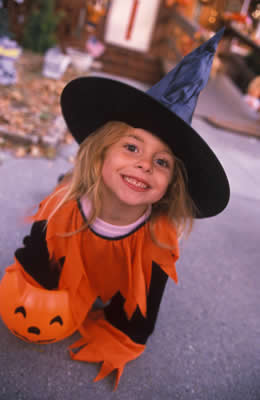 . .
Regards,
|
|