"Tips for Running Your Life"
By: Mark Ehrenshaft, LCSW
|
|
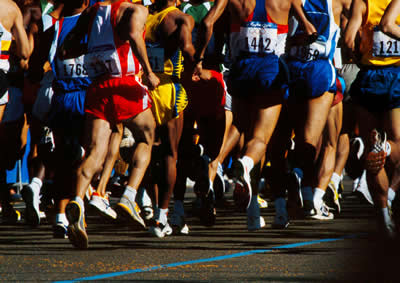 Athletes the world over are quick to acknowledge the adage "it's not the size of the dog in the fight, but rather the size of the fight in the dog" that matters most in determining the outcome of many athletic events. As a long distance runner for over fifteen years, I am intimately aware that in addition to one's physical preparedness, it is also your mental and emotional conditioning that determines how well one fares in competitive races, especially in events ranging from marathon to ultra-marathon distances. Whether you're a first time marathoner or an experienced ultra distance runner, the race can be lost as easily at the starting line as it can down the final stretch. However, more often not, it is those tedious and seemingly endless middle-of-the-race miles that are one's undoing in determining if one even makes it to the finish line. Athletes the world over are quick to acknowledge the adage "it's not the size of the dog in the fight, but rather the size of the fight in the dog" that matters most in determining the outcome of many athletic events. As a long distance runner for over fifteen years, I am intimately aware that in addition to one's physical preparedness, it is also your mental and emotional conditioning that determines how well one fares in competitive races, especially in events ranging from marathon to ultra-marathon distances. Whether you're a first time marathoner or an experienced ultra distance runner, the race can be lost as easily at the starting line as it can down the final stretch. However, more often not, it is those tedious and seemingly endless middle-of-the-race miles that are one's undoing in determining if one even makes it to the finish line.
Harnessing all your physical strengths and maintaining your mental focus is a delicate balancing act. Feeling confident in your ability is much more difficult after ten, twenty or thirty miles into a race as fatigue, muscle soreness and boredom begin to extract a negative toll and you start to question your resolve to continue. The use of cognitive techniques that promote a positive orientation is key in setting the stage for success. No matter how I may feel at any given moment during a long distance event, I always view adversity as temporary and shift my attention to some aspect of the race that I feel good about. As in athletic events, our mental attitude about life also defines our emotional response and feelings about our experiences. Research has consistently demonstrated that individuals who maintain a positive and joyous outlook on life tend to live longer, have more successful relationships, and enjoy a higher quality of life than those who view the glass as half empty. Fortunately, implementing these cognitive strategies is easier than you may think as you begin to identify and challenge your negative thoughts and gradually change your outlook by focusing on your strengths and virtues. I invite you to try this new approach in all areas of your life; with family and friends, in your business dealings with colleagues, and even when you're alone thinking about personal issues. The benefits of positive thinking are endless and finding the silver lining in any gray cloud is well worth the effort. |