Vaccines and Autism: Mixed Signals Documentary on Tuesday, August 23rd at 9:00pm - HD Net TV
HDNet World Report's Greg Dobbs interviews the authors of the "Unanswered Questions" study and families of vaccine-injured children about the government's claim that vaccines do not cause autism. SafeMinds' Board Members Katie Wright and Katie Weisman and SafeMinds' Government Affairs Committee Member Mary Holland participated in the documentary. If you do not have HDNet TV in your area, the program will be available for download at I-Tunes after the broadcast.
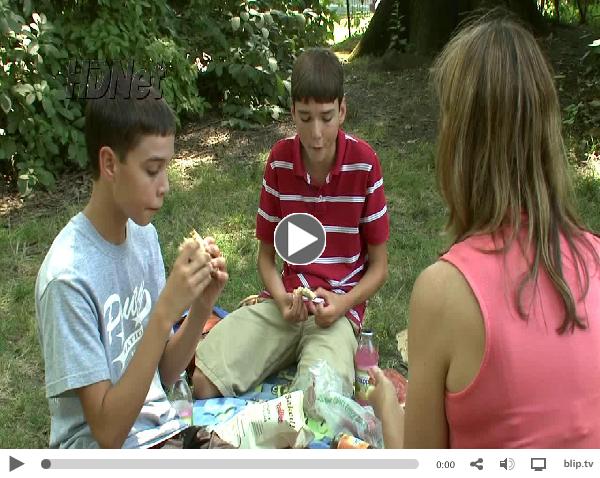 | | Watch preview here. |
|
The 10th International Conference on Mercury as a Global Pollutant
SafeMinds Executive Director Eric Uram attended the 10th International Conference on Mercury as a Global Pollutant held in Halifax, Nova Scotia the last week in July. In attendance were 850 scientists and thought leaders on the issue of mercury in the global context. Also in attendance were several staff and delegates from the UNEP negotiating team for the global mercury treaty. Joining Eric was SafeMinds board member Gayle DeLong.
Over 700 papers and posters were presented on recent research into mercury's global presence and impacts. The vast majority of research dealt with the transport of mercury after release into the environment by human activities and the fate of that mercury once in the global ecosystems.
The event built on nine previous iterations which have had very little to do with research on human health impacts. A Conference Declaration on the state of knowledge regarding mercury as a global pollutant developed for the 8th ICMGP has been the guide for relevant research and policy-making over the past two conferences. Read the Madison Declaration on Mercury Pollution here.
Scientific research continues to create greater understanding about mercury, but has failed to unlock the secrets regarding the toxicology of mercury in its different forms - including how it enters and affects the brain and other organs before during and after the nervous system and other organs mature. Presentations about mercury in wildlife currently give the best indications for understanding human impacts. Several researchers have been looking at learning development in wildlife and have found distinct markers for these impacts in birds and mammals. In 2013, the 11th ICMGP in Glasgow, Scotland plans to give greater coverage to human health issues.
|
|
SmartVax: Weigh the Risks By Scott Laster, SafeMinds Board Member

SafeMinds has launched a new website, SmartVax, to change the discourse on vaccines in a manner that will create a positive environment where consumers are empowered and scientists are encouraged to pursue the necessary research on vaccine-injury and vaccine-effectiveness. The website raises an important question: To what extent has an increase in vaccine-injuries changed the risks versus benefits of the USA vaccination program for young children? The SmartVax website provides a Weigh The Risks analysis of the current vaccine risks versus benefits for American children which indicates that vaccine-injury risk (1 in 13 children) is currently higher than the injury risk of each disease. The vaccine-injury risk was quantifiable for vaccine-induced asthma. Since there were insufficient studies available to calculate other risks, this section provides discussions on the plausibility of vaccine-induced autism, vaccine-induced allergies, vaccine-induced ADHD, and vaccine-induced deaths. The disease risk was calculated as the incremental risk to an individual child if that child is not vaccinated during ages 0 - 4 in two cases: 1) in a highly vaccinated population and 2) in a population with low vaccination rates:

The point of this analysis is not to argue against vaccination programs, since vaccines can provide valuable protection against disease injuries and deaths, but rather to dispel the unproven assumption that all existing vaccines' benefits exceed risks in the USA today and to issue an urgent call to scientists for research to dramatically reduce vaccine-injuries. The SmartVax philosophy proposes that knowledge gained by understanding the mechanism of vaccine-injuries will lead to a smarter vaccination program that produces the best overall public health results.
Follow SmartVax on Facebook (HERE) and let us know your thoughts and suggestions in the online conversation there. If you find the information useful, please share the website information with prospective parents, family, and friends.
|
|

Mercury Inhibits a Key Enzyme That Protects Against Heart Disease
A new study in an Inuit population shows that elevated blood mercury inhibits PON1 - an enzyme in blood plasma that helps prevent atherosclerosis. The bottom line is that if you are eating fish to improve the health of your heart, make sure it is low-mercury fish. You can read the press release and the full text of the study HERE.
EPA Rule Does Not Require Contractors to Follow Up Lead Levels After Renovation
Contractors are required to use lead abatement techniques when renovating homes built before 1978, but homeowners should be aware that they are not required to prove the absence of lead. Read article.
Lower Lead Limits Approved
The Consumer Safety Commission has voted to lower the limit for lead in toys designed for children aged 12 and under. Read more.
Is Your Soil Safe?
Many families are starting their own garden plots in an effort to be green. The following article discusses the importance of testing your soil for lead and other contaminants before you get started through one family's experience. Read more.
Hispanics Often Unaware of the Dangers of Mercury and Lead Pollution
A recent Sierra Club survey asked a sample of Latinos across the United States about environmental issues and their outdoor behaviors. A significant number of Latinos fish, but the majority were unaware of the risks of mercury. To see the whole survey, go HERE.
Elevated Mercury and Nickel in a Michigan River from Tar Sands Oil Spill
Potential toxic metal contamination is just one of several pollution issues related to ruptured oil pipelines. Clean up is difficult. For an update on the Kalamazoo River, read HERE.
|
Resources for our Readers

We are so happy to have you as a member of our community. Whether you are a long-time supporter or someone new to the issue, we would like to point out some areas of our website that may be of interest to you:
If you are interested in getting more involved, here are some easy ways you can help:
Your support provides the hope of a tomorrow that has the answers we seek and treatment for those injured through the accomplishment of life-changing research. None of this would be possible without the interest of people like you.
|






