UNEP FI to speak at FELABAN Annual Assembly, Miami, 13-15 November
|
The XLV edition of the Latin American Federation of Banks (FELABAN) Annual Assembly will take place from 13-15 November in Miami, USA.
During the event, a session on "Banking in a Changing Risk Landscape: Sustainability as a Better Business Model" will be hosted by UNEP FI. This session will highlight how the banking institutions in Latin-America have adopted green business practices and processes enabling them to better manage the emerging financial risks underpinned by environmental and social issues.
During this session, a number of UNEP FI member banks will share their experiences in a discussion panel, including BBVA Group and Bancolombia.
The FELABAN Assembly, organized in cooperation with the Florida International Bankers Association, attracts over 2,000 bankers from more than 50 countries who wish to meet and do business with their international counterparts from Latin America, United States, Canada, Europe and Asia.
UNEP FI and FELABAN became partner earlier this year after the landmark signature of a memorandum of understanding.
More information here.
|
| Countdown to 2011 Global Roundtable begins, Washington D.C., 19-20 October |
With only a few weeks to go before UNEP FI's 2011 Global Roundtable the countdown has begun.
The Global Roundtable - now in its 13th edition - comes at a crucial time for the US public, with the recent financial crisis offering a stark reminder that instability looms over the horizon when markets are left exposed to long-term risks.
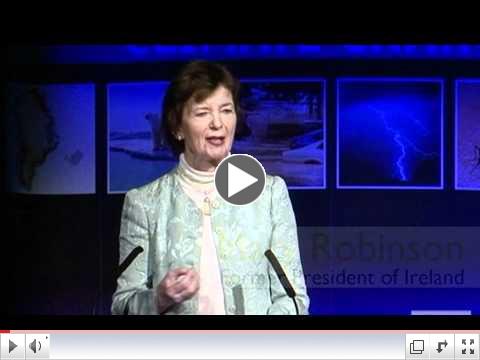 | |
A peek at the Roundtable
|
With the drive for economic recovery topping the US political agenda, a host of sessions will highlight the sustainability sector's promising potential as a key propeller of economic growth and job creation across the country.
Among the 100 speakers confirmed are: Gordon Brown (former Prime Minister of the United Kingdom), Mary Robinson (former President of Ireland), Lisa Jackson (Administrator of the United States Environmental Protection Agency) and Nassim Taleb (author of best-seller book The Black Swan).
 | |
Global Roundtable speaker Lene Wendland
|
Secure your place today to hear (and debate) the views of some of today's leading financial actors and thinkers.
To register and obtain further information, please visit the Global Roundtable website: http://www.unepfi.org/grt/.
|
| Available Soon: UNEP FI Guide to Sustainable Banking |
To be launched at Global Roundtable on 19-20 October 2011 in Washington D.C., the UNEP FI Guide to Sustainable Banking will provide a clause-by-clause explanation of the UNEP Statement of Commitment by Financial Institutions on Sustainable Development, seeking both to shed further light on the meaning of individual clauses, and to provide guidance on how banking institutions might seek to apply them in their day-to-day operations. The Guide will further provide illustrations of current practice within UNEP FI Signatory banks, and references to key resources.
The Guide will further provide illustrations of current practice within UNEP FI Signatory banks, and references to key resources.
The tool results from consultations with a variety of UNEP FI members from the banking sector, who have identified a range of uses to the Guide, from Board level to operations:
● a clear and practical interpretation of the UNEP Statement for UNEP FI's banking members, as well as a roadmap/benchmark against which to measure and orient their sustainability work.
● an introduction to sustainable banking for practitioners, especially pioneers in emerging markets, who are seeking guidance on how to implement sustainability;
● support material for sustainability drivers and champions within banks with to build up the business case for sustainability within the organisation/ across different departments;
● a tool to educate new staff (and refresh current staff) on sustainability issues;
● a means for all stakeholder groups/the general public to better understand the intersection between banking and sustainability.
More information: banking [at] unepfi.org.
|
|
New report on REDD+ presented to European parliamentarians
| |
 Climate change negotiators must spur private sector investment into climate change-related deforestation and forest degradation reduction projects in order to significantly reduce current levels of deforestation, the head of the UN-based public-private partnership UNEP FI told European lawmakers following the release of report, REDDy-Set-Grow Part II: Private sector suggestions for international climate change negotiators in September. Climate change negotiators must spur private sector investment into climate change-related deforestation and forest degradation reduction projects in order to significantly reduce current levels of deforestation, the head of the UN-based public-private partnership UNEP FI told European lawmakers following the release of report, REDDy-Set-Grow Part II: Private sector suggestions for international climate change negotiators in September.
Speaking to members of the European Parliament on the occasion of a conference on European and global forests, Paul Clements-Hunt stressed the need to recognise the economic value of forests and ecosystem services as part of wider efforts to mitigate climate change that are currently underway.
Since 2009, international climate change negotiators have been holding talks on the creation of a worldwide scheme to foster deforestation and forest degradation reduction in developing countries. The scheme, known as REDD+, is embedded in the currently ongoing international climate change negotiations.
Despite the general enthusiasm for REDD+, the price tag associated with halving global deforestation and forest degradation with REDD+ at the required scale and speed is steep, however, warned Clements-Hunt.
Clements-Hunt further highlighted the recent conclusions of a new UNEP FI report, REDDy-Set-Grow, which argues that the involvement of private finance in the REDD+ scheme is essential for the scheme to be crowned with success.
In the report, UNEP FI's 200-plus member financial institutions assert that any post-Kyoto climate convention must encourage private engagement and investment in funding REDD+.
Among the specific policy propositions formulated in the report are the implementation of a policy scenario, coined as the "nested approach," deemed most likely to close the REDD+ investment gap, said Clements-Hunt.
More information here.
|
|
Event: Nigerian bankers commit to responsible banking at sustainability summit
|
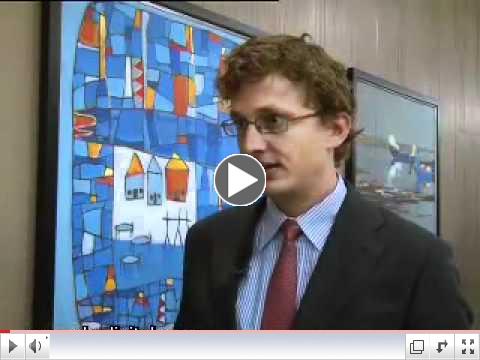
Nigeria's top CEOs committed to the establishment of pioneering, country-wide principles on sustainable banking as they closed a one-of-its-kind summit dealing with the budding market in Lagos in September.
The CEO's accord was the high point of the Nigeria Sustainable Finance Week, a meeting convened by Africa's sustainability banking champion Access Bank, Dutch development bank FMO, and UNEP FI to boost the emerging Nigerian sustainable finance sector.
The select group of CEOs representing Nigeria's most powerful banks and the country's Central Bank representatives agreed in a closed meeting to work together in the near term to implement country-wide sustainability standards applicable to loaning services.
 | | CNBC interview |
The public commitment by CEOs to incorporate environmental and social risk analysis in their future risk management strategies is a first in Nigeria and signals a strengthening consensus around the notion of competitive sustainability by the country's entrepreneurial class.
"Today's decision is a historic commitment by Nigerian regulators and bankers to a better environment," said UNEP FI's head Paul Clements-Hunt. "It is inspiring to witness a country coming together to address one of the greatest challenges currently facing humanity."
More information here. |
|
UNEP FI Principles for Sustainable Insurance consultation heads to the Middle East & North Africa
 |
After four regional insurance markets, the Middle East & North Africa (MENA) took its turn to partake in the United Nations-convened global consultation process to develop principles for sustainable insurance in September.
The regional meetings are part of UNEP FI's pioneering initiative to develop global principles that tackle environmental, social and governance risks and opportunities in the core business strategies and operations of insurance companies. The principles include concrete actions that enhance risk management and underwriting practices, stimulate innovative solutions, and catalyze industry action on sustainability issues such as natural catastrophe risks, climate change, ecosystem degradation, ageing populations and emerging health risks. Moreover, the initiative will form a unique partnership between the UN and the insurance industry to drive the adoption and implementation of the principles worldwide.
"MENA is a key economic region and the insurance industry is integral to its development. The major challenge is how to make this development sustainable in economic, environmental and social terms. The principles are anchored on risk management, innovation and transparency. They set a solid foundation for insurers to systematically address emerging risks and develop solutions that accelerate the transition to a sustainable economy - one that is low carbon, resource efficient, disaster resilient and socially inclusive," said Paul Clements-Hunt, Head of UNEP FI.
More information here.
|
|
UNEP FI and PRI joint webinar: "Property investors' perspective on Climate Change policy," 17 November
|
The bulk of GHG emissions attributable to buildings emanate from the existing stock. To achieve energy saving and emissions reduction targets in the EU, US and elsewhere, a coherent set of polices is needed to drive responsible behaviors across key stakeholders and over the life-cycle of buildings.
This webinar will review the following important issues, namely:
● What measures can be introduced to drive mutually reinforcing and responsible behaviors in property investors and managers, brokers and occupiers over the whole life cycle of buildings?
● Which of these measures have to date proven most successful and which are the most cost-effective?
● What is the potential for using market-based mechanisms like 'carbon trading schemes' in driving responsible behaviors?
What role can labeling and metrics play in the policy agenda and what measures can be adopted to accelerate standardization, consistency and comprehensiveness of environmental metrics, labels and standards for buildings?
Guests are invited to attend the webinar on 17 November at 10.00 am (CET).
Related publication: An Investor's Perspective on Environmental Metrics for Property.
More information and registration: property [at] unepfi.org.
|
|
Integrating ecological risk in sovereign credit ratings and government bonds, 17 October
|
UNEP FI, Global Footprint Network and a number of leading financial institutions are collaborating on a potentially transformational project to investigate the linkages between ecological risk and country level risk in sovereign bonds. We invite you to join the launch on 17 October in Washington, D.C. ahead of the UNEP FI Global Roundtable. The event is meant for financial institutions with an interest in sovereign bond markets that may consider joining the project, as well as those investors and banks that have already confirmed their participation.
It will take place at UN Foundation, Washington, D.C. on 17 October from 01.00 pm - 05.00 pm.
Registration here.
|
|
Launch of the Natural Value Initiative's benchmarking study of the extractive sector, 20 October
|
The Natural Value Initiative (NVI) - a collaboration between UNEP FI, Dutch social investment NGO VBDO and international environmental group Fauna & Flora International - invites you to come to the launch of a benchmark of the management of biodiversity and ecosystem services within 30 companies in the mining and energy sectors. It repeats and updates a similar analysis conducted in 2005.
The event will take place at L'Enfant Plaza Hotel, Washington D.C. on October 20 from 06.00 pm - 09.00 pm.
More information and registration here.
|
|
Mastering water risks for banks and investors in a changing climate workshop, 21 October
|
UNEP FI, the Alliance for Global Water Adaptation (AGWA), the World Bank and Conservation International will be hosting a half-day training workshop on water and finance directly after the UNEP FI Global Roundtable. The workshop aims to raise awareness and build capacity for banks to identify and manage water risks related to lending in water scarce areas and/or water-intensive sectors.
The workshop will take place at the World Bank headquarters, Washington, D.C. on 21 October from 8.30 am - 12.30 pm.
Registration here.
|
|
Banking for Biodiversity worshop, 21 October
|
UNEP FI in collaboration with the WWF, the Equator Principles and BBOP (the Business and Biodiversity Offset Programme) are hosting a half-day training workshop on biodiversity and ecosystem service (BES) risks for lenders and investors - directly after the UNEP FI Global Roundtable. The workshop aims to raise awareness and build capacity at banks to identify and manage BES risks in project finance, corporate loans and investments.
The training workshop will be held at the World Bank headquarters in Wahington, D.C. on October 21 at 1.00 pm - 05.30 pm.
More information and registration here.
|
FINAMERICA joins UNEPFI
|  As a result of UNEP FI's participation in the Latin American Federation of Banks (FELABAN) annual assembly in November 2011 and the recent signing of a MoU, there has been an increase in members from the Latin American region. FINAMERICA, a newly signed member to UNEP FI, is a Regulated Financial Institution that focuses on microfinance in order to improve the access to credit of Colombia's most vulnerable population groups, and to contribute to the promotion of micro-entrepreneurship and enhanced well being of its families.
More information here. |
| Axial Gestão de Recursos Ltda joins UNEPFI | 
Axial Gestão, a Latin American venture capital firm promoting investments based in São Paulo, Brazil, is one the latest members from the region to join UNEP FI. It manages venture capital investments for Swiss and Brazilian families in small and medium sized companies that promote value creation through business growth and positive environmental and social impacts.
The company's vision is "to be a lever for an ever more sustainable world." It has been involved in the areas of organic products and family farming, fish farming and biodiversity, specialty soybeans, soybean seeds, sustainable agriculture, microcredit, renewable energy and carbon credits from tropical forests.
More information here.
|
| Vision Banco becomes a member |  Visión Banco is a leading Paraguayan microfinance institution whose vision is to contribute positively to economic development, employment generation and poverty alleviation by offering sustainable solutions. For Visión Banco, being socially responsible goes beyond certification, compliance with regulations and to operate with high standards of quality.
More information here. |
|
|
7th International Investment Promotion Forum, China
| |
Taking place at a critical conjuncture of international investment, the 7th International Investment Promotion Forum will offer a unique platform for policy makers, business leaders, international investors, and investment promoters to explore policy and business measures to handle the most prominent challenges and opportunities facing international investment community worldwide, in particular in the transition to a low-carbon future.
Held in conjunction with the 2nd World Low-Carbon and Eco-economy Conference and Technical Exhibition, which include many other low-carbon investment and trade-related meetings and exhibitions, the 7th International Investment Promotion Forum will also offer valuable opportunities of networking with policy makers, investors and business leaders from China and around the world.
The forum will take place on 10-11 November in Nanchang, China.
More information: Ralf.Krueger [at] unctad.org.
  |
|
|
|
Upcoming training
| |
French:
10 - 28 October
Spanish:
31 October- 18 November
English:
7-25 November
The Environmental and Social Risk Analysis (ESRA) Online Course runs interactively over a three-week period and is intended specifically for risk managers and analysts in commercial, corporate, investment and retail banking in or dealing with developing countries and emerging markets.
More information here.
***
English:
7 - 28 November
The Climate Change: Risks and Opportunities for the Finance Sector Online Course aims to equip financial institution executives and stakeholders with fundamental knowledge on a variety of aspects at the interface of private finance, climate change, and climate regulation, as well as to provide support for the development of effective responses.
| |
|
|
|



