|
|
|
| SPECIAL THANK'S | |
Thank you to Mary Brunette and Sandy Faiman-Silva for their hard work in organizing 'Team Independence House' during the 2010 Cigna Falmouth Road Race. |
| IMPORTANT RESOURCES | |
Independence House HOTLINE:
1-800-439-6507
|
| FUNDRAISING EVENTS |
October 16: 5K Walk/Run . New 1-mile route thise year!
October 22: Provincetown Fantasia Fair (details soon)
November 19-20: Border Books Benefit days (more soon).
Ongoing: eBay Giving Works |
| AWARENESS MONTHS |
Feb: Teen Dating Violence Awareness
Apr: Sexual Assault Awareness
Oct: Domestic Violence Awareness
Oct 1 Domestic Violence
|
|
|
| Greetings! |  Independence House is now in it's 31st year of operation, and it remains a critical resource for survivors of domestic and sexual violence in the Cape Cod community.
As we approach October, Domestic Violence Awareness Month, we would like to share with you some general information, articles and resources about domestic violence.
Independence House's mission is to help all domestic violence and sexual assault victims, survivors, and their children by creating opportunitites to find safety and become empowered through crisis intervention, advocacy, counseling, referral, outreach, education and inspiring change in our community.
If you or someone you know is in need of help, please contact Independence House today. |
| A Few Facts |
- Domestic violence is the leading cause of injury to women between the ages of 15-44.
- More than three million children witness acts of domestic violence each year.
- One in six women and one in 33 men have experienced an attempted or complete rape.
- Up to 50 percent of all homeless women and children in this country are fleeing domestic violence.
- One in ten calls made to alert police of domestic violence is placed by a child in the home.
- More than 53 percent of male perpetrators, physically abuse their children.
- One in three abused children become an adult abuser or victim.
- Victims and abusers are found in every social and economic class, race, religious group, and sexual orientation.
- The cost of intimate partner violence exceeds $5.8 billion each year, $4.1 billion of which is for direct medical and mental health services.
- Every 21 days, a woman is killed by domestic violence.
Sources: allhealth.com,U.S. Department of Justice, "Prevalence, Incidence, and Consequences of Violence Against Women," November 1998., Centers for Disease Control & Prevention, National Centers for Injury Prevention & Control. Atlanta, GA. |
| Children's Exposure to Domestic Violence | Children who live in homes where a parent or caretaker is  experiencing abuse are commonly referred to as "child witnesses" or "children who are witnessing" domestic violence. The term "children's exposure" to domestic violence, however, provides a more inclusive definition because it encompasses the multiple ways children experience domestic abuse. Although caretakers frequently believe they are protecting their children from witnessing their abuse, children living in these homes report differently. (full article). Click for: Additional resource for children who witness violence. experiencing abuse are commonly referred to as "child witnesses" or "children who are witnessing" domestic violence. The term "children's exposure" to domestic violence, however, provides a more inclusive definition because it encompasses the multiple ways children experience domestic abuse. Although caretakers frequently believe they are protecting their children from witnessing their abuse, children living in these homes report differently. (full article). Click for: Additional resource for children who witness violence. |
| Sexting 101: What you need to know as a parent |
Erik Fisher, PhD (aka Dr. E.) www.ErikFisher.com 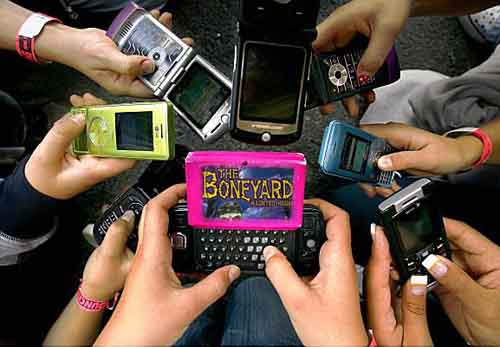 "My kid may be doing what?" Yes, Mom and Dad, the phenomenon of "sexting" is taking off (no pun intended). If you don't know what "sexting" is, it involves people, mostly teens, taking nude pictures of themselves and sending them using their cell phones to others. This action has resulted in some teens being charged with violations of child pornography laws. These laws can carry some serious penalties, the most serious being registration on sex offenders databases for 10 years. With this in mind, what would happen if the offending material was found on your personal computer? Why is this happening, and what do you need to be aware of to keep you and your kids safe? (read more....) |
|
|
|
| Male Victims of Domestic Violence | Why Men Don't Report Physical Abuse
May 25, 2008, Christina Gleason
Men who are abused by women often suffer in silence. In addition to the shame shared by many women victims of domestic violence, men must overcome gender stereotypes.
While most attention is given to women who are abused by men, men are often overlooked victims of domestic violence. According to the Bureau of Justice Statistics Crime Data Brief, men account for approximately 15% of the victims of reported intimate partner violence (February 2003). How Women Abuse Men Women who abuse men are not much different than their male counterparts who abuse women. Men can be hit, kicked, punched, pushed, or bitten by women abusers. Women can also use weapons, such as knives, guns, or any blunt object that can be used to strike. Abused men are not necessarily smaller or physically weaker than the women who abuse them, but they do not use their size or strength to hurt their abusive partners even when they are being hurt. (Read more on why men don't report abuse) |
|
|
|
|
|
|






